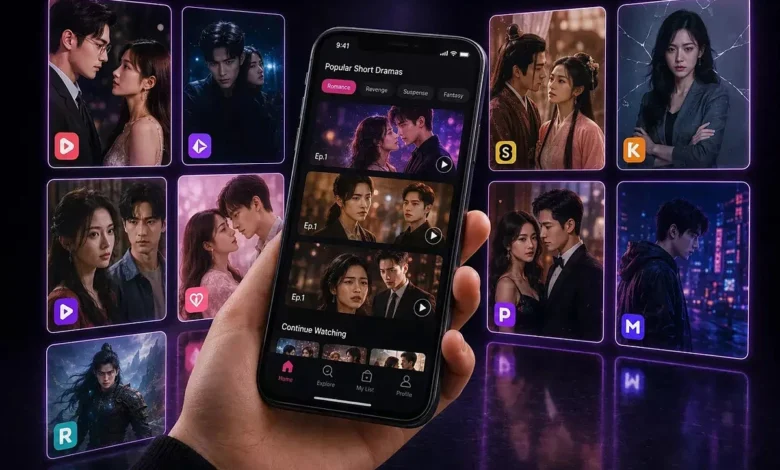
It is 2:45 AM, and while her eyes are heavy with fatigue and her mind feels clouded, 36-year-old office worker Hoa finds herself caught in a relentless cycle. Her thumb moves mechanically across the smartphone screen, driven by a compulsive need to uncover the next cliffhanger in a short-form AI-generated drama. On the screen, the 42nd episode of a series concludes in a mere 50 seconds, depicting a poor girl preparing to reveal her true identity to her wealthy in-laws. Though Hoa intended to watch only 15 minutes of entertainment before bed, she has already spent nearly four hours submerged in this digital void.
This phenomenon, now being dubbed "AI-drama addiction," is emerging as a significant public health concern in Vietnam and across Southeast Asia. As these hyper-condensed, algorithmically optimized narratives saturate digital platforms, experts are raising alarms about the cognitive and psychological toll they exact on the average viewer.
The Anatomy of an Addiction: Why Viewers Cannot Look Away
The addictive nature of these short-form AI dramas is no accident; it is the result of sophisticated psychological engineering. Unlike traditional television, which requires long-form character development and slow-burning plot arcs, AI-driven scripts are built on the "micro-drama" model. Each segment lasts between 60 and 120 seconds, featuring intense conflict, high-stakes emotional outbursts, or sudden, life-altering revelations.
Dr. Nguyen Khac Duong, Deputy Head of the Clinical Department at the Mai Huong Day Psychiatric Hospital in Hanoi, explains that the structure of these scripts is specifically designed to bypass critical thinking. "The content is optimized by artificial intelligence to hit the most primal emotional buttons—injustice, wealth disparity, sudden revenge, or romantic betrayal," Dr. Duong notes.
Every episode is engineered to leave the viewer in a state of suspended animation. By cutting off the narrative at the exact moment of a "hook"—the precipice of a secret being revealed or a confrontation reaching its boiling point—the platform forces the brain to demand an immediate resolution. Because the next episode is only a tap away, the cognitive cost of stopping becomes higher than the cost of continuing.
Data and Trends: The Explosive Growth of Short-Form Content
The rise of AI-produced short dramas has been meteoric. According to data from Sensor Tower as of May 2026, the global market currently hosts over 700 dedicated short-drama applications, a figure that does not even account for the massive volume of such content integrated into broader social media ecosystems like TikTok or Douyin.
In Vietnam, the adoption rate has been staggering. DataReportal reports that as of early 2024, the country boasted approximately 67.72 million TikTok users aged 18 and older, placing it among the highest-penetration markets in Southeast Asia. This massive user base has provided the perfect fertile ground for short-form video providers.
Market intelligence platform Adjust reported that download rates for short-drama apps in Vietnam during the fourth quarter of 2025 surged by 271% compared to the same period the previous year. Financial data is equally telling: Vietnamese consumers spent an estimated 11.5 million USD (over 302 billion VND) on these platforms throughout 2025. Perhaps most significantly, the average viewing session length in Vietnam climbed to 24.46 minutes in the first quarter of 2026, significantly higher than the 14.28-minute regional average for Southeast Asia.
The Neuroscience of the Digital Loop
The reason behind this compulsive behavior lies in the brain’s reward system. Dr. Duong explains that the continuous, rapid-fire consumption of high-emotion content triggers a powerful dopamine release. "Every time a viewer sees a dramatic reveal or a conflict resolution, the brain releases dopamine," he says. "This neurotransmitter doesn’t just create a fleeting sense of pleasure; it reinforces the behavior, turning the act of checking the phone into a conditioned reflex."
When this cycle is repeated, the brain enters a loop: curiosity leads to stimulation, which leads to brief satisfaction, which in turn breeds an immediate craving for more. Over time, the act of reaching for the phone becomes an automatic response to any feelings of boredom or stress.
However, this "emotional fuel" is akin to consuming large amounts of sugar while suffering from severe malnutrition. Viewers are consuming hours of high-intensity imagery and sound, yet they retain almost nothing of substance once the screen is turned off. This phenomenon has led to reports of "brain fog," where users experience sluggish cognition, reduced memory retention, and a diminished ability to focus on complex, long-form tasks.
Implications for Mental Health and Cognitive Function
The long-term impact on mental health is becoming a subject of intense clinical scrutiny. Dr. Diem Lam, a specialist at the No. 8 People’s Hospital in Guangzhou, China, has observed a growing number of patients presenting with symptoms of cognitive decline and emotional dysregulation linked to excessive short-form video consumption.
"The constant, rapid-fire stimulation leads to a desensitization of the neural pathways," Dr. Lam explains. "The brain becomes accustomed to high-frequency, high-dopamine inputs, making it difficult for the individual to derive pleasure or focus from slower-paced, real-world activities. We are seeing a generation of viewers who are losing their ability to sustain attention, leading to what we call ‘cloudy brain’ or ‘brain fog.’"
Furthermore, the scripts often feature themes that induce constant states of physiological stress. The themes of betrayal, extreme social competition, and interpersonal conflict trigger the release of stress hormones, which, when sustained over hours, can lead to sleep deprivation and increased cardiovascular strain. Over time, the viewer’s emotional baseline shifts; they become emotionally "chilled" or blunted, unable to find joy in the mundane, everyday occurrences of real life.
The Role of Algorithmic Feedback Loops
The addiction is not solely the result of the content itself but the sophisticated algorithms that deliver it. These platforms record every interaction—where a user stops, how long they hover, and when they skip. By leveraging this data, the platforms can automatically queue the next episode before the user even has a chance to contemplate exiting the app.
Representatives from major short-form video platforms claim they have integrated various tools to assist users in managing their screen time, such as sleep reminders, daily usage limits, and auto-play disable buttons. However, these features are frequently optional and require the user to actively enable them. Given the psychological design of the apps, these "off-ramps" are easily ignored or bypassed with a single tap.
Clinical Recommendations and Behavioral Changes
Health experts and psychologists are urging a proactive approach to managing digital consumption. The primary recommendation is for users to manually disable the "auto-play" function to break the involuntary loop of continuous viewing. Additionally, setting a hard time limit on usage, particularly in the hour before sleep, is considered essential for restoring healthy sleep patterns.
For those struggling with the impact of this behavior, experts suggest replacing screen time with activities that demand sustained, focused attention. Reading books, engaging in physical exercise, or participating in face-to-face social interactions are critical for "retraining" the brain to handle slower-paced, non-instant-gratification stimuli.
"If the habit is causing chronic sleep loss and interfering with professional or personal life, it is time to seek the guidance of a mental health professional," says Dr. Duong. "We are treating these cases with a combination of cognitive behavioral therapy and, where necessary, pharmacological interventions to restore the brain’s natural balance."
As technology continues to advance, the line between helpful content consumption and harmful digital dependency continues to blur. While AI-driven storytelling offers new possibilities for entertainment, it remains a potent tool that, if left unchecked, threatens the cognitive and emotional well-being of a increasingly digitized society. The challenge ahead lies not in the rejection of technology, but in the cultivation of intentional, mindful consumption habits that preserve human agency in an age of algorithmic influence.