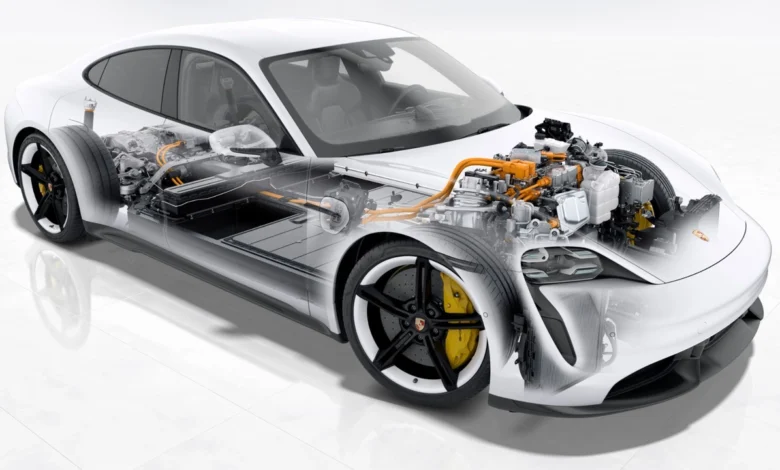
The financial reality of electric vehicle ownership extends far beyond the initial purchase price, routine maintenance, and energy consumption. For high-performance luxury electric vehicles such as the Porsche Taycan, one of the most critical and potentially prohibitive long-term cost factors is the battery pack. Recent industry data and owner disclosures have illuminated the staggering replacement costs associated with Porsche’s premier electric sports sedan, revealing that a complete battery pack replacement can rival the price of an entirely brand-new mainstream sedan, specifically a Toyota Camry. This economic reality has profound implications for the secondary luxury electric vehicle market, insurance underwriting, and the broader trajectory of electric vehicle sustainability and circular manufacturing.
Economic Realities of Porsche Taycan Battery Replacements
When a high-voltage battery pack suffers catastrophic damage resulting from severe traffic accidents, prolonged neglect, improper maintenance, or unauthorized aftermarket modifications, the financial burden placed upon the vehicle owner is immense. For first-generation Porsche Taycan models manufactured between 2019 and 2024, Porsche does not publish a standardized standalone retail price for a complete factory-fresh energy storage assembly. However, official parts catalogs and community-sourced data from specialized owner forums indicate that replacement battery packs designed for later iteration models range between $25,000 and $35,000. In the United States automotive market, this expenditure is equivalent to purchasing a brand-new Toyota Camry, transforming what would traditionally be a routine mechanical repair in an internal combustion engine vehicle into a major financial event for an electric vehicle owner.
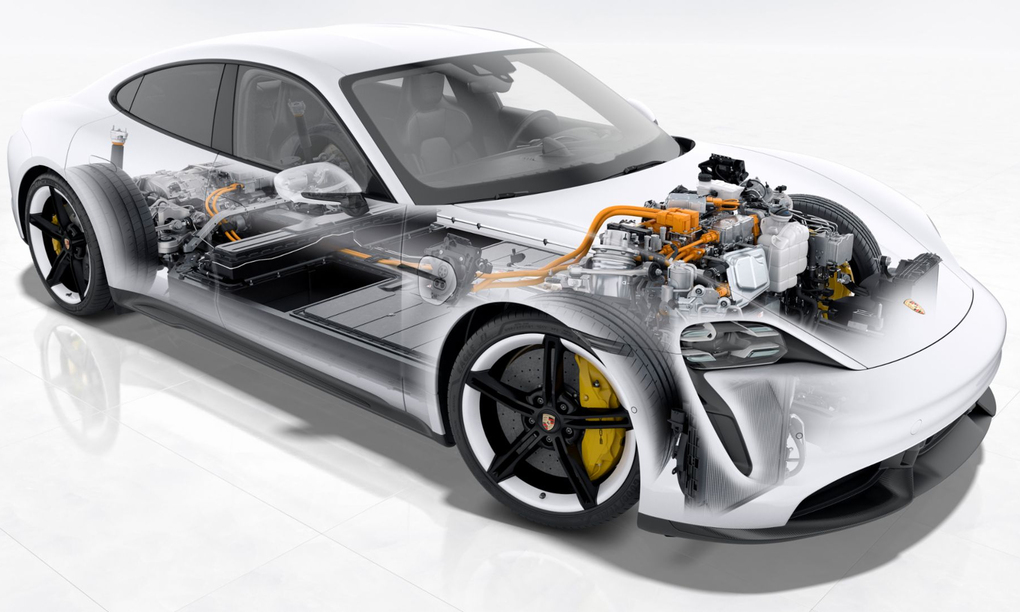
Fortunately, the structural engineering of the battery packs utilized in the Porsche Taycan—manufactured by LG Energy Solution—offers a partial mitigation strategy. Unlike monolithic battery architectures that require the entire assembly to be swapped out upon the failure of a single component, the Taycan’s pack is constructed from modular units known as cell modules. This modular design permits technicians to replace individual faulty modules rather than discarding the entire housing and energy matrix. Depending on the exact number of damaged or degraded cells requiring intervention, this modular approach can theoretically reduce the physical hardware replacement costs by roughly half.
Despite the hardware savings achieved through modular servicing, labor expenses present an entirely separate financial hurdle. Documentation released by Porsche North America earlier this year outlines labor billing rates ranging from $300 to $350 per operational hour for high-voltage powertrain technicians. Real-world accounts from Taycan owners seeking out-of-warranty battery interventions reveal that labor costs alone frequently total between $7,200 and $8,400. Consequently, while the modular design successfully avoids the catastrophic expense of replacing an entire monolithic battery pack, the specialized labor required to safely execute high-voltage repairs remains exceptionally costly.
Warranty Coverage, Exclusions, and Risk Mitigation

For the vast majority of owners, these steep repair figures remain a theoretical concern rather than an immediate out-of-pocket expense, largely due to comprehensive factory warranties. Porsche traditionally covers the Taycan’s high-voltage battery under a comprehensive eight-year or 160,000-kilometer (100,000-mile) warranty, whichever comes first. This manufacturer backing guarantees protection against severe, premature capacity degradation that falls outside normal operational parameters within the specified timeframe.
However, the fine print governing these factory warranties contains crucial exclusions that every prospective buyer or current owner must understand. The warranty strictly protects against manufacturing defects and abnormal capacity loss; it explicitly excludes physical damage resulting from traffic collisions—which are typically absorbed by commercial automotive insurance policies—improper charging habits, neglect of routine maintenance schedules, or unauthorized technical interventions. Furthermore, if Porsche officially authorizes a battery replacement under warranty, the manufacturer
does not guarantee the installation of a brand-new factory pack. Instead, the company reserves the right to supply a refurbished or remanufactured unit, meaning the vehicle’s maximum energy storage capacity may not fully return to 100% factory-new specifications following the service procedure.
To minimize the likelihood of triggering premature battery failure or costly out-of-warranty service events, automotive engineers recommend specific operational guidelines. Owners are advised to avoid consistently depleting the battery to absolute zero over extended periods, refrain from executing continuous high-power fast-charging sessions in rapid succession, and maintain regular vehicle connectivity to home charging stations when the automobile is parked for extended durations.
The Evolution of Porsche Battery Technology and Sustainability
Beyond immediate ownership costs, Porsche is aggressively spearheading technological advancements aimed at redefining the lifecycle management of electric vehicle energy storage. In recent developments, the German sports car manufacturer successfully completed the assembly of its first experimental high-voltage battery pack manufactured from 100% post-consumer recycled raw materials. While this pioneering pack remains in rigorous internal testing phases, automotive analysts view it as a monumental milestone toward realizing a fully closed-loop circular economy within the luxury automotive sector.
The overarching vision of this closed-loop manufacturing model is simple yet ambitious: to begin a battery’s lifecycle inside one vehicle and conclude its operational existence inside another. By recovering high-grade raw materials—including lithium, cobalt, and nickel—from end-of-life battery packs, manufacturers can significantly reduce the environmental footprint of future electric vehicle production while stabilizing raw material supply chains against geopolitical volatility and resource scarcity. Although these recycled material methodologies are currently confined to engineering test mules and have not yet entered full-scale commercial production, select technological components derived from these initiatives are projected to infiltrate commercial production lines within the decade.
Advanced Thermal Management and Next-Generation Architectures
Simultaneously, Porsche and its parent conglomerate, Volkswagen Group, are deploying sophisticated thermal and electrical management systems to optimize charging speeds and preserve long-term battery health. The innovative Bank Charging feature, integrated into the Premium Platform Electric (PPE) architecture and prominently featured in the new Porsche Macan EV, represents a major leap forward in electric powertrain engineering. Under this architectural configuration, the standard 800-volt high-voltage battery pack is dynamically split into two distinct 400-volt halves during charging sessions. This allows the vehicle to draw maximum power from high-capacity DC fast chargers simultaneously across both circuits, substantially reducing refueling times without placing undue thermal stress on individual cell chemistry.
Furthermore, these modern electric platforms incorporate dedicated high-voltage coolant heaters capable of outputting up to 6 kW of thermal energy. This active pre-conditioning system actively warms the battery pack prior to arrival at a designated charging station, bringing the individual cells up to their optimal electrochemical temperature threshold before energy transfer begins. By conditioning the battery in advance, the vehicle maintains peak charging speeds for significantly longer durations before tapering off as the state of charge approaches maximum capacity.
Industry-Wide Transition to Solid-State Batteries
The broader automotive landscape is currently undergoing a systemic transition toward advanced battery chemistries, with solid-state technology widely regarded as the ultimate holy grail for the electric vehicle industry. Legacy automakers and specialized technology startups alike are locked in a high-stakes race to develop the first commercially viable, mass-produced solid-state battery cells. By replacing traditional liquid or gel polymer electrolytes with solid ceramic, glass, or solid polymer materials, engineers anticipate unprecedented improvements in energy density, thermal safety, and overall vehicle operating range.
Industry leaders project that these next-generation solid-state architectures will fundamentally transform the consumer ownership experience by virtually eradicating range anxiety. Solid-state cells promise to drastically shorten ultra-fast charging intervals—potentially reducing 10% to 80% replenishment times to mere minutes—while offering drastically improved safety profiles that eliminate the risk of thermal runaway. As these revolutionary technologies transition from research laboratories to automated assembly lines, the long-term cost of electric vehicle ownership is expected to decline progressively. For luxury performance brands like Porsche, these advancements will ultimately ensure that future sports cars deliver uncompromising performance, enhanced durability, and sustainable circular lifecycles that alleviate the financial burdens currently associated with high-voltage battery maintenance.