PetroVietnam Fertilizer and Chemical Corporation Upgrades 2026 Business Targets Despite Third-Quarter Profit Compression Amid Rising Input Costs

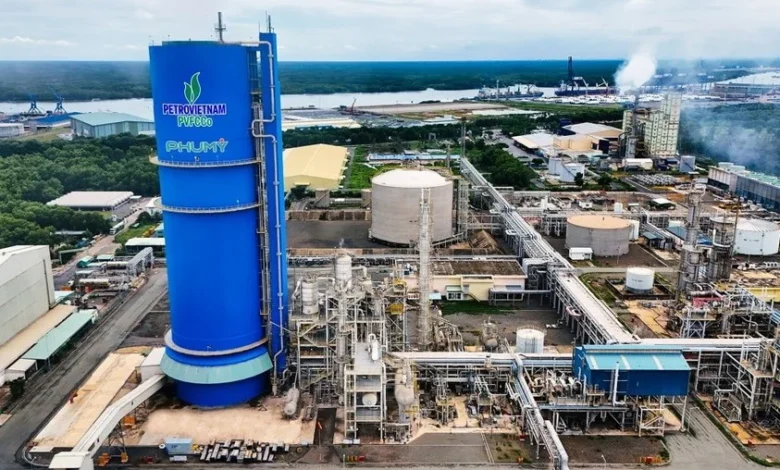
PetroVietnam Fertilizer and Chemical Corporation, widely known under its ticker symbol DPM on the Ho Chi Minh City Stock Exchange, has officially approved an upward revision of its production and business targets for the fiscal year 2026. This strategic adjustment comes on the heels of a robust nine-month performance, demonstrating management’s confidence in the company’s operational trajectory despite a pronounced margin contraction witnessed during the third quarter. The decision to raise full-year guidance reflects a combination of solid historical earnings, robust consumption volumes, and proactive capital expenditure management within the domestic fertilizer and chemical sector.
Revised 2026 Financial Targets and Capital Allocation Strategy
Under the newly endorsed plan, DPM has recalibrated its consolidated financial objectives significantly higher compared to the initial projections approved at the beginning of the year. The corporation is now targeting a total consolidated revenue of 19 trillion Vietnamese dong
($VND$), representing an 8% increase over the original baseline. More notably, profitability targets have been scaled up exponentially: pre-tax profit is now projected at 1.77 trillion VND, marking a striking 108% surge from the initial blueprint, while net profit after tax is slated to reach 1.445 trillion VND, reflecting an impressive upward adjustment of nearly 113%.
Alongside operational revenue and earnings upgrades, DPM has also fine-tuned its capital expenditure framework for the year. Total capital investment requirements have been scaled upward from 1,163 billion VND to approximately 1.4 trillion VND. To support this expanded investment scope, the corporation’s planned funding sources have similarly been reinforced, increasing from an initial 1,164 billion VND to nearly 1.4 trillion VND. This capital expansion underscores management’s commitment to ongoing operational upgrades, technological enhancements, and long-term strategic asset development within its core manufacturing facilities.
Nine-Month Operational Performance and Goal Attainment
The motivation behind DPM’s aggressive upward revision of its full-year guidance stems from an exceptionally strong operational performance during the first nine months of 2026. Cumulative financial statements for the period ending September 30, 2026, illustrate substantial double-digit growth across all major profitability metrics.

During the first three quarters of the year, DPM recorded net revenue of 16,737 billion VND, translating to a 27% increase compared to the corresponding period in 2025. Profitability grew at an even faster pace: pre-tax profit reached 1,734 billion VND, up 57% year-on-year, while net profit after tax surged 59% to 1,371 billion VND.
These results mean that by the end of September, DPM had already successfully completed approximately 88% of its newly revised annual revenue target and an overwhelming 95% of its newly upgraded net profit goal. When measured against the company’s original, pre-revision plans, the nine-month net profit performance has achieved an extraordinary 202.4% of the initial full-year target, while revenue realization stands at roughly 97% of the original objective. This exceptional outperformance during the first half and third-quarter transition provided the vital financial buffer necessary for leadership to realign its yearly benchmarks toward a more ambitious standard.
Third-Quarter Margin Compression and Cost Pressures
Despite the stellar cumulative results for the first nine months, a granular examination of the third-quarter financial report reveals a divergence in underlying profit drivers. During the third quarter of 2026, DPM registered a top-line revenue figure of 4,221 billion VND, representing a substantial 113% expansion compared to the same period in the previous year. However, net profit after tax for the quarter stalled at a mere 45 billion VND, marking a steep decline from the nearly 239 billion VND recorded in the third quarter of 2025.
Explaining this earnings contraction, corporate disclosures highlight severe input cost headwinds that materialized during the period. Natural gas—the primary raw material utilized in the production of nitrogenous fertilizers and specialized chemical products—experienced a significant price rally compared to the prior year. This upward pressure on feedstock directly elevated the overall cost of goods sold.
Simultaneously, while consumption volume and aggregate sales quantities maintained a positive growth trajectory, market selling prices for certain key product categories faced downward adjustments. Consequently, the rate of top-line revenue growth failed to outpace the sharp acceleration in production costs, cost of goods sold, and concurrent selling and administrative expenses. This margin squeeze serves as a textbook example of industry-wide commodity exposure, where input price volatility can temporarily decouple revenue expansion from bottom-line profitability.
Balance Sheet Strength and Financial Position
A review of DPM’s financial standing as of September 30, 2026, demonstrates a robust and liquid balance sheet capable of navigating macroeconomic volatility. Total assets stood at nearly 18,383 billion VND, down only slightly from 18,496 billion VND at the close of the second quarter. Notably, the corporation maintains a conservative liquidity profile, with cash and cash equivalents—primarily consisting of cash and bank deposits—accounting for approximately 10,435 billion VND.

Debt levels remain manageable and prudently structured. Total outstanding loan obligations at the end of the third quarter stood at 3,649 billion VND, entirely composed of short-term bank borrowings utilized to support operational liquidity and seasonal working capital requirements. Shareholders’ equity reached 11,514 billion VND, anchored by a substantial undistributed post-tax profit reserve of 2,310 billion VND. This conservative leverage ratio and substantial cash cushion provide DPM with considerable operational resilience against future commodity price fluctuations and position the firm favorably to execute its expanded capital expenditure pipeline.
Broader Economic Implications and Upcoming Industry Events
The developments at PetroVietnam Fertilizer and Chemical Corporation offer a valuable window into the broader dynamics shaping Vietnam’s agricultural inputs and chemical manufacturing sectors. As input costs remain sensitive to global energy market fluctuations, domestic enterprises are increasingly compelled to rely on operational efficiency, volume optimization, and proactive financial planning to protect shareholder value. DPM’s choice to upgrade its targets despite a challenging third quarter signals institutional confidence in the resilience of domestic fertilizer demand heading into the final stretch of 2026.
Stakeholders and market participants tracking these macroeconomic trends will find further insights at upcoming premier industry convenings. Notably, the Vietnam Investment Forum 2027 is scheduled to take place on November 12, 2026, at the Shilla Monogram Hanoi Westlake, located at 6 Hoang Minh Thao, Tay Ho Tay, Hanoi. As a leading annual gathering of top-tier financial experts, corporate leaders, and institutional investors, the forum will provide deep-dive perspectives on investment prospects and emerging market opportunities for the upcoming year.
In parallel with discussions on economic trajectories and financial market trends, the event will host the official announcement of Best Retail Brokers 2026, recognizing securities firms exhibiting superior retail brokerage services across the Vietnamese market. As the investment community gathers to align with evolving macroeconomic trends, corporate performances like that of DPM will continue to serve as vital benchmarks for evaluating sectoral health, strategic foresight, and capital allocation discipline in Vietnam’s dynamic financial landscape.