Novaland Reports Q3 2026 Profitability Amid Ongoing Financial Strain and Massive Overdue Debt

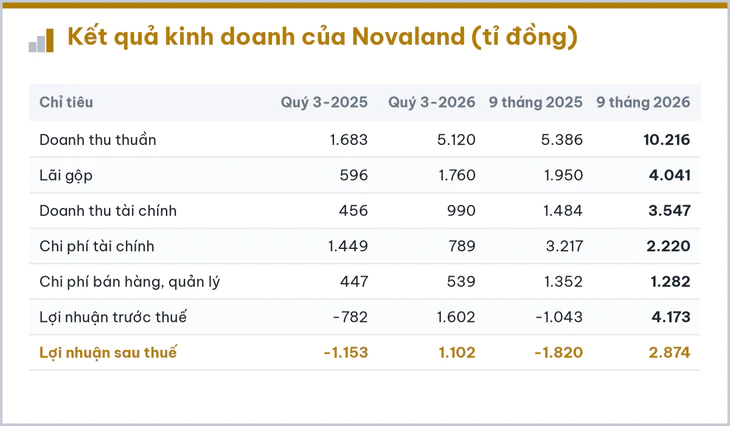
Ho Chi Minh City — In its consolidated financial report for the third quarter of 2026, No Va Land Investment Group Corporation (Novaland, HOSE: NVL) has posted a notable return to profitability, recording a net profit after tax of 2,874 billion Vietnamese dong during the first nine months of the year. This marks a sharp recovery compared to the heavy losses incurred during the corresponding period in previous fiscal years. Despite this operational uplift, the company continues to grapple with severe structural pressures, highlighted by nearly 15,000 billion dong in overdue principal debt and a persistently negative operating cash flow.
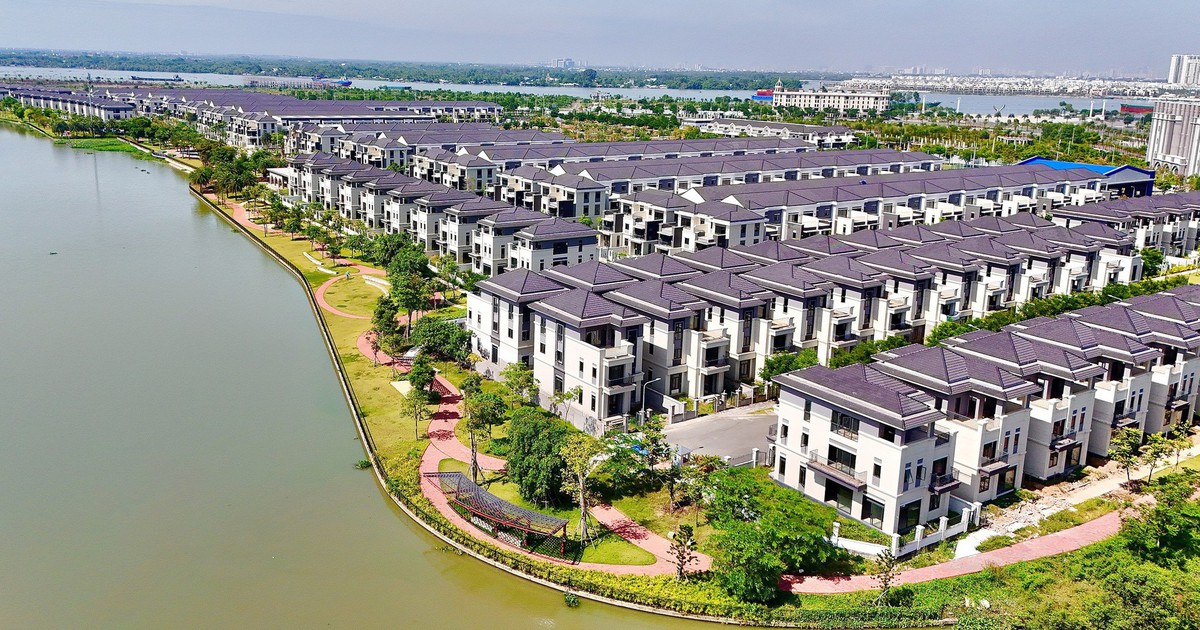
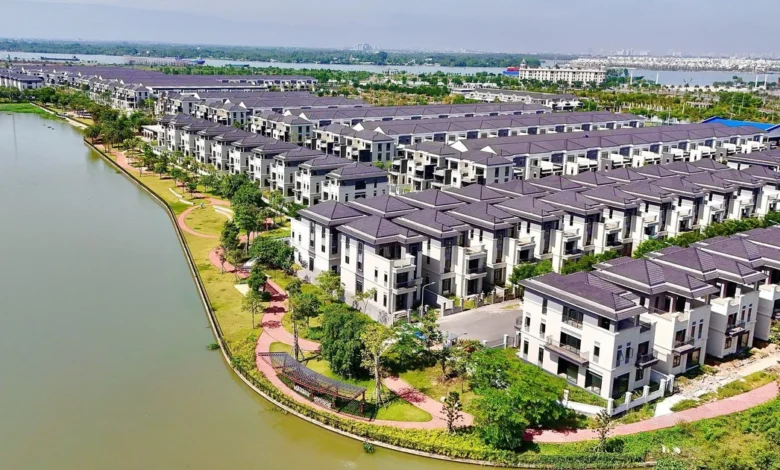
The financial statements reveal that for the quarter ending September 30, 2026, Novaland’s net revenue surged to nearly triple the figure recorded in the same period last year, driving a net profit of 1,102 billion dong for the quarter alone. Management attributed this positive earnings reversal primarily to the transfer of land use rights and retail real estate assets across major developments such as Victoria Village, Aqua City, and Sunrise Riverside, alongside gains generated from investment cooperation agreements and asset valuation adjustments.
Revenue Composition and Financial Maneuvers
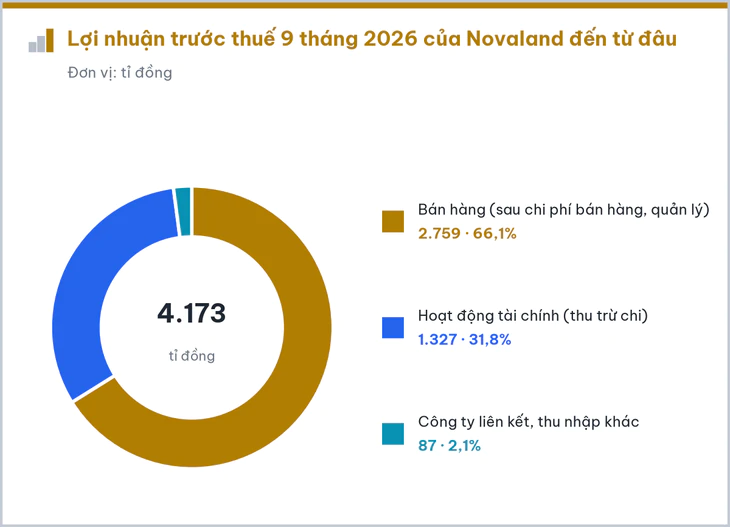
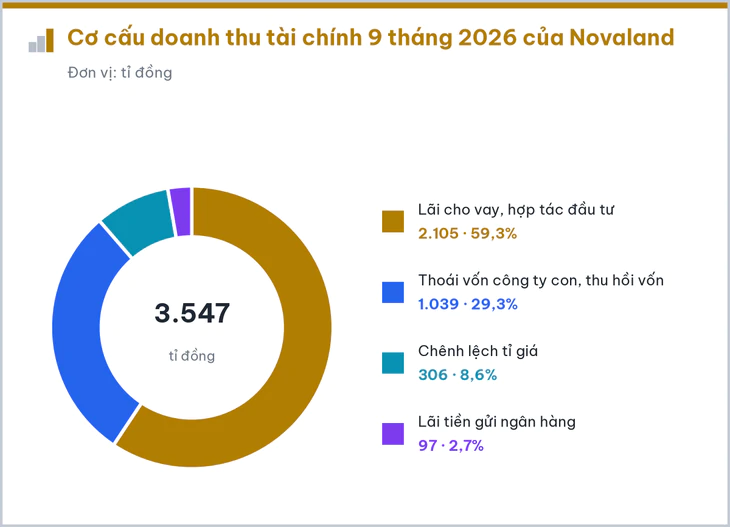
A closer inspection of the nine-month financial results demonstrates that two-thirds of Novaland’s pre-tax profit originated from core sales and project transfers, while the remaining one-third was derived from financial activities. Financial revenue for the period expanded by 2.4 times compared to the prior year. The primary catalysts within this segment included interest earned from loans and investment cooperation contracts, supplemented by approximately 1,039 billion dong realized through the divestment of subsidiaries and the recovery of past investments.
Despite these lucrative asset sales and accounting gains, the corporation’s cash flow dynamics reveal a contrasting narrative. For the first nine months of 2026, Novaland’s net cash flow from operating activities remained negative at 5,364 billion dong, though this figure represents an improvement compared to the cash drain experienced in 2025. Concurrently, the group disbursed 3,740 billion dong toward debt servicing obligations, a sum nearly five times larger than the interest expense explicitly recognized in its income statement.
Conversely, customer advances—representing funds deposited by buyers for residential units pending handover—rose by 15% from the beginning of the year to reach approximately 23,400 billion dong by the end of September. These advances will be formally recognized as revenue upon the physical delivery of properties to clients, providing a critical pipeline of future liquidity once construction milestones are achieved.
Mounting Debt and Overdue Obligations
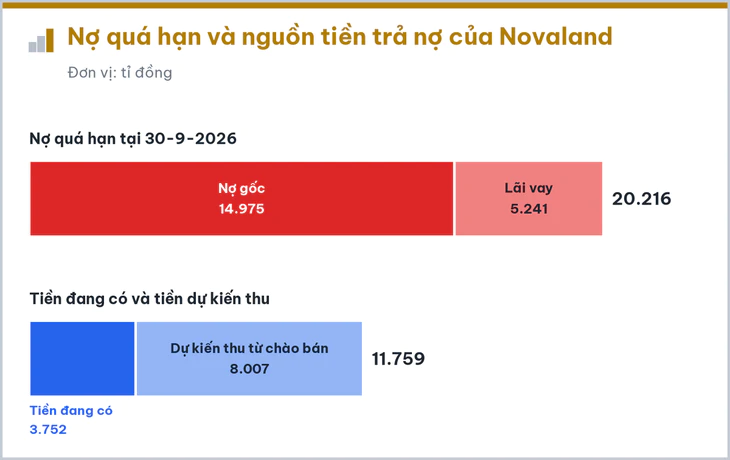
Total outstanding borrowings at the close of the third quarter stood at approximately 72,400 billion dong, showing virtually no significant change since the start of the year. Among these liabilities, 29,750 billion dong represents short-term debt scheduled for repayment within a 12-month window—a figure that towers at nearly eight times the company’s current cash and cash equivalent reserves. Most critically, overdue principal obligations for bank loans and corporate bonds accounted for 14,975 billion dong, accompanied by an additional 5,241 billion dong in overdue interest.
To address the mountain of overdue obligations, Novaland leadership has engaged in continuous negotiations with institutional lenders and bondholders. Proposed resolutions include debt maturity extensions, asset restructuring permitted under legal frameworks, or direct settlement through alternative corporate assets. To date, creditors representing roughly 2,884 billion dong of the overdue debt have formally agreed to terms involving maturity extensions.
Beyond bilateral debt restructuring, Novaland has actively pursued equity-based solutions. Since the beginning of the year, the corporation has issued approximately 164 million private placement shares dedicated to debt-for-equity swaps, alongside another 23 million shares utilized for bond conversions. These capitalization efforts have collectively expanded the group’s total owner’s equity by 13% compared to the beginning of the fiscal year.
Rights Offering and Capital Utilization Strategy
In a further effort to bolster its balance sheet, Novaland initiated a rights offering targeting existing shareholders at a price of 10,000 dong per share, structured on a 3-to-1 ratio where shareholders holding three existing shares are entitled to purchase one new share. If fully subscribed, the offering is projected to yield gross proceeds of 8,007 billion dong, equivalent to roughly 53% of the corporation’s total overdue principal debt as of September 30.
According to the capital utilization plan approved by the board of directors, the entirety of the proceeds generated from the share offering is designated for debt reduction, the fulfillment of mandatory financial obligations, and the settlement of overdue liabilities incurred by the parent company and two key subsidiaries: Nova Saigon Royal and No Va Thao Dien. Novaland officially closed the registration and subscription window on November 26, 2026. Prior to the subscription deadline, market trading for NVL shares closed at 10,300 dong, hovering approximately 3% above the fixed rights offering price and signaling stable investor confidence amid ongoing corporate restructuring.
Broader Implications for the Real Estate Sector
The financial trajectory of Novaland in 2026 serves as a bellwether for Vietnam’s broader real estate market, which continues to navigate a protracted recovery phase following regulatory bottlenecks and liquidity crunches that began in late 2022. Analysts note that while asset monetization and strategic divestments have successfully restored quarterly profitability, the persistent deficit in operating cash flow underscores the reality that real estate developers cannot rely solely on paper gains or portfolio shrinkage to achieve sustainable solvency.
The successful execution of large-scale equity dilutions, such as the recent rights issue and debt-for-equity conversions, reflects a willingness among stakeholders to absorb equity risk in exchange for long-term corporate survival. However, market observers emphasize that the ultimate resolution of Novaland’s financial distress will hinge on the accelerated legal clearance and construction resumption of flagship stalled projects like Aqua City. Restoring buyer confidence and unlocking the delivery pipeline of pre-sold residential units remain essential prerequisites for converting customer advances into positive operating cash flow and ensuring the long-term stabilization of Vietnam’s leading property developers.
Related posts: