Quang Tri Province Inaugurates Festival Marking a Century of Khe Sanh Coffee, Embracing a Legacy of Green Growth and Reconciliation


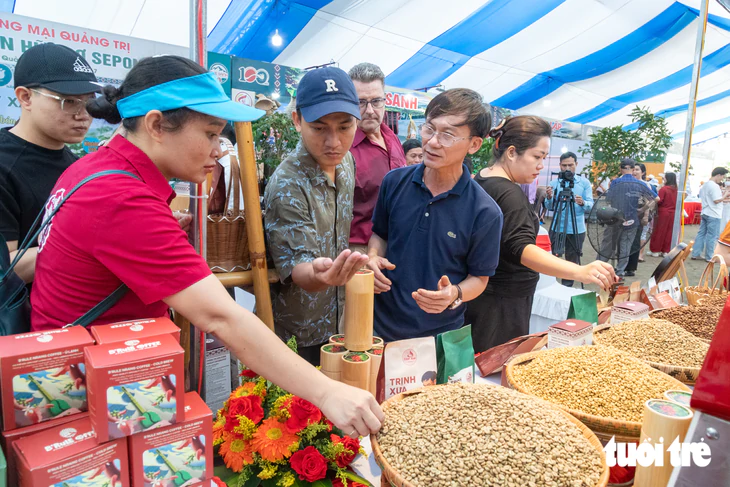
Quang Tri Province officially inaugurated the landmark festival titled "Following the Footsteps of 100 Years of Khe Sanh Coffee" in Khe Sanh commune, marking a transformative century for the iconic crop grown in the rugged western highlands. The multi-day event not only celebrates the deep-rooted agricultural heritage established during the French colonial era but also charts a forward-looking strategy focused on sustainable production, specialty coffee branding, and post-war economic reconciliation.
A Century-Long Agricultural Journey Rooted in Basalt Soil
The history of Khe Sanh coffee dates back to 1926, when French botanist Eugène Poilane introduced the first coffee saplings to the fertile basalt highlands of Quang Tri Province. Characterized by cool temperatures, persistent mountain mists, and the sweeping winds of the Truong Son (Annamite) Range, the region provided a uniquely hospitable microclimate for the crop to flourish. Over the decades, despite enduring the immense devastation and historical upheavals of the Vietnam War, coffee cultivation steadily evolved into a vital economic engine, anchoring the livelihoods of thousands of local ethnic minority households and smallholder farmers.

Speaking at the grand opening ceremony, Mr. Bui Hoang Phuong, Chairman of the People’s Committee of Quang Tri Province, emphasized that the centennial milestone represents far more than a simple agricultural celebration. He described the century-long trajectory of Khe Sanh coffee as a profound journey of ecological and social rebirth for a land once heavily scarred by wartime bombings and defoliants.
"The flavor of Khe Sanh coffee today is not merely a local commodity; it is the crystallization of the earth, the mountain mist, and a powerful testament to peace," Mr. Phuong stated. Highlighting the province’s progressive vision, organizers adopted the poignant thematic message: "Make Coffee, Not War." This powerful slogan serves as a universal invitation, signaling Quang Tri’s definitive transition away from its turbulent past toward international cooperation, sustainable development, and global economic integration. "Commemorating 100 years of coffee in Khe Sanh is an act of gratitude to our past, but more importantly, it is an opening statement to a prosperous new future," he added.
Elevating Quality over Quantity: The Rise of Khe Sanh Specialty Coffee
In structuring the future of its agricultural economy, the provincial leadership of Quang Tri has committed to steering the Khe Sanh coffee sector away from sheer acreage expansion. Instead, the strategic blueprint prioritizes high-value specialty production, environmental sustainability, and brand enhancement.

Current agricultural data indicates that Quang Tri encompasses approximately 3,706 hectares of coffee plantations, generating an annual yield exceeding 4,100 tons and directly supporting more than 8,620 local farming households. The overwhelming majority of the province’s production centers on Arabica varieties, with Catimor constituting a significant share. Cultivated at elevations ranging from 400 to 600 meters above sea level, the coffee benefits significantly from distinct diurnal temperature variations—marked by warm days and cool mountain nights—which facilitate the slow maturation of coffee cherries and the accumulation of complex flavor profiles.
The distinct identity of Khe Sanh coffee stems as much from its nearly century-old production pedigree as it does from its terroir. Local authorities have placed strong emphasis on protecting the official "Khe Sanh" geographical indication. This legal and administrative framework provides the foundation for rigorous quality control, traceability protocols, and enhanced market valuation.
Over recent years, Khe Sanh Arabica has steadily carved out a prestigious reputation across domestic and international specialty coffee circuits. A major turning point occurred during the 2021 Vietnam Specialty Coffee Contest, where Khe Sanh entries achieved remarkable acclaim. A naturally processed sample secured first place, another placed third, and a honey-processed entry met elite national specialty standards.
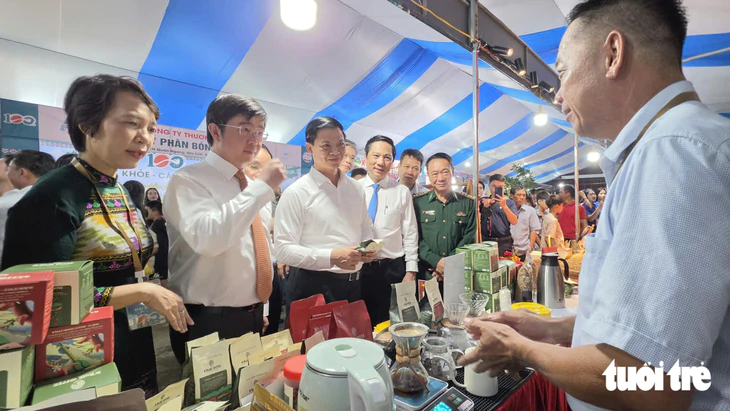
This momentum persisted through subsequent national and international evaluations between 2022 and 2025, with local cooperatives and private enterprises consistently finishing among the top tier. Notably, in 2023, Khe Sanh coffee broke into the global top five at an international specialty coffee competition, validating the meticulous efforts of local producers and agronomists.
Overcoming Structural Challenges Through Sustainable Innovation
Despite these notable accolades, the local coffee industry continues to navigate several structural hurdles. Production remains highly fragmented, dominated by small-scale farming households with uneven application of advanced agronomic practices. Furthermore, supply chain linkages among farmers, agricultural cooperatives, and commercial processing enterprises remain underdeveloped, resulting in a low proportion of deep-processed, high-value-added consumer goods reaching export markets.
To address these vulnerabilities, the provincial government is aggressively implementing structural reforms. A primary initiative involves the establishment of a concentrated 1,000-hectare agro-forestry coffee raw material zone, primarily situated within Huong Phung commune. This initiative is designed to champion high-quality production models that are explicitly engineered to withstand shifting climate patterns while simultaneously reducing carbon emissions across the supply chain.
By integrating climate-smart agriculture with rigorous soil conservation techniques, Quang Tri aims to future-proof its agricultural backbone against environmental volatility. Local agricultural extension offices are actively training farmers in sustainable harvesting, water management, and organic fertilization methods to preserve the integrity of the basalt topsoil.
Weaving History, Culture, and Experiential Tourism
The "Following the Footsteps of 100 Years of Khe Sanh Coffee" festival serves as an overarching umbrella designed to synthesize local history, ethnic minority cultural heritage, and high-end agricultural commerce. Beyond trade exhibitions and barista competitions, the event highlights the integration of coffee farming with experiential rural tourism.
Travelers visiting the western highlands of Quang Tri can now partake in coffee-tasting tours, explore historic plantations established generations ago, and engage directly with the farmers whose ancestors tended the land through decades of conflict and reconstruction. By bridging the gap between historical remembrance and modern agricultural enterprise, Quang Tri Province is successfully rebranding Khe Sanh from a historical symbol of wartime struggle into a vibrant beacon of agricultural excellence, resilience, and sustainable global connection.