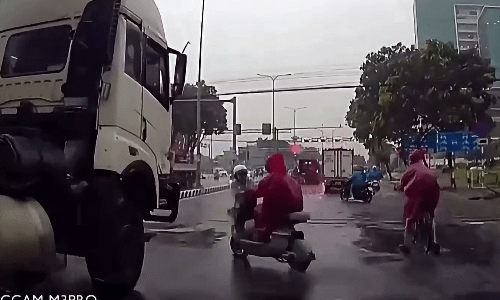
Every day, millions of motorists navigate complex roadways filled with unpredictable hazards, ranging from stray debris and sudden potholes to stalled vehicles and erratic pedestrians. When an unexpected obstacle materializes in a driver’s path, human instinct triggers an immediate, visceral reaction: freeze, panic, and stare directly at the danger. While drivers focus intensely on the threat to avoid a collision, this psychological phenomenon frequently yields the exact opposite result. Instead of steering clear of danger, drivers subconsciously guide their vehicles straight toward the very object they are trying desperately to avoid.
This counterintuitive and often dangerous driving behavior is formally recognized in psychology and traffic safety circles as "target fixation." Understanding the cognitive mechanisms behind target fixation, how it affects motor control, and learning how to retrain visual and physical reflexes can mean the difference between a near-miss and a catastrophic crash.
The Psychology of Target Fixation: Why We Stare at Danger
The term target fixation originates from aviation and combat sports, describing a phenomenon where an individual becomes so fixated on an approaching hazard that their motor functions subconsciously align with their line of sight. According to Dr. Denise Dellarosa Cummins, a cognitive psychologist and author of the book Good Thinking, target fixation occurs when visual attention becomes trapped by a perceived threat.
When a sudden obstacle appears on the road, the human brain instantly prioritizes processing the new risk. Evolutionary biology dictates that humans monitor potential threats continuously to assess their trajectory and danger level. Consequently, drivers naturally lock their gaze onto the hazard. The higher the anxiety surrounding a potential collision, the harder it becomes for the driver to shift their visual focus away from the threat and toward a safe escape route.
This visual lock directly influences physical coordination, particularly steering inputs. Hand-eye coordination ensures that human hands naturally follow where the eyes lead. In high-stress driving scenarios, a driver staring fixedly at a hazard will unconsciously pull or nudge the steering wheel in that exact direction. Instead of steering around the obstacle, the driver steers directly into it, compounding the danger in a matter of milliseconds.
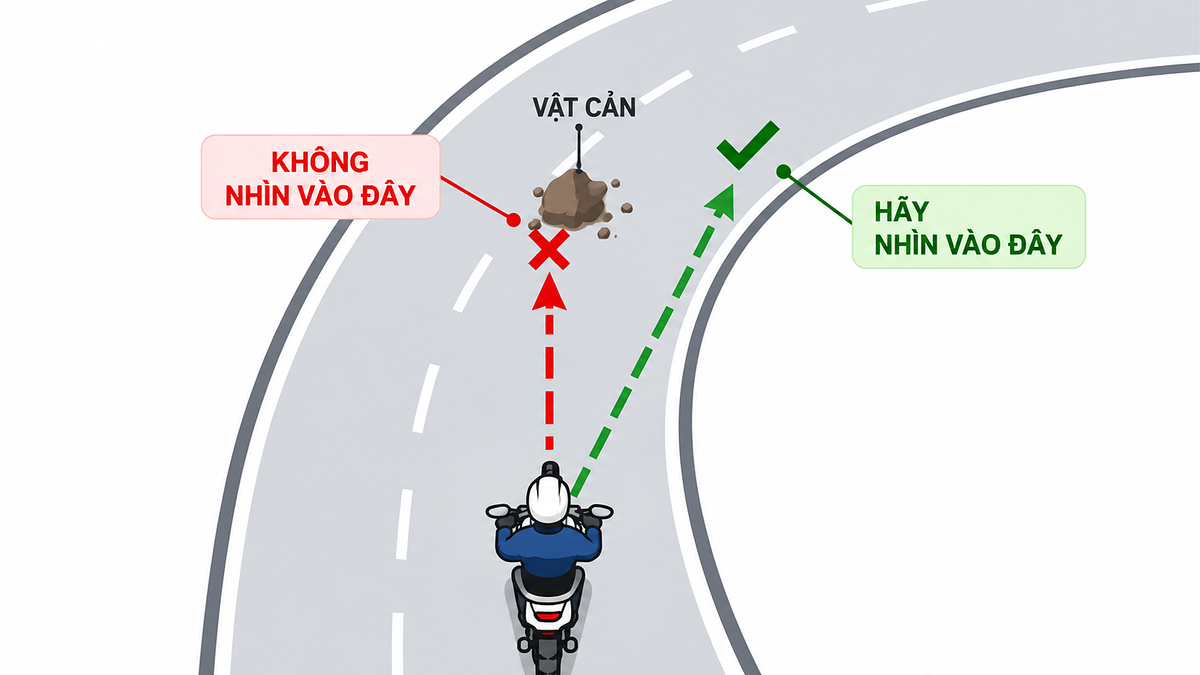
Furthermore, tunnel vision sets in. When visual attention is entirely consumed by a single threat, drivers frequently miss critical surrounding information. Peripheral gaps open up, causing motorists to overlook open lanes on either side, oncoming traffic in adjacent lanes, or the dynamic movements of surrounding vehicles. At high speeds, even a fraction of a second spent staring blindly at an obstacle translates to significant distance traveled, severely shrinking the window of time available to select a safe escape route.
Chronology of a Crisis: The Split-Second Evolution of a Crash
To fully grasp how target fixation leads to accidents, traffic safety researchers have broken down the typical sequence of events during an unexpected road hazard encounter. The chronology of a close call usually unfolds in distinct, rapid-fire phases:
- The Sudden Appearance (T-Minus 2 Seconds): An unexpected obstacle—such as a spilled load from a truck, a disabled vehicle without hazard lights, or a pedestrian stepping into traffic—enters the driver’s field of view.
- The Visual Lock and Panic (T-Minus 1.5 Seconds): The driver’s eyes snap onto the object. Adrenaline surges, and cognitive processing narrows. The driver fixates on the threat, repeating the internal panic phrase: "Don’t hit it, don’t hit it."
- The Unconscious Steering Drift (T-Minus 1.0 Second): Because the driver’s gaze remains locked on the hazard, micro-adjustments in hand placement on the steering wheel cause the vehicle to drift directly toward the object.
- The Critical Decision Window (T-Minus 0.5 Seconds): The driver realizes the vehicle is heading toward the obstacle. A panicked, violent jerk of the steering wheel occurs, frequently resulting in a loss of traction, a spin-out, or an unmitigated collision with either the obstacle or adjacent traffic.
- The Aftermath and Post-Hazard Fixation: Even after successfully clearing an obstacle, many drivers experience secondary target fixation. They continue staring in their mirrors or out the side windows at the hazard they just avoided, failing to re-engage with the road ahead and risking secondary collisions.
Supporting Data and Traffic Safety Statistics
Global transportation safety authorities have long recognized perceptual and cognitive errors as primary contributors to single-vehicle accidents and unexpected collisions. According to comprehensive transportation research studies, human error accounts for over 90% of all traffic collisions, with perceptual misjudgment and delayed reaction times representing a significant percentage of those incidents.
Data compiled by highway safety institutes indicates that distracted or improperly focused vision drastically reduces stopping and maneuvering efficiency. At a highway speed of 100 kilometers per hour (approximately 62 miles per hour), a vehicle covers roughly 28 meters every single second. When a driver experiences target fixation for even 1.5 seconds due to panic, the vehicle travels over 40 meters completely unadjusted, while the driver’s hands actively steer toward the hazard.
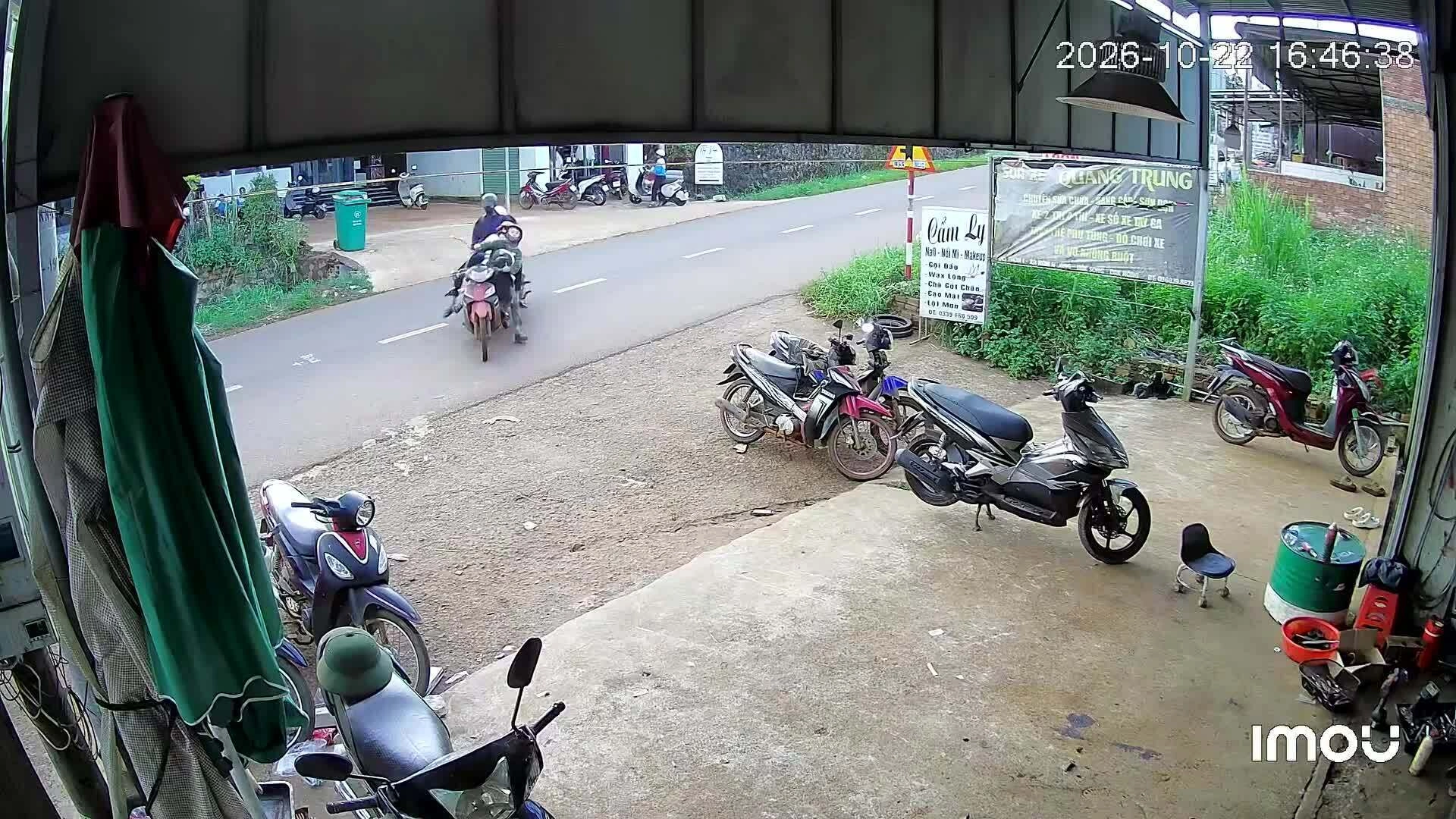
Moreover, data examining motorcyclist safety reveals an even higher vulnerability to target fixation. Because motorcycles require precise counter-steering and dynamic weight distribution, riders who fixate on potholes, gravel patches, or roadside barriers experience a dramatically higher rate of single-vehicle crashes compared to automobile drivers under identical conditions.
Shifting the Paradigm: Look Where You Want to Go
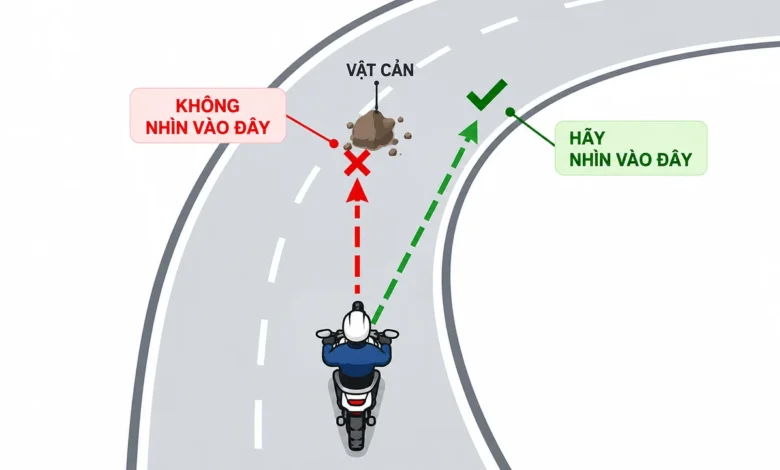
Overcoming target fixation requires a conscious, trained shift in driving philosophy: drivers must look at where they want the vehicle to go, not at what they want to avoid.
Traffic safety experts and advanced driving instructors recommend a structured response protocol when encountering unexpected road hazards:
- Prioritize Early Speed Reduction: The moment an anomaly appears, the first physical action should be controlled, progressive braking. Reducing speed early increases available reaction time and minimizes the severity of any subsequent impact while lowering the need for violent, rushed steering maneuvers.
- Scan for Alternative Escape Routes: While decelerating, the driver must immediately scan the peripheral space around the obstacle to identify open, safe pathways—whether on the left shoulder, the right lane, or an adjacent opening.
- Intentionally Shift the Gaze: Once a safe path is identified, the driver must forcefully break the visual lock on the hazard. By shifting the focal point to the open space or clear lane, the driver’s natural hand-eye coordination will guide the steering wheel smoothly toward safety.
- Execute Controlled Steering Inputs: Steering adjustments must be measured and deliberate. Jerking the steering wheel violently can cause a vehicle to lose stability, cross into opposing traffic, or roll over. If neither side offers a safe escape route, the driver should maintain straight-line braking within their lane rather than forcing a dangerous swerve into unknown traffic.
Broader Impact and Implications for Modern Infrastructure and Autonomous Systems
As traffic density increases globally, infrastructure designers and automotive engineers are actively seeking technological and educational solutions to mitigate the dangers of human perceptual errors like target fixation.
On the educational front, advanced defensive driving academies are incorporating cognitive psychology modules into their standard training curriculums. Rather than merely teaching mechanical vehicle control—such as threshold braking and skid recovery—modern driver education emphasizes gaze-management techniques and hazard anticipation training using simulation technology.
Simultaneously, the rapid advancement of Advanced Driver Assistance Systems (ADAS) and autonomous vehicle technology aims to bypass human cognitive limitations altogether. Modern vehicles equipped with autonomous emergency braking (AEB), lane-keep assist, and 360-degree collision avoidance sensors can detect obstacles significantly faster than human eyes can process them. These systems can execute evasive steering or emergency stopping maneuvers automatically, effectively nullifying the dangers posed by driver panic and target fixation.
However, until fully autonomous transport becomes universal, human drivers remain the primary decision-makers behind the wheel. Recognizing the insidious nature of target fixation—and actively practicing the discipline of looking toward safety rather than danger—remains an essential skill for every motorist navigating today’s roadways.
Related posts: