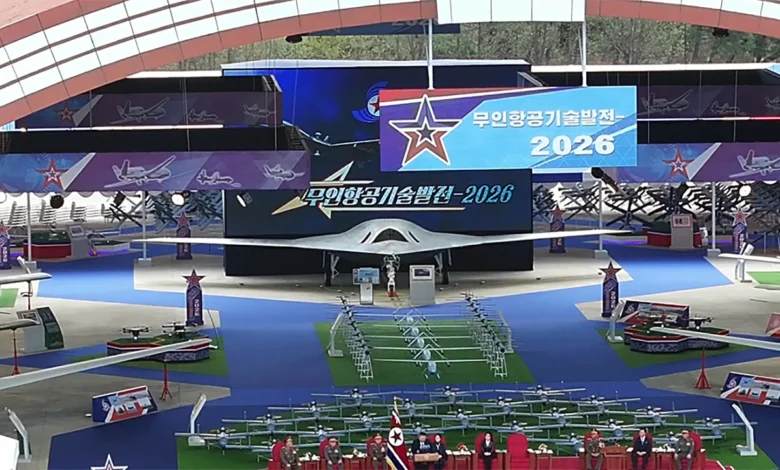
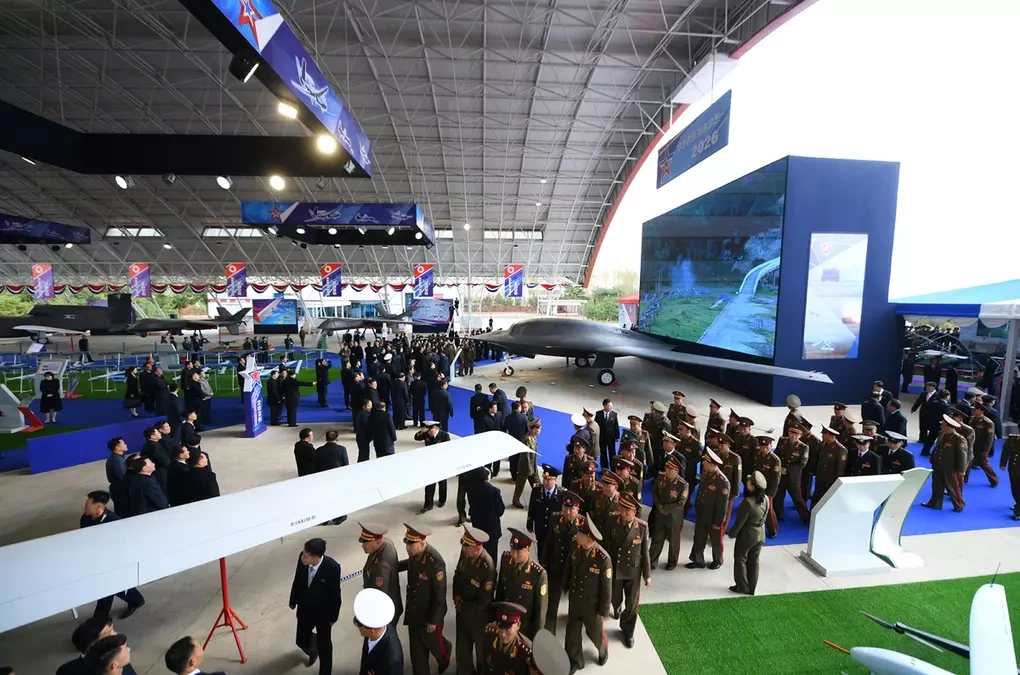
North Korea has unveiled a new, large-scale unmanned aerial vehicle (UAV) featuring a distinctive flying-wing design during the 2026 Defense Development Exhibition, signaling a significant evolution in the country’s aerial warfare capabilities. The aircraft, which bears striking architectural similarities to advanced stealth platforms utilized by major global powers, was displayed prominently at the center of the exhibition floor. While Pyongyang has yet to release an official name, technical specifications, or a detailed development timeline, the appearance of the drone has drawn intense scrutiny from international military analysts who are now evaluating the implications of such a platform for regional security.
Chronology of the Exhibition and Initial Observations
The exhibition, which opened on October 29, 2026, served as a showcase for North Korea’s burgeoning domestic drone program. Among the over 30 different models and unmanned systems on display, the stealth-capable flying-wing UAV stood out as the centerpiece. Military analysts Thomas Newdick and Tyler Rogoway of The War Zone were among the first to note the design’s departure from North Korea’s traditional, rudimentary aerial assets.

The display follows a broader trend in North Korean defense strategy, which has pivoted significantly toward unmanned systems over the past several years. By investing heavily in drone technology, Pyongyang seeks to modernize its military architecture while minimizing the risk to its pilots and circumventing the limitations of its aging crewed aircraft fleet. This shift reflects a recognition that drone-centric warfare provides a cost-effective, asymmetric advantage against more technologically advanced adversaries.
Technical Design and Stealth Characteristics
The newly revealed UAV employs a "flying-wing" configuration, characterized by the absence of a conventional tail, vertical stabilizers, or horizontal tailplanes. In this design, the fuselage and wings are integrated into a single, cohesive structure. This aerodynamic approach is specifically optimized to reduce drag, improve payload capacity, and significantly decrease the aircraft’s Radar Cross-Section (RCS), making it harder for conventional air defense systems to detect.
The air intake is positioned on the top of the fuselage, a strategic placement intended to shield the engine turbine blades from ground-based radar. The turbine blades are typically one of the most reflective components of an aircraft, and by masking them, the design enhances the drone’s overall stealth profile. However, observers have noted that the absence of visible exhaust nozzles—or at least the lack of information regarding the engine’s heat-signature management—leaves critical questions regarding its operational efficacy in a high-threat, modern electronic-warfare environment.
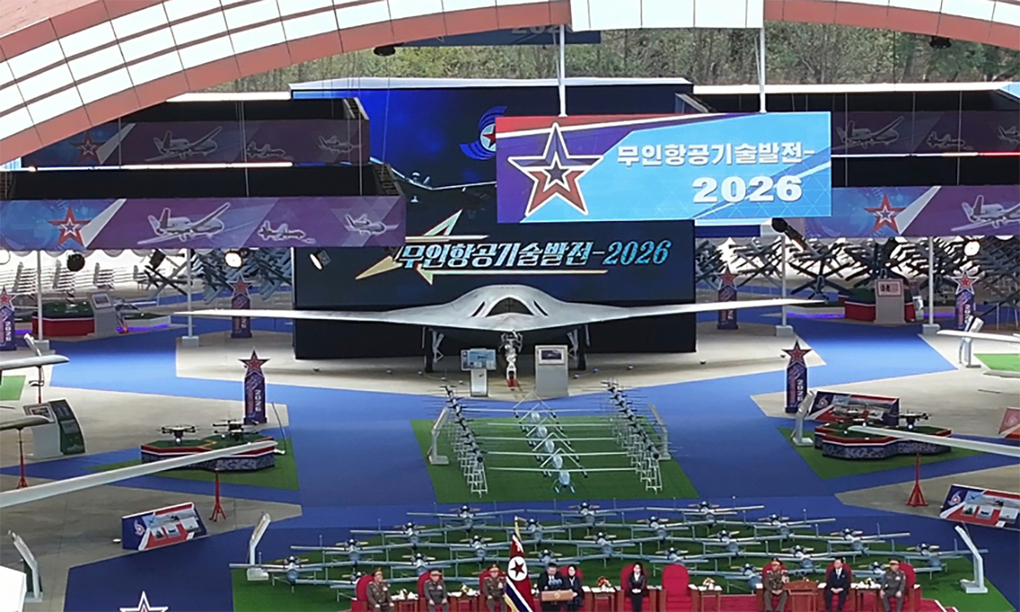
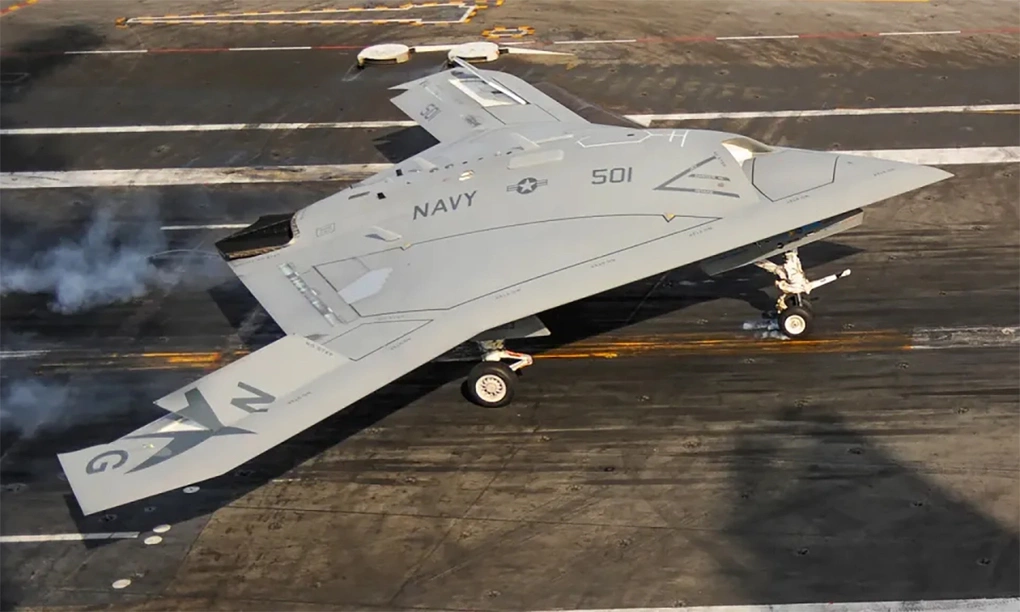
According to Hong Min, a senior analyst at the Korea Institute for National Unification, the UAV is estimated to have a wingspan of approximately 17 to 20 meters and a height of 3 to 3.5 meters. These dimensions place the platform in a weight and capability class similar to the U.S. X-47B, the Russian S-70 Okhotnik, and the Chinese GJ-11.
Expert Analysis and Global Comparisons
The design parallels several established stealth programs. The X-47B, a test platform developed for the U.S. Navy, established the foundational architecture for carrier-based, low-observable drones. The Russian S-70 Okhotnik ("Hunter") and China’s GJ-11 provide closer contemporary examples of how such designs are being transitioned into frontline combat roles.
Despite the visual similarities, military experts remain skeptical about the internal maturity of the North Korean model. "Design is only one part of the equation," note Newdick and Rogoway. "Achieving stealth is a multifaceted engineering challenge that requires mastery of radar-absorbent materials (RAM), precise surface-processing technology, and sophisticated engine-exhaust management. Furthermore, a flying-wing design is notoriously unstable, necessitating an extremely advanced, autonomous flight-control system to maintain flight and ensure safety."
There is currently no confirmed evidence suggesting that North Korea received direct foreign technical assistance in the development of this specific airframe. However, the international defense community is closely watching for signs of technology transfer from Moscow. Given the deepening defense cooperation between Pyongyang and Moscow, particularly in the wake of the ongoing conflict in Ukraine, the possibility of Russian assistance in areas such as sensor integration, flight control algorithms, or composite material manufacturing cannot be dismissed.
The Role of Conflict Experience
The conflict in Ukraine has provided a testing ground for various drone technologies, and North Korea has been a keen observer of these developments. The use of FPV (First-Person View) drones, reconnaissance UAVs, and loitering munitions has redefined modern maneuver warfare.
North Korean personnel involved in the conflict in the Kursk region have gained firsthand experience in modern electronic warfare and drone operations. This experience is likely being fed directly back into their domestic research and development cycles. Analysts believe that Pyongyang is not necessarily aiming for the long-range, high-end capabilities of platforms like the U.S. Global Hawk or MQ-9 Reaper, but rather a high-volume, cost-effective force that can overwhelm South Korean air defense networks.

Implications for Regional Security
The emergence of this stealth-capable UAV presents a unique challenge for South Korea. Current air defense systems, including traditional anti-aircraft artillery and missile batteries, are often optimized to track and intercept conventional, high-speed crewed aircraft or larger, less-maneuverable missiles. A fleet of small, stealthy, and low-flying drones could saturate these networks, forcing South Korea to rely on expensive and scarce interceptors or to accelerate the development of alternative solutions, such as directed-energy (laser) weapons and low-cost anti-drone missile systems.
The strategic rationale behind this investment is clear: Pyongyang is attempting to create a credible threat that forces its neighbors to divert significant financial and military resources into defensive measures. By mass-producing drones that can perform reconnaissance or carry out precision strikes, North Korea effectively changes the calculus of a potential conflict.
Future Trajectory of North Korean Defense
As the exhibition continues, the international community remains wary of the speed at which North Korea is iterating its hardware. Beyond the stealth prototype, the inclusion of models like the "Saetbyol-4" and "Saetbyol-9"—which resemble the RQ-4 Global Hawk and MQ-9 Reaper—underscores a diversified approach to aerial warfare.
The prevailing view among intelligence and military experts is that North Korea will continue to prioritize the expansion of its drone fleet. While the "stealth" claims surrounding the new prototype require verification through flight testing and operational deployment, the intent is clear: to field a modern, diversified, and resilient unmanned aerial force. As North Korea integrates its domestic manufacturing capacity with the lessons learned from global hotspots, the regional security architecture in Northeast Asia faces an increasingly complex and unpredictable future. The ability of South Korea and its allies to adapt their defensive postures to counter this swarm-capable, low-observable threat will be a critical focal point of defense policy for the remainder of the decade.