Decoding the 5-Year Tire Replacement Myth: When Do Car Tires Actually Need to Be Changed?

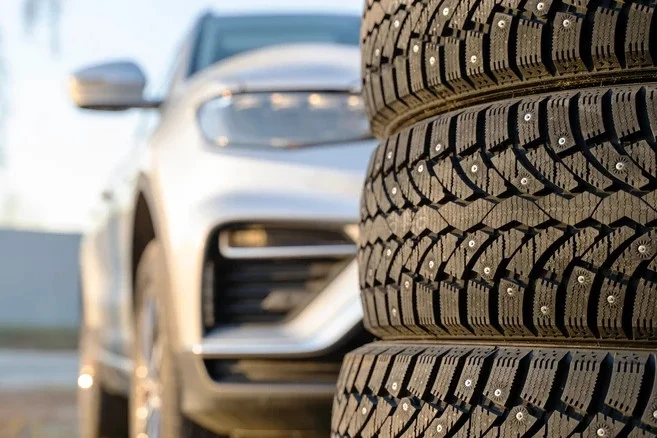
For decades, a widely accepted rule of thumb has guided vehicle maintenance protocols across the globe: automobile tires must be replaced every five years from their date of manufacture, regardless of their visual condition or the depth of their tread. This standard has long been advocated by various industry stakeholders, automotive mechanics, and safety organizations as a critical threshold to prevent catastrophic failures on the road. However, with continuous advancements in material science, chemical engineering, and manufacturing technology, automotive experts are increasingly questioning whether this arbitrary five-year timeline remains relevant in the modern era of vehicle ownership.
According to insights compiled by automotive publication Carscoops, while the five-year mark serves as an important psychological and technical milestone to begin rigorous, routine inspections, it does not automatically dictate an immediate replacement. Under optimal storage, maintenance, and environmental conditions, modern tires can often safely perform for six to seven years, or occasionally even longer. Understanding the delicate balance between calendar aging, environmental degradation, mileage accumulation, and structural integrity is essential for modern drivers striving to optimize safety without incurring unnecessary maintenance expenditures.
The Chemistry of Tire Aging: Why Rubber Decays Even While Parked
One of the most persistent misconceptions among vehicle owners is that a brand-new tire stored in a warehouse or kept as an unused spare remains indefinitely pristine. In reality, automotive tires begin aging the moment they are manufactured, undergoing continuous chemical transformations even if they never touch a rolling paved surface. The primary vulnerability stems from the complex organic compounds and synthetic polymers used in rubber formulation. Over time, these chemical bonds are systematically altered through thermo-oxidative processes, gradually stripping the material of its initial elasticity, flexibility, and high-traction characteristics.
This degradation process is heavily influenced by environmental factors. Exposure to elevated ambient temperatures, ultraviolet (UV) radiation from sunlight, atmospheric ozone, and road salts accelerates the breakdown of the rubber matrix. At a microscopic level, initial aging manifests as hairline cracking along the sidewalls and tread grooves. While these micro-fissures are initially too small to detect with the naked eye, they progressively expand under continuous mechanical stress. When visible cracks eventually emerge, the tire’s structural load-bearing capacity becomes severely compromised, dramatically escalating the risk of rapid air loss, tread separation, or blowout during high-speed transit.
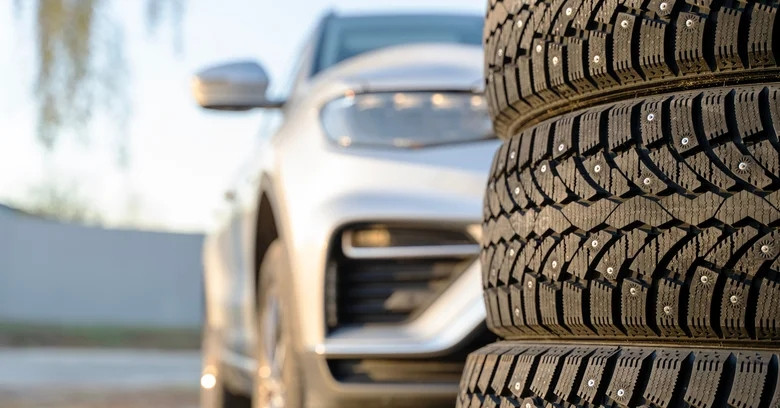
Furthermore, storage conditions play a monumental role in determining the longevity of uninstalled rubber. Tires stored in dark, temperature-controlled, and dry indoor environments experience a significantly decelerated aging process compared to those kept in harsh conditions. For instance, spare tires mounted externally on the rear of a vehicle or stowed insecurely beneath the chassis are subjected to persistent temperature fluctuations, moisture, dust, and direct sunlight. Consequently, these neglected spares often age prematurely, presenting hidden safety hazards when deployed during an emergency roadside wheel change.
Decoding Manufacturing Date Codes and Warehouse Storage Realities
To navigate the complexities of tire procurement, consumers must familiarize themselves with the Department of Transportation (DOT) serial number stamped directly onto the tire sidewall. This standardized four-digit code provides the exact chronological origin of the product. The first two digits signify the production week, while the final two digits represent the manufacturing year. For example, a code reading 3526 indicates that the tire was manufactured during the 35th week of the year 2026.
When purchasing replacement tires, motorists are universally advised to prioritize products with a manufacturing date as close to the purchase point as possible. Tires that have spent several months in inventory can generally be installed and operated without issue, provided they have been stored correctly. However, if a tire has languished in a distributor’s warehouse for nearly a year or longer, buyers are fully justified in negotiating a price reduction or requesting a fresher batch.
Industry analysts emphasize that while retailers maintain inventory turnover goals, consumers should actively inspect the DOT codes prior to authorizing installation. The compounding effects of warehouse shelf life combined with active operational service dictate that a tire’s total lifespan is a cumulative timeline of both storage and driving conditions.
Manufacturer Guidelines: Balancing Safety Margins and Practical Reality

Major global tire manufacturers, including industry giants like Michelin, Continental, Bridgestone, and Goodyear, have established multi-tiered recommendation frameworks regarding tire aging and replacement protocols. According to Michelin’s technical guidelines highlighted by Carscoops, once a tire reaches five years of service, it should undergo a comprehensive annual inspection conducted by a certified professional technician.
As tires approach the six-to-eight-year bracket, manufacturers recommend increasing inspection frequencies to at least twice per year. The consensus across the global manufacturing sector points toward a mandatory replacement window between eight and ten years. Crucially, industry standards dictate that any tire reaching ten years of age from its manufacturing date must be retired and replaced immediately, regardless of whether the tread depth appears superficially adequate and no external damage is visible.
During these professional evaluations, certified technicians execute meticulous examinations of the tire architecture. The inspection protocol focuses heavily on the sidewalls—the structural zones experiencing extreme cyclical flexing during vehicle operation. Technicians actively search for internal cord exposure, bulging, deformation, cracking, and localized wear patterns. Additionally, the tread face, circumferential grooves, and shoulder blocks are scrutinized for embedded foreign objects, punctures, or chemical contamination. In advanced diagnostic scenarios, technicians may dismount the tire from the rim to inspect the interior liner for hidden stress fractures or degradation caused by prolonged operation at incorrect inflation pressures.
Mileage Versus Calendar Aging: The Dual Metrics of Wear
A critical variable in determining replacement intervals is the interplay between calendar age and total mileage accumulation. Driving habits vary drastically among motorists, creating distinct wear profiles that challenge standard maintenance rules.
Consider two contrasting driving profiles:
- High-Mileage Commuters: Vehicles that travel approximately 15,000 miles (roughly 24,140 kilometers) annually will typically experience accelerated tread wear. For these drivers, the tread rubber will wear down to legal safety limits (typically 2/32 of an inch or 1.6 millimeters) well before the tire reaches its five-year chronological limit. In this scenario, mechanical friction and road abrasion dictate the replacement schedule.
- Low-Mileage Urban Drivers: Vehicles that cover a modest 5,000 miles (approximately 8,050 kilometers) or less per year may retain significant tread depth even after six or seven years of ownership. However, automotive safety experts warn that sufficient tread depth does not equate to structural safety. The chemical aging of the rubber compound proceeds independently of road friction. Therefore, low-mileage vehicles face a higher statistical risk of sudden rubber failure due to material embrittlement rather than tread depletion.
This divergence underscores why relying exclusively on a single metric—such as the odometer reading, tread depth gauges, or the five-year calendar rule—is fundamentally flawed. Vehicle operators must evaluate rubber degradation, mileage output, operating environments, and historical maintenance logs as interconnected variables.
The Hidden Menace of Improper Inflation and Environmental Stressors
Beyond environmental exposure and chronological age, day-to-day operational practices exert a profound influence on tire longevity. Operating a vehicle with incorrect tire pressure stands out as a primary catalyst for accelerated degradation.
Under-inflated tires suffer from excessive flexing of the sidewalls and heightened friction across the contact patch. This continuous mechanical abuse generates intense internal heat, causing the structural compounds to break down at an exponential rate. The elevated operating temperatures supercharge the oxidation of the rubber matrix, transforming a healthy tire into a brittle, failure-prone hazard long before its expected expiration date. Conversely, over-inflation reduces the contact footprint, leading to uneven center tread wear, compromised braking performance, and increased vulnerability to impact damage from road potholes and debris.
Furthermore, external chemical agents found in specific regional environments can sabotage tire integrity. Vehicles operating in coastal zones with high atmospheric salt concentrations, or in northern climates where winter roads are heavily treated with de-icing chemicals, experience accelerated surface corrosion and rubber degradation. These corrosive agents penetrate microscopic pores in the rubber, weakening the internal steel belts and polyester body plies over time.
Broader Implications for Fleet Management and Consumer Safety

The ongoing reassessment of the five-year tire replacement rule carries significant economic and ecological implications for the global automotive sector. Billions of tires are manufactured, sold, and discarded annually. Prematurely discarding perfectly functional tires purely based on an arbitrary chronological benchmark generates unnecessary financial strain for vehicle owners and contributes to mounting environmental waste streams in global landfills.
Conversely, extending tire service life without stringent professional oversight introduces severe safety liabilities. Tire failure at highway speeds frequently results in catastrophic loss of vehicle control, triggering multi-vehicle collisions, severe injuries, and fatalities. Therefore, regulatory bodies and consumer advocacy groups emphasize that flexibility in maintenance schedules must be balanced with uncompromising safety audits.
Modern vehicle maintenance demands a sophisticated, multi-faceted approach. Motorists are advised to shift away from rigid adherence to the five-year rule as a strict disposal deadline, viewing it instead as a critical threshold for heightened vigilance. By combining routine visual checks, professional workshop inspections, diligent monitoring of inflation pressures, and careful tracking of manufacturing date codes, drivers can safely maximize the service life of their tires without compromising road safety. Ultimately, the decision to replace a set of tires should be driven by a holistic assessment of rubber chemistry, structural health, environmental exposure, and operational wear—ensuring that every journey remains as safe and secure as possible.