Chronic Tonsillitis and Adenoid Hypertrophy Cause Serious Hearing Loss in Ten-Year-Old Child

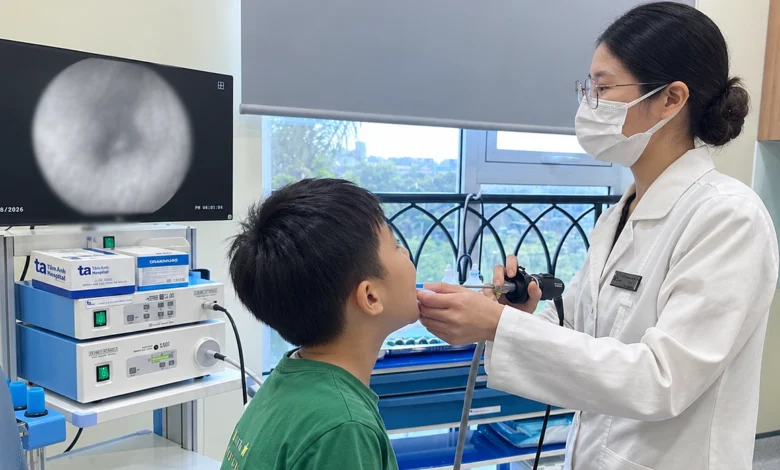
A ten-year-old boy, identified by the pseudonym Quang, recently underwent a complex surgical intervention at Tam Anh General Hospital in Hanoi after suffering from severe, recurring upper respiratory issues that resulted in significant hearing impairment. Medical professionals discovered that chronic inflammation of the adenoids and tonsils had progressed to a critical stage, causing the boy’s eardrums to collapse and compromising his ability to hear clearly. This case highlights the often-overlooked systemic connections between pediatric ear, nose, and throat (ENT) health and long-term sensory development.
The Clinical Diagnosis: A Cascade of Complications
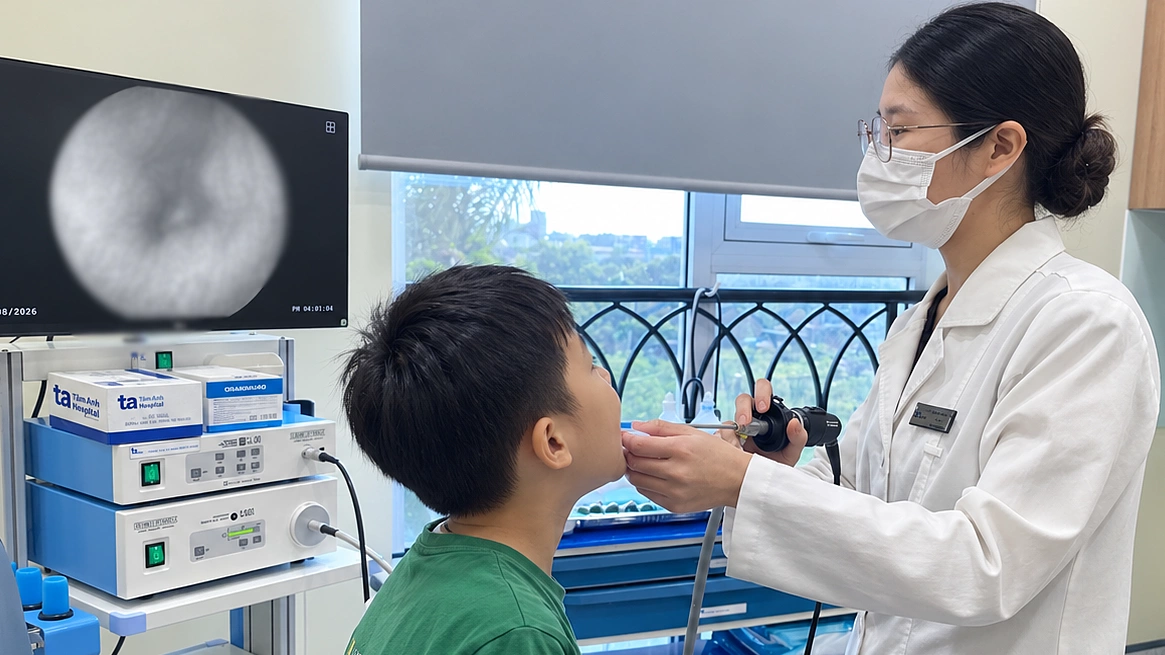
Upon performing a diagnostic nasopharyngoscopy, surgeons at Tam Anh General Hospital identified that Quang’s adenoids—a mass of lymphoid tissue situated at the back of the nasal cavity—had reached a grade 3-4 hypertrophy. Simultaneously, his tonsils were classified as grade 3. The chronic inflammation had resulted in persistent mucosal swelling and a buildup of fluid in the nasopharynx.
Dr. Tran Thuy Hoa, a specialist in the Department of Otolaryngology at the hospital, explained that the primary cause of the child’s hearing loss was the physical obstruction of the eustachian tubes. "The adenoids had become so enlarged due to recurrent infections that they completely blocked the posterior nasal passages and the openings of the eustachian tubes," Dr. Hoa noted. "Because the middle ear could no longer be ventilated, the resulting negative pressure acted like a vacuum, pulling the eardrums inward. This state, known as a retracted eardrum, severely inhibited the transmission of sound vibrations, leading to the patient’s diminished hearing capacity."
Beyond the auditory complications, the hypertrophy created a significant upper airway obstruction. This forced the child to breathe through his mouth consistently, a condition that disrupts sleep quality and can lead to long-term developmental issues if left unaddressed.
Surgical Intervention and Timeline of Recovery
Given the severity of the obstruction and the impact on the child’s quality of life, the medical team opted for a dual surgical approach. The procedure involved an adenoidectomy and a tonsillectomy, performed using Coblator technology. This advanced radiofrequency device allows for precise tissue removal while simultaneously coagulating blood vessels, which significantly reduces the risk of intraoperative bleeding and minimizes thermal damage to surrounding healthy tissue.
To address the immediate hearing deficit, the surgeons also performed a myringotomy with the insertion of pressure-equalization tubes (grommets) into the eardrums. These tiny tubes create an artificial passage for airflow, allowing the pressure within the middle ear to stabilize and preventing the eardrums from being pulled further inward.
The recovery timeline was closely monitored:
- Initial Post-Op (Days 1–3): The patient remained under observation to manage pain and ensure there was no postoperative hemorrhage.
- Intermediate Recovery (Day 12): During a follow-up assessment, clinicians noted that the child’s nasal obstruction had completely resolved, and the pathological discharge had ceased. The ear tubes were functioning correctly, and the eardrums showed signs of returning to a more anatomical position.
- Long-term Outlook (3 Months): Medical expectations are that the middle ear environment will stabilize within three months. At that stage, the pressure-equalization tubes are expected to extrude naturally as the eardrums heal, eventually restoring the child’s hearing to near-normal levels.
Supporting Data on Pediatric ENT Health
The case of Quang is not an isolated incident but rather a symptomatic example of the risks associated with untreated pediatric upper respiratory infections. According to clinical data, adenoid hypertrophy is a common condition in children aged three to ten. When chronic, it is associated with a 30% to 40% increased risk of otitis media with effusion—the very condition that led to the boy’s hearing loss.
Epidemiological studies suggest that up to 15% of school-aged children may experience some degree of temporary hearing loss due to fluid accumulation in the middle ear caused by adenoid or tonsillar issues. If left untreated, this can progress from temporary conductive hearing loss to permanent damage or chronic ear infections that may necessitate more invasive surgery later in life.
Clinical Analysis: The Link Between Sleep and Hearing
Medical professionals emphasize that parents should view symptoms such as chronic mouth breathing, snoring, and restlessness during sleep as indicators of underlying structural issues. When a child is forced to compensate for nasal blockage, the body is deprived of optimal oxygen intake.
"When a child is frequently asking for things to be repeated, showing signs of poor concentration at school, or appearing distracted, it is often assumed to be a behavioral or academic issue," Dr. Hoa explained. "However, in many cases, we find an underlying physical blockage. The ears and the nose are intrinsically linked. By ignoring the ‘snoring’ or ‘mouth breathing’ phase, parents may inadvertently allow a condition to worsen until it impacts the child’s sensory organs."
Recommendations for Parents and Guardians
The medical team at Tam Anh General Hospital has issued a set of clinical recommendations for parents concerned about their child’s ENT health. They advise seeking professional consultation if a child exhibits:
- Prolonged Mouth Breathing: Particularly if it persists during the day.
- Sleep Disturbances: Including habitual snoring or restless sleep patterns.
- Communication Difficulties: A consistent habit of asking others to repeat themselves or turning up the volume on electronic devices.
- Academic Challenges: Sudden drops in concentration or performance that may be linked to undetected hearing difficulties.
The Broader Impact on Pediatric Care
This case underscores the importance of a multidisciplinary approach to pediatric ENT care. Modern surgical techniques like Coblator ablation have revolutionized the treatment of tonsillar and adenoid conditions, offering shorter recovery times and higher safety profiles compared to traditional cold-steel dissection.
However, the efficacy of these procedures remains dependent on early detection. The long-term implication for public health is clear: pediatricians and school health programs must prioritize routine ENT screenings to catch airway and auditory obstructions before they result in structural changes to the middle ear.
For parents whose children have undergone similar procedures, follow-up care is essential. Adherence to postoperative guidelines, such as proper wound care and attending scheduled follow-up visits, is critical. Any sign of postoperative bleeding, difficulty breathing, or inability to swallow liquids should be treated as a medical emergency, requiring immediate evaluation at a qualified facility.
As the medical field continues to advance, the integration of minimally invasive technology and early diagnostic screening remains the most effective defense against the long-term sequelae of chronic tonsillitis and adenoid hypertrophy. For Quang, the successful surgery marked the end of a difficult period, restoring not only his physical comfort but his ability to engage fully with the world around him.