Mitsubishi Outlander Prepares for Vietnamese Market Return in December 2026 with All-New Generation Amid Fierce C-SUV Competition

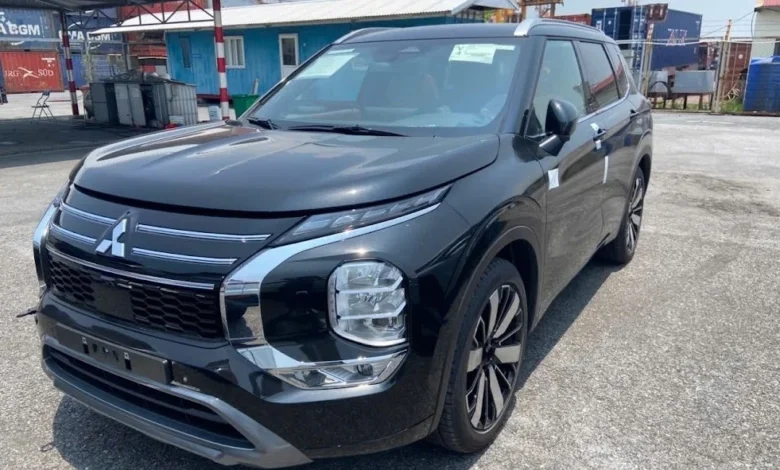
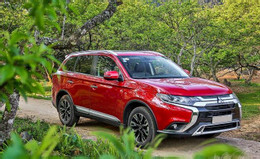
After an absence of roughly one year from the Vietnamese automotive landscape, the Mitsubishi Outlander is gearing up for a strategic return. Industry sources indicate that the latest iteration of the Japanese brand’s flagship crossover is scheduled for an official market introduction in early December 2026. Recent sightings of unmasked Outlander models arriving at domestic ports have generated substantial buzz across automotive forums and social media channels. While Mitsubishi Motors Vietnam (MMV) previously hinted at a December release window, final pricing and definitive specification details remain tightly under wraps.
The impending relaunch marks a critical chapter for a nameplate with a deep-rooted history in Vietnam, yet it also exposes the vehicle to an entirely transformed and vastly more competitive segment. The C-SUV landscape that the new Outlander is re-entering bears little resemblance to the market it quietly exited in late 2025. With shifting consumer preferences, aggressive pricing strategies from rival automakers, and an influx of new market entrants, the Japanese SUV faces a daunting uphill battle to reclaim its former standing.
A Storied Lineage: From Japanese Import to Domestic Assembly and Back
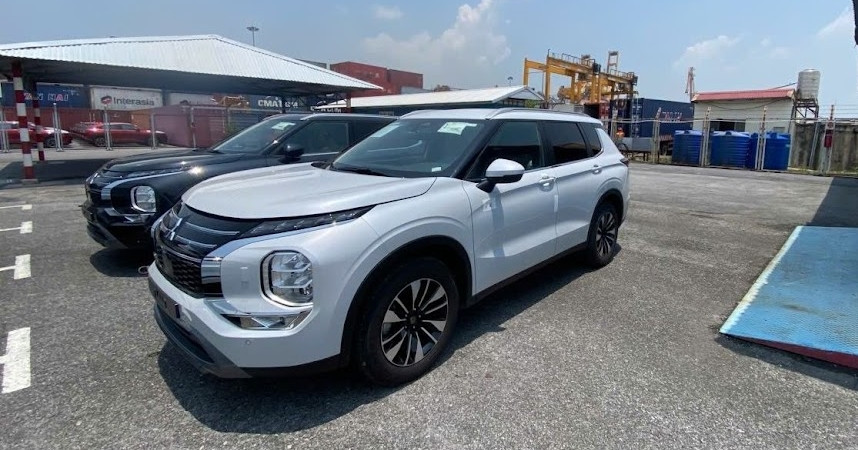
Tracing its origins back to 2001 globally, the Mitsubishi Outlander has evolved across five distinct generations. Its journey in Vietnam began in 2016 when Mitsubishi Motors initially introduced the crossover as a fully imported CBU (Completely Built-Up) vehicle sourced directly from Japan. Capitalizing on early favorable reception and growing demand for multi-purpose family vehicles, the company transitioned to CKD (Completely Knocked Down) local assembly at its Vietnamese facility to optimize production costs and improve supply chain stability.
During its local production run, the Outlander underwent several minor cosmetic updates and feature enhancements. However, intensifying pressure from segment heavyweights ultimately eroded its competitive edge. Sales figures dwindled significantly, prompting MMV to suspend local production and sales of the crossover in November 2025 after a prolonged period of underwhelming commercial performance. Official registry data highlighted the extent of this decline, showing that only 362 units of the Outlander were sold during the first ten months of 2025—a stark contrast to its historical sales targets. Despite earning praise from owners for its ride stability, effective cabin sound insulation, and reasonable maintenance costs, the outgoing model’s aging design and stagnant feature set could no longer sustain consumer interest.
Shifting Strategies: Importing from Japan and New Product Positioning
For its 2026 comeback, Mitsubishi has pivoted away from local assembly, opting instead to source the new Outlander generation exclusively as an imported CBU model from Japan. This strategic shift is expected to influence the vehicle’s pricing structure and market positioning significantly.
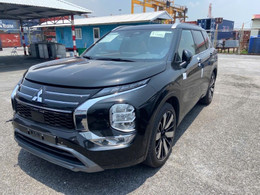
Externally, the new Outlander maintains Mitsubishi’s signature Dynamic Shield design language, though the overall aesthetic has been modernized with sharper lines, bolder lighting signatures, and a more commanding stance. Inside the cabin, the vehicle receives a comprehensive overhaul. Premium touches include Semi-Aniline leather upholstery, a tri-zone automatic climate control system, a crisp 12.3-inch digital instrument cluster, and an upscale Yamaha Ultimate audio system.
One of the Outlander’s defining traditional advantages—its spacious 5+2 seating configuration featuring a third row that can be folded flat to expand cargo capacity—remains a core selling point. This layout provides a distinct edge over strict five-seater rivals like the Mazda CX-5, Ford Territory, and Hyundai Tucson. However, international automotive reviews have consistently noted that the third row remains relatively tight, best suited for children or short trips rather than long-distance adult travel.
Performance Dynamics and Technical Specifications
Under the hood, international variants of the new Mitsubishi Outlander utilize a modern 1.5-liter turbocharged gasoline engine integrated with mild-hybrid (MHEV) technology. This powertrain generates approximately 174 horsepower and 279 Nm of torque, channeled through a Continuously Variable Transmission (CVT).
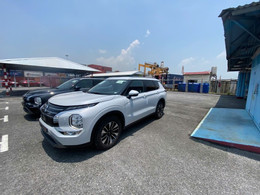
On paper, these performance metrics place the Outlander ahead of entry-level naturally aspirated competitors such as the Mazda CX-5 2.0L and Hyundai Tucson 2.0L, as well as its corporate sibling, the Mitsubishi Destinator. However, it trails behind higher-performance forced-induction options like the Honda CR-V or the turbocharged Hyundai Tucson 1.6L. A notable mechanical advantage for the Mitsubishi offering is its proprietary Super All-Wheel Control (S-AWC) four-wheel-drive system, whereas the vast majority of competitors in the mainstream C-SUV segment rely solely on front-wheel-drive (FWD) configurations.
While manufacturer statements confirm that the new generation will be produced exclusively in Japan for global export, MMV has yet to confirm the exact powertrain options and trim levels designated specifically for Vietnamese consumers.
Navigating a Radically Altered C-SUV Landscape
When the Outlander officially goes on sale in December 2026, it will step into a C-SUV arena that is significantly more crowded and fiercely contested than it was a year ago. The market dynamics have shifted drastically, driven by aggressive discounting, frequent product refreshes, and an expanding roster of competitors.
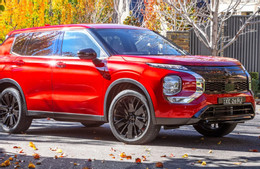
Mazda CX-5 remains the undisputed volume leader of the segment, buoyed by a low entry price point starting around 699 million VND and consistent promotional campaigns at nationwide dealerships. Meanwhile, established heavyweights including the Ford Territory, Hyundai Tucson, Honda CR-V, KIA Sportage, and Subaru Forester continuously refine their lineups and incentives to capture market share. Adding to the competitive pressure, the past year has witnessed the rapid expansion of Chinese automotive brands in Vietnam, leveraging aggressive pricing, striking modern designs, and advanced technology suites to attract budget-conscious tech-savvy buyers.
Internal Competition: The Destinator Factor
Complicating Mitsubishi’s market strategy further is the presence of the Mitsubishi Destinator within its own domestic portfolio. Positioned squarely in the C-SUV segment with a 7-seat configuration and a pricing bracket ranging from 780 to 855 million VND, the Destinator has quickly established itself as a commercial success since its introduction, frequently appearing on bestseller lists for utility vehicles in Vietnam.
This overlap creates a delicate balancing act for MMV. Leadership must carefully differentiate the incoming imported Outlander from the locally accessible Destinator to prevent cannibalization within its own showrooms, as both models target family-oriented buyers seeking spacious multi-passenger SUVs.
Pricing Strategy as the Ultimate Decisive Factor
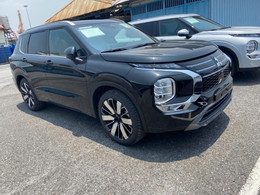
Industry analysts emphasize that pricing will ultimately make or break the Outlander’s re-entry campaign. Prior to its discontinuation in late 2025, the Outlander retailed between 825 and 950 million VND. Transitioning from domestic assembly to Japanese CBU imports inherently introduces cost pressures that make significant price reductions difficult.
If Mitsubishi prices the new Outlander too high, it risks being marginalized by the dominant Mazda CX-5 and other established rivals. Conversely, pricing the vehicle too closely to the Destinator could create internal market confusion. To succeed, MMV must strike a delicate balance—pairing the vehicle’s high-end Japanese craftsmanship, advanced S-AWC drivetrain, and modern technology upgrades with a compelling and competitive price tag that convinces Vietnamese consumers to return to the brand.
Comparative Overview of the New Mitsubishi Outlander and Key Competitors
| Specification | Mitsubishi Outlander (New Generation) | Mazda CX-5 | Honda CR-V | Hyundai Tucson |
|---|---|---|---|---|
| Dimensions (L x W x H) | 4,710 x 1,862 x 1,750 mm | 4,590 x 1,845 x 1,680 mm | 4,691 x 1,866 x 1,681 mm | 4,640 x 1,865 x 1,665 mm |
| Wheelbase | 2,705 mm | 2,700 mm | 2,701 mm | 2,755 mm |
| Ground Clearance | 210 mm | 200 mm | 198–208 mm | 181 mm |
| Engine Options | 1.5L Turbo, 48V Mild-Hybrid | 2.0L / 2.5L Gasoline | 1.5L Turbo / 2.0L Hybrid | 2.0L / 1.6L Turbo / 2.0L Diesel |
| Power Output | 174 horsepower | 154 / 188 horsepower | 188 / 204 horsepower | 156 / 180 / 186 horsepower |
| Transmission | CVT | 6-speed Automatic | CVT or e-CVT | 6AT, 7-speed DCT, 8AT |
| Drivetrain | S-AWC 4-Wheel Drive | FWD / AWD | FWD / AWD | FWD |
| Estimated Retail Price | Approx. 900+ million VND | 699 – 979 million VND | 1.039 – 1.25 billion VND | 769 – 989 million VND |
| Origin | Japan | Vietnam | Vietnam | Vietnam |
As the countdown to December 2026 continues, automotive enthusiasts and prospective buyers alike watch closely to see how Mitsubishi executes its comeback strategy. The success of the new Outlander will not only determine the future of the nameplate in Southeast Asia’s rapidly developing automotive market but will also test the manufacturer’s agility in adapting to shifting consumer demands in an unforgiving economic climate.
Related posts: