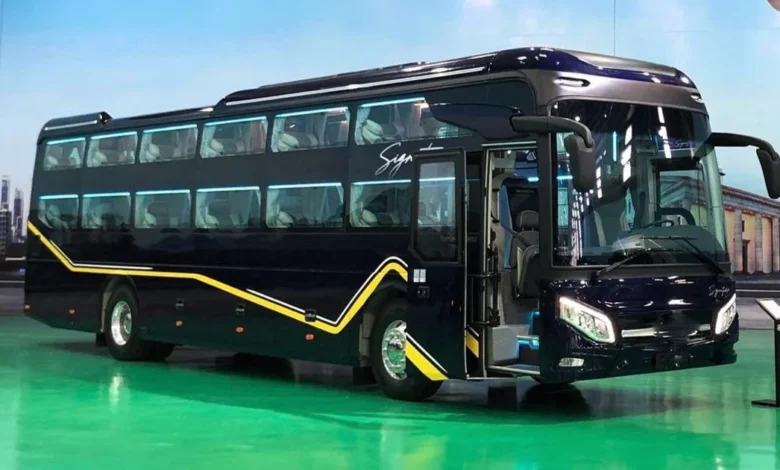
The recent tragic fire involving a long-distance passenger bus in Dong Nai province, which resulted in the deaths of seven individuals, has reignited a critical debate regarding vehicle safety and design standards in Vietnam. As the community mourns the loss of life, a recurring question has surfaced among the public and safety experts alike: Why do large vehicles designed to transport dozens of passengers frequently feature only a single primary entrance and exit? This inquiry delves into a complex intersection of national transport regulations, mechanical engineering constraints, and the economic realities of the transportation industry.
The Dong Nai Incident: A Catalyst for Safety Re-evaluation
The tragedy in Dong Nai serves as a somber backdrop to this technical investigation. According to preliminary reports, the fire broke out with such intensity and speed that many passengers were unable to evacuate in time. In the aftermath, survivors and witnesses pointed to the difficulty of exiting the vehicle as a primary factor in the high casualty count. This incident is not an isolated one; over the past decade, several high-profile bus fires across Southeast Asia have raised similar concerns about whether the current design of long-distance coaches provides an adequate "window of survival" during a catastrophic event.
When a fire occurs within the confined space of a bus, the "golden period" for evacuation is typically less than three minutes before smoke inhalation and heat become fatal. In vehicles where only one door is available, a bottleneck effect is almost inevitable, especially if the fire originates near that single exit or if the electronic door-opening mechanism fails due to a power cut caused by the blaze.
Understanding the Legal Framework: QCVN 09:2024/BGTVT
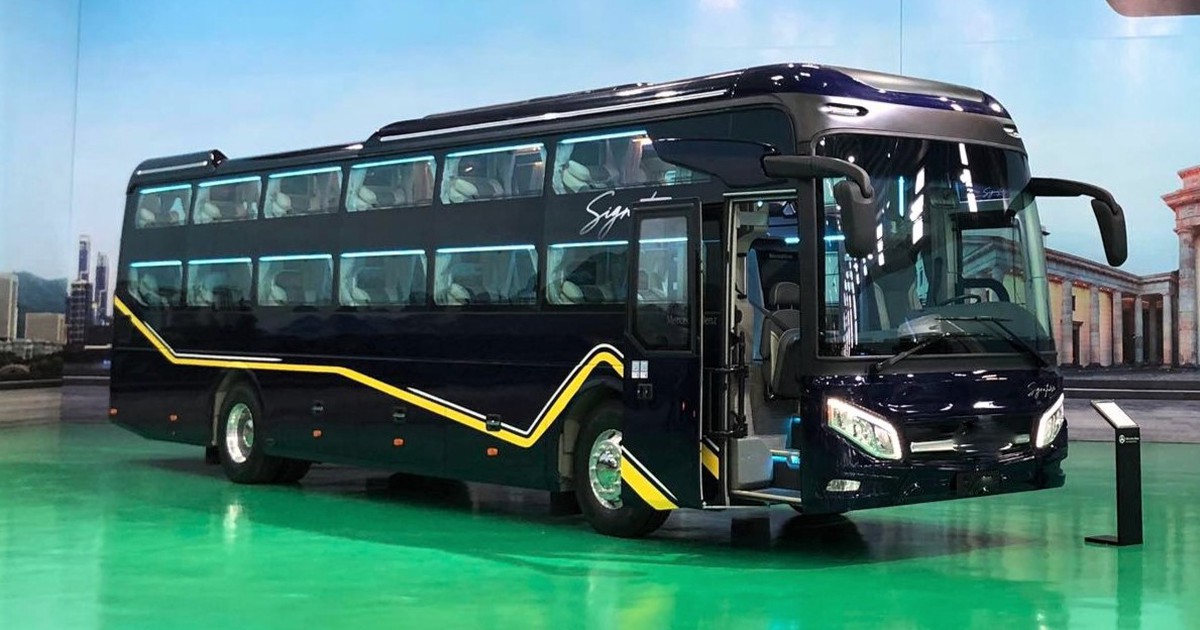
To understand why buses are built this way, one must first look at the governing regulations. In Vietnam, the technical requirements for motor vehicles are dictated by National Technical Regulations (QCVN). Specifically, QCVN 09:2024/BGTVT, which outlines standards for the technical safety and environmental protection of automobiles, provides the legal basis for bus designs. This regulation, issued alongside Circular 48/2024/TT-BGTVT and set to take full effect on January 1, 2025, mandates that the passenger compartment of a bus must be equipped with at least one service door located on the right side of the vehicle (relative to the direction of travel).
For long-distance coaches, the law does not strictly require a second service door, provided the vehicle meets other specific criteria regarding emergency exits. This distinguishes long-distance coaches from urban transit vehicles. Under QCVN 10:2024/BGTVT, which applies specifically to city buses, the requirements are more stringent due to the high frequency of passenger boarding and alighting. For instance, city buses carrying 46 to 90 passengers must have at least two doors, and those exceeding 90 passengers must have three. The discrepancy between urban and long-distance requirements is rooted in the "operational profile" of the vehicles.
The Engineering and Economic Rationale
From a manufacturing and operational standpoint, the decision to limit a long-distance bus to one door is rarely a matter of negligence; rather, it is a calculated trade-off involving several factors:
1. Structural Integrity and Space Optimization
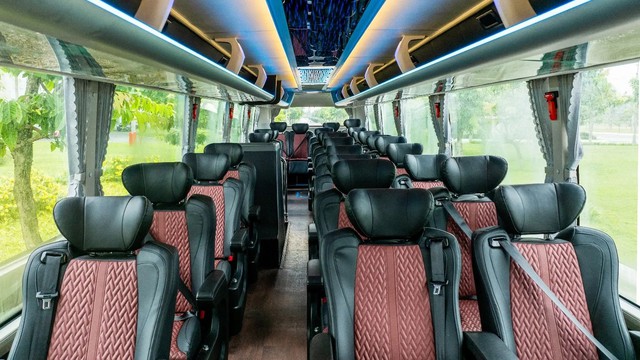
Long-distance buses, particularly the "sleeper" variants popular in Vietnam, are designed to maximize internal real estate. Every square meter is allocated to passenger comfort or cargo capacity. A second door is not merely a hole in the side of the vehicle; it requires a dedicated stairwell, a door-actuation system, and structural reinforcement around the aperture to maintain the "monocoque" or frame rigidity. Incorporating a second door often necessitates the removal of at least two to four passenger seats or sleeper berths. For transport companies operating on thin margins, the loss of 10% of their seating capacity per trip represents a significant long-term revenue deficit.
2. Cargo and Technical Layout
Unlike city buses, long-distance coaches must carry significant amounts of luggage. This is accommodated by large under-floor compartments located between the front and rear axles. Placing a second door in the middle or rear of the bus would interrupt these luggage bays, complicating the structural layout and reducing the vehicle’s utility for travelers carrying heavy bags or freight. Furthermore, the sides of the bus are occupied by essential technical components, including fuel tanks, battery banks, air conditioning condensers, and wheel arches. Finding a "clear" space for a second stairwell is a significant engineering challenge.
3. Passenger Control and Security
In the context of the Vietnamese transport market, a single door near the driver facilitates better management. It allows the driver or an assistant to verify tickets, manage luggage stowing, and monitor who enters and exits the vehicle at various stops. This "controlled entry" point is seen as a security feature, preventing unauthorized boarding and ensuring that all passengers are accounted for.
The Distinction Between "Service Doors" and "Emergency Exits"
A critical point of confusion for the public is the difference between a service door and an emergency exit. Safety experts emphasize that while a bus may have only one door for daily use, it is legally required to have multiple emergency exits.
According to QCVN 09:2024/BGTVT, any vehicle designed for 16 or more passengers must have a specific number of emergency exits based on its total capacity. These exits can take several forms:
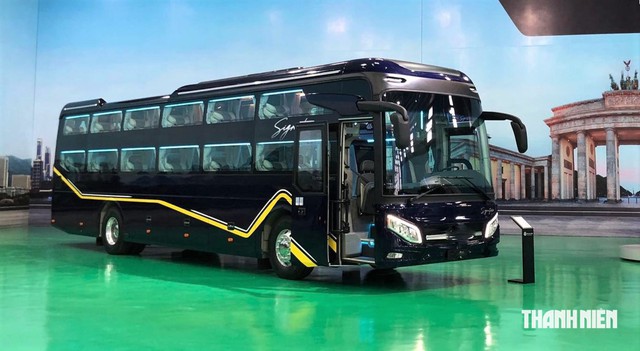
- Emergency Doors: Secondary doors that are normally closed but can be opened from both inside and outside in an emergency.
- Emergency Windows: Large glass panes designed to be shattered or pushed out.
- Roof Hatches: Openings in the ceiling that allow for evacuation if the bus tips onto its side.
The regulation explicitly states that the primary service door used for boarding cannot be counted as an emergency exit in technical safety audits. Therefore, a standard 45-seat long-distance coach is technically equipped with five to seven different points of egress, even if only one is visible as a traditional door.
The "Golden Minute" and the Failure of Safety Systems
If these exits exist, why do tragedies like the Dong Nai fire still occur? The answer lies in the functionality and accessibility of these systems during a crisis.
Obstructions and Modifications
In many instances, the interior of a bus is modified by operators to add more amenities. Curtains, decorative lighting, or even additional luggage stacked in aisles can obscure emergency exit signs or block access to breakable windows. In sleeper buses, the narrow aisles and multi-tiered bedding structures create a labyrinthine environment that is difficult to navigate in the dark or when filled with thick, toxic smoke.
The Hammer Problem
Emergency windows require a specialized safety hammer to break the tempered glass. Regulations mandate that these hammers be placed in conspicuous, accessible locations near the windows. However, in practice, these hammers are sometimes stolen or removed by staff to prevent theft, leaving passengers helpless when they need to shatter the glass. Furthermore, tempered glass, while designed to break into small, non-sharp pieces, still requires a specific striking force and technique that a panicked passenger may not be able to execute effectively.
Human Factors and Awareness
A significant gap exists in passenger education. Unlike airlines, where safety briefings are mandatory before every takeoff, bus passengers are rarely informed about the location of emergency hammers or how to operate the roof hatches. In a high-stress environment like a vehicle fire, the lack of "muscle memory" or basic knowledge of the vehicle’s layout leads to fatal delays.
Broader Implications and the Path Forward
The Dong Nai incident has prompted calls for a shift in how vehicle safety is approached in the long-distance transport sector. While the current "one door" design is legally compliant and economically efficient, its reliance on secondary emergency exits assumes a level of passenger readiness and vehicle maintenance that may not always exist.
1. Mandatory Fire Suppression Systems
Experts suggest that rather than focusing solely on the number of doors, more emphasis should be placed on prevention. Automatic fire suppression systems in the engine compartment—where most bus fires originate—could extinguish a blaze before it enters the passenger cabin, providing the extra minutes needed for an orderly evacuation.
2. Enhanced Inspection Protocols
The Vietnam Register and relevant authorities may need to tighten inspection standards. This includes ensuring that emergency hammers are not only present but also functional, and that emergency exit pathways are never obstructed by cargo or illegal modifications.
3. Digital Safety Briefings
With the ubiquity of screens on modern long-distance buses, operators could be required to play a short safety video—similar to those on airplanes—detailing the location of all exits and the proper use of safety equipment.
4. Re-evaluating Design Standards
As technology advances, the "one door" model may eventually be phased out in favor of designs that incorporate a secondary, lightweight emergency door at the rear of the vehicle that does not significantly compromise cargo space. Some European manufacturers have already moved toward "1+1" designs (one service door, one emergency-only door) as a standard safety feature for long-haul coaches.
Conclusion
The design of long-distance passenger buses with a single entrance is a result of a complex balance between regulatory compliance, structural engineering, and the economic demands of the transport industry. While this design is legally sound under current Vietnamese law, the tragic loss of life in Dong Nai highlights the precarious nature of this balance. Safety in the transport sector is not merely about the number of doors, but about the reliability of the entire safety ecosystem—from the presence of a simple hammer to the split-second decisions of a well-informed passenger. As the new regulations of 2025 approach, the industry faces a pivotal moment to move beyond mere compliance and toward a culture of proactive safety that ensures such tragedies are never repeated.