The annual phenomenon of mass crab migration on Christmas Island, an Australian territory located in the Indian Ocean, has once again transformed the island’s landscape into a sea of red. An estimated 100 million red crabs (Gecarcoidea natalis) have emerged from the dense tropical forests, embarking on a synchronized, perilous trek toward the coast to spawn. This spectacular natural event, often described as one of the most remarkable wildlife migrations on the planet, represents a critical juncture in the life cycle of the species and the ecological health of the island.
The Mechanics of Migration
The timing of this mass movement is dictated by a precise, rhythmic biological clock linked to the phases of the moon and the onset of the wet season. Typically occurring between October and November, the migration can occasionally shift into December or January depending on rainfall patterns. As the humidity rises and the rains begin, the crabs emerge from their burrows, which are scattered throughout the island’s interior.
The migration is a highly organized process. Male crabs generally lead the advance, trekking toward the ocean to meet the females, who join the procession as they reach the shoreline. Once they arrive at the coast, the crabs engage in mating rituals. The male crabs then retreat back into the forest, leaving the females to burrow into the sand and release their eggs into the ocean, timed precisely with the final quarter of the moon. This allows the larvae to hatch and develop in the water during the high tide, providing the best chance for survival before they eventually return to the island as juveniles.
Scientific Significance and Environmental Triggers
According to observations from experts at Parks Australia, the red crabs are highly sensitive to their environment. The migration speed is heavily influenced by meteorological conditions. If the rains are consistent, the crabs move with purpose and speed, navigating their way through the forest floor and across man-made infrastructure. If the rains are sparse or inconsistent, the migration slows, forcing the crabs to forage for food along the way or, in extreme cases, remain in their burrows until the next lunar cycle.
The red crab, a species endemic to Christmas Island, serves as a keystone species for the region. They are the primary recyclers of the forest floor, consuming fallen leaves, seedlings, fruits, and flowers. By doing so, they facilitate nutrient cycling, which is vital for the island’s biodiversity. Their burrowing activity also aerates the soil, creating a subterranean ecosystem that supports various other organisms.
Chronology of Conservation Efforts
The history of the red crab on Christmas Island has been fraught with challenges, particularly since the introduction of the invasive yellow crazy ant (Anoplolepis gracilipes). These ants, which are not native to the island, were accidentally introduced in the early 20th century and have since caused significant damage to the crab population.
In the late 1990s and early 2000s, the population of red crabs faced a catastrophic decline, with millions of individuals being killed by the yellow crazy ants. The ants form "supercolonies" that overwhelm the crabs, spraying them with formic acid and occupying their burrows. This led to a dramatic drop in the crab population, which had once numbered well over 100 million.
Recognizing the potential for ecological collapse, the Australian government initiated comprehensive management strategies. These include the use of targeted biological controls to suppress the yellow crazy ant populations and the construction of specialized infrastructure to protect the migrating crabs. Today, thanks to decades of persistent conservation, the population has shown a robust recovery, estimated to be back near its historic levels.
Infrastructure and Human Intervention
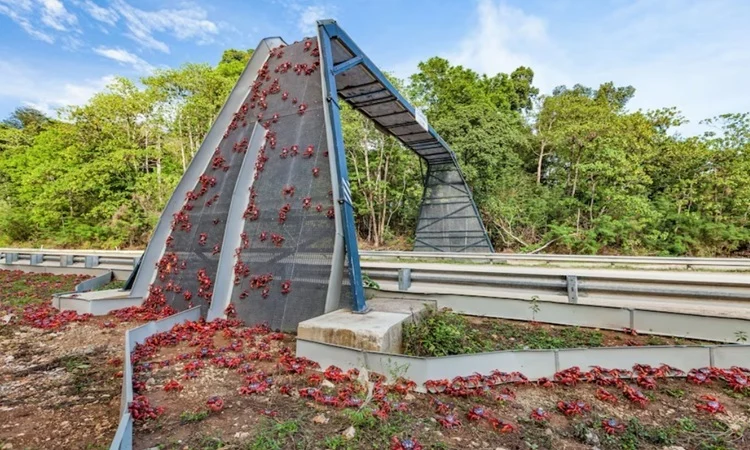
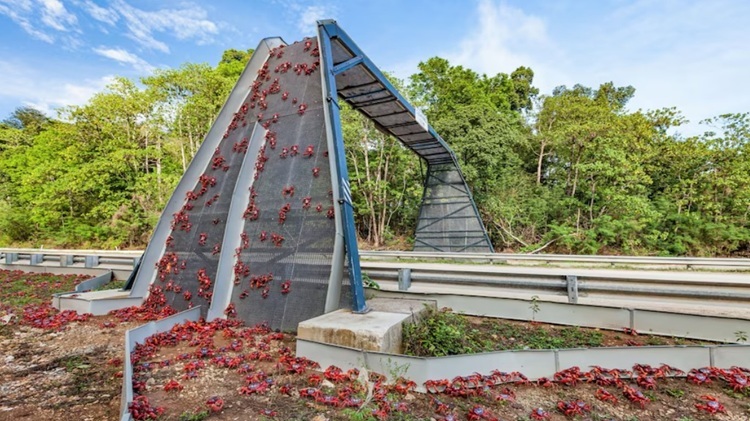
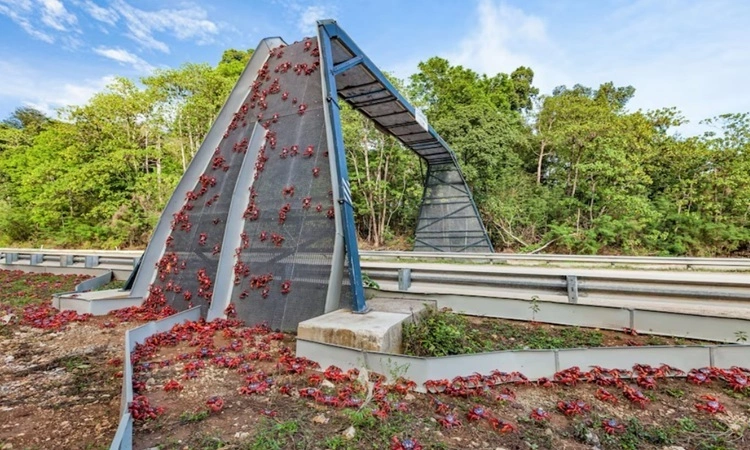
To mitigate the impact of human development on the migration, authorities have implemented a sophisticated array of protective measures. During the peak of the migration, major roads are closed to vehicular traffic to prevent mass casualties. Furthermore, the island features an extensive network of "crab bridges" and underpasses. These structures allow the crustaceans to safely cross over roads or navigate beneath them, ensuring that the migration route remains unbroken despite the presence of human settlements and transport corridors.
Chris Chartres, a senior manager for the Christmas Island National Park, emphasizes that these efforts are not merely for the benefit of the crabs but for the integrity of the island’s entire ecosystem. "The red crab is essential to the forest’s health," Chartres notes. "When we protect the crabs, we are protecting the entire forest structure that makes Christmas Island unique."
Broader Ecological Implications
The survival of the red crab is inextricably linked to the health of the island’s tropical rainforest. Because they are the primary herbivores, their grazing prevents the forest floor from becoming choked with leaf litter, which in turn reduces fire risk and promotes the germination of native plants. When the crabs are abundant, the forest thrives; when they are threatened, the entire habitat suffers.
The ongoing battle against the yellow crazy ant remains the central pillar of the island’s environmental policy. The ants are known for their aggressive behavior, and if left unchecked, they can displace the crabs from their nesting sites, leading to population crashes. Continuous monitoring and intervention are required to ensure that the ecological balance remains in favor of the endemic species.
Looking Ahead
As the 2026 migration continues, researchers and conservationists are collecting data to assess the success of the current breeding season. The precision of the crabs’ migration—often cited as a "miracle of nature"—serves as a reminder of the delicate balance of island ecosystems. The ability of these creatures to synchronize their movements with the lunar cycle remains a subject of intense scientific study, offering insights into how species adapt to environmental stressors.
The success of the Christmas Island red crab migration is a testament to the efficacy of proactive conservation. By combining scientific research with practical, on-the-ground management, Australia has managed to preserve a natural phenomenon that could have easily been lost to the impacts of invasive species and habitat degradation.
As the sea of red moves toward the Indian Ocean, the event stands as a clear example of the resilience of nature when given the necessary support. For the inhabitants of Christmas Island, the migration is more than just an annual event; it is a defining characteristic of their home—a yearly reminder of the interconnectedness of all life forms on this remote, 135-square-kilometer island. The work continues, with officials already planning for future cycles, ensuring that the next generation of crabs will have a clear path to the sea, just as their ancestors have done for thousands of years.
Related posts: