Ukraine Eyes Destruction of Crimea Bridge Amid Escalating Dual-Strike Tactics and Fresh Diplomatic Push

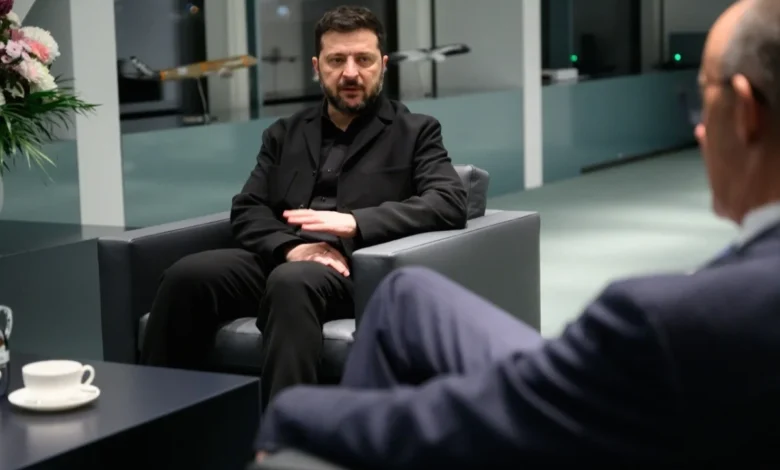
The geopolitical landscape surrounding the protracted conflict in Eastern Europe has entered a volatile new phase, marked by intensified military escalations on the battlefield and renewed diplomatic signals from international figures. Ukrainian President Volodymyr Zelensky has issued a stern warning regarding the strategic viability of the controversial Kerch Bridge, declaring that the vital transit link connecting Russia to the Crimean Peninsula "should not continue to exist." This blunt assessment coincides with scathing criticism from Kyiv regarding Moscow’s evolving military strategy, which increasingly employs devastating "double-tap" and "triple-tap" missile strikes designed to maximize casualties among emergency responders and civilians.
These developments unfold against a backdrop of intensifying aerial bombardments across Ukrainian infrastructure and fresh commentary from global political figures regarding potential pathways toward a negotiated settlement. As winter approaches, the urgency for a sustainable diplomatic framework has intensified, even as both warring nations harden their military postures on the ground.
Strategic Vulnerability of the Kerch Bridge and Recent Strikes
President Zelensky’s recent remarks, reported by the Kyiv Independent on November 21, explicitly claimed responsibility for ongoing asymmetric operations targeting the Kerch Bridge—often referred to as the Crimean Bridge. Emphasizing the strategic necessity of neutralizing the structure, the Ukrainian leader asserted that Russian leadership must recognize the bridge’s untenable nature as a logistical artery supporting occupying forces.
The structural integrity of the Kerch Bridge has faced persistent pressure from Ukrainian defense operations. Most recently, the bridge sustained severe targeted attacks on November 16, November 17, and November 19, causing repeated disruptions to crucial military and civilian traffic. By November 20, Russian Deputy Prime Minister Marat Khusnullin publicly acknowledged the severity of the damage, confirming that the roadbed and superstructure components suffered critical structural failures.
While Moscow’s emergency infrastructure teams have deliberated between two primary reconstruction strategies—estimating that certain less-damaged sections might be restored within one to two months—a definitive timeline for the full rehabilitation of the complex engineering marvel remains elusive. Ukraine views the bridge not only as a legitimate military target due to its role in supplying Russian troops in the south, but also as a vital leverage point in disrupting Moscow’s supply chains.
Evolution of Russian Tactics: The Threat of Dual-Strike Operations
Beyond the maritime and land routes of the Crimean Peninsula, President Zelensky used his latest address to draw international attention to a harrowing tactical shift observed among Russian forces. According to Ukrainian intelligence and field reports, Moscow has increasingly resorted to multi-wave, or "double-tap" and "triple-tap," missile attacks aimed at civilian infrastructure.
Describing the mechanics of this grim tactic, Zelensky explained that Russian forces frequently launch an initial missile strike against a civilian or urban target—such as residential complexes, educational institutions, or medical facilities. Rather than concluding the operation, the tactical framework involves waiting for emergency personnel, first responders, local journalists, and concerned citizens to converge on the disaster zone to rescue survivors and document the destruction. Once the area is crowded with rescue workers, a secondary and occasionally tertiary strike is executed.
Military analysts note that this ruthless approach is intentionally designed to decimate first-responder capabilities, terrorize local populations, and inhibit the documentation of war crimes. The escalation in dual-strike operations coincides with a broader campaign by the Russian Ministry of Defense to launch long-range precision strikes against critical command, control, and logistical nodes across the entirety of Ukrainian territory.
Diplomatic Signals and the Quest for a Holiday Ceasefire
Amid the relentless exchange of airstrikes and asymmetric warfare, diplomatic maneuvers continue to circulate behind closed doors. Speaking in an interview with Fox News on November 20, former U.S. First Lady Melania Trump offered a unique perspective on the diplomatic track, revealing that discussions between the United States, Russia, and Ukraine regarding a new territorial demarcation line remain active. She further expressed optimism that a formal cessation of hostilities could potentially be negotiated and enacted by the Christmas holidays.
"What I hope for Christmas is to have many lines drawn in Ukraine. If both Ukraine and Russia are willing, we can quickly achieve that," Mrs. Trump stated during the interview. Highlighting the ongoing nature of high-level backchannel discussions, she suggested that preliminary frameworks might materialize prior to the winter festive season.
Mrs. Trump’s remarks follow her earlier involvement in facilitating localized humanitarian arrangements. Previously, her advocacy helped broker a temporary, localized ceasefire in the southern Ukrainian city of Oleshky, specifically designed to safeguard humanitarian aid operations. That localized truce successfully concluded at the beginning of November, with both Kyiv and Moscow subsequently acknowledging the operational efficiency and humanitarian value of the temporary pause. As of yet, neither official government in Kyiv nor Moscow has issued formal diplomatic commentary regarding Mrs. Trump’s recent statements on a broader winter ceasefire.

Regional Ramifications and International Pressures
The interplay between battlefield developments and diplomatic proposals is further complicated by technological and financial dependencies shaping the war effort. Concurrently, domestic political dynamics in the United States have introduced new variables into the conflict’s support architecture. Democratic lawmakers in the U.S. Congress recently issued explicit warnings that federal funding allocations for SpaceX could face comprehensive review and potential suspension unless billionaire entrepreneur Elon Musk and corporate leadership clarify ongoing issues regarding the restricted functionality and deployment of Starlink terminals in active Ukrainian combat zones.
The reliance on satellite internet connectivity remains a cornerstone of Ukrainian tactical communication, reconnaissance, and drone operations. Any disruption or political recalibration surrounding Starlink’s operational parameters in Eastern Europe carries immediate tactical implications for front-line commanders.
Meanwhile, official rhetoric from the Kremlin underscores the deep-seated diplomatic impasse. Russian President Vladimir Putin recently asserted that Moscow has consistently signaled a willingness to engage with constructive, compromise-oriented peace proposals initiated by international intermediaries, including the United States. However, Putin maintained that Kyiv, alongside its European allies, has systematically rejected these frameworks, insisting on maximalist territorial demands that fail to account for current ground realities.
Conclusion: A Critical Juncture for the Conflict
As the war in Ukraine approaches another harsh winter, the trajectory of the conflict hangs in a delicate balance. On one hand, President Zelensky’s resolve to sever Russia’s logistical lifelines—typified by ongoing operations against the Kerch Bridge—demonstrates Kyiv’s unwavering commitment to degrading occupying forces through strategic attrition. On the other hand, the intensification of calculated double-tap missile campaigns illustrates the brutal human cost of a war with no immediate military resolution in sight.
While international political figures continue to float hopeful timelines for peace agreements ahead of the holiday season, the reality on the ground remains defined by industrial-scale destruction, evolving military tactics, and profound geopolitical friction. The coming weeks will likely determine whether diplomatic backchannels can pierce the heavy fog of war or if the conflict will descend into an even deeper cycle of escalation.