Ukraine Unveils Ambitious ‘Robot Army’ Initiative to Revolutionize Modern Warfare and Protect Soldier Lives

The government of Ukraine has officially announced a groundbreaking defense technology initiative known as the "Robot Army," aimed at integrating advanced robotic systems and autonomous platforms directly into frontline combat operations. Revealed by Ukraine’s Deputy Minister of Defense, Mykhailo Fedorov, during the high-profile IT Arena technology conference held in Lviv, this visionary project seeks to dramatically reshape the dynamics of modern warfare. By shifting hazardous frontline tasks from human soldiers to sophisticated mechanical units, Kyiv hopes to minimize mounting casualties while maintaining a robust defensive and offensive posture against Russian forces.
The announcement marks a significant evolutionary step for Ukraine’s defense sector, following closely on the heels of the highly successful "Army of Drones" initiative launched earlier in the conflict. According to defense planners, the newly conceptualized "Robot Army" is not merely a single corporate entity or manufacturer, but rather a comprehensive defense technology ecosystem. This ecosystem is designed to pool resources, channel private and international venture capital into domestic startups, establish specialized research and development facilities, and rapidly field-test emerging military technologies directly on the battlefield.
Strategic Evolution from Drones to Autonomous Combat Systems
The genesis of the "Robot Army" can be traced back to the innovative frameworks established during the early days of the full-scale Russian invasion in 2022. At that time, Mykhailo Fedorov served as Ukraine’s Minister of Digital Transformation. Recognizing the urgent need to offset conventional military disparities, Fedorov spearheaded the "Army of Drones" project, which successfully mobilized public donations, corporate partnerships, and international tech giants to supply thousands of Unmanned Aerial Vehicles (UAVs) to the Armed Forces of Ukraine.
Building upon the lessons learned from the widespread proliferation of aerial drones, Ukrainian defense officials realized that ground-based robotics represented the next logical frontier in asymmetric warfare. In late August, Fedorov traveled to the United States to meet with prominent venture capitalists, tech investors, and Silicon Valley leaders. During these high-level discussions, he announced the establishment of a specialized defense tech fund aimed at accelerating innovation and scaling manufacturing capabilities to meet Ukraine’s wartime requirements.
Significantly, several prominent international technology executives have already expressed support for Kyiv’s technological ambitions. Among the early financial and strategic backers is Alex Karp, Chief Executive Officer of Palantir Technologies, whose advanced data-analytics and software platforms have been extensively utilized by Ukrainian military and intelligence agencies throughout the conflict. While the initial announcement of the "Robot Army" omitted specific proprietary details regarding the exact software architectures or mechanical designs underpinning the initiative, defense analysts emphasize that the framework is structured to invite rapid iteration and global technological collaboration.
Core Objectives and Capabilities of the Robotic Fleet
At the heart of Mykhailo Fedorov’s strategic vision is the development and deployment of a diverse array of robotic platforms, with a particular emphasis on humanoid robots and specialized unmanned ground vehicles (UGVs). These systems are engineered to undertake the most perilous missions currently performed by infantrymen, thereby preserving human life in intensely contested combat zones.
Fedorov has outlined an aggressive timeline for the initiative. The stated objective is to operationalize the first generation of humanoid and autonomous combat robots within the next six months, specifically targeting the neutralization of opposing combatants in high-risk sectors. Furthermore, within a 12-month window, the Ukrainian defense sector aims to execute complex, coordinated surprise assaults and tactical maneuvers utilizing entirely autonomous robotic units, requiring minimal or no direct human command on the ground.
The overarching philosophy of the initiative is starkly pragmatic: reducing human casualties and saving lives. Military planners stress that robots must be thrust into the most hazardous environments—such as clearing heavily mined terrain, storming fortified trench systems, and holding exposed zero-line positions—where human vulnerability is highest.
The envisioned robotic ecosystem encompasses a wide variety of form factors and operational scales. Smaller, specialized platforms can function as reconnaissance units, perimeter defense nodes, or mobile fire support, while larger UGVs advance ahead of friendly infantry to suppress enemy positions. Despite these ambitious goals, defense technology experts acknowledge that military robotics on the active Ukrainian frontlines are still in a relatively nascent stage of development.
Current Technological Realities and Battlefield Integration
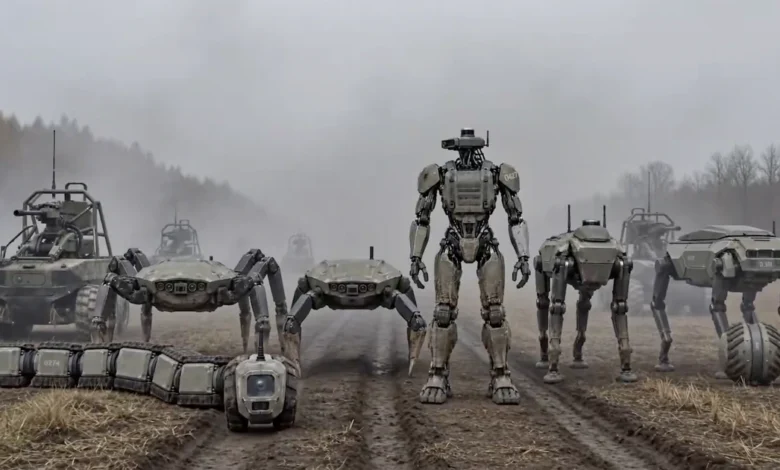
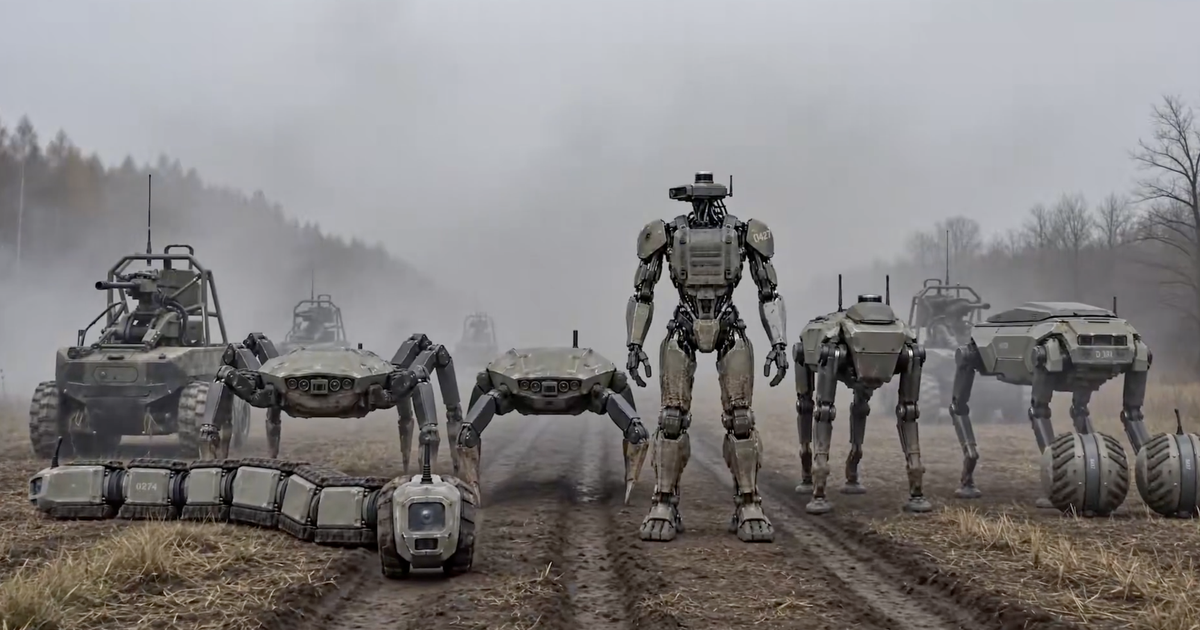
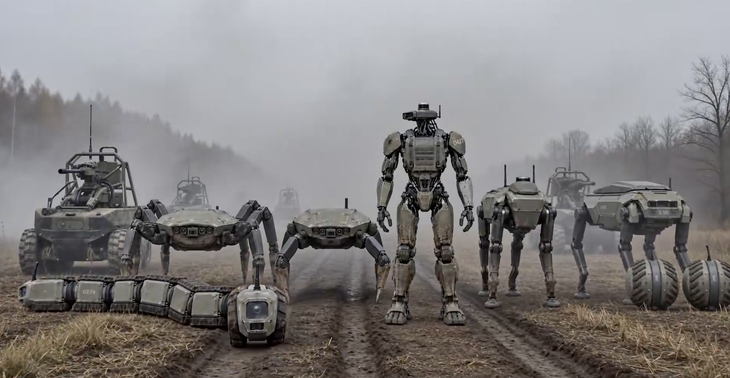
While the prototypes showcased during recent briefings featured an array of conceptual designs—ranging from humanoid and spherical configurations to quadrupedal "robot dogs" and specialized mechanical scouts—many of these advanced systems have yet to see widespread deployment in active combat.
Currently, Unmanned Ground Vehicles (UGVs) are already utilized by both Russian and Ukrainian forces on a daily basis, but primarily for logistical support. These tasks include the transportation of heavy ammunition, food, and medical supplies across exposed terrain, as well as the evacuation of wounded soldiers from frontline positions. However, the vast majority of these deployed UGV systems are operated via remote control by human operators stationed at safe distances, rather than functioning as fully autonomous entities capable of independent tactical decision-making.
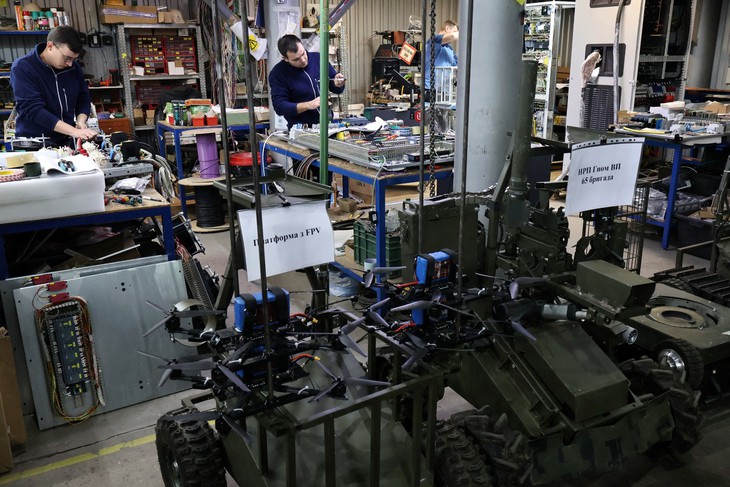
Moreover, operational challenges remain significant. Ground-based robotic systems require continuous maintenance, robust power sources, and frequent battery replacements or recharging cycles. Operating heavy machinery near the front lines also exposes them to constant threats from enemy First-Person View (FPV) kamikaze drones, artillery barrages, and sophisticated electronic warfare (EW) jamming that can sever the critical communication links between the robot and its human controller.
According to reports from international news agencies such as Reuters, the Ukrainian military has nevertheless made substantial strides in fielding indigenous combat-support UGVs. Among them is the four-wheeled UGV system known as "Hyenas," specifically engineered to carry high payloads of explosives. These tracked or wheeled explosive delivery systems are designed to approach heavily fortified Russian defensive lines, breaching subterranean bunkers, concrete dugouts, and preventing enemy infantry from advancing.
Implications for the Future of Warfare
The formal announcement of Ukraine’s "Robot Army" underscores a broader, irreversible global trend toward the automation and digitization of armed conflict. As the war of attrition continues to exact a heavy toll on human capital, both belligerents are increasingly turning to technology to bridge personnel gaps and protect scarce manpower.
By aggressively mobilizing international tech capital, fostering domestic engineering talent, and establishing a dedicated defense tech ecosystem, Ukraine is attempting to leapfrog traditional military procurement cycles. If Kyiv successfully meets its ambitious benchmarks for autonomous battlefield integration, the initiative could fundamentally alter military doctrine worldwide, demonstrating the viability of robotic infantry and autonomous strike groups in high-intensity, conventional warfare environments. However, the success of the "Robot Army" will ultimately depend on its resilience against electronic warfare, the reliability of its power systems, and its ability to operate effectively in the chaotic, GPS-denied environment of the modern front line.
Related posts: