Số ca tử vong do ung thư tại Việt Nam tăng hơn 2,4 lần sau 5 năm: Loại ung thư nào đứng đầu?


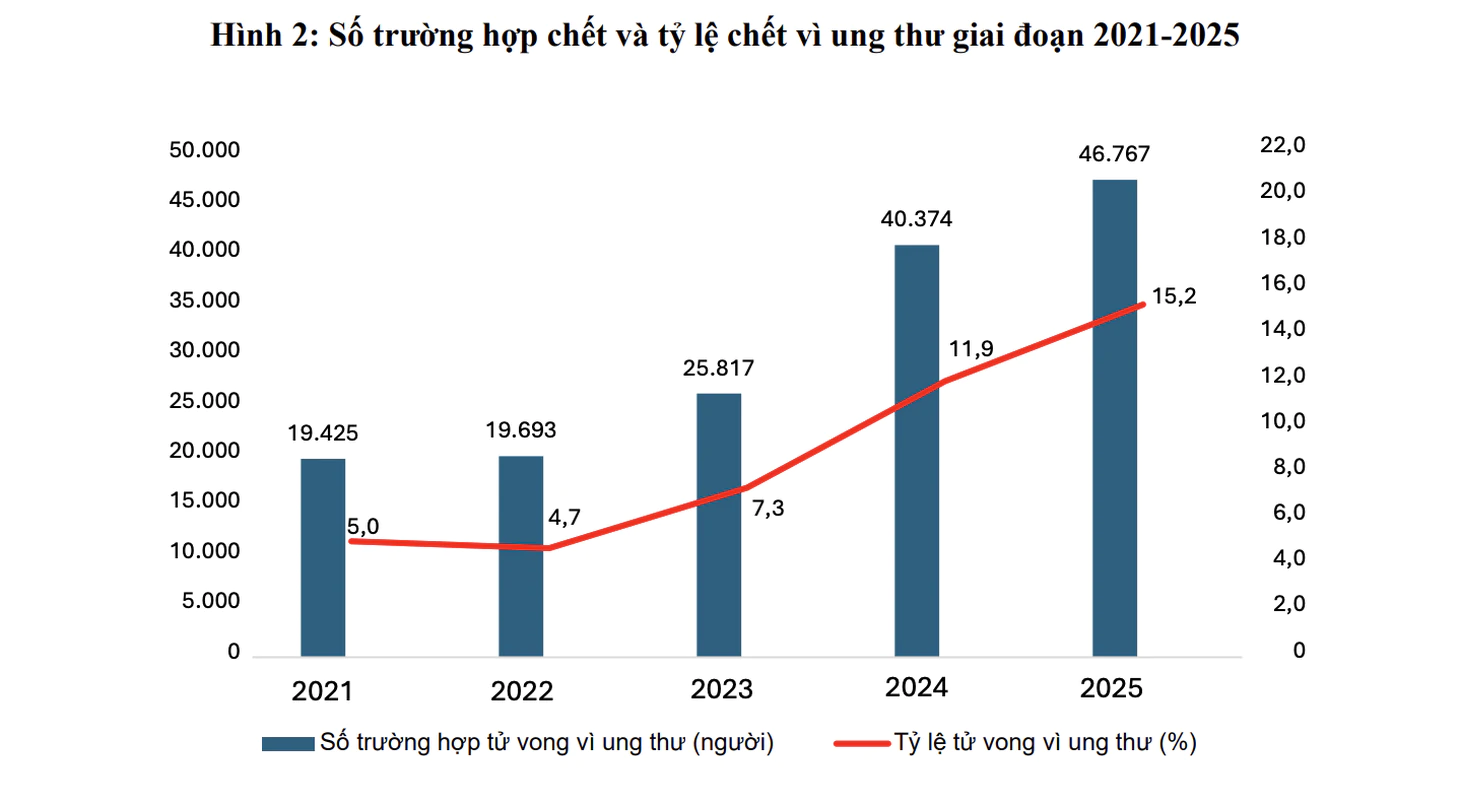
The burden of non-communicable diseases in Vietnam has entered a critical phase, underlined by startling new demographic and health metrics that reveal a dramatic escalation in cancer-related fatalities. According to a comprehensive joint report spanning the 2021–2025 period released by the General Statistics Office (GSO), the United Nations Population Fund (UNFPA), and global public health organizations, mortality patterns in the Southeast Asian nation are undergoing a profound epidemiological transition. While lifestyle diseases and chronic illnesses continue to dominate national mortality statistics, cancer has emerged as a formidable public health crisis, recording a more than 2.4-fold increase in documented fatalities over a span of just half a decade.
The nationwide study provides an exhaustive breakdown of mortality trends, offering a clearer lens through which policymakers, healthcare professionals, and international stakeholders can evaluate the shifting landscape of public health in Vietnam. As the country grapples with a rapidly aging population and shifting socio-economic behaviors, the data underscores an urgent imperative to restructure national healthcare strategies, reinforcing early detection, preventive care, and oncology treatment infrastructure.
General Mortality Landscape and the Ascendance of Cancer
During the 2021–2025 observation window, diseases collectively served as the predominant driver of mortality in Vietnam, accounting for 64.5% of all recorded deaths nationwide. Within this broad category of disease-related mortality, approximately 28% of cases featured clearly verified clinical causes of death, whereas 72% remained categorized under undetermined or secondary contributory causes. Other primary categories of death documented in the comprehensive report included physiological decline and frailty associated with advanced age (accounting for 20.6% of deaths), undetermined causes (10.2%), and external mishaps, accidents, or injuries (4.8%).
Within the verified disease-related mortality group, cancer assumed an increasingly alarming share of the national burden. Between 2021 and 2025, an estimated 152,100 individuals succumbed to various forms of malignancy across the country, representing roughly 8.4% of all disease-related deaths.

A granular chronological analysis of the data highlights a steep, continuous upward trajectory in absolute numbers and proportional representation. In 2021, Vietnam recorded roughly 19,000 cancer-related deaths, translating to approximately 5% of total disease mortality. By 2023, this figure escalated to 25,800 cases, or 7.3%. By the close of the projection period in 2025, annual cancer deaths surged to an estimated 46,800 cases, representing 15.2% of all disease-related fatalities.
While public health experts note that part of this dramatic rise is undoubtedly attributable to systemic improvements in national medical recording, cause-of-death verification, and clinical data coding, the underlying reality remains stark. The sheer magnitude of cancer claiming 15.2% of all disease deaths by 2025 signals an immense healthcare challenge that demands immediate, sustained strategic intervention.
The Frontline Killers: Lung and Liver Cancers Lead the Toll
A closer examination of the diagnostic categories reveals that the heavy toll of cancer mortality is heavily concentrated in a small group of malignancies. Throughout the 2021–2025 period, four specific types of cancer emerged as the most lethal and widespread: lung cancer, liver cancer, stomach cancer, and colorectal cancer. Collectively, these four malignancies accounted for 50.6% of all cancer-related deaths in the country.
Lung cancer stood out as the leading cause of cancer mortality, responsible for an annual average of 22% of all cancer deaths throughout the study period. The proportional impact of lung cancer expanded notably, climbing from 18% of cancer deaths in 2021 to 24.9% by 2025. Often characterized by an insidious onset that mimics common respiratory ailments in its early stages, lung cancer frequently eludes timely diagnosis until it has reached advanced, untreatable stages.
Liver cancer occupied the second position, accounting for a yearly average of 17.4% of cancer fatalities. Mortality proportions linked to hepatic malignancies also edged upward, rising from 15.9% in 2021 to 18.7% in 2025. Given Vietnam’s historical prevalence of viral hepatitis and lifestyle risk factors such as alcohol consumption, liver cancer remains a primary target for national screening initiatives.

Stomach and colorectal cancers, while maintaining lower initial proportions than pulmonary and hepatic malignancies, exhibited steady upward trends. Stomach cancer mortality rates rose from 4.7% to 6.4%, while colorectal cancer experienced a more pronounced surge, climbing from 3.5% to 6.6% over the course of the study.
Conversely, all other forms of cancer combined accounted for 49.4% of total cancer deaths across the period, though the proportional weight of this miscellaneous group dropped from 57.8% in 2021 to 43.4% in 2025. Health analysts clarify that this proportional decline reflects the disproportionately rapid expansion of the four major cancers rather than an absolute drop in fatalities from other malignancies.
Gender Disparities and High-Risk Demographics
The epidemiological report underscores significant demographic divides, revealing that cancer mortality is heavily skewed along gender and age lines. Across the entire 2021–2025 timeframe, male patients experienced a drastically higher burden of cancer-related mortality than females. On average, for every three individuals who died of cancer, two were men—a ratio that remained remarkably stable throughout the five-year study.
Among men, the four major malignancies—lung, liver, stomach, and colorectal cancer—exerted an overwhelming toll, accounting for 55.5% of total male cancer deaths. This proportion escalated sharply from 47.4% in 2021 to 61.3% in 2025, driven largely by lifestyle-related risk factors such as higher smoking prevalence and occupational exposures.
In contrast, while women exhibited lower mortality proportions for lung and liver cancers compared to their male counterparts, female populations faced distinct vulnerabilities related to reproductive health and gender-specific malignancies. Cancers associated with the female reproductive system accounted for 13.6% of all cancer deaths among women during the 2021–2025 period. Fatalities within this specific group surged from 571 individuals (9% of female cancer deaths) in 2021 to 2,357 individuals (approximately 16%) by 2025.
Age Distribution and Pediatric Oncology Trends
When evaluated by age, cancer mortality predominantly concentrates among middle-aged and older adults. The proportion of deaths begins to rise sharply from age 40 onward, peaking dramatically within the 60–69 age bracket at 32.9%. Following this peak, mortality proportions experience a steep drop in the over-80 demographic, primarily due to competing risks of mortality from general physiological senescence.
However, a deeply concerning trend highlighted in the report is the subtle yet consistent rise in cancer fatalities among pediatric and adolescent populations under the age of 20. Official registry data recorded 364 cancer deaths in this young cohort in 2021. This figure ticked upward to 379 cases in 2022 and reached 648 cases by 2025, marking an approximate 1.7-fold increase in recorded deaths among children and adolescents over the five-year span.
Public Health Implications and Strategic Policy Response
The release of these comprehensive statistics occurs against the backdrop of Vietnam’s ongoing efforts to modernize its civil registration and vital statistics (CRVS) systems, enhance cause-of-death coding, and elevate data accuracy. By transitioning toward more rigorous epidemiological tracking, health authorities are securing the empirical foundation necessary to evaluate population health status accurately and forecast future demands on the medical system.
Public health experts emphasize that the stark escalation in cancer mortality—particularly driven by preventable or treatable malignancies such as lung, liver, and colorectal cancers—demands a multi-pronged national response. Strengthening primary healthcare networks to facilitate early screening, expanding vaccination campaigns against oncogenic viruses like Hepatitis B and Human Papillomavirus (HPV), and intensifying anti-tobacco and public health education campaigns are viewed as urgent priorities.
As Vietnam continues to navigate its epidemiological transition, policymakers face the critical task of translating these sobering statistical insights into robust, targeted healthcare interventions aimed at mitigating the rising societal and economic toll of cancer.