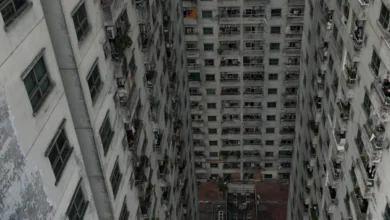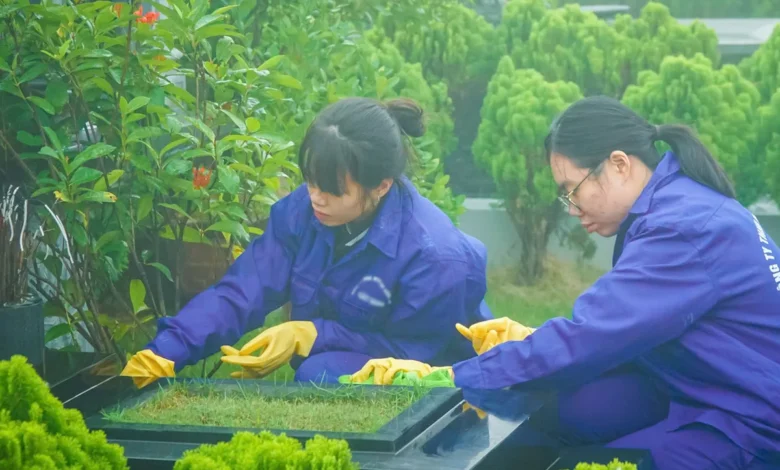
The modern workplace is undergoing a profound transformation, characterized by shifting values among the younger generation, particularly Gen Z. In a striking example of this paradigm shift, hundreds of young professionals, typically accustomed to air-conditioned offices and digital workflows, have traded their keyboards for gardening tools. On a recent weekend, nearly 100 participants traveled over 60 kilometers from Hanoi to the Lac Hong Vien memorial park in Hoa Binh province to engage in a unique volunteer experience: cleaning and maintaining burial plots for the departed.
This trend, which has gained significant traction throughout November, reflects a growing desire among young urban workers to disconnect from the relentless pace of corporate life and engage in "spiritual labor" that offers a deeper, more grounded perspective on existence.
The Genesis of a Unique Social Experiment
The initiative, organized by the management of Lac Hong Vien, was born out of a poignant, real-life anecdote. Three days after a standard office worker began assisting with grave maintenance—partly as a way to escape the crushing pressure of high-stakes corporate deadlines—the management realized that this manual, meditative work resonated deeply with a generation often characterized by high levels of burnout and digital fatigue.
The memorial park, spanning nearly 100 hectares across nine rolling hills, serves as the final resting place for over 5,000 individuals. It is a sprawling landscape that requires constant, meticulous upkeep. By opening this space to volunteers, the administration aimed not to replace professional staff, but to bridge the gap between the living and the departed, fostering a sense of community service that is both physically demanding and emotionally restorative.
A Day in the Life: From Keyboards to Burial Plots
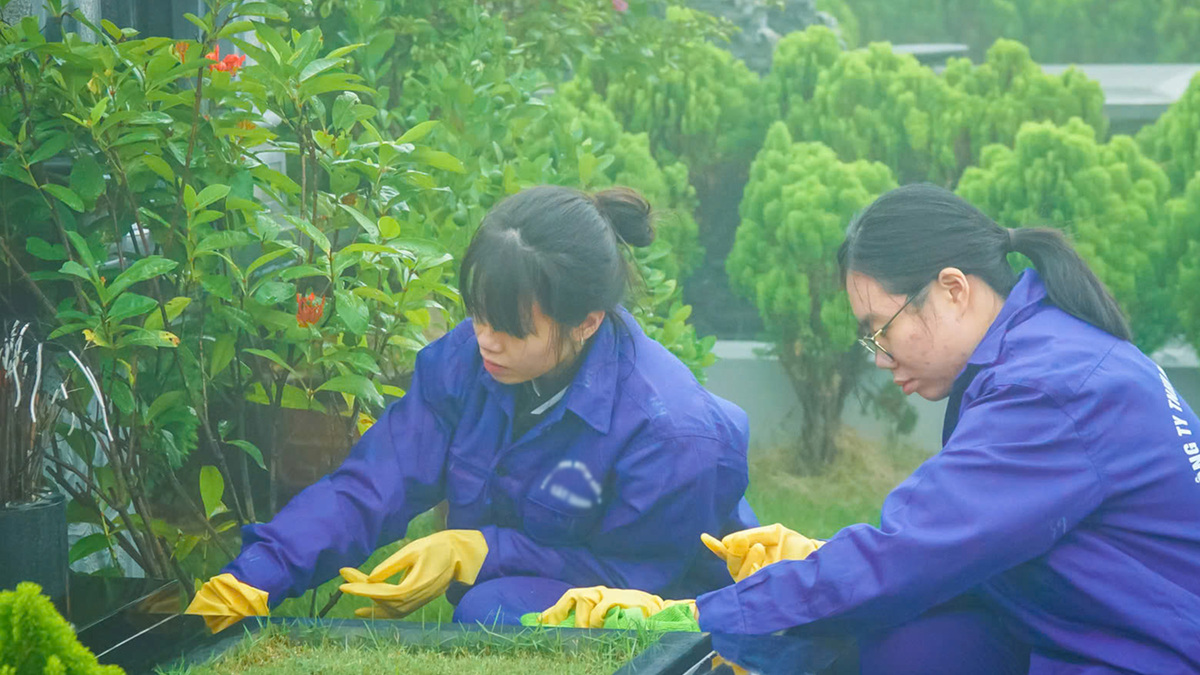
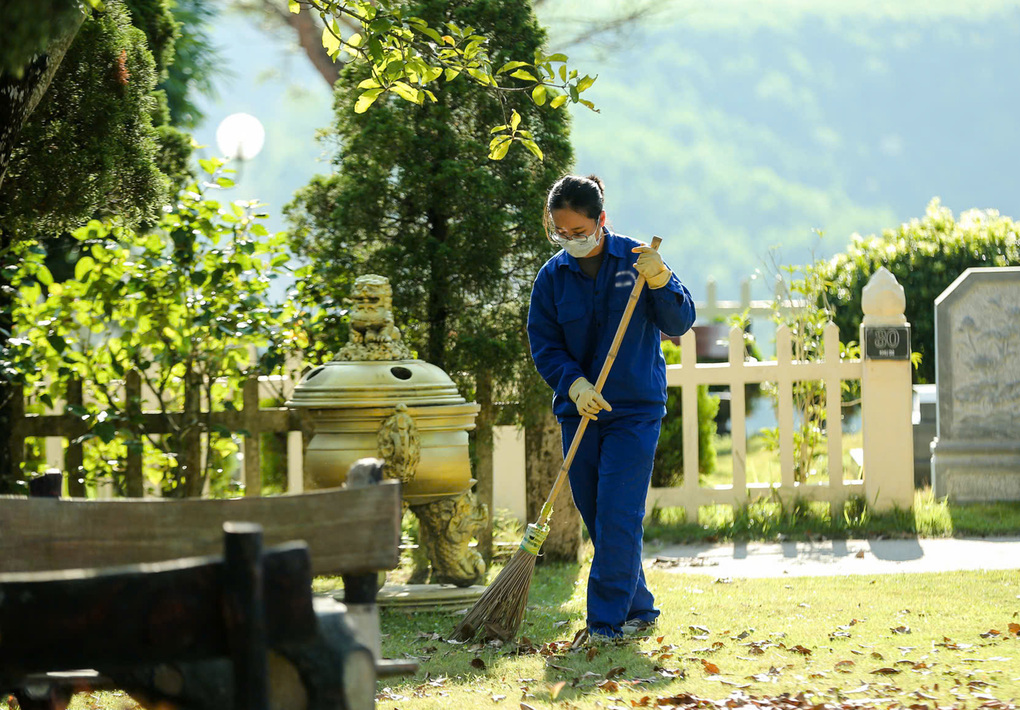
For 27-year-old Thuy Duong, a typical day at the office involves managing spreadsheets and high-pressure client communications. However, on the day of the event, she was clad in the standard-issue green uniform of a memorial park caretaker, kneeling on the grass to scrub headstones and prune shrubbery.
The process is far from casual. Before beginning their work, volunteers are instructed in the cultural protocols of the space. "Before cleaning, we clasp our hands and ask for permission from those who have passed," Duong explained. This ritual, deeply rooted in Vietnamese tradition, is designed to instill a sense of respect and serenity. The manual labor itself—pruning hedges with shears, wiping down stone markers, and ensuring incense burners remain undisturbed—is executed with a level of precision that mirrors the care one would show to a living relative.
The physical toll is significant. With temperatures often exceeding 30 degrees Celsius under the midday sun, participants quickly find that the work is far more challenging than it appears from the outside. Gloves slip, muscles ache, and fatigue sets in rapidly, yet the participants remain committed to the task, completing multiple plots before concluding their shifts.
The Night Watch: Bridging the Fear Gap
While the daytime work focuses on physical restoration, the nighttime component of the program introduces a psychological dimension. 22-year-old Nhat Minh, a volunteer who opted for the night shift, noted that he had previously been afraid to enter a cemetery after dark.
The security shift, which runs from 5:30 PM to 6:30 AM, involves patrolling the various zones of the park, including the central Kim Hill, where hundreds of graves are situated. Equipped with flashlights and dressed in reflective security vests, the volunteers patrol in 30-minute intervals. Their duties include deterring potential intruders, monitoring for stray livestock that might disturb the grounds, and ensuring the safety of the park’s valuable infrastructure.
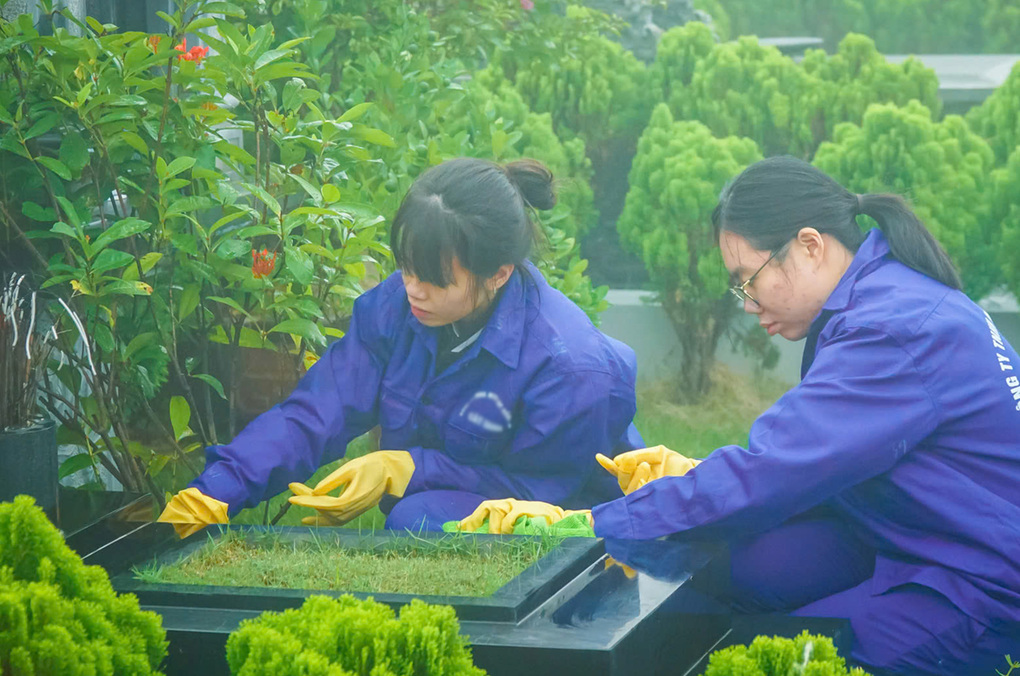
For many, the experience serves as a form of exposure therapy. By confronting their fears in a structured, respectful environment, these young people find that the atmosphere of the memorial park is not one of dread, but of quiet, natural beauty. As Minh noted, "If I am not doing anything disrespectful to the departed, I trust they will not frighten me."
Broader Implications and Societal Context
The surge in interest among Gen Z to participate in this program is not merely a hobby; it is a symptom of broader societal trends. According to HR analysts, younger generations are increasingly seeking "meaning-making" activities that provide a sense of agency and impact, which is often missing in corporate environments characterized by invisible, high-pressure output.
Fact-Based Analysis of the Phenomenon:
- Burnout Mitigation: The transition from digital to manual labor provides a psychological "reset." The clear, observable outcome of cleaning a headstone stands in stark contrast to the abstract and never-ending nature of digital tasks.
- Cultural Preservation: Many participants, such as Duong and Ngoc, expressed that their experience in the memorial park encouraged them to think more about their own families and the importance of visiting their own ancestors.
- Economic Support: While the participants receive a modest stipend of 250,000 VND (approximately $10 USD) as a token of appreciation for their labor, the value of the work is largely viewed through the lens of community service and self-reflection.
Hoang Thi Quoc Khanh, a representative for Lac Hong Vien, emphasized that the park does not intend to turn young people into full-time cemetery workers. "We do not expect them to abandon their careers," she stated. "We only want them to have the opportunity to feel and appreciate the work of those who maintain these spaces, and to contribute to the peace of those who have moved on."
A New Perspective on Life and Death
The impact of this experience extends beyond the boundaries of the cemetery. As participants return to their urban lives, they report a shift in perspective. For many, the juxtaposition of the quiet, serene hills of Hoa Binh and the chaotic, noise-filled streets of Hanoi provides a needed contrast.
Ngoc, a 24-year-old office worker, admitted that she felt hesitant when she first held the cloth to wipe a headstone. However, after walking through the grounds and observing the natural beauty of the trees and streams surrounding the park, she realized that the cemetery was not a place to be feared. "It is a place of memory," she remarked. "Working here, I have gained a new understanding of the connections we have with those who have left us."
Future Outlook
The program is expected to continue, with management planning to refine the volunteer experience based on the feedback received during this initial phase. By creating a space where the younger generation can engage with the realities of life and death, the organizers hope to foster a culture of empathy and intergenerational respect.
As the sun sets on the hills of Hoa Binh, the volunteers depart, often carrying a sense of accomplishment that is fundamentally different from the satisfaction of closing a digital file or meeting a sales target. In the silence of the cemetery, these young professionals have found a rare commodity in the modern world: a quiet, meaningful connection to the past, and perhaps, a clearer vision for their own futures.
This trend of "spiritual labor" is likely to continue as more young people seek out ways to balance the high-speed demands of the 21st-century economy with the human need for reflection, stillness, and a tangible sense of contribution to the collective history of their society.
Related posts: