TPHCM Vision 2025-2050: Unlocking the Maritime Economy Potential of the Cai Mep – Thi Vai Deep-Water Port System

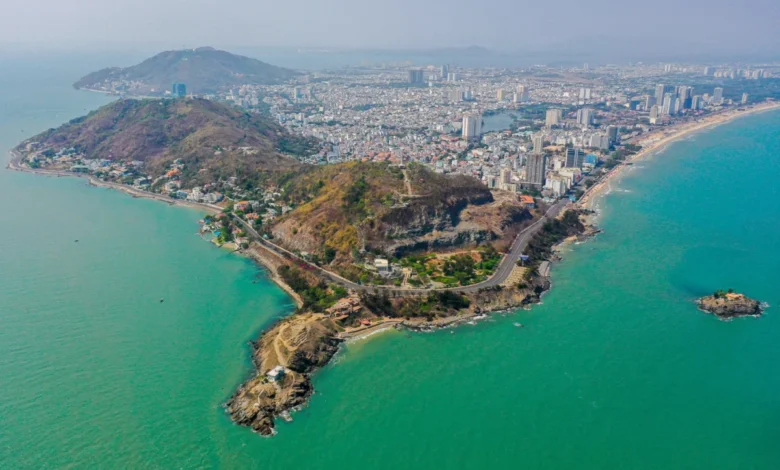
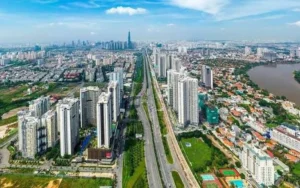
Ho Chi Minh City is charting a transformative course for its future under the newly unveiled comprehensive master plan for the 2025–2050 period, with a grand 100-year vision. At the heart of this strategy lies a bold structural shift toward a multi-centric, polycentric metropolis designed to redefine the regional and national economic landscape. By pivoting aggressively toward maritime and coastal development, TPHCM aims to establish a robust economic growth corridor in its southern sector, leveraging the immense logistical and industrial advantages of the world-class Cai Mep – Thi Vai deep-water port system in Ba Ria – Vung Tau.
The comprehensive urban blueprint establishes a framework composed of five core growth poles, five satellite urban centers, five strategic linkages, and ten administrative development zones. Within this intricate urban architecture, the southern coastal territory has been designated as the epicenter for maritime trade, free-market commerce, logistics, and advanced marine energy systems. Key satellite spaces such as Long Hai – Ho Tram and the Con Dao archipelago are envisioned as critical developmental nodes. This strategic realignment aims to maximize the latent potential of Vietnam’s coastal economy by forging seamless synergies between modern port infrastructure, intelligent urban centers, clean manufacturing, and high-value marine services.
Strategic Integration of Ports, Logistics, and Global Trade
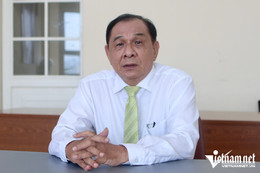
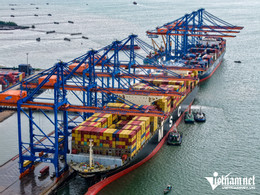
According to TSKH Tran Quang Thang, Director of the HCMC Institute of Economics and Management, the Ba Ria – Vung Tau region possesses unparalleled comparative advantages that position it as a paramount maritime economic hub for the entire nation. The cornerstone of this competitive edge is the Cai Mep – Thi Vai deep-water port cluster. As one of Vietnam’s premier maritime gateways, it boasts the rare capability to accommodate ultra-large container vessels and establish direct connections with major international maritime shipping routes.
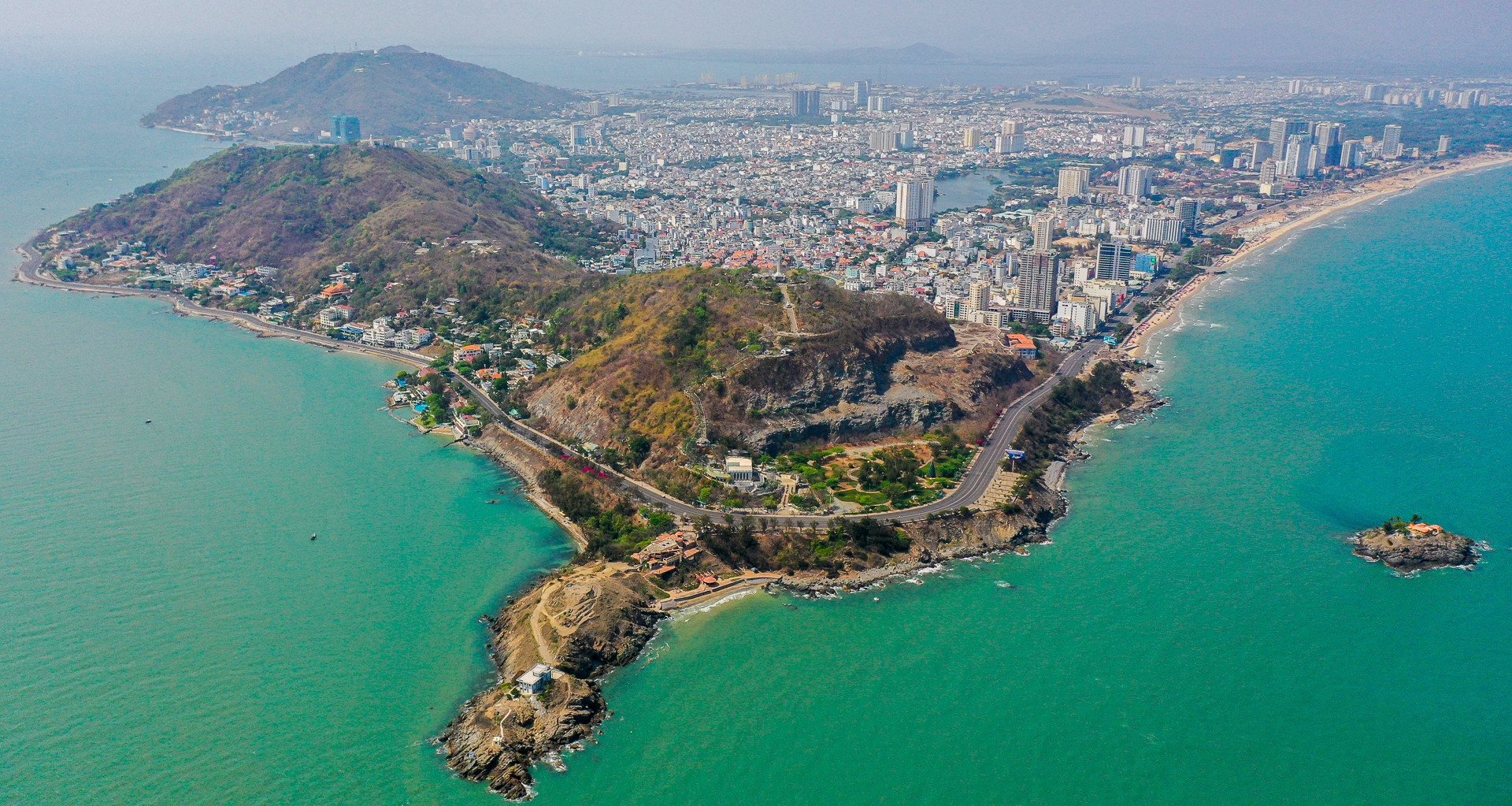
This direct connectivity serves as the bedrock for developing high-value-added services, including international maritime transport, marine insurance, specialized maritime finance, advanced warehousing, and sophisticated regional distribution networks. However, to unlock the full economic yield of these assets, experts emphasize that the city must transcend traditional paradigms. Rather than functioning merely as a transshipment pass-through for cargo, the region must cultivate a comprehensive marine economic ecosystem where advanced logistics and clean maritime industries act as primary growth catalysts.
Attracting high-tech manufacturing plants, eco-friendly industries, centralized distribution hubs, and multinational logistics corporations will facilitate the creation of closed-loop supply chains. These integrated networks will seamlessly bridge primary manufacturing, climate-controlled storage, multimodal transportation, and global export operations. Furthermore, the convergence of these industrial activities with world-class maritime logistics is projected to dramatically reduce operational friction and transit times for businesses operating within the southern key economic zone.
Evolution of the Urban-Maritime Blueprint and Land-Use Strategy
To support this ambitious transformation, spatial planners have introduced a specialized land-use distribution model spanning approximately 6,000 hectares within the southern maritime corridor. The proposed allocation strategically balances urbanization demands with environmental conservation and maritime industrial growth. Under this framework, urban residential zones account for roughly 25% (1,500 hectares), while commercial, service, and maritime financial sectors occupy 20% (1,200 hectares).
Logistics, port operations, and clean industrial manufacturing are assigned 25% (1,500 hectares) of the total land area, ensuring adequate space for future supply chain expansions. Coastal tourism, resort real estate, and marine entertainment comprise 15% (900 hectares), while the remaining 15% is strictly dedicated to ecological preservation, green infrastructure, and water surface management. This deliberate apportionment aims to prevent urban sprawl, mitigate environmental degradation, and establish a harmonious balance between economic productivity and ecological resilience.
Urban planners suggest that this diversified functional model will insulate the regional economy from the vulnerabilities of single-industry reliance. By combining commercial trading, marine financial services, and high-end tourism with heavy industrial logistics, the southern corridor can generate robust, multi-channel revenue streams capable of sustaining long-term fiscal health.
Infrastructure Development as the Catalyst for Regional Connectivity
The realization of TPHCM’s maritime vision is inextricably linked to the rapid and synchronized advancement of inter-regional transportation networks. Historically, infrastructural bottlenecks have constrained the logistical velocity of the Cai Mep – Thi Vai port cluster. To rectify this, the master plan prioritizes the accelerated deployment of critical arterial projects, including the Bien Hoa – Vung Tau Expressway, the coastal expressway corridor, Ring Road 4, and direct high-speed transit linkages to the upcoming Long Thanh International Airport.
These transportation arteries are engineered to form a robust multimodal logistics network capable of facilitating the rapid, high-capacity flow of freight and passengers between industrial parks, urban centers, and international transit hubs. Concurrently, the integration of advanced digital data infrastructure, automated customs clearance facilities, and centralized logistics information platforms will transform the southern corridor into a technologically advanced smart logistics zone.
Financial experts recommend a phased implementation strategy, dividing the expansive 6,000-hectare project into manageable phases of 1,000 to 1,200 hectares each. Priority should be granted to sub-regions capable of generating early financial returns, such as commercial, residential, and tourism zones. This incremental approach alleviates immediate fiscal burdens on public coffers while creating a predictable investment climate that encourages robust participation from private domestic enterprises and foreign direct investment (FDI) funds.
Pioneering Special Economic Mechanisms and B2B Trade Models
To successfully compete with established maritime powerhouses across the Asia-Pacific region, TPHCM and its neighboring localities must pioneer breakthrough institutional frameworks. Experts advocate for the establishment of specialized coastal economic zones endowed with simplified administrative procedures, attractive tax incentives, and streamlined investment licensing protocols. Creating a unified management authority would eliminate bureaucratic friction, empowering regional leaders to decisively coordinate spatial planning, land clearance, and project execution.
A particularly innovative proposal featured in the master plan is the development of an international B2B trade center linked directly with the Cai Mep – Thi Vai port cluster and the proposed Cai Me Ha Free Trade Zone. Unlike conventional retail-oriented commercial centers, this model is specifically engineered for business-to-business transactions, international commodities trading, wholesale distribution, specialized trade exhibitions, and cross-border e-commerce.
Integrated seamlessly with bonded warehouses and preferential tariff zones, this international trade hub is designed to function as an indispensable nexus within global supply chains. Revenue generation will be derived not from traditional real estate leasing, but from high-velocity monetary transactions, international multimodal transport services, marine value-added solutions, and global trade facilitation platforms.
Environmental Sustainability and Climate Change Adaptation
As industrialization and urban expansion accelerate along the southern coast, safeguarding the fragile marine and terrestrial environment remains a paramount imperative. The master plan mandates strict compliance with environmental protection standards, requiring all industrial parks, logistics centers, and port facilities to adopt advanced wastewater treatment technologies and green energy solutions.
Proactive adaptation measures against climate change—including rising sea levels, coastal erosion, and saltwater intrusion—are integrated directly into the zoning guidelines. Preserving expansive green corridors, wetland buffers, and natural drainage basins will safeguard urban settlements while maintaining the ecological integrity of the coastal ecosystem. Furthermore, municipal authorities have committed to ensuring transparent resettlement policies, comprehensive vocational retraining programs, and equitable compensation frameworks for local communities affected by infrastructure development, ensuring that the fruits of economic growth are shared inclusively across all segments of society.
Macroeconomic Implications and Long-Term Projections
The successful execution of TPHCM’s long-term maritime development strategy is projected to yield extraordinary socioeconomic dividends. According to preliminary economic modeling by the HCMC Institute of Economics and Management, the fully realized urban-maritime economic zone could attract between $20 billion and $30 billion in cumulative investment capital over the coming decades. Furthermore, the initiative is anticipated to generate between 150,000 and 250,000 direct and indirect jobs across specialized sectors such as green logistics, advanced manufacturing, marine finance, international trade, and coastal tourism.
By synergizing the operational capacity of the Cai Mep – Thi Vai deep-water port system with visionary urban planning, progressive institutional reforms, and sustainable environmental management, TPHCM and Ba Ria – Vung Tau are poised to redefine Vietnam’s economic geography. This grand vision not only cements the region’s status as a premier maritime economic nucleus within Southeast Asia, but also reinforces the nation’s broader strategic ambition of emerging as a globally competitive trade and logistics superpower by the mid-21st century.