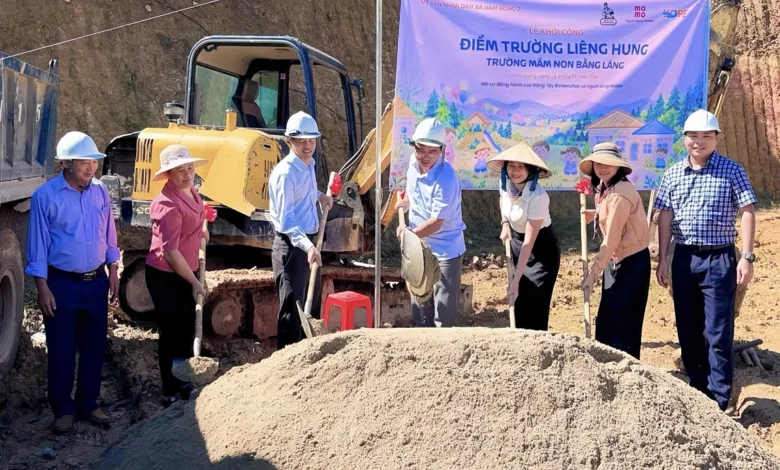
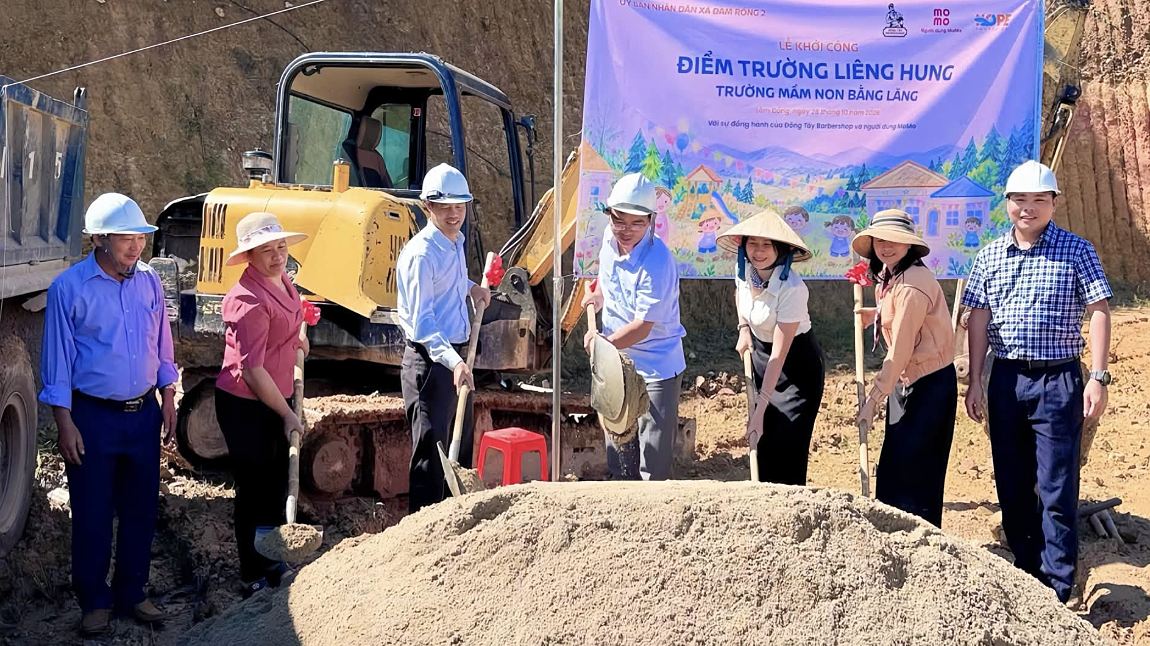
The commencement of construction for two new classrooms at the Lieng Hung school site in Dam Rong 2 Commune, Lam Dong Province, marks a significant milestone in the ongoing efforts to improve educational infrastructure in Vietnam’s remote highlands. This project, facilitated by the Hy Vong Foundation (Hope Foundation) in collaboration with local authorities and corporate partners, seeks to alleviate the severe overcrowding and facility degradation that have long hindered early childhood development for the Cil ethnic minority children in the region.
The Reality of Educational Infrastructure in Dam Rong
Established in 2016, the Lieng Hung school site—a critical branch of the Bang Lang Preschool—was originally designed to accommodate between 50 and 70 students. However, the rapid growth of the local population and the lack of alternative educational facilities in the mountainous terrain have forced the school to operate far beyond its intended capacity. Currently, the facility serves nearly 100 students, the vast majority of whom belong to the Cil ethnic minority community.
The physical conditions of the school have reached a critical state. After a decade of constant use, the infrastructure shows clear signs of decay: peeling wall paint, structural wear, and inadequate outdoor play areas. According to Ms. Dao Thu Hoa, Vice Principal of the school, the current pedagogical standards—which recommend a maximum of 35 children per class—are impossible to maintain. Teachers are currently tasked with managing nearly 50 children in a single room.
The spatial limitations are profound. Desks and chairs are packed tightly together, leaving almost no room for movement. During lunch, the lack of a proper cafeteria forces staff to divide the children into small groups, utilizing corridors and the small courtyard in front of the classrooms to distribute meals. This environment not only impedes academic progress but also creates significant challenges for sanitation and safety.
The Human Cost of Facility Shortages
The lack of adequate space has created a ripple effect throughout the local community. Because the school cannot enroll more students due to safety regulations and spatial constraints, many families living in remote areas—some as far as 15 kilometers away—are forced to seek alternatives.
For parents in these mountainous regions, the options are stark. Many families of the Mong and Cil ethnic groups are forced to relocate temporarily, renting small, makeshift living quarters near the commune center just so their children can attend preschool. This disruption to family life places an immense economic and emotional burden on these households, as parents must take turns staying in the commune to care for their children, often sacrificing their agricultural livelihoods in the process.
Chronology of the Intervention
The project to renovate and expand the Lieng Hung school site is the result of a multi-stakeholder partnership designed to address these systemic issues:
- 2016: The original Lieng Hung school site is established to serve the growing population of Dam Rong 2 Commune.
- 2024 (Q1-Q3): Recognizing the worsening conditions, the Hy Vong Foundation, in partnership with MoMo and Tay Barbershop, launches the "Chung tay xây trường" (Join Hands to Build Schools) campaign.
- October 28, 2026: Official groundbreaking ceremony for the new 150-square-meter facility, including two modern classrooms equipped with integrated sanitary facilities.
- Future Projection: Upon completion, the school aims to increase its intake by 50 to 60 additional students, raising the total capacity to 150 children.
Financial Support and Community Engagement
The project is estimated to cost 1.55 billion VND. A substantial portion of this funding was secured through the "Chung tay xây trường" campaign, which utilized digital innovation to drive social change. MoMo users participated in the effort through the "Momo’s Piggy Bank" in-app game, where each successful game session resulted in a 200 VND contribution from corporate sponsors toward the Hy Vong Foundation. This model of "gamified philanthropy" allowed thousands of individual contributors to participate in a large-scale infrastructure project, demonstrating the power of digital connectivity in addressing rural development gaps.
Official Perspectives and Local Governance
During the groundbreaking ceremony, Mr. Truong Van Sang, Deputy Secretary of the Party Committee and Chairman of the People’s Committee of Dam Rong 2 Commune, emphasized the unique challenges posed by the region’s geography. "The rugged, fragmented terrain of our highlands is a major obstacle in managing and distributing school networks," Mr. Sang stated. He noted that the new project is not merely an investment in bricks and mortar, but a strategic move to ensure educational equity.
"The care and support from various sectors, especially the Hy Vong Foundation, creates favorable conditions for our teachers to enhance the quality of education in these deep-lying areas," Mr. Sang added. He further urged the construction contractors to focus their resources on ensuring that the facility is completed on time and meets all national safety and pedagogical standards set by the Ministry of Education and Training.
Broader Implications for Highland Education
The situation at the Lieng Hung school site is emblematic of a broader challenge faced by rural education in Vietnam. As the country continues to modernize, the disparity between urban and remote educational facilities remains a primary concern for policymakers.

- Educational Quality and Nutrition: The addition of new classrooms, particularly with dedicated sanitary facilities, is expected to improve hygiene standards, which directly correlates to child health and attendance rates.
- Socio-Economic Stability: By providing adequate local preschooling, the community reduces the need for "educational migration," allowing parents to remain in their home villages and maintain their traditional economic activities.
- Teacher Retention: Improving working conditions is a vital factor in teacher retention. Educators working in remote regions often face high burnout rates due to overcrowded classrooms and limited resources. Providing a modern, well-equipped environment is a proven method to attract and keep qualified teaching staff in high-need areas.
Analysis: Beyond the Classroom
The expansion of the Lieng Hung school site serves as a case study for sustainable development in mountainous regions. While infrastructure is a necessary first step, long-term success will require continued investment in teacher training and curriculum development tailored to the cultural context of the Cil and Mong ethnic groups.
Furthermore, the integration of technology—both in terms of the digital funding model used for this project and the eventual potential for digital learning tools—suggests a path forward for bridging the "digital divide" that often compounds the physical isolation of these communities.
As construction progresses, the eyes of the community are fixed on the completion date. For the parents and children of Dam Rong 2, these two rooms represent more than just additional space; they represent a bridge to a future where geography does not dictate the quality of a child’s early education. The project remains a testament to the effectiveness of public-private partnerships in addressing the persistent inequalities that define life in Vietnam’s highlands.
The successful implementation of this initiative will likely serve as a blueprint for future school development projects across Lam Dong, offering a scalable model for how local authorities, non-profit organizations, and private corporations can work in concert to build a more equitable educational landscape.
Related posts: