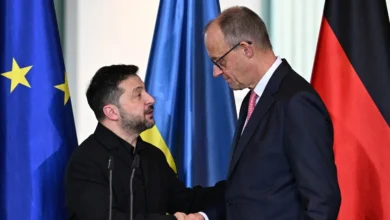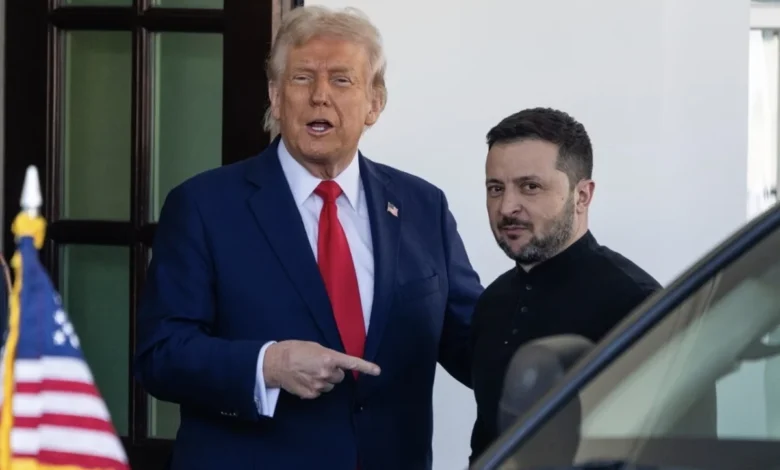
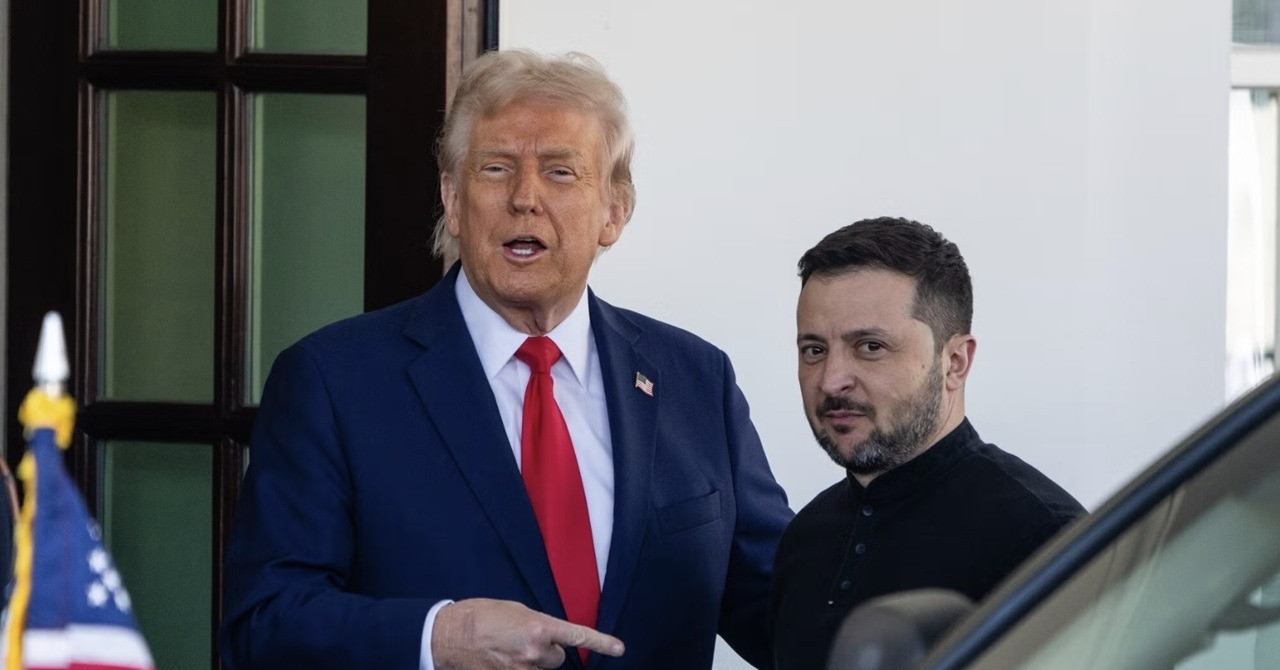
The diplomatic friction between Washington and Kyiv has intensified following remarks by US President Donald Trump, who categorically dismissed assertions made by Ukrainian President Volodymyr Zelensky regarding an accelerated peace timeline. President Zelensky had previously claimed that the Trump administration was aggressively pushing for a finalized settlement to end the ongoing Russia-Ukraine conflict by January—a politically sensitive juncture coinciding with shifts in the US legislative landscape.
Addressing reporters regarding these claims, President Trump questioned the origin of the narrative and clarified his position on deadlines. "Who said that? What does Mr. Zelensky want me to do? I am not setting any deadlines. I just want to see the conflict end," President Trump stated. He emphasized that the overarching goal is an immediate resolution, though he acknowledged that achieving sustainable peace requires active and willing cooperation from both belligerent parties.
Chronology and Origins of the Dispute
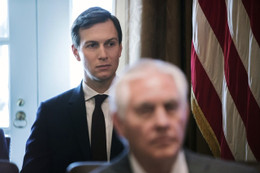
The war between Russia and Ukraine has entered a highly volatile phase, characterized by shifting diplomatic maneuvers and intense battlefield friction. The latest diplomatic spat stems from an interview granted by President Zelensky to international media, during which he outlined the activities of US special envoys Jared Kushner and Steve Witkoff. According to the Ukrainian leader, these envoys have been actively pressing Moscow and Kyiv to agree to terms ahead of January, a period historically marked by significant political transitions in Washington.
However, deep-seated divergence remains the primary obstacle to any formal agreement. Kyiv and Moscow are reportedly at extreme odds regarding fundamental issues of national security and territorial integrity. While Washington seeks to accelerate a political framework, Ukrainian officials argue that fundamental guarantees must precede any ceasefire. The divergence in strategic visions has repeatedly stalled back-channel communications, creating friction between the Ukrainian administration and the White House.
Strategic Leverage and Kyiv’s Diplomatic Calculus
Faced with mounting military pressure and a reluctance from the current US administration to commit indefinite financial and material blank checks, President Zelensky’s administration has sought alternative pathways to strengthen its hand. Ukrainian leadership has explored leveraging political dynamics within Washington, specifically targeting legislative actors to maintain sustained assistance packages.
"We will seek a large-scale military aid package from the US, while simultaneously driving harsher retaliatory measures against Russia if a peace deal acceptable to Ukraine cannot be reached," President Zelensky noted during his recent briefings. Kyiv maintains that high levels of international support and strict enforcement of economic sanctions are vital to compelling Moscow to engage seriously at the negotiating table. However, this strategy has periodically created tension with American negotiators, who have cautioned that public airing of internal disagreements can disadvantage Ukraine’s position.
Security Guarantees and International Reactions
A central pillar of the ongoing peace negotiations involves the nature of post-conflict security arrangements for Ukraine. Recent diplomatic reports indicate that US negotiators have officially ruled out the deployment of American ground troops or the establishment of permanent US military bases within Ukrainian territory once hostilities cease. This boundary represents a significant constraint for Kyiv, which has continuously sought robust, binding security architectures comparable to NATO’s Article 5 collective defense clause.
Conversely, proposals originating from various European allies—often referred to informally as the "coalition of the willing"—have floated the possibility of deploying a multinational security force to Ukraine to deter future aggression should a settlement be reached. This disparity in security visions highlights the complex multilateral dimensions of the conflict, wherein European and American strategies do not entirely align.
Broader Implications and Ongoing Hostilities on the Ground
The diplomatic deadlock occurs against a backdrop of continuing military engagements that consistently threaten to derail peace initiatives. Despite appeals from Washington to de-escalate specific types of strikes, kinetic operations persist unabated. Russian leadership recently noted that Ukrainian forces continue to target critical energy infrastructure, including oil refineries, defying requests from the US president to pause such operations.
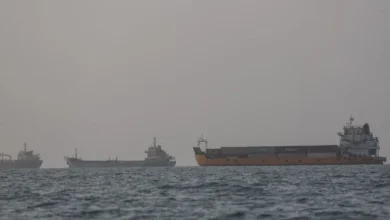
Concurrently, third-party nations have begun voicing concerns over the widening scope of maritime and regional skirmishes. Countries such as Norway and Libya have publicly registered objections following incidents involving commercial and naval vessels near contested shipping lanes, emphasizing their desire to remain insulated from the direct fallout of the protracted conflict.
As diplomatic channels continue to test various formulas for a durable settlement, the interplay between Washington’s push for a pragmatic resolution and Kyiv’s demand for uncompromised sovereignty underscores the immense difficulty of bringing the Russia-Ukraine war to a close. Both domestic political pressures and divergent security definitions ensure that the path toward lasting peace remains fraught with diplomatic hurdles.