Germany Demands Full EU Financial Commitment to Support Ukraine Amid Rising Budgetary Tensions

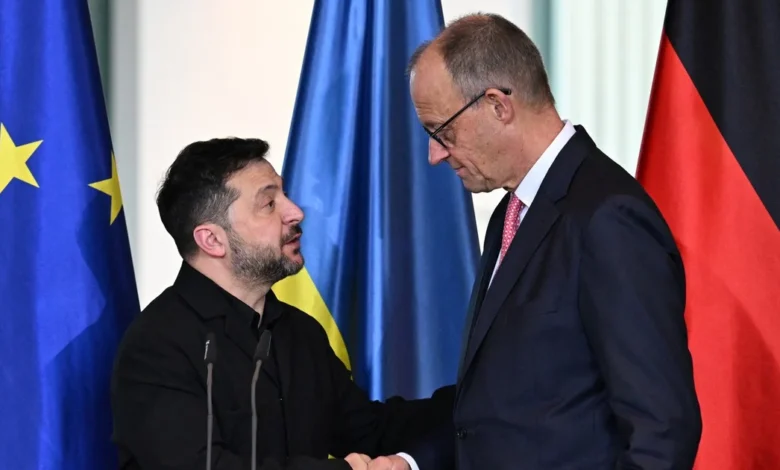
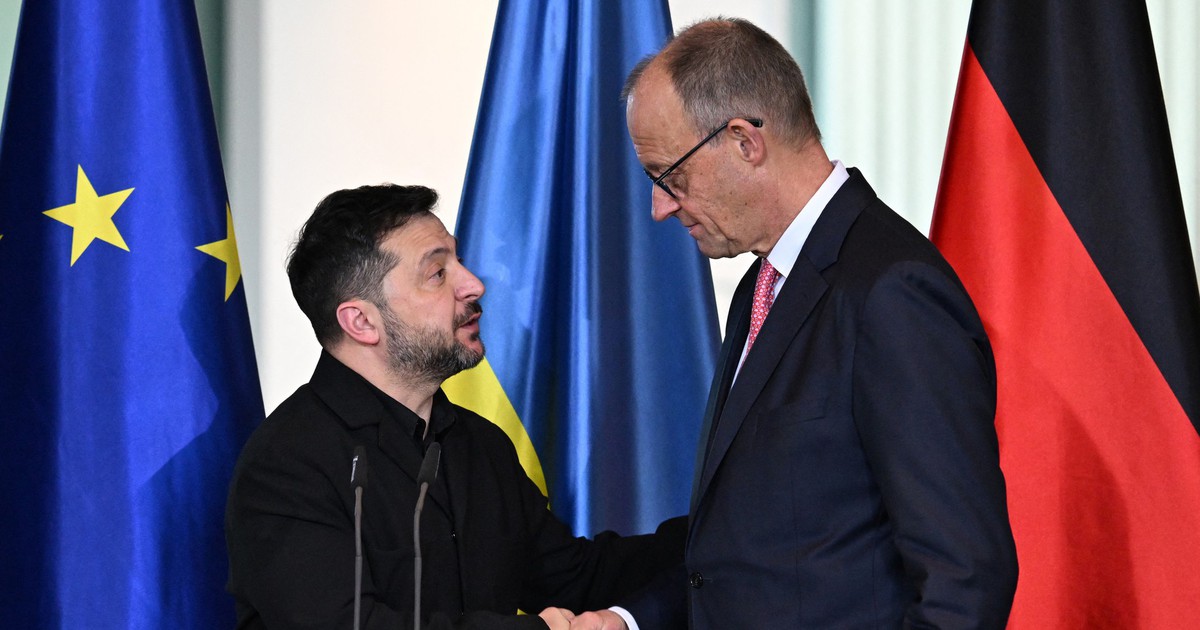
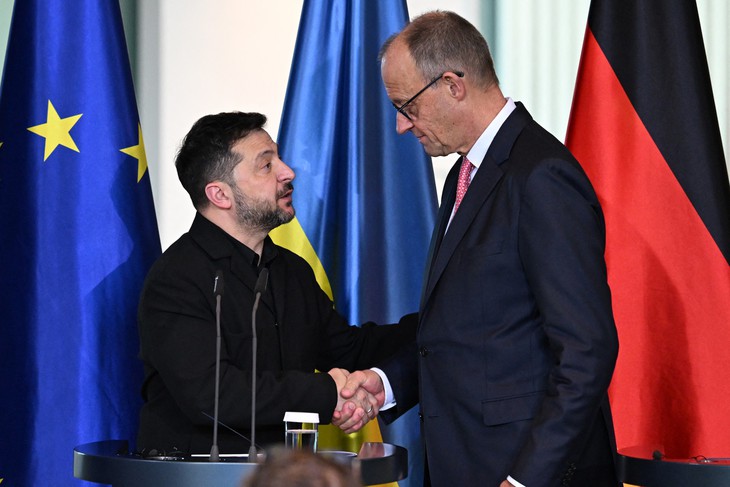
German Chancellor Friedrich Merz has issued a definitive call to action to all 27 member states of the European Union, urging a unified and unwavering financial commitment to support Ukraine. Speaking in Berlin alongside Hungarian Prime Minister Peter Magyar, Chancellor Merz stressed that Europe’s collective responsibility toward Kyiv must remain resolute, warning that any reduction in financial assistance could jeopardize the stability of the entire continent.
The appeal comes at a critical juncture for the European bloc, which is currently engaged in complex and contentious negotiations regarding its upcoming multi-year common budget framework starting in 2028. Within these high-stakes discussions, the allocation of dedicated funding for Ukraine has emerged as a major point of friction among member capitals, highlighting deep-seated political divisions within the union.
The Core of Berlin’s Proposal
Chancellor Merz’s remarks underscore Berlin’s firm stance that European solidarity cannot be compartmentalized or subjected to shifting political whims. "We must integrate the entirety of our policy toward Ukraine directly into the European budget," Merz declared during a joint press briefing. "I understand that there are still divergent viewpoints on this matter. At least four member states hold distinctly different perspectives."
According to diplomatic communications accessed by Reuters, the German government is pressing for a comprehensive approach to address Kyiv’s looming financial shortfall, which is projected to reach approximately 70 billion euros by the end of 2027. Within this framework, the European Union is expected to shoulder a substantial burden, contributing an estimated 45 billion euros to bridge the gap.
While acknowledging that the upcoming EU budget must prioritize vital areas such as European defense capabilities and economic competitiveness, Merz maintained that these domestic imperatives cannot come at the expense of Ukraine. Ensuring robust, predictable funding for Kyiv, he argued, is fundamentally intertwined with the long-term security architecture of the European Union itself.
Growing Pushback and Political Divisions
Germany’s ambitious proposal has immediately encountered stiff resistance from several member states, most notably Slovakia and the Czech Republic. The friction highlights a fracturing consensus within Central and Eastern Europe regarding the scope, duration, and mechanism of continued Western aid to Ukraine.
Slovak Prime Minister Robert Fico openly criticized Chancellor Merz during the same diplomatic cycle, accusing the German leader of applying undue financial pressure by linking Ukraine’s ongoing support directly to the broader EU budget negotiations.
"We are a sovereign nation with our own independent viewpoint on this critical issue," Fico stated, signaling that Bratislava is prepared to stand firm against any mandatory financial mechanisms. "We will not be coerced into open-ended funding commitments that bypass national legislative oversight."
Fico’s sentiments were echoed by Czech Prime Minister Andrej Babis, who was visiting Slovakia at the time. Babis voiced confusion and opposition regarding Berlin’s approach, questioning the rationale behind tying vital budgetary reforms to foreign military and financial aid. Both leaders have consistently expressed skepticism over direct military-related financial transfers to Kyiv, favoring alternative diplomatic strategies and emphasizing national sovereignty in fiscal matters.
The resistance from Slovakia and the Czech Republic mirrors past political battles within the bloc. In December of the previous year, the EU successfully brokered a monumental 90-billion-euro loan package for Ukraine. However, Slovakia, the Czech Republic, and Hungary notably opted out of direct participation, setting a precedent of non-involvement that continues to cast a shadow over current unity efforts. While Hungary’s new leadership under Prime Minister Peter Magyar has exhibited a more measured diplomatic tone compared to previous administrations, Budapest remains deeply cautious regarding Berlin’s latest fiscal proposals.
The Geopolitical and Financial Backdrop
The urgency behind Germany’s push is driven by a deteriorating security situation on the ground in Ukraine. Intensified military campaigns and systematic aerial assaults by Russian forces targeting critical energy and civil infrastructure have severely strained the Ukrainian economy. Independent economic forecasts indicate that the financial lifelines established in previous years will be severely depleted well before the conclusion of 2027, making new, sustained funding streams an absolute necessity.

Germany currently stands as the single largest net contributor to the European Union budget and remains Ukraine’s foremost bilateral financial and military benefactor within the continental bloc. Berlin’s leadership views the current budgetary debate as an existential test of European credibility on the global stage. German policymakers argue that failing to secure a predictable, long-term financial mechanism for Ukraine would project weakness to adversaries and undermine decades of European integration and collective security policies.
Implications for the Future of European Integration
The standoff over Ukraine’s future financing exposes broader structural challenges within the European Union. As member states grapple with sluggish domestic economic growth, inflationary pressures, and the rising costs of green and digital transitions, consensus-building has become increasingly difficult.
The debate over the post-2028 budget framework will serve as a definitive litmus test for the EU’s ability to act cohesively during geopolitical crises. If major powers like Germany fail to bridge the gap with skeptical nations such as Slovakia and the Czech Republic, the bloc risks fracturing into a multi-tier structure where foreign and security policies are advanced by coalitions of the willing rather than the union as a whole.
As negotiations proceed in Brussels and national capitals ahead of formal budget deadlines, Chancellor Merz’s challenge to his European counterparts remains a stark reminder of the stakes involved. Whether the European Union can transcend national divisions to secure a stable financial future for Ukraine will shape not only the outcome of the ongoing conflict but also the future trajectory of European unity and strategic autonomy.