Vietnam’s Ministry of Information and Communications Charts Future with CMC Group, Aiming for a Powerful and Prosperous Digital Era


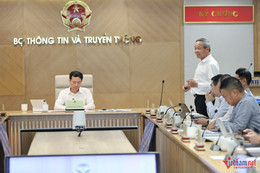
On the afternoon of October 25th, at the headquarters of the Ministry of Information and Communications (MIC) in Hanoi, a landmark working session convened, chaired by Minister Nguyen Manh Hung, alongside the leadership and key executives of CMC Group. This unprecedented meeting marked a pivotal moment for CMC, a technology enterprise with 31 years of operation, signaling the government’s profound recognition of its contributions and its strategic role in Vietnam’s ambitious digital transformation agenda. The dialogue, attended by Deputy Ministers Nguyen Thanh Lam and Bui Hoang Phuong, as well as leaders from various MIC units, underscored the government’s confidence in CMC’s potential to evolve into a leading global digital technology and Artificial Intelligence (AI) powerhouse.
Strategic Dialogue for National Digital Sovereignty
The direct engagement between the MIC’s top brass and CMC’s senior management was more than a routine consultation; it was a clear endorsement of the public-private partnership crucial for achieving Vietnam’s national digital sovereignty. This meeting was particularly significant as it was the first time in CMC’s 31-year history that its core leadership had a dedicated session with the highest levels of the MIC, highlighting the growing importance of domestic tech champions in the national development narrative. Minister Hung emphasized that the Ministry’s invitation to CMC, focusing on its development roadmap, reflected a deep appreciation for the Group’s past contributions to the national technology landscape. More importantly, it conveyed a strategic belief that CMC possesses the inherent capability to transcend its domestic success and emerge as an internationally recognized leader in digital technology. This vision aligns perfectly with Vietnam’s overarching national strategy to actively participate in the Fourth Industrial Revolution, as outlined in Resolution 52-NQ/TW, and to accelerate the National Digital Transformation Program to 2025, with a vision to 2030. These national mandates prioritize the development of robust digital infrastructure, innovative platforms, skilled human resources, and the nurturing of strong domestic digital technology enterprises like CMC, recognizing them as the bedrock for a self-reliant digital economy.

CMC’s Ambitious Vision and Future Roadmap
During the session, Mr. Dang Tung Son, CMC’s Vice Chairman of Strategy, presented a compelling overview of the Group’s journey and its future aspirations. Kicking off with a concise video highlighting over three decades of innovation and growth, Mr. Son detailed CMC’s business performance, key strategic initiatives for the first half of fiscal year 2024, and, crucially, its ambitious development orientation through 2028. CMC’s strategic target is to transform into a global digital and AI group, operating at international standards by 2028. This includes a projected revenue growth exceeding threefold its current figures, a workforce expansion to over 10,000 employees – doubling its present size – with a significant 40% dedicated to AI-related development and research. This bold vision reflects not only CMC’s internal drive but also its commitment to contributing significantly to Vietnam’s burgeoning digital economy, which is projected to reach an estimated $49 billion by 2025, according to reports by Google, Temasek, and Bain & Company, making it one of the fastest-growing digital economies in Southeast Asia. CMC’s plan to prioritize AI development also resonates with global trends and national strategies to harness emerging technologies for competitive advantage.
Ministerial Directives: Mastering Technology and National Mission
Minister Nguyen Manh Hung articulated high expectations for CMC, urging the Group’s leadership and key personnel to embrace a renewed sense of purpose and determination. He called upon CMC to play a pivotal role in Vietnam’s digital transformation revolution, thereby contributing to the nation’s journey towards a powerful and prosperous era. A central theme of the Minister’s address was the imperative for Vietnamese enterprises to "master technology." He underscored this by referencing General Secretary To Lam’s official declaration that Vietnam must achieve technological mastery, particularly as digital transformation is unequivocally identified as the pathway for the nation to attain developed status. This directive resonates deeply with the "Make in Vietnam" philosophy, which champions indigenous technological development and ownership as crucial for national independence and economic resilience.
To effectively master technology and steer the national digital transformation process, Minister Hung advised CMC and other Vietnamese digital technology enterprises to substantially increase their investment in research and development (R&D). The focus, he stressed, should be on first mastering applications, then progressing towards owning core technologies. Currently, Vietnam’s R&D expenditure, while growing, still lags behind some regional counterparts, making this ministerial emphasis a critical call to action for fostering genuine technological independence and innovation. Minister Hung asserted that now is the opportune moment for CMC to boldly declare its position as a leading, large-scale digital technology enterprise, not merely within Vietnam but with a demonstrable international reach. To realize these "leading, large, and international" objectives, he counselled, CMC must undertake significant projects intrinsically linked to national missions and execute them with uncompromising thoroughness. "If an enterprise wants to grow, to endure with the nation, it must link itself with national missions," Minister Hung stated, framing corporate success within the broader context of national development and long-term national prosperity.
Key Strategic Areas and Policy Support
The intensive four-hour working session provided ample opportunity for detailed discussions, with Minister Hung, the Deputy Ministers, and other MIC leaders offering comprehensive responses to CMC’s proposals and queries. They also put forth concrete suggestions for CMC’s strategic focus areas in the coming period, demonstrating the Ministry’s proactive role in guiding and supporting the industry.
Enhancing Digital Infrastructure Resilience
A significant concern raised by CMC related to the cumbersome procedures for land allocation to establish new submarine fiber optic cable landing stations. These stations are vital for bolstering Vietnam’s international internet connectivity, which has historically faced disruptions due to frequent cable breaks, impacting businesses and daily life. Recognizing the critical importance of robust and resilient international telecommunications networks for national security and economic stability, the MIC leadership guided CMC. They advised the Group to thoroughly examine the provisions of the updated Land Law and to collaborate with the Telecommunications Authority. This collaboration would enable the MIC to propose to relevant provinces the strategic planning of land for these crucial landing stations, thereby streamlining the process and fortifying Vietnam’s digital backbone against future vulnerabilities, ensuring uninterrupted connectivity for a digitally reliant nation.
Innovation in Market Strategy
Addressing CMC’s apprehensions regarding future development space, Minister Hung offered insightful guidance on market strategy. He remarked that while enterprises often seek "blue ocean" spaces – entirely new, untapped markets – significant opportunities also exist within "red ocean" territories, which are already crowded and competitive. The key, he explained, lies in adopting fresh, distinctive, and innovative approaches that differentiate offerings even in established sectors. "The fields of information and communications technology (ICT) are always new," Minister Hung affirmed. "Therefore, the industry itself doesn’t need to ponder much about finding new spaces. The question is whether the enterprise dares to do it and does it thoroughly?!" This challenges companies to push boundaries, embrace creativity, and innovate relentlessly even in established sectors, rather than solely relying on discovering entirely new markets.

Focus on Foundational Digital Infrastructure
For a mature and sizable enterprise like CMC, the Minister recommended a strategic pivot towards developing foundational infrastructure. This includes critical components such as Cloud services, Data Centers, and fundamental software platforms. The rationale is that by building these robust "backbones," CMC can create an ecosystem where other enterprises can "stand on its shoulders," leveraging CMC’s infrastructure to build their own innovative solutions. This approach not only strengthens the national digital ecosystem by providing shared, high-quality resources but also positions CMC as a central enabler for broader digital transformation across various industries, fostering collective growth and efficiency.
Strategic Technology Investment
Regarding CMC’s dilemmas in selecting core technology investment areas, the MIC leadership provided clear direction. If CMC’s strategy already encompasses the Internet of Things (IoT), then Artificial Intelligence (AI) and semiconductor chip development should be considered parallel and equally essential branches. Both are critical for future technological leadership and synergistic with IoT applications, creating intelligent and interconnected systems. This integrated approach ensures that CMC is not just reacting to technological trends but proactively shaping its capabilities to meet future demands in a converged digital landscape.
Specialized AI Development
In the rapidly evolving field of AI, a nuanced strategy was proposed for CMC and other Vietnamese digital technology enterprises: focus on "narrow AI," specialized AI, custom AI, and AI tailored for individual users and specific businesses. Instead of trying to compete directly with global giants in general AI, Vietnamese firms should leverage their unique understanding of local contexts, cultural nuances, and niche market demands. The Minister even suggested that enterprises could develop foundational platforms that empower individuals and organizations to create their own AI assistants by feeding them their proprietary data, thereby fostering a vibrant ecosystem of personalized AI solutions. This strategy aligns with Vietnam’s National Strategy on AI Research, Development, and Application to 2030, which aims to establish Vietnam as one of the top four AI hubs in ASEAN, emphasizing practical applications and local relevance rather than broad, undifferentiated competition.

Internal Digital Transformation as a Prerequisite
Minister Hung also issued a crucial directive: before embarking on digital transformation initiatives for other enterprises, CMC must first undergo its own internal digital transformation. This internal journey would provide invaluable firsthand experience, deep understanding of the challenges and opportunities, and credible expertise when advising external clients. Leading by example, he argued, would not only enhance CMC’s internal efficiency and capabilities but also make the process of guiding other businesses far more effective and impactful, building trust and demonstrating practical expertise in the complex realm of digital transformation.
Government as a Partner: Fostering Tech Ecosystem Growth
Throughout the meeting, Minister Hung consistently positioned the Ministry of Information and Communications as a steadfast "home" for Vietnamese digital technology enterprises. He reiterated that the MIC serves as a vital resource where businesses can seek advice, support, and solutions when encountering difficulties, underscoring a commitment to nurturing the domestic tech sector. This commitment highlights the government’s understanding of the symbiotic relationship between policy and industry growth. "The MIC recognizes that if digital technology enterprises do not develop, then the Ministry and the industry itself cannot develop, and the national digital transformation story cannot be realized," Minister Hung clarified. This statement powerfully encapsulates the government’s acknowledgment that the success of its digital agenda is inextricably linked to the vitality and growth of its domestic tech sector. This collaborative approach, characterized by open dialogue and proactive support, is a cornerstone of Vietnam’s broader economic development strategy, where public-private partnerships are seen as essential drivers for innovation, job creation, and sustainable progress in the digital age.
Concluding Commitments and Future Outlook
The working session concluded on a note of mutual commitment and optimism. As a symbolic gesture of support and guidance, Minister Nguyen Manh Hung presented CMC Chairman Nguyen Trung Chinh with two significant books: "Information and Communications Industry" and "Digital Transformation Overview: Strategy & Roadmap," serving as both a recognition of the present and a roadmap for the future. Expressing profound gratitude for the Ministry’s candid and dedicated contributions, Chairman Nguyen Trung Chinh reaffirmed CMC’s unwavering dedication. He stated that beyond the Group’s intrinsic development goals, CMC’s team is deeply committed to contributing to national development, aiming to project Vietnamese intelligence onto the global stage and affirm the nation’s position internationally. Acknowledging the formidable and challenging development goals set, Mr. Chinh humbly requested the continued companionship, support, guidance, and assistance from the Ministry of Information and Communications. This collaborative spirit, where government and leading enterprises work hand-in-hand, is poised to accelerate Vietnam’s journey towards a powerful, prosperous, and digitally advanced future, showcasing the nation’s innovation and capabilities on a global scale and solidifying its standing in the international technology arena.