Phú Quốc is witnessing a remarkable engineering milestone as construction crews on the island’s pioneering Light Rail Transit (LRT) system accelerate fieldwork, successfully laying the initial stretch of rail tracks. This rapid mobilization marks a critical turning point for the infrastructure initiative, designed to seamlessly connect the Phu Quoc International Airport with the prestigious APEC Conference and Exhibition Center. With thousands of tons of specialized steel arriving directly at the site, the project is rapidly transforming the urban transit landscape of southern Vietnam.
Project executives and engineering teams have mobilized unprecedented resources to ensure the ambitious 17.59-kilometer dual-track system meets its rigorous deadlines. Within the next six months, the entirety of the 35.18 kilometers of single-track equivalent is slated for completion, positioning the Phu Quoc LRT as one of the fastest-deployed urban rail projects in the nation’s modern transportation history.
Massive Steel Logistics and Precision Engineering
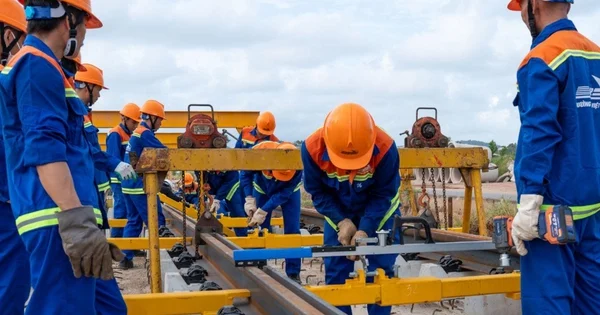
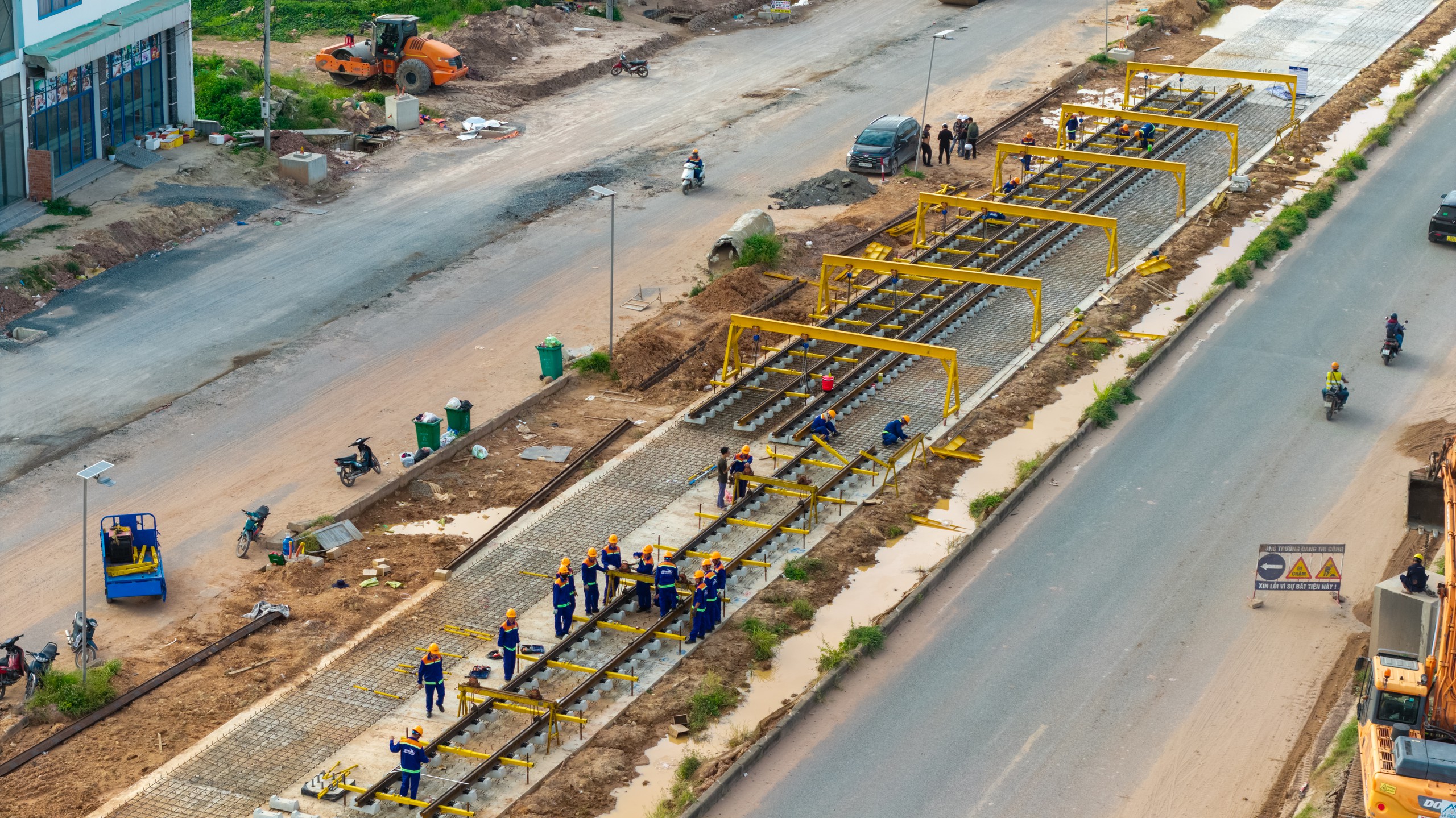
Less than two weeks after the arrival of the initial heavy equipment shipments, nearly one kilometer of standard-gauge 1,435 mm and specialized 60R2 grooved tracks has been positioned along the prepared roadbed. The logistics operation is staggering in scale. Each individual rail segment spans 25 meters and weighs approximately 1.5 tons. As these massive steel beams are systematically unloaded, aligned, and welded into place, they lay the structural foundation for the island’s primary mass transit corridor.
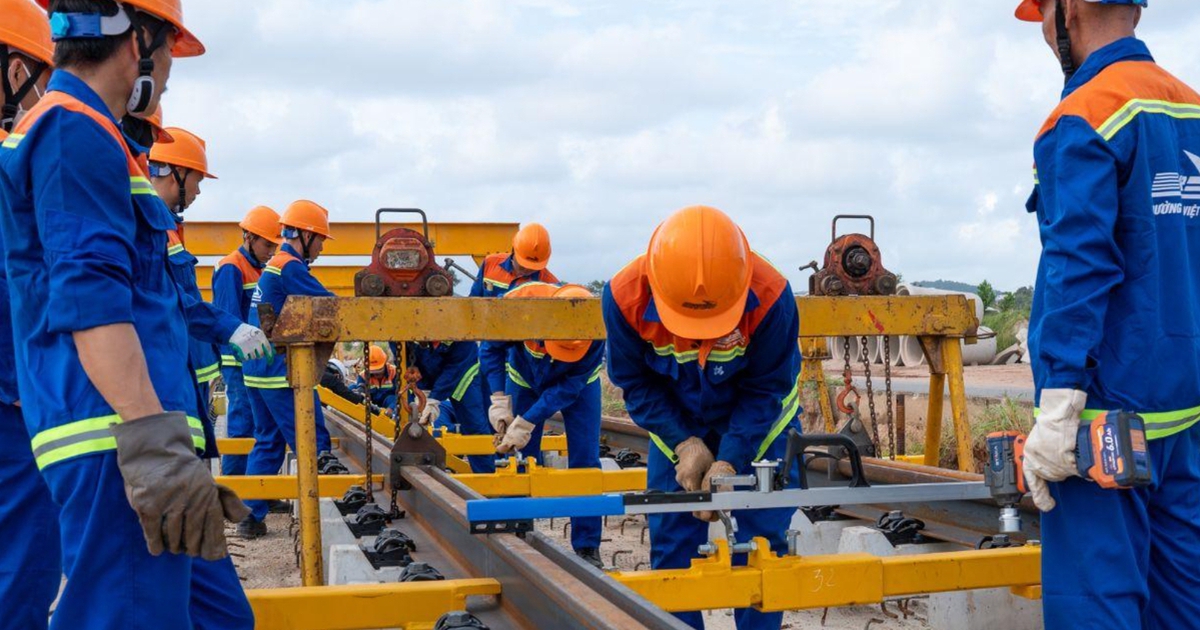
When fully installed, the project will integrate a staggering 2,850 individual rail segments, translating to over 4,200 tons of high-grade structural steel stretching across the southern expanse of the island. This "sea of steel" is meticulously engineered to withstand both the heavy dynamic loads of modern transit vehicles and the unique environmental challenges of a tropical coastal destination.
The selection of 60R2 grooved rails is a deliberate design choice with multifaceted benefits. Unlike traditional railway tracks, grooved rails are specifically engineered for embedded street-running applications. Once installation concludes, the surface area immediately surrounding the tracks can be paved flush with asphalt or decorative stone. This integration minimizes disruptions to surface traffic, allowing multi-modal transport networks to coexist harmoniously while preserving the aesthetic appeal of the island’s premier tourism hubs. Furthermore, the robust cross-section of the 60R2 profile dampens operational vibrations and minimizes rolling noise, ensuring a comfortable, quiet passenger experience.
Unwavering Commitment on the Ground
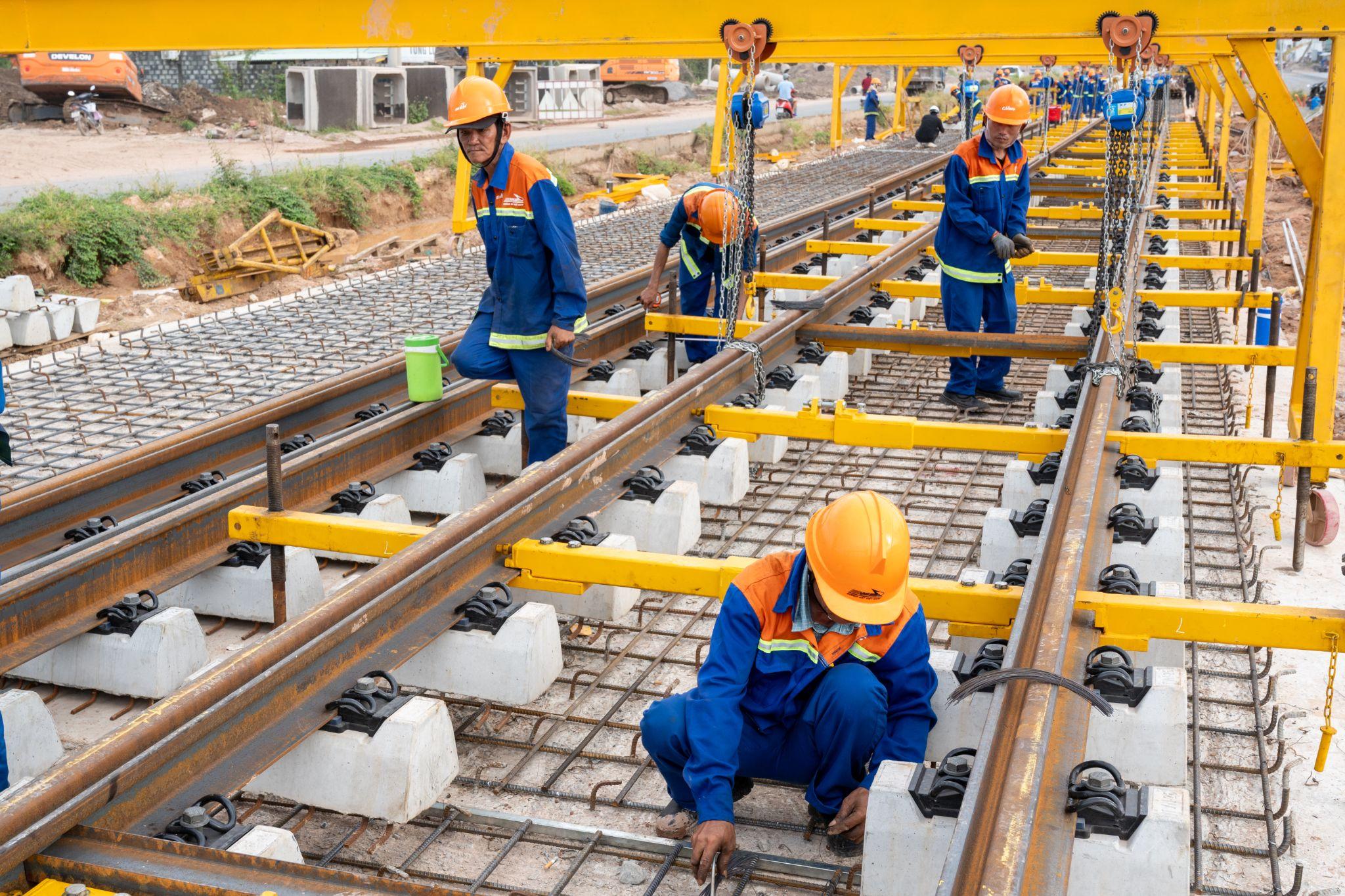
Behind the rapid deployment of the rail infrastructure lies a formidable human effort. The primary Vietnamese contracting consortium has deployed nearly 200 engineers, technical specialists, and construction laborers across multiple synchronized workfronts. Operations continued unabated throughout the National Day holiday period, exemplifying the unwavering dedication of the workforce. While families across the country enjoyed leisure time during the late-summer break, technicians remained stationed along the alignment, welding and fastening track components under the tropical sun.
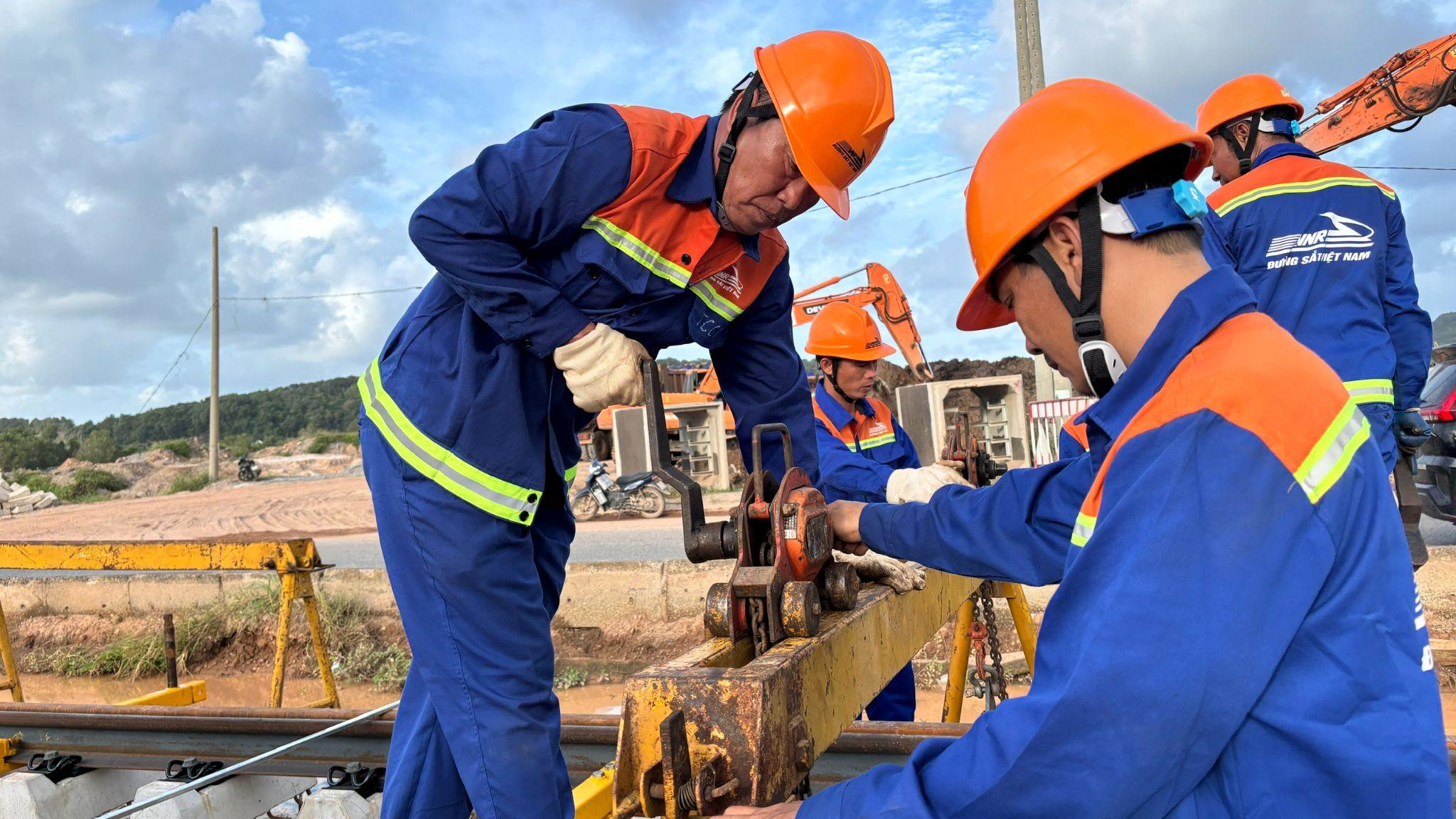
Among the seasoned professionals leading the on-site operations is Mr. Lê Quý Công, a veteran track-laying specialist with over 36 years of experience in the railway sector. Transferred from Hanoi to lend his expertise to the Phu Quoc project, Mr. Công represents a vital bridge between traditional railway craftsmanship and modern urban transit demands.
"Before commencement, our engineering teams underwent rigorous technical briefings covering the specific installation protocols, alignment tolerances, and metallurgical properties of these specialized grooved rails," Mr. Công noted. "While the technical specifications are demanding, this project represents an invaluable opportunity for our veteran workforce to apply decades of accumulated expertise to a truly historic national undertaking."
Project managers emphasize that recruiting veteran craftsmen is essential given the exacting tolerances required for modern light rail systems. The combination of standard-gauge alignment and embedded grooved rails demands millimeter-level precision to ensure high-speed stability and long-term structural integrity.
Institutional Backing and Financial Security
The rapid transformation of the Phu Quoc LRT project is underpinned by decisive governance and robust financial engineering. The initiative has received continuous, hands-on oversight from provincial authorities, including the An Giang Provincial People’s Committee and the Department of Construction, alongside the mobilized support of the broader political apparatus.
Financial backing for the consortium is anchored by the National Citizen Bank (NCB), which provides comprehensive trade finance solutions, including letters of credit, guarantees, and factoring services. This financial security empowers prime contractors and suppliers to maintain an uninterrupted flow of materials, completely mitigating the supply chain bottlenecks that frequently plague large-scale infrastructure developments.
Structured under a Build-Operate-Transfer (BOT) framework, the total investment for the LRT line approaches 9,000 billion VND. Public sector capital accounts for 70 percent of the funding, with the remaining 30 percent contributed by private investors. This public-private partnership model has proven instrumental in accelerating the project’s lifecycle, aligning commercial efficiency with strategic public policy objectives.
Timeline, Milestones, and the Road to APEC 2027
Officially breaking ground in December 2025, the Phu Quoc LRT project has adhered to an extraordinarily aggressive implementation schedule. According to master planning documents, all civil engineering works—including roadbeds, elevated viaducts, and tunneling segments—are scheduled for full completion by February 2027. With track laying commencing in late August 2026, the entire rail installation phase will be executed within a compressed six-month window.
Mr. Trần Anh Tuấn, Deputy General Director of Vietnam Railways Corporation and a representative of the contracting joint venture, characterized the six-month timeline for installing nearly 36 kilometers of urban rail tracks as "truly astonishing." He noted that similar projects in heavily urbanized international markets routinely require three to five years for completion, even without subterranean tunneling components. Provided that international shipping logistics remain unaffected by adverse maritime weather, the consortium believes the schedule could be shortened even further.
The project’s primary short-term mandate is serving as a vital transport artery for the upcoming APEC High-Level Week in 2027. By connecting the Phu Quoc International Airport directly to the APEC Conference and Exhibition Center, the LRT line will provide delegates and international visitors with world-class mobility. Over the long term, the system is projected to reshape the island’s socioeconomic geography, replacing private vehicular congestion with a high-capacity, zero-emission mass transit alternative.
Operational Outlook and Future Capacity
Upon reaching commercial operation, the LRT system will dramatically transform travel dynamics across the island. The project targets trial runs by July 2027, followed by full commercial commissioning in November 2027.
The initial operational phase will introduce a fleet of 6 to 10 train sets, with the eventual capacity to scale up to 14 simultaneous operating rakes. Each train will consist of three modular, eco-friendly cars powered by clean energy sources. At peak operational capacity, the system is designed to transport approximately 4,500 passengers per hour in each direction.
Travel times between the international airport, the APEC convention complex, and the major resort and entertainment clusters in southern Phu Quoc will be slashed to approximately 20 minutes. By bridging the gap between aviation infrastructure and urban tourism centers, the Phu Quoc LRT stands as a monumental leap forward for Vietnam’s transit engineering capabilities, setting a new benchmark for future urban rail developments nationwide.