Robot-assisted surgery successfully treats early-stage lung cancer in 79-year-old patient at Tam Anh General Hospital

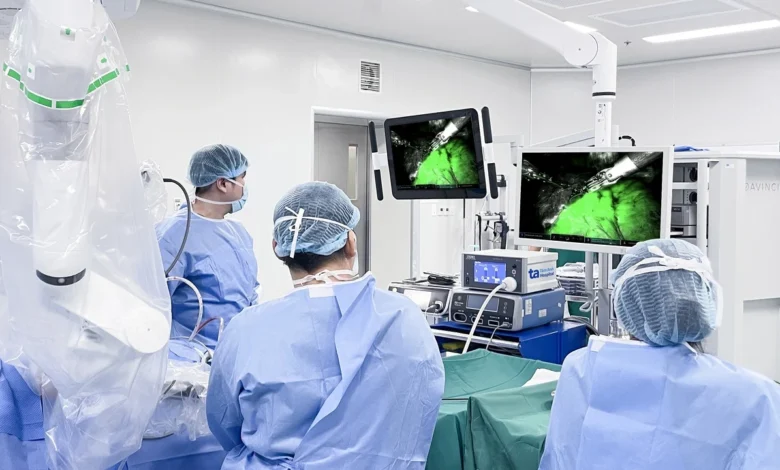
In a remarkable medical achievement at Tam Anh General Hospital in Ho Chi Minh City, a 79-year-old patient, referred to by the pseudonym Ms. Lien, has successfully undergone a minimally invasive robot-assisted lung resection to treat early-stage lung cancer. This case underscores the increasing efficacy of robotic surgical systems in managing complex thoracic conditions in geriatric patients, offering a viable alternative to traditional, more traumatic open surgeries.
Clinical Presentation and Diagnostic Process
Ms. Lien initially sought medical consultation at Tam Anh General Hospital following a persistent, nagging cough and a noticeable decline in physical stamina during routine exertion. Given her age and the potential severity of such symptoms, the medical team prioritized a comprehensive diagnostic evaluation.
High-resolution CT imaging of the thoracic cavity revealed a concerning pulmonary lesion measuring approximately 12x10x11 mm located in segments S4 and S5 of the left lung. The nodule exhibited irregular characteristics—specifically, a spiculated margin and a dense internal structure—which are common markers for malignancy. Furthermore, the scan identified several scattered ground-glass opacities, which necessitated a cautious and highly precise clinical approach.
The Challenge of Geriatric Oncology
According to Associate Professor Dr. Vo Huu Vinh, Director of the Center for Thoracic and Vascular Surgery at Tam Anh General Hospital, the medical team faced a significant dilemma. While pulmonary nodules smaller than 10 mm can often be monitored through longitudinal imaging, the 12 mm lesion in Ms. Lien’s left lung presented suspicious malignant features that could not be ignored.
However, the small size and specific location of the lesion made traditional percutaneous needle biopsy difficult and potentially risky. To address this, the surgical team reached a critical decision: to perform a single-stage procedure that combined an intraoperative frozen section biopsy with definitive surgical resection. This strategy was designed to provide an immediate pathological diagnosis while simultaneously removing the potentially cancerous tissue, thereby sparing the patient the need for a secondary operation.
Precision Engineering: The Role of Da Vinci Xi
The surgical team opted for the Da Vinci Xi robotic system, a state-of-the-art platform that allows for unparalleled precision through its four robotic arms and high-definition 3D imaging capabilities. Unlike traditional thoracotomy, which requires large incisions and significant disruption to the chest wall, the robotic approach relies on small ports. This is particularly advantageous for elderly patients, as it drastically reduces postoperative pain, minimizes trauma to the thoracic structures, and lowers the risk of systemic complications.
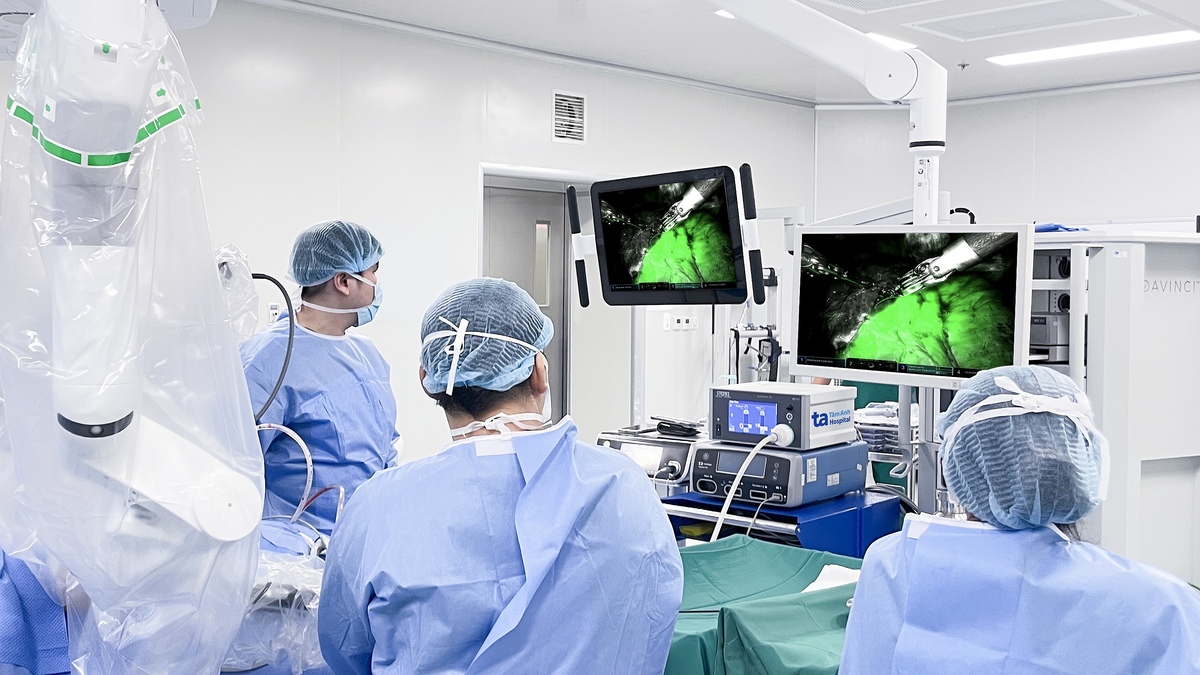
During the procedure, Professor Vinh utilized the robot’s enhanced dexterity to isolate the lesion. A key component of this success was the integration of Indocyanine Green (ICG) fluorescence imaging. By injecting the fluorescent dye, the surgeons were able to visualize the vascular supply to the lung segments. The healthy lung tissue illuminated with a distinct green glow under the fluorescent light, while the diseased segment—after the vascular supply was clamped—remained dark. This stark contrast allowed for a highly accurate resection, ensuring that the oncological margins were clear while preserving the maximum amount of healthy lung function.
Chronology of Care and Recovery
The efficiency of the procedure was a testament to the hospital’s integrated care protocol. Following the biopsy, which confirmed the presence of malignant cells, the surgical team immediately proceeded with the targeted resection. To ensure the integrity of the lung tissue in an elderly patient with potentially weakened pulmonary parenchyma, the team employed specialized powered stapling devices equipped with titanium micro-staples. These devices ensure airtight closure and immediate hemostasis, which is critical for preventing air leaks and bleeding in the immediate postoperative period.
Ms. Lien’s recovery was notably swift. Owing to the minimally invasive nature of the procedure, she was able to be discharged from the hospital just three days after surgery. Because the malignancy was identified and removed at an early stage, the multidisciplinary tumor board determined that no further aggressive adjuvant therapies, such as systemic chemotherapy or radiation, were required.
Broader Implications for Geriatric Lung Health
This case serves as a vital case study for the management of lung cancer in aging populations. With global life expectancy increasing, the prevalence of thoracic malignancies in patients over 75 is rising. Traditionally, these patients were often deemed "too frail" for curative surgery, leading to suboptimal outcomes.
The success of this intervention highlights three significant trends in modern thoracic oncology:
- The Shift to Minimally Invasive Techniques: Robotic platforms are redefining the risk-benefit ratio for elderly patients, allowing for curative intent in cases that might have previously been managed only with palliative intent.
- Technological Integration: The use of ICG fluorescence is becoming the gold standard for segmentectomy, allowing surgeons to visualize anatomical boundaries that are otherwise invisible to the naked eye.
- The Importance of Early Screening: As noted by Professor Vinh, the positive outcome for Ms. Lien was directly linked to the early identification of the lesion. He strongly advocates for regular, low-dose CT screening for high-risk individuals, including long-term smokers, those exposed to occupational hazards, or individuals with a family history of thoracic cancers.
Clinical Perspectives and Future Directions
The integration of robotic technology into community and tertiary hospitals is democratizing access to high-precision surgical care. For patients like Ms. Lien, the ability to undergo a procedure that removes the tumor while preserving the maximum amount of respiratory reserve is life-altering.
Medical experts emphasize that the success of such surgeries is not merely the result of the machine, but the outcome of a refined multidisciplinary workflow. This includes radiologic assessment, expert anesthesia management—which is particularly complex in geriatric lung surgery—and post-surgical rehabilitation.
In conclusion, the case at Tam Anh General Hospital highlights a successful bridge between complex diagnostic pathology and advanced surgical technology. By leveraging robotic precision and fluorescence-guided surgery, medical teams are now better equipped to provide curative, life-extending care for the elderly, reinforcing the necessity of early detection programs in the ongoing fight against lung cancer.
Note: The name of the patient has been changed to protect privacy in accordance with hospital policy.
Related posts: