The Vietnamese real estate landscape is undergoing a fundamental transformation as investors move away from traditional speculative "buy and hold" strategies toward a more pragmatic, income-oriented approach. For years, the prevailing wisdom in the market was to acquire land or residential assets and wait for annual price appreciation, often ignoring the immediate utility or rental potential of the property. However, a combination of tightened credit, fluctuating gold prices, and a more mature understanding of asset management has birthed a new era: the rise of the "cash flow" investor. This shift is placing significant pressure on resort real estate developers to solve a complex equation—creating vibrant, high-traffic ecosystems that can guarantee steady occupancy and, by extension, consistent returns for individual owners.
The Evolution of the Vietnamese Investor Profile
In the current economic climate, the archetype of the passive investor is being replaced by the strategic asset manager. Market data from the first half of 2024 suggests that retail investors are increasingly wary of assets that remain "dead" or unproductive for long periods. Instead, they are gravitating toward properties that can actively generate liquidity.
A prime example is found in the story of Mr. Viet Anh, a mid-level manager at a major commercial bank in Ho Chi Minh City. Having accumulated approximately 2 billion VND (roughly $80,000) through years of disciplined saving, he and his wife conducted an exhaustive search for an investment vehicle that balanced safety with growth. Their analysis reflected the broader sentiment of the urban middle class: traditional savings accounts offer stability but modest returns (averaging 5-8% per annum), while the gold market remains too volatile for significant capital allocation. Furthermore, in the hyper-expensive Ho Chi Minh City market, 2 billion VND is no longer sufficient to secure a high-quality apartment in a prime location.
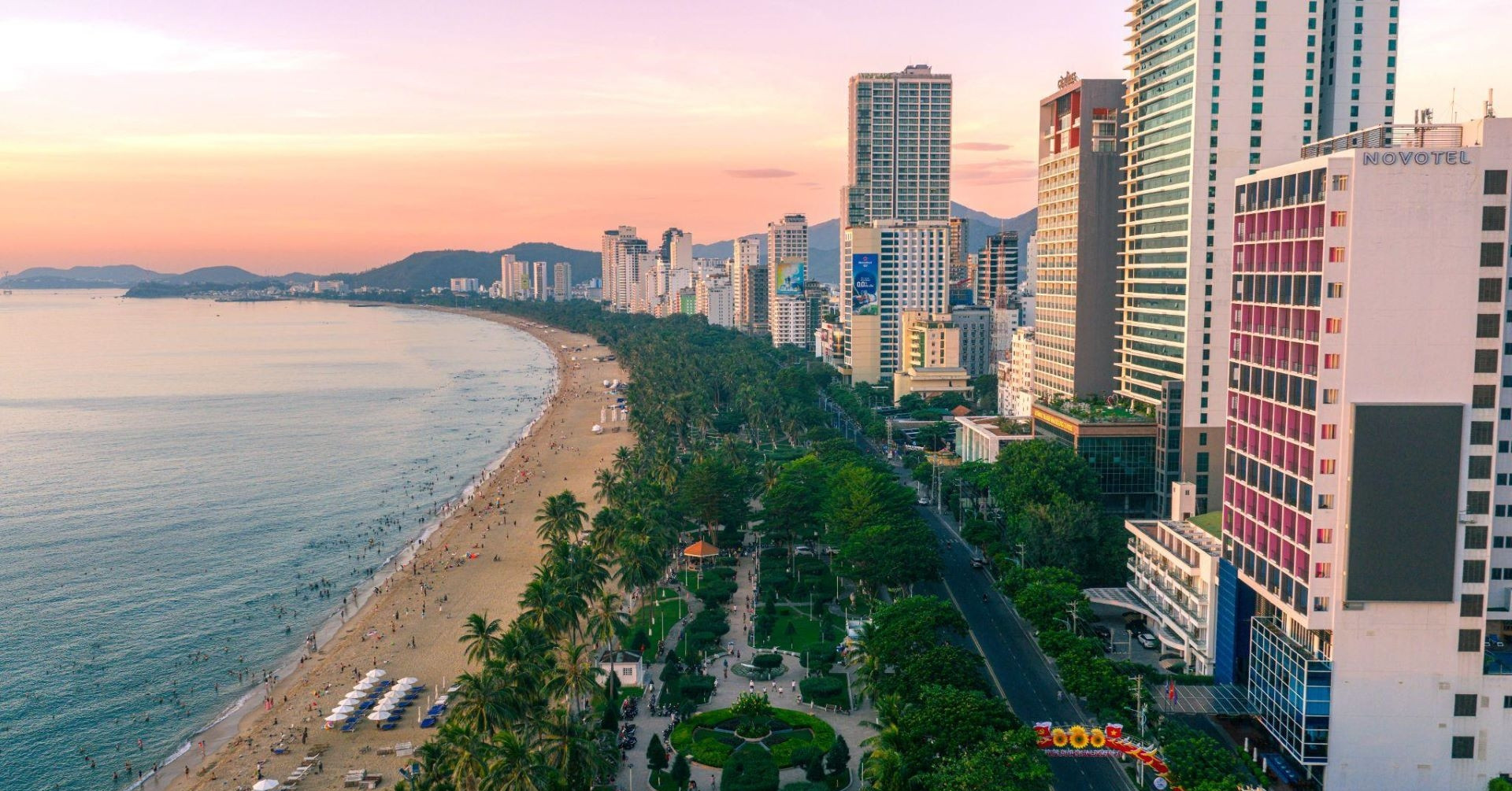
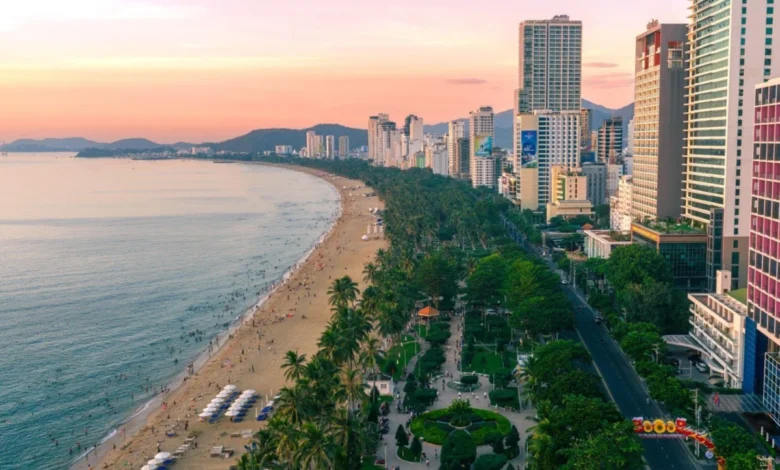
"After looking at various cities, we decided to invest in a high-end apartment in Nha Trang," Mr. Viet Anh explains. "Our goal wasn’t just to wait for the property value to double in ten years. We wanted an asset that we could put to work immediately upon handover. Nha Trang is a four-season tourist destination, and we calculated that with a steady flow of visitors, our rental income could significantly outperform bank interest."
The Logic of the Entertainment-Driven Ecosystem
The decision to invest in coastal cities like Nha Trang is backed by a global logic: the value of a real estate asset is directly proportional to the scale and attractiveness of the surrounding infrastructure and amenities. This "ecosystem-led" appreciation is a model perfected in international markets. For instance, in Anaheim, California, the presence of Disneyland drives short-term rental rates to an average of $325 to $371 per night. During peak seasons or major festivals, a single unit can generate upwards of $10,000 in monthly revenue. In these scenarios, property owners rarely need to spend on marketing; the anchor attraction—the theme park—automatically draws millions of potential customers to their doorstep 365 days a year.
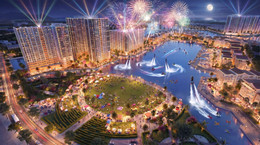
Sun Group, one of Vietnam’s premier developers, is applying this exact logic to its latest venture: Charmora City in South Nha Trang. Within this 227-hectare urban development, the developer has dedicated 116 hectares to "Festival Island," an entertainment-focused district designed to be the "beating heart" of the region’s nightlife and tourism economy.
The centerpiece of Festival Island is a 7.3-hectare iconic water stage. This venue is slated to host multi-million-dollar multimedia shows, international-standard jet ski and flyboard performances, and nightly firework displays. By creating a perpetual "festival atmosphere," the developer aims to ensure that the district remains a high-traffic zone regardless of the traditional "off-season."
Analyzing The Fest: A Strategic Anchor for Cash Flow
Located at the core of Festival Island is "The Fest," a complex of high-end service apartments specifically engineered to capture the massive influx of tourists drawn to the island’s attractions. The product mix at The Fest is diverse, ranging from compact 29.4-square-meter studios to larger 1-bedroom+ and 2-bedroom units.
The strategic advantage of The Fest lies in its integration. Unlike standalone coastal condos that struggle to find guests during the rainy season or mid-week, The Fest is positioned to benefit from a constant stream of "walk-in" traffic. This traffic is generated by the 24/7 culinary walking streets, the VUIFest night market, and the central squares that host daily cultural events.
From a financial perspective, the projections for these units are ambitious yet grounded in the recovery of Vietnam’s tourism sector. Analysts estimate that once the ecosystem is fully operational, occupancy rates could reach 90%. For an investor like Mr. Viet Anh, this translates to a potential monthly rental income of over 20 million VND for a studio unit—nearly double the average rental yield for a similar studio in the competitive Ho Chi Minh City market. By reinvesting this rental income into other financial instruments, investors can effectively create a compounding wealth effect.
Financial Engineering and Investment Solutions
To accommodate varying levels of financial capacity, the developer has introduced three distinct payment and cash flow solutions for units at The Fest, which carry a list price of approximately 2.4 billion VND for a studio.

1. The Early Liquidity Path
For investors with significant ready capital, a 95% early payment option offers a discount of up to 22.5%. This reduces the total investment for a fully furnished unit to under 2 billion VND. Under this scenario, the projected return on investment (ROI) is estimated at 22% after the first two years of operation, primarily driven by the steep initial discount and immediate rental readiness.
2. The Sun Early Key Strategy
The "Sun Early Key" policy is designed for those who prefer to preserve cash flow during the construction phase. It extends the payment schedule to 55 months, requiring an initial capital outlay of approximately 1.6 billion VND. This path is projected to yield a 30% ROI over a two-year operational period, as it balances lower upfront costs with the eventual appreciation of the completed district.
3. Maximum Financial Leverage
For more aggressive investors, a 30% initial equity contribution (approximately 870 million VND) combined with bank financing allows for maximum leverage. Despite interest costs, the high rental yields expected from the Festival Island ecosystem could push the ROI on the initial invested capital to as high as 38% after two years.
Broader Implications for the Nha Trang Real Estate Market
The development of Charmora City and The Fest comes at a pivotal time for Nha Trang. The city is currently benefiting from significant infrastructure upgrades, including the completion of the Cam Lam – Vinh Hao expressway, which has drastically reduced travel time from Ho Chi Minh City. Furthermore, the expansion of Cam Ranh International Airport continues to facilitate a growing number of direct flights from South Korea, China, and Central Asia.
The shift toward commercial-service real estate with clear legal frameworks is also providing a sense of security that was missing during the "condotel" boom of the previous decade. By focusing on 100% commercial-service land funds with transparent planning, projects like The Fest are regaining the trust of institutional and retail investors alike.
Beyond the financial returns for individuals, the "Festival Island" model represents a new chapter in Vietnamese urban planning. It moves away from the "dormitory" style of coastal development—where buildings sit empty for most of the year—toward "living" cities that integrate work, play, and residence. The inclusion of a 1,400-square-meter swimming pool, walking gardens, and onsen clubhouses within The Fest ensures that the property remains attractive for long-term stays and wellness tourism, further diversifying the income streams for owners.
Conclusion: The New Standard for Property Investment
The transition from a speculative mindset to a cash-flow-centric strategy is a sign of a maturing real estate market. Investors are no longer satisfied with the promise of "future value"; they demand "present utility." As Nha Trang positions itself as a center for the nighttime economy and international-scale entertainment, assets like The Fest offer a blueprint for how real estate can be more than just a place to store wealth.
By anchoring property value in a 365-day entertainment ecosystem, developers are providing a solution to the volatility of the traditional market. For the modern Vietnamese investor, the goal is clear: own an asset that grows in value while simultaneously providing a monthly "salary" that rivals or exceeds professional earnings. As Festival Island moves toward completion, it stands as a testament to the power of integrated development in creating sustainable, high-yield investment opportunities in the heart of Vietnam’s most famous coastal city.