Viettel Expands Global Reach as Make-in-Vietnam 5G Equipment Moves to Commercial Testing in the Middle East

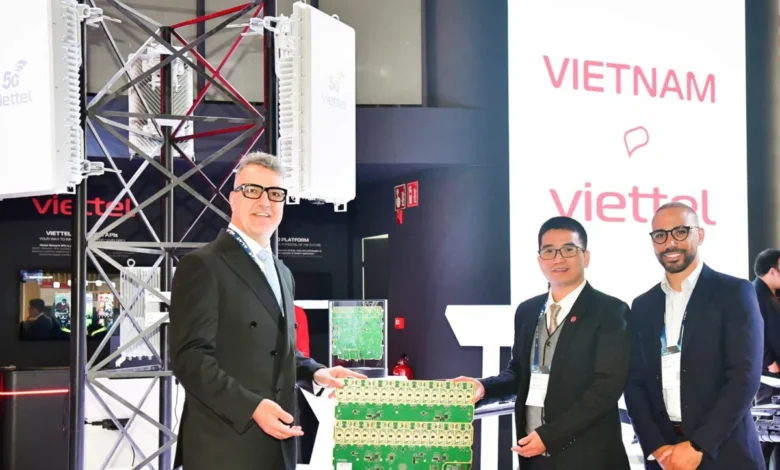
The global telecommunications landscape is undergoing a significant paradigm shift, characterized by the decentralization of equipment manufacturing and the rise of homegrown technological capabilities in emerging markets. A prominent development in this global transformation unfolded at the Mobile World Congress 2025 (MWC 2025), where Viettel High Technology Industry Corporation, a core subsidiary of Vietnam’s military-industrial conglomerate Viettel, announced a landmark agreement to test its proprietary 5G equipment with Emirates Integrated Telecommunications Company (Du), one of the leading telecommunications operators in the Middle East.
This strategic partnership marks a major milestone not only for Viettel’s international expansion strategy but also for Vietnam’s broader ambition to establish itself as a recognized contributor to advanced global telecommunications infrastructure. By bringing locally designed and manufactured 5G hardware and software to a highly competitive Middle Eastern market, Viettel continues to challenge the traditional hegemony of legacy Western and Asian telecom equipment vendors.
Strategic Partnership and Technical Scope in the Middle East
Under the memorandum of understanding signed at MWC 2025 in Barcelona, Viettel and Du will jointly deploy, test, and ultimately commercialize advanced 5G solutions across the Middle Eastern operator’s extensive network infrastructure. The initial phase of this rigorous testing protocol encompasses two critical technological fronts: the 5G OpenRAN public network and the 5G Private Network.
The integration of OpenRAN (Open Radio Access Network) architecture is of particular significance. OpenRAN decouples hardware and software, allowing telecommunications operators to mix and match components from different vendors using open interfaces, thereby reducing capital expenditure, lowering operational costs, and avoiding vendor lock-in. Concurrently, the deployment of 5G Private Networks caters directly to enterprise customers seeking secure, dedicated, high-bandwidth, and low-latency connectivity for industrial automation.
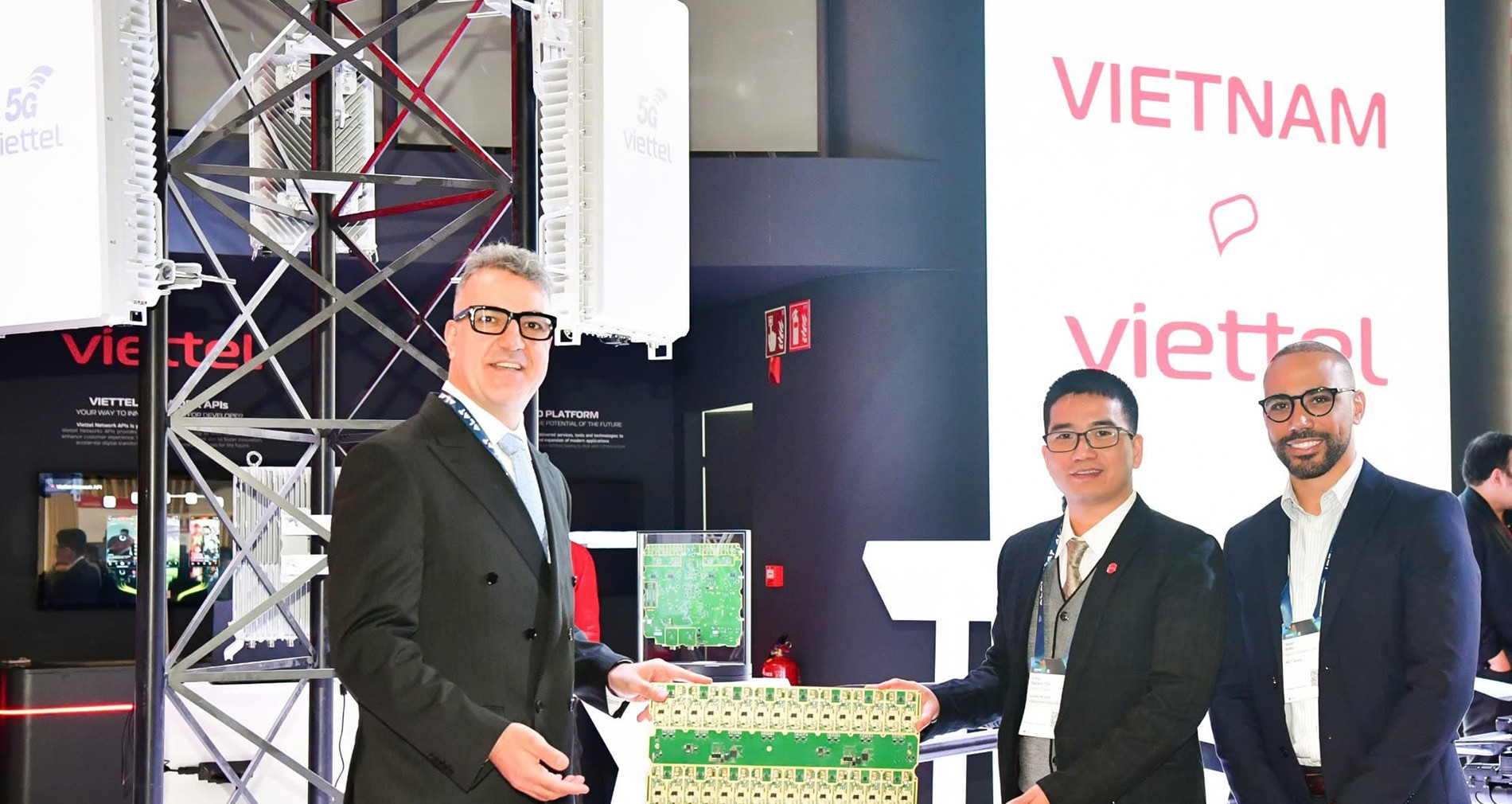
Fahad Al Hassawi, Chief Executive Officer of Du, emphasized the strategic importance of the collaboration following the announcement. He noted that the partnership represents a crucial step forward in providing future-ready connectivity solutions. Integrating 5G Private and OpenRAN technologies will empower Du to build a next-generation telecom ecosystem that delivers tangible value to enterprises, government entities, and the wider community. Successful trials are expected to pave the way for large-scale commercial deployments across the region, laying the foundation for breakthrough applications such as smart cities, immersive Virtual and Augmented Reality (VR/AR) experiences, and large-scale Industrial Internet of Things (IoT) deployments.
Vietnam’s Ascent as a 5G Manufacturing Hub
Viettel holds a unique position on the global stage as both a telecommunications service provider and an in-house manufacturer of network infrastructure. Supported by robust domestic technological capabilities, Vietnam has solidified its position as one of only six nations worldwide possessing the domestic capacity to manufacture complete 5G network equipment.
For several years, Viettel has pursued a deliberate and systematic strategy to replace foreign-imported equipment with homegrown alternatives across its core network architecture. This drive toward technological sovereignty aims to reduce external dependencies, protect national cybersecurity interests, and retain valuable foreign currency within the domestic economy.
The international significance of this capability was further underscored when Vietnam’s Ministry of Information and Communications officially recognized several key telecommunications products researched and manufactured by Viettel as national key information technology products. This official designation covers critical infrastructure components, including 5G gNodeB radio access network units, core network systems, high-capacity transmission equipment, and proprietary 5G processing microchips. Under national policy frameworks, these officially recognized products are slated to receive preferential administrative support, targeted state funding, and streamlined regulatory pathways to accelerate their market adoption both domestically and internationally.
Economic Implications and Global Market Dynamics
The timing of Viettel’s international push aligns with broader global macroeconomic trends highlighted by the Global System for Mobile Communications Association (GSMA). According to GSMA reports, 5G technology is projected to inject more than $930 billion into the global economy by 2030. The distribution of these economic benefits spans multiple sectors, with manufacturing leading the impact at 36%, followed by public administration at 15%, general services at 10%, information technology and communications at 9%, and financial services at 8%.
In Vietnam, the government has elevated the commercialization of 5G to a national priority, viewing it as a primary catalyst to accelerate economic growth and achieve ambitious national GDP expansion targets. Prime Minister Phạm Minh Chính has repeatedly stressed that expediting 5G deployment and satellite telecommunications is a central task for driving national productivity.
Domestic progress reflects this high-level political will. By January 2025, Viettel reported reaching approximately 5.5 million 5G subscribers. Concurrently, VNPT announced nationwide 5G coverage across central urban areas in all 63 provinces and municipalities, encompassing numerous airports and industrial parks, serving roughly 3 million users. Although MobiFone has not yet formally announced commercial launch dates, it has begun provisioning 5G services to early-adopter customers.
Data from Viettel’s initial months of 5G commercialization reveal robust consumer demand. On average, a Viettel 5G subscriber consumes approximately 21GB of mobile data per month—nearly 1.7 times the consumption rate observed during the initial rollout phase. Industry analysts anticipate that data consumption and service adoption will scale exponentially throughout 2025.
Regulatory Support and Accelerated Infrastructure Development
To maintain this growth momentum, the Vietnamese National Assembly passed a landmark resolution providing specific trial mechanisms and special policies to foster scientific research, innovation, and digital transformation. A cornerstone of this legislative effort involves direct state budgetary allocations designed to support telecommunications enterprises in rapidly expanding nationwide 5G infrastructure.
Under these regulatory provisions, telecom operators that achieve rapid deployment thresholds—specifically bringing at least 20,000 5G base transceiver stations into commercial operation by December 31, 2025—will receive financial support equivalent to 15% of their equipment costs. This aggressive fiscal stimulus is intended to fast-track network densification and bridge the digital divide.

The concerted push is already yielding measurable improvements in national digital competitiveness. According to Ookla’s Speedtest Global Index for January 2025, Vietnam climbed 15 positions in global mobile internet speeds, reflecting the immediate performance dividends delivered by ongoing network upgrades and early 5G integration.
Conclusion
Viettel’s ongoing trials in the Middle East, coupled with aggressive domestic deployment schedules and state-backed manufacturing incentives, represent a watershed moment for Vietnam’s technology sector. By transitioning from a traditional technology importer to a sovereign developer and global exporter of advanced telecommunications infrastructure, Viettel is redefining its corporate trajectory while simultaneously validating the viability of Make-in-Vietnam technology on the world stage. As these international trials progress toward commercial realization, they will provide a critical stress test for Vietnamese engineering prowess, potentially reshaping the competitive dynamics of the global telecommunications equipment market for the coming decade.