Ministry of Health Concludes Investigation into Hospital E Director Nguyen Cong Huu Following Whistleblower Allegations and Procurement Irregularities

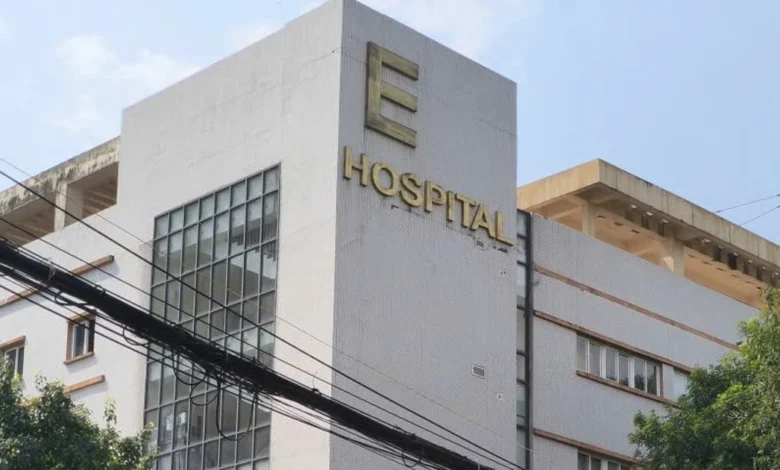
The Vietnamese Ministry of Health has officially released its comprehensive investigation findings regarding a series of serious allegations leveled against Dr. Nguyen Cong Huu, Director of Hospital E, a prominent national healthcare facility located in Hanoi. The official investigative report, which addresses multiple administrative, procurement, and operational facets of the hospital, determines that several core accusations against the hospital leadership are substantiated, some are partially true, while others lack sufficient factual or legal grounds to warrant punitive actions.
The sprawling inquiry highlights systemic vulnerabilities in public hospital administration, particularly concerning adherence to public procurement laws, employee welfare management, and regulatory compliance in conducting medical training programs. While the investigation stops short of identifying criminal actions such as embezzlement, financial loss to the state, or illicit personal enrichment, the findings nonetheless depict a troubling pattern of procedural shortcuts justified by expediency rather than statutory compliance. Consequently, the Ministry of Health has mandated strict corrective actions, formal reprimands, and internal reviews across various hospital departments.
Background and Context of the Investigation
Hospital E, which formerly operated directly under the direct jurisdiction of the Ministry of Health before transitioning to its current administrative framework, serves hundreds of thousands of patients annually in the capital region. As a major multi-specialty tertiary care center, it manages substantial public funds, large-scale supply chains, and complex internal human resources operations. In recent years, public hospitals across Vietnam have faced heightened regulatory scrutiny regarding procurement transparency, bidding processes for medical supplies, nutritional catering services, and employee benefits.
The investigation into Dr. Nguyen Cong Huu emerged from a series of internal whistleblower complaints and administrative grievances filed by disgruntled staff members and external observers. These grievances targeted various operational domains, ranging from the procurement of protective dietary supplements and staff meal contracts to custom-tailored employee uniforms, the unauthorized hosting of clinical practice courses, and broader managerial disputes. The Ministry of Health constituted a specialized inspection team to independently verify each accusation, resulting in a multi-layered administrative ruling that distinguishes between proven procedural violations and unfounded claims.
Procurement Deficiencies: Dietary Supplements and Staff Meals
Among the most substantive findings of the Ministry of Health’s report are those concerning procurement irregularities in employee welfare provisions. Specifically, the investigation examined the processes used to select contractors for supplying hazard-duty nutritional supplements and daily meal rations for medical staff, physicians, and support personnel.
According to institutional records, Hospital E previously organized competitive bidding processes for the provision of in-kind hazard-duty nutritional supplements intended for workers exposed to demanding medical environments. Following these initial procedures, Director Nguyen Cong Huu issued formal decisions bypassing standard statutory protocols to select the Song Duong Production and Trading Joint Stock Company as the direct supplier. The Ministry of Health concluded that this selection method fundamentally violated the provisions of the Law on Bidding, as the hospital awarded contracts to an economic entity without executing the mandatory, full-scale contractor selection procedures mandated by law. Consequently, allegations regarding irregularities in the nutritional supplement procurement package were officially validated.
A parallel violation was identified regarding the selection of canteen and meal-catering service providers for hospital personnel, a practice that had been running continuously since 2023. Hospital E management defended their actions by explaining that Song Duong Company had previously won a public auction for leasing commercial floor space within the hospital and was already supplying food and beverage services to patients and visitors. When the hospital’s previous primary catering contractor ceased operations at the end of 2022, Hospital E management contracted Song Duong directly to maintain an uninterrupted supply of meals for vulnerable patients and healthcare workers on duty.
Despite these operational justifications, the Ministry of Health’s conclusion was unambiguous: the prior victory in a spatial lease auction does not exempt a public institution from adhering strictly to statutory contractor selection rules for food services. The hospital was legally obligated to conduct a transparent, competitive bidding process regardless of existing commercial tenancy arrangements.
Despite these clear procedural infractions, the Ministry’s investigation found no definitive evidence of corruption, kickbacks, state budget dissipation, or intentional financial harm inflicted upon the participating parties. Defense reports submitted by Hospital E emphasized that these shortcuts were taken out of administrative expediency to ensure the timely and continuous welfare of its workforce, a sentiment that reportedly received positive internal support from the collective staff. Nevertheless, the regulatory body maintained that operational urgency does not supersede statutory legality.
Unsubstantiated Claims Regarding Uniform Procurement and Administrative Management
Not all allegations brought against the hospital leadership withstood rigorous regulatory scrutiny. The investigation also reviewed a whistleblower complaint regarding a 2023 procurement package for custom-tailored staff uniforms. According to the complaint, the designated contractor failed to deliver 50 complete sets of uniform trousers and jackets destined for the staff of the hospital’s resuscitation and intensive care department by the agreed-upon deadline.
Evidence showed that while the contractor submitted formal written requests for a contract extension, hospital management declined the extension request. Instead, leadership negotiated an agreement to ensure the final distribution of all outstanding uniform sets was successfully completed and handed over to workers by November 30, 2024. The Ministry of Health noted that while the hospital’s documentation lacked formal record-keeping of punitive measures or liquidated damages against the delayed contractor, the handling of the contract implementation deviated from standard procurement regulations rather than constituting a substantive violation of criminal bidding laws. Because the evidence failed to prove illegal intent or financial damage, this specific whistleblower allegation was classified as lacking sufficient legal foundation.
Similarly, allegations concerning the general management, handling, and security of official hospital seals were reviewed thoroughly. The Ministry of Health concluded that there was no factual basis to substantiate claims of seal misuse or administrative malpractice. Furthermore, claims regarding the alleged fabrication of signatures, the doctoring of training credential records, and deliberate forgery were downgraded because many of the supporting photocopied documents submitted by the whistleblower lacked essential authentication marks, official dates, and verified stamps necessary for definitive legal conclusions.
Unauthorized Clinical Practice Courses and Regulatory Compliance
A critical domain where whistleblower claims were definitively proven correct involved the organization of clinical practice and training courses for aspiring nursing professionals. Investigation records revealed that Hospital E organized two separate clinical practice and training courses (designated as courses K1 and K2) focused on examination and treatment methodologies for nursing personnel in October and November 2024.
However, these courses were initiated and conducted before the Ministry of Health had officially received and acknowledged the hospital’s statutory dossier announcing its practice facility guidelines. Official records indicate that the Ministry of Health did not formally receive the facility’s public disclosure dossier until March 17, 2025. Consequently, at the exact time courses K1 and K2 were organized and executed, the hospital had not fully completed all mandatory administrative prerequisites required under national medical education and licensing laws.
While the Ministry of Health confirmed that organizing training programs without the formal acknowledgment dossier constituted a clear regulatory breach, it dismissed harsher counter-allegations accusing hospital administrators of orchestrating deliberate fraud, fabricating training dossiers, or deliberately issuing fraudulent certificates of practice. The inquiry found that while administrative oversight was lax, the underlying educational activities were conducted without malicious intent to deceive regulatory bodies or exploit trainees financially.
Broader Regulatory Backdrop and Concurrent Investigations
The scrutiny facing Hospital E extends beyond the findings of the recent whistleblowing report. The administrative pressure on the facility was compounded in September when the Department of Medical Examination and Treatment under the Ministry of Health issued an urgent formal document directing Director Nguyen Cong Huu to verify and clarify damaging media reports concerning operations within the hospital’s radiotherapy department.
Public investigative journalism reports published in early September 2024 had highlighted disturbing practices at the radiotherapy unit, alleging that cancer patients undergoing critical radiation therapy were routinely solicited for unofficial cash payments ranging from 50,000 to 100,000 Vietnamese Dong to secure preferential placement on daily treatment queues. According to media accounts, patients who failed or refused to make these informal payments were subjected to prolonged waiting times, compromising their continuity of care during life-threatening health crises.
In swift response to these public disclosures, Hospital E suspended five medical personnel assigned to the radiotherapy department and invited external investigative and law enforcement authorities to conduct an independent, transparent inquiry into the matter. This parallel scandal, alongside earlier administrative rulings issued by the Ministry of Health in June regarding procedural delays in citizen grievance resolution, underscores a compounding institutional crisis centered around accountability, institutional governance, and administrative oversight at the hospital.
Official Mandates: Disciplinary Actions and Corrective Measures
In light of the substantiated violations detailed in the exhaustive investigative report, the Ministry of Health has issued a series of binding directives aimed at rectifying structural deficiencies and holding leadership accountable.
Dr. Nguyen Cong Huu, in his capacity as Director and primary legal representative of Hospital E, has been formally instructed to organize an internal self-criticism session, formally draw operational experiences, and reflect deeply on the systemic shortcomings identified within public procurement, supply chain management, and employee welfare administration—specifically regarding the handling of hazard-duty nutritional supplements and staff meal provisions. He is further mandated to oversee immediate corrective actions and submit comprehensive compliance reports back to the Ministry.
Hospital E as an institution is required to execute a thorough, organization-wide review of all internal standard operating procedures governing public bidding, procurement execution, contract management, and internal auditing. The Ministry emphasized the imperative of enforcing uncompromising transparency, rigorous internal monitoring, and strict alignment with national statutory frameworks. Furthermore, all departments, functional rooms, and individual personnel implicated in procedural lapses must formally review their responsibilities, clarify accountability, and implement preventative safeguards.
Regarding the unauthorized medical training courses, the hospital administration must discipline the specific units and individuals responsible for admitting trainees and issuing confirmation certificates prior to obtaining full regulatory clearance from the Ministry. Hospital leadership has been ordered to overhaul its document issuance and archival workflows to ensure that all future clinical training certificates are backed by complete, verifiable, and transparent administrative trails.
As Hospital E navigates these multi-layered administrative and regulatory reckonings, health sector experts note that the case serves as a critical benchmark for public hospital governance across Vietnam. Balancing operational expediency with rigorous statutory compliance remains an overarching challenge for healthcare administrators tasked with caring for vulnerable populations while strictly adhering to the rule of law.