Viện Toán cao cấp của GS Ngô Bảo Châu hướng tới những nghiên cứu hàng đầu châu Á


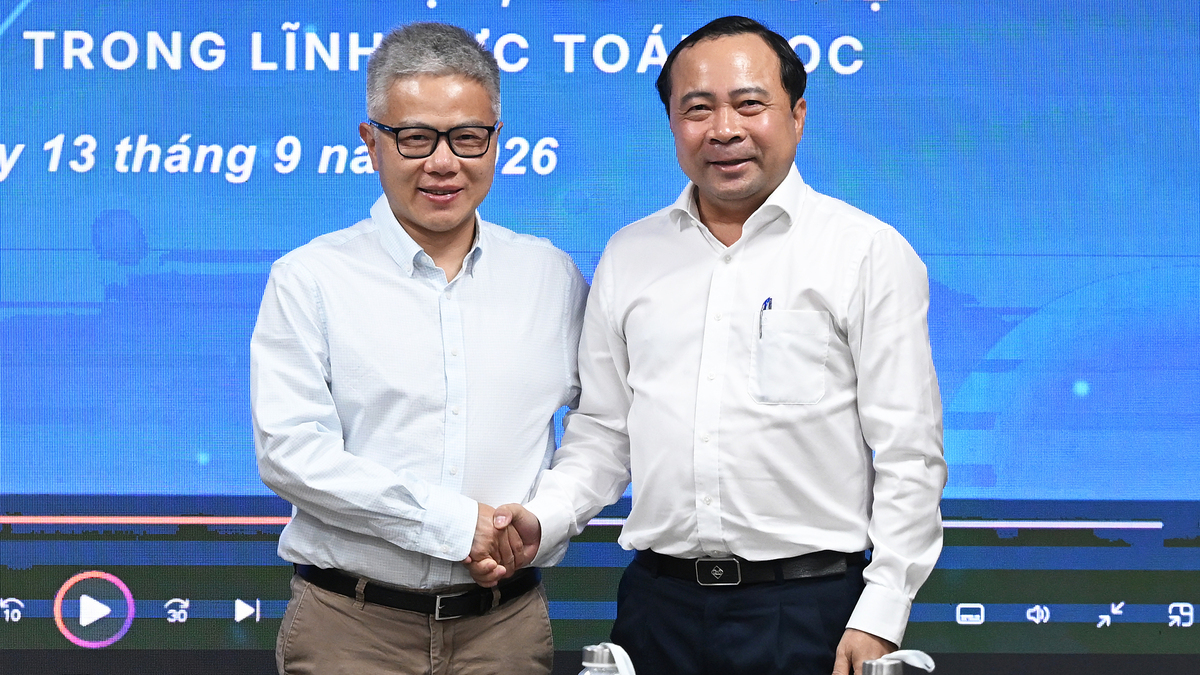
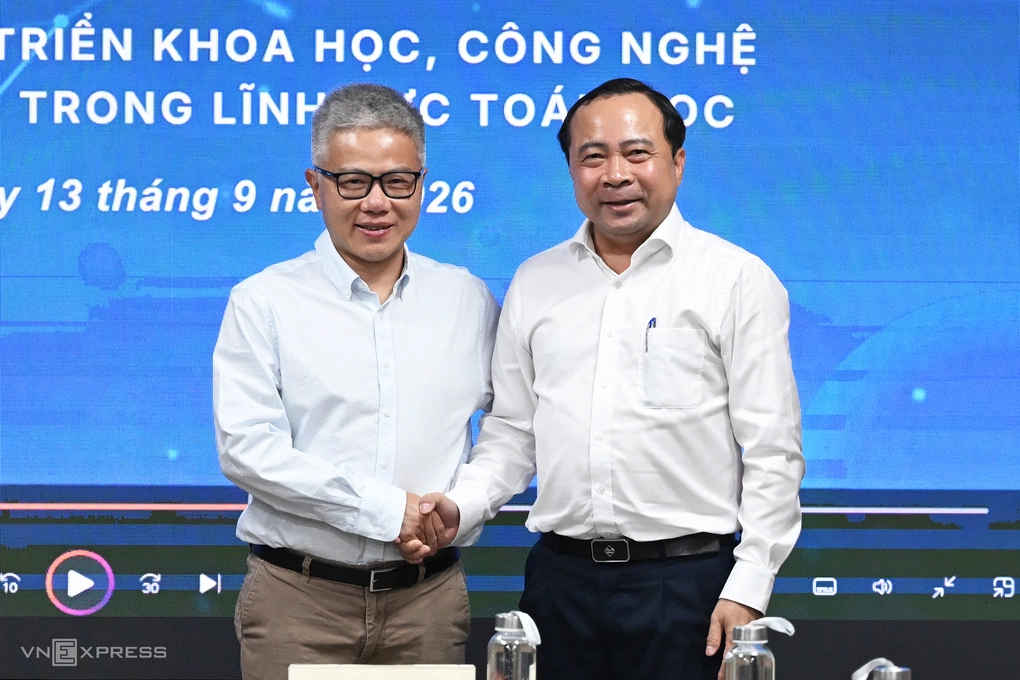
The Vietnam Institute for Advanced Study in Mathematics (VIASM), under the scientific leadership of Fields Medalist Professor Ngô Bảo Châu, is embarking on a strategic transformation designed to elevate Vietnam’s mathematical research to the forefront of the Asian continent. This shift in direction, announced during a working session with the Minister of Science and Technology, Huynh Thanh Dat, on September 13, marks a pivotal evolution in the institute’s fifteen-year history. Since its inception in 2010, VIASM has functioned as a central hub for mathematical excellence, but it is now transitioning from a support-oriented model to a proactive, globally-integrated powerhouse of innovation.
A New Strategic Vision: From Support to Leadership
The core of Professor Ngô Bảo Châu’s new roadmap involves three fundamental changes to the operating philosophy of the institute. First, the institute is shifting its focus from broad-based support for the academic community toward high-impact, deep-dive research. Historically, VIASM acted as a platform to facilitate university-level mathematical activity across Vietnam. While this helped improve the baseline quality of mathematical education and research nationwide, the new objective is to concentrate resources on breakthrough studies that command international attention. The goal is to move beyond domestic influence and establish Vietnam as a premier hub for mathematics in Asia.
Second, the institute is moving from a passive role to an active, leading position in international collaboration. Previously, the model relied heavily on hosting international experts to conduct work within Vietnam. The new strategy emphasizes active leadership, where Vietnamese scholars take the helm of collaborative projects. This includes the proposed formation of an Asian Mathematical Alliance, a network involving 12 to 15 research institutions from across the region and Europe. This initiative, expected to be formalized in Hanoi this coming November, will focus on training doctoral candidates and forming elite research groups capable of addressing complex, global mathematical challenges.
Third, the strategy addresses the critical issue of human capital. To lead in specialized research, VIASM plans to restructure its personnel model, moving toward a blend of tenured and tenure-track positions. This structural adjustment is intended to create a stable, high-level research core while retaining the agility to attract global talent through rotating visiting fellowships.
Chronology and Institutional Background
Established in December 2010 under the guidance of the Ministry of Education and Training and later transitioned under the Ministry of Science and Technology, VIASM was born out of a national desire to revitalize mathematics in Vietnam. Its initial mandate was to provide a professional environment for top-tier research and to act as a bridge between the classroom and the frontiers of mathematical theory.
In its first decade, the institute successfully implemented the National Key Program for the Development of Mathematics. This program provided scholarships, funding for conferences, and grants for domestic researchers to collaborate with international counterparts. By 2020, the institute had established a reputation as the primary gateway for international mathematical exchange in Southeast Asia. The September 2024 announcement represents the second phase of its life cycle—a pivot toward self-sustaining, world-class research production rather than purely capacity-building.
Supporting Data and Scientific Impact
The necessity of this shift is underscored by the current state of Vietnam’s mathematical publication output. According to recent academic bibliometric data, Vietnam has seen a steady increase in international publications in mathematics, particularly in journals indexed in Scopus and Web of Science. However, while the volume of papers has increased, the "citation impact"—a measure of the influence and originality of the research—remains an area for growth.
Over the past year alone, VIASM has actively engaged with corporate partners and private donors to fund the "Returning Scientist" initiative. This program has successfully attracted 6 to 7 world-class researchers back to Vietnam, either on a permanent or part-time basis. These figures are modest, yet they represent a significant qualitative shift in the domestic research landscape. The institute’s goal is to scale this model, ensuring that these scientists are not merely visiting, but are leading research groups that mentor the next generation of Vietnamese mathematicians.
Official Responses and Government Commitment
Minister of Science and Technology Huynh Thanh Dat expressed strong support for the proposed structural changes, emphasizing that the institute does not necessarily need a large permanent staff, but rather the capacity to attract and retain the best minds. "The critical factor is the ability of these individuals to contribute to our national scientific and technological capacity," the Minister stated during the September 13 meeting.
The Ministry has committed to further investment, not merely in terms of general funding, but through specific, mission-oriented science and technology grants. The Minister emphasized that the government is prepared to formalize programs that facilitate the "Returning Scientist" model, ensuring that top-tier talent can integrate into the domestic system without being burdened by administrative constraints. This alignment between the Ministry’s policy goals and the institute’s strategic needs provides a clear pathway for the long-term sustainability of the new research agenda.
Implications for the Asian Scientific Landscape
The establishment of the Asian Mathematical Alliance is perhaps the most ambitious component of the new strategy. By integrating with 12 to 15 peer institutions across Asia and Europe, VIASM aims to mitigate the isolation that can often hinder scientific advancement in emerging economies. The alliance is expected to create a "shared laboratory" environment, where researchers can share computational resources, data, and peer-review processes, effectively increasing the visibility of Asian mathematical research on the global stage.
Furthermore, the focus on deep-dive research into fields such as artificial intelligence, cryptography, and complex system modeling has significant practical implications. These fields are high-demand sectors in the modern economy. By fostering top-tier mathematical research, VIASM is positioning itself as a vital contributor to the country’s digital transformation.
Challenges and Future Outlook
Despite the optimistic outlook, the transition will face challenges. Competing for top-tier talent requires competitive compensation, institutional autonomy, and a robust research ecosystem that includes advanced computing infrastructure. While the partnership with private corporations provides a necessary financial boost, the long-term success of the institute will depend on the consistency of public funding and the ability of the institute to maintain its scientific independence.
As VIASM enters this next chapter, the focus on "quality over quantity" and "leadership over support" will be tested. If successful, the institute will not only solidify its place as a leader in Southeast Asia but will serve as a model for how emerging economies can leverage scientific excellence to drive national development. The upcoming November meeting in Hanoi will be a crucial milestone, as it will signal the official launch of the collaborative network that is intended to redefine the regional mathematical landscape.
By prioritizing the cultivation of talent and the pursuit of original, high-impact research, Professor Ngô Bảo Châu and his team are setting the stage for Vietnam to move from a contributor to the global scientific community to a leader that shapes the direction of future mathematical discourse.