Why The Wolf of Wall Street Stands as Leonardo DiCaprio and Martin Scorsese’s Masterclass in Cinematic Manipulation

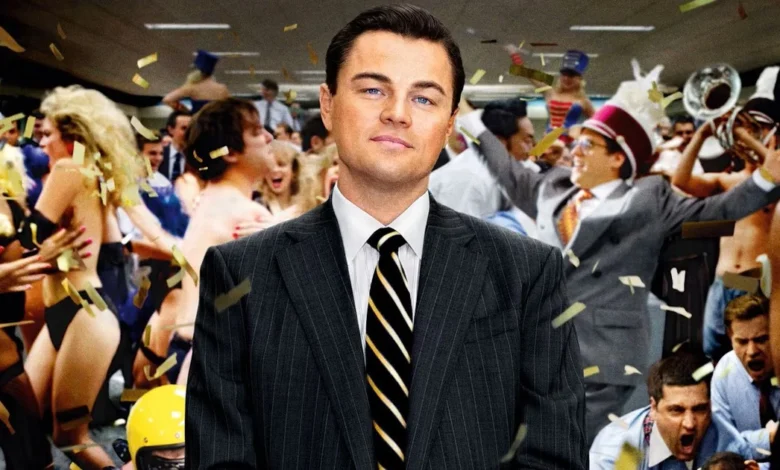
When examining the prolific career of Leonardo DiCaprio, few performances capture his uncanny ability to transform an inherently repulsive figure into an utterly magnetic protagonist quite like Jordan Belfort in The Wolf of Wall Street. Released in December 2013 under the direction of Martin Scorsese, the film chronicled the meteoric rise and catastrophic fall of a real-life penny-stockbroker who built an empire on fraud, market manipulation, and boundless hedonism. While traditional Hollywood biographies often attempt to humanize or offer redemptive arcs for antiheroes, Scorsese and DiCaprio achieved something far more subversive: they engineered a cinematic experience that seduces the audience into rooting for a financial predator, only to implicate them in the character’s moral decay.
The Anatomy of a Modern Financial Empire: Background and Context
The film is adapted from the 2007 memoir of the same name by Jordan Belfort, a former broker whose firm, Stratton Oakmont, operated as a massive "pump-and-dump" scheme during the late 1980s and 1990s. Operating out of Long Island, New York, Belfort and his associates defrauded thousands of retail investors out of hundreds of millions of dollars through aggressive high-pressure sales tactics, artificial stock inflation, and widespread corruption.
When Martin Scorsese took on the project, working from a adapted screenplay by Terence Winter, the challenge was not merely historical accuracy, but tone. Rather than portraying corporate greed as a cold, sterile boardroom phenomenon, the filmmakers chose to depict it as an intoxicating, cult-like fraternity fueled by unbridled testosterone, illegal narcotics, and unchecked consumerism. The context of the film’s release in late 2013—arriving just five years after the devastating 2008 global financial crisis—imbued the narrative with a biting cultural resonance. At a time when public distrust of Wall Street institutions was at an all-time high, The Wolf of Wall Street held up a distorted, hyper-vivid mirror to the mechanisms of financial exploitation.
Transforming Physicality into Psychological Warfare
One of the most remarkable aspects of DiCaprio’s performance is how he weaponized his own public persona. Prior to The Wolf of Wall Street, DiCaprio was largely associated with brooding, emotionally grounded, or tragic figures—from the romantic idealism of Titanic and Romeo + Juliet to the tormented psychological depths of Shutter Island and Inception. He possessed classic leading-man looks, youthfulness, and an inherent accessibility that audiences trusted.
Scorsese and DiCaprio seized upon these very attributes to construct Jordan Belfort. When Belfort first appears on screen, he is not introduced as a mustache-twirling villain. Instead, he presents as an ambitious, silver-tongued family man trying to break into the legitimate financial sector. However, once the 1987 Black Monday market crash wipes out his initial firm, Belfort pivots to the unregulated world of over-the-counter penny stocks, discovering that poor investors are willing to gamble on worthless equities if the pitch is delivered with absolute conviction.
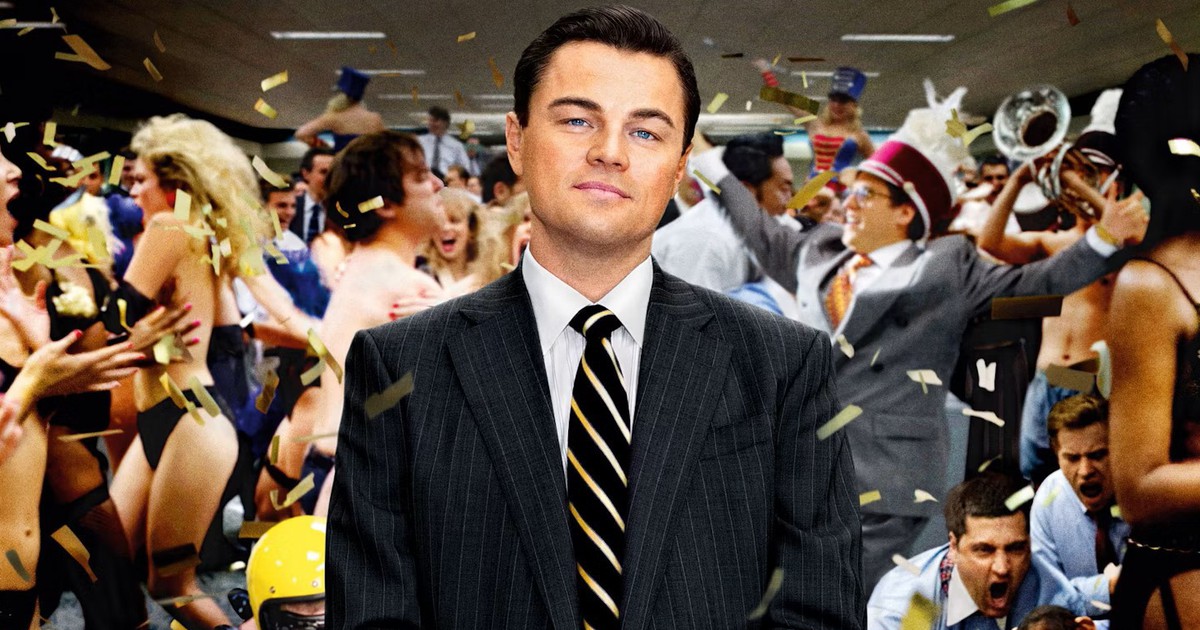
As the founder of Stratton Oakmont, Belfort transforms the trading floor into a secular revival tent. DiCaprio captures the intoxicating nature of charismatic leadership through rapid-fire cadence, unwavering eye contact, and physical swagger. He does not play Belfort as a criminal hiding in the shadows; he plays him as a man who genuinely believes his own propaganda—that wealth is the ultimate metric of human worth, that intelligence grants the right to exploit the naive, and that regulatory laws are merely speed bumps for the bold.
A Departure from Sympathetic Tropes
To fully appreciate the uniqueness of Belfort, one must contrast him with DiCaprio’s other iconic cinematic rogues and survivors. In Steven Spielberg’s Catch Me If You Can (2002), Frank Abagnale Jr. is a youthful con artist driven by a desperate desire to reunite his fractured family, maintaining a core of vulnerability and innocence. In Baz Luhrmann’s The Great Gatsby (2013), Jay Gatsby is defined by a singular, tragic romantic obsession that ultimately leads to his undoing. In Alejandro G. Iárritu’s The Revenant (2015), Hugh Glass is a frontiersman pushed to the absolute limits of endurance in a quest for sheer survival and vengeance.
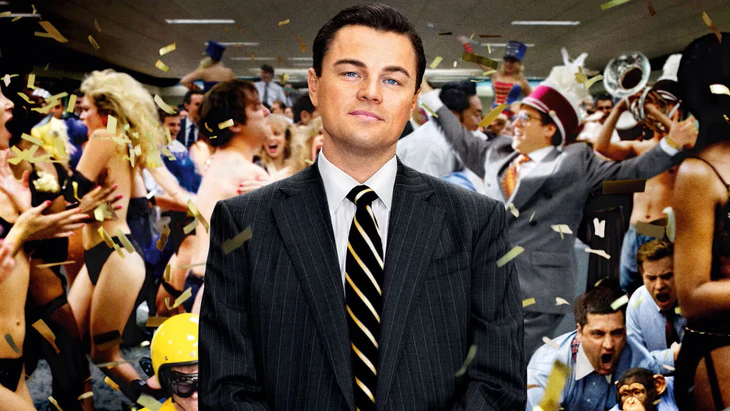
Jordan Belfort shares none of these redemptive or sympathetic motivations. He does not fight for survival against natural elements, nor is he tormented by unrequited love. Belfort wants more even when he already possesses excess. Money generates the need for more money; narcotics amplify the demand for stronger substances; power feeds an insatiable appetite for dominance.
This addiction extends beyond chemical dependencies; Belfort is addicted to the adrenaline rush of the victory itself. Every time he executes a fraudulent trade, every time he convinces a skeptical investor to hand over their life savings, and every time he stands before his battalion of chanting brokers, he experiences a psychological high. DiCaprio manifests this through microscopic behavioral shifts: a sudden widening of the eyes, a subtle vocal inflection change, or a sudden transition from a charismatic motivational speaker to a paranoid, controlling domestic abuser within his own household.
Directorial Choices and Audience Implication
A central critique and paradox surrounding The Wolf of Wall Street upon its release was the concern that the film glorified the decadent lifestyle it sought to satirize. However, film critics and media analysts soon recognized that this discomfort was precisely the point. Scorsese deliberately avoided creating a safe moral distance between the audience and the perpetrators of financial crime.
Cinematographer Rodrigo Prieto’s camera frequently places the viewer directly inside the chaotic parties, the smoke-filled boardrooms, and the drug-induced stupors alongside the characters. By refusing to include a moralizing narrator or an external voice of reason to condemn Belfort’s actions in real time, Scorsese forced viewers to grapple with an uncomfortable realization: why are we laughing? Why does this depravity look so appealing?
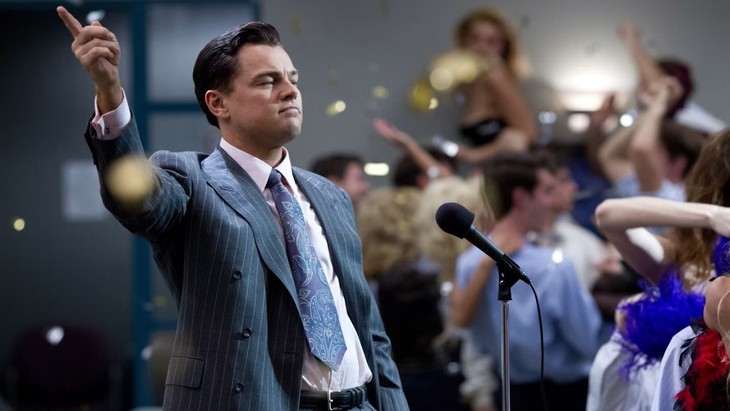
DiCaprio’s performance acts as the anchor for this psychological trap. He sells the American Dream turned inside out. By making Belfort simultaneously hilarious, repulsive, charming, and terrifying, DiCaprio ensures that the audience understands the seductive power of unchecked capitalism. Viewers are made complicit in the seduction, forced to acknowledge that systemic fraud often wears a very attractive, charismatic face.
Chronology of Production, Release, and Legacy
- 2007: Jordan Belfort publishes his memoir, The Wolf of Wall Street, detailing his rise and fall, subsequent cooperation with the FBI, and transition into a motivational speaker. Leonardo DiCaprio and Warner Bros. secure the film rights following a competitive bidding war against Brad Pitt’s production company.
- 2012: After years of development hurdles regarding the film’s explicit content and NC-17 rating concerns, financing is secured independently through Red Granite Pictures. Martin Scorsese officially signs on to direct, reuniting with DiCaprio for their fifth feature film collaboration.
- August – October 2012: Principal photography takes place primarily in New York City and surrounding areas.
- December 2013: The Wolf of Wall Street premieres in New York City and receives a widespread theatrical release by Paramount Pictures. Despite initial controversy over its record-breaking profanity and depictions of drug use, the film becomes a commercial success, grossing over $406 million worldwide against a production budget of $100 million.
- 2014 (Awards Season): The film receives five Academy Award nominations, including Best Picture, Best Director for Scorsese, Best Adapted Screenplay for Terence Winter, Best Actor for Leonardo DiCaprio, and Best Supporting Actor for Jonah Hill. While it ultimately did not win the major categories, the film cemented its status as a defining cultural artifact of 2010s cinema.
Broader Impact and Industry Implications
Over a decade after its theatrical debut, The Wolf of Wall Street continues to be analyzed in film studies curricula, financial ethics seminars, and popular culture analyses. Its cultural footprint remains visible through countless internet memes, entrepreneurial subcultures, and ongoing discussions regarding corporate ethics and white-collar crime enforcement.
For Leonardo DiCaprio, the film marked a pivotal maturation in his career. By shedding the constraints of traditional leading-man heroism, he demonstrated a willingness to explore the darkest recesses of human ambition without a safety net. In doing so, DiCaprio and Scorsese did not just chronicle the life of a notorious stockbroker; they created a timeless cautionary tale about the high cost of unchecked desire, proving that the most dangerous monsters are often the ones who can look you in the eye, smile, and sell you a dream that is too good to be true.