Cục Hàng không Việt Nam yêu cầu 6 hãng hàng không mở mới các đường bay nội địa kết nối du lịch

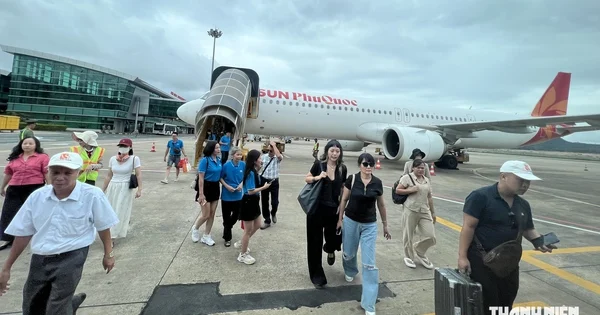
In a decisive move to revitalize domestic connectivity and boost the national tourism sector, the Civil Aviation Administration of Vietnam (CAAV) has officially requested six major domestic airlines to research, restore, and expand their route networks. The directive, issued to Vietnam Airlines, Vietjet Air, Pacific Airlines, Vietravel Airlines, Bamboo Airways, and Sun PhuQuoc Airways, calls for strategic evaluations regarding the opening of new domestic air routes, the reinstatement of suspended pathways, and the intensification of operational frequencies across existing corridors.
This regulatory initiative unfolds against the broader backdrop of nationwide infrastructure modernization. Airports across Vietnam are currently undergoing significant capital investments, capacity upgrades, structural renovations, and technological advancements to transition toward modern, highly efficient transport hubs. By urging carriers to align their operational strategies with these infrastructure enhancements, aviation regulators aim to bridge the gap between physical capacity and market utilization, ensuring that the country’s growing network of regional airports can handle increased passenger flows safely and efficiently.
The Strategic Role of Aviation in Regional Integration
Air transportation serves as the circulatory system of Vietnam’s economy, playing an indispensable role in linking distant provinces, stimulating regional commerce, attracting foreign and domestic investments, and fulfilling the daily mobility needs of citizens. Recognizing the profound socio-economic impacts of aviation, the CAAV has emphasized that carriers must move beyond traditional, trunk-line heavy business models—such as the high-frequency Hanoi–Ho Chi Minh City corridor—and focus deeply on regional cohesion.
Under the new guidelines, airlines are instructed to conduct thorough reviews of their current route portfolios, including paths that were temporarily suspended due to fluctuating fuel costs, fleet optimization efforts, or post-pandemic adjustments. Carriers must identify routes with high market potential, robust travel demand, and favorable operational conditions. Furthermore, the administration has underscored the necessity of establishing direct connections between secondary localities, particularly routes linking prominent economic zones, cultural hubs, and premier tourist destinations.
The development of direct regional connections is projected to yield multiple economic benefits. Chief among these is the reduction of travel time and transit costs for passengers while concurrently alleviating the congestion historically observed at major hub airports such as Hanoi’s Noi Bai International Airport and Ho Chi Minh City’s Tan Son Nhut International Airport. By bypassing central hubs, travelers can journey seamlessly between provinces, thereby maximizing the efficiency of domestic travel and fostering localized economic growth.
Collaborative Frameworks and Tourism Promotion
Achieving a sustainable expansion of the domestic aviation market requires more than unilateral scheduling adjustments by individual airlines. Consequently, the CAAV has mandated a synchronized, multi-sector collaborative framework involving commercial carriers, local government authorities, airport operators, tourism enterprises, travel agencies, and relevant industry stakeholders.
Airlines and provincial authorities are expected to form joint research teams to evaluate market demand accurately. These collaborative units will design joint destination marketing campaigns, develop specialized tourism products that bundle flights with hospitality services, and implement commercial incentives aimed at stimulating public interest in air travel. Such partnerships are viewed as vital mechanisms for mitigating the financial risks traditionally associated with launching developmental routes in emerging tourism markets.
To ensure accountability and structured progress, the CAAV has established a strict compliance timeline. All six targeted airlines are required to submit comprehensive operational plans and feasibility reports by November 10. These detailed reports must explicitly identify which routes are scheduled for restoration, which new routes will be introduced, and which existing corridors will experience frequency enhancements. Additionally, the filings must outline a clear operational roadmap and implementation schedule spanning the late months of 2026 and extending through the entirety of 2027.
Contextualizing the Short-Haul Potential
The push for domestic route expansion does not occur in a vacuum; it is informed by rigorous empirical research conducted by industry experts. Prior to the CAAV’s latest directive, comprehensive joint studies conducted by ATR—the world’s leading regional turboprop manufacturer—and the Transport Engineering Design Institute (TEDI) evaluated the viability of the domestic airspace.
The ATR-TEDI study identified a total of 149 promising domestic routes characterized by short-haul distances of under 555 kilometers. Crucially, the research highlighted that out of these viable short-haul corridors, 87 routes currently remain unexploited by any commercial carrier. Despite demonstrating sound economic feasibility and clear passenger demand, these routes have historically been overlooked in favor of high-density trunk routes that promise immediate, high-volume yields.
The existence of these 87 unexploited short-haul routes provides a clear blueprint for airlines complying with the CAAV’s directive. Utilizing efficient regional aircraft, such as turboprops or smaller narrow-body jets, carriers can theoretically service these thinner markets without incurring unsustainable operational losses.
Implications for the Broader Economy and Tourism Sector
The implications of this coordinated aviation push extend far beyond corporate balance sheets; they strike at the heart of Vietnam’s national development strategy. Tourism is a designated key economic sector for the country, contributing significantly to gross domestic product (GDP) and generating millions of jobs. However, tourism growth has frequently been bottlenecked by accessibility issues, where travelers face prohibitive transit times or exorbitant costs when attempting to visit emerging, non-urban destinations.
By directing airlines to open direct pathways to secondary tourist spots—such as lesser-known coastal enclaves, mountainous cultural regions, and ecological preserves—the government is effectively decentralizing economic activity. Tourists will no longer be funneled exclusively into major urban centers, thereby distributing tourism revenue more equitably across rural and provincial economies.
From a regulatory standpoint, the CAAV’s approach represents a nuanced balancing act between market-driven operations and strategic state guidance. While airlines retain the ultimate autonomy to decide which routes meet their commercial thresholds, the regulatory framework ensures that national priorities—such as regional equity, infrastructure optimization, and economic resilience—are actively integrated into corporate decision-making processes.
As the November 10 reporting deadline approaches, the executive boards of Vietnam Airlines, Vietjet Air, Pacific Airlines, Vietravel Airlines, Bamboo Airways, and Sun PhuQuoc Airways are actively re-evaluating their fleet utilization schedules, leasing agreements, and crew allocations. The decisions made during this critical window will shape the contours of Vietnamese domestic aviation for years to come, dictating how seamlessly the nation can traverse its own geography in an era of post-pandemic recovery and infrastructural transformation.