The global football calendar shifts into an intensive gear as national teams, continental bodies, and regional federations converge for a packed schedule of international friendlies, competitive qualification matches, and multi-sport regional tournaments. Football fans and sports analysts alike are turning their attention to a diverse lineup of fixtures spanning from the group stages of the Asian Games in Nagoya to the high-stakes tactical battles of the UEFA Nations League, alongside crucial regional cups across Africa, the Middle East, and Southeast Asia.
This comprehensive slate of matches highlights the complex ecosystem of modern international football, where elite European heavyweights test their squads against rising continental rivals, while emerging national teams fight for vital ranking points and tournament progression. As domestic leagues across Europe—including the English Premier League, La Liga, Serie A, and the Bundesliga—pause temporarily to accommodate the international window, national team managers face mounting pressure to balance squad rotation, tactical experimentation, and the absolute necessity of securing positive results.
UEFA Nations League 2026/27: High Stakes in League A and B
The crown jewel of the mid-week international calendar remains the UEFA Nations League 2026/27, which enters a critical phase as Europe’s top-tier nations battle for supremacy in Leagues A and B. Scheduled for the early hours of September 25 (Indochina Time), League A features a slate of blockbuster fixtures that promise tactical chess matches and high-octane drama across the continent.
In League A, the Netherlands prepare to host a resilient and tactically disciplined Czech side in a fixture that historically produces intense physical battles in midfield. Concurrently, Norway welcomes Denmark in a fierce Nordic derby, where Erling Haaland and his compatriots will look to break down a well-organized Danish defensive block. Elsewhere, Portugal takes on Wales in a matchup that juxtaposes Iberian technical brilliance with the trademark resilience and verticality of the Welsh squad. Rounding out the League A fixtures, Serbia locks horns with Greece in what is projected to be a fiercely contested battle of attrition, characterized by fervent atmospheres and tactical discipline.
Meanwhile, League B action brings its own unique brand of high-stakes drama on the same night. Austria faces off against Israel, with both sides eager to cement their status among Europe’s rising footballing powers. In another intriguing encounter, Kosovo hosts Ireland, a match that carries significant implications for regional pride and group standings, as the Kosovo side continues to leverage its fervent home support to challenge more established European federations.
Adding to the European tapestry, League D fixtures provide a platform for lower-ranked federations to taste competitive success. Andorra takes on Malta in an early kickoff on September 24, followed by Liechtenstein locking horns with Lithuania in the early hours of September 25. While these matches may not command the global television audiences of the Premier League or El Clásico, they remain foundational to the development of football infrastructure and competitive resilience in microstates and developing football nations.
Asian Games 2026: Group Stage Drama and Youth Development
Shifting focus to Asia, the men’s football tournament at the Asian Games 2026 continues to deliver captivating storylines, particularly regarding the development of young talent and the shifting balance of power in continental youth football. The recent results from September 23 have set a fascinating baseline for the remainder of the group stage.

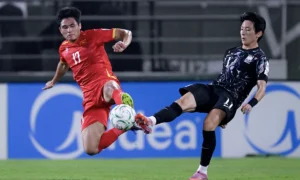
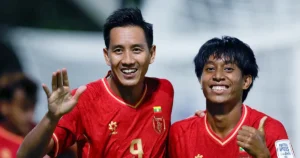
In Group proceedings, U23 China played out a tense, scoreless stalemate against U23 UAE, a match that underscored the defensive solidity and tactical caution exercised by both sides as they sought to preserve their tournament aspirations. However, the headline-grabbers of the day were undoubtedly U23 North Korea, who delivered a statement performance by dismantling U23 Iran with a resounding 4-1 victory. The clinical finishing and relentless high press deployed by the North Korean youngsters left the traditional Asian powerhouse searching for answers and dramatically reshaped the dynamics of their group.
In other notable Asian Games results on September 23, U23 Japan showcased their technical superiority and clinical efficiency with a comfortable 3-0 victory over U23 Thailand, asserting their status as one of the gold medal favorites. Concurrently, U23 Kyrgyzstan overwhelmed U23 Hong Kong (China) in a dominant 4-0 display, highlighting the rapid developmental strides being made by Central Asian football federations at the youth level.
International Friendlies: Global Cross-Confederation Clashes
International friendlies during this window serve a dual purpose: providing elite managers with a low-risk environment to test tactical variations, and offering cross-confederation showdowns that rarely occur outside of FIFA World Cups.
Asia plays host to several high-profile friendlies on September 24. Japan welcomes South American heavyweights Uruguay in a fixture that will test the Samurai Blue’s defensive compactness against world-class individual flair. Shortly after, South Korea tests its mettle against Ecuador, a side renowned for its physical robustness and high-altitude endurance. Later in the evening, an all-Asian tactical battle unfolds as Uzbekistan squares off against Iran, offering a preview of the fierce competition expected in upcoming World Cup qualification cycles.

In other international friendly action, Azerbaijan edged past Tajikistan with a narrow 1-0 victory, while Gibraltar and Sao Tome played out a hard-fought, goalless draw, demonstrating the incremental competitive parity developing among lower-tier FIFA member associations.
Regional Supremacy: African Cup of Nations Qualifiers and Arabian Gulf Cup
The relentless pursuit of continental and regional glory extends to Africa and the Middle East, where crucial qualification matches and regional tournaments are currently underway.
The Africa Cup of Nations 2026/27 qualifiers feature a massive slate of fixtures across September 24 and 25. The action begins with Namibia hosting Congo at 20:00 (ICT), followed by a blockbuster late-night slate at 23:00 featuring Democratic Republic of Congo against Equatorial Guinea, Libya taking on Botswana, and Mauritania facing the Central African Republic. The midnight oil burns brightest for African football fans as the early hours of September 25 feature traditional heavyweights and regional contenders colliding: Cameroon meets Comoros, Cape Verde clashes with Ghana, Sierra Leone plays Zimbabwe, and Tunisia tests its depth against Uganda. These fixtures are vital barometers for African football, where physical endurance, tactical adaptability, and squad depth often dictate who secures passage to the continent’s premier showcase.
Simultaneously, the Arabian Gulf Cup 2026/27 group stage provides intense regional rivalries in the Middle East. On September 23, Iraq shared the spoils with Oman in a 1-1 draw, while Saudi Arabia secured a hard-fought 1-0 victory over Kuwait. The tournament continues on September 24 and 25 with the United Arab Emirates locking horns with Yemen, and regional powerhouse Qatar squaring off against Bahrain in fixtures deeply saturated with historical context, local pride, and passionate fanbases.

ASEAN Cup 2026 – Division 2: Southeast Asian Battles
Southeast Asian football commands its own spotlight with the ongoing FIFA ASEAN Cup 2026 – Division 2 fixtures on September 24. Laos prepares to face Brunei in a 16:00 kickoff, while Myanmar squares off against Timor Leste at 19:00. These regional competitions are indispensable for fostering competitive spirit, improving infrastructure, and driving grassroots engagement across Southeast Asia, providing developing national teams with regular, meaningful competitive fixtures.
Broader Implications and Strategic Analysis
As football associations navigate this exhaustive calendar, the broader implications of the current international window extend far beyond simple match results. For club managers back in Europe—monitoring stars across the Premier League, Serie A, Bundesliga, and La Liga—the primary concern remains player welfare, fatigue management, and the avoidance of injuries during a grueling professional season.
Conversely, for national team coaches, this window represents a precious window of cohesion. With global tournaments on the horizon, every tactical minute spent on the training pitch and every competitive international fixture serves as a foundational building block for squad identity. As the matches unfold over the coming days, the collective focus of the global sports community remains fixed on the pitch, where narratives of triumph, redemption, and tactical evolution continue to write the latest chapter in international football history.