China’s BrainCo Unveils Non-Invasive Brain-to-Robot Control, Intensifying Global BCI Race


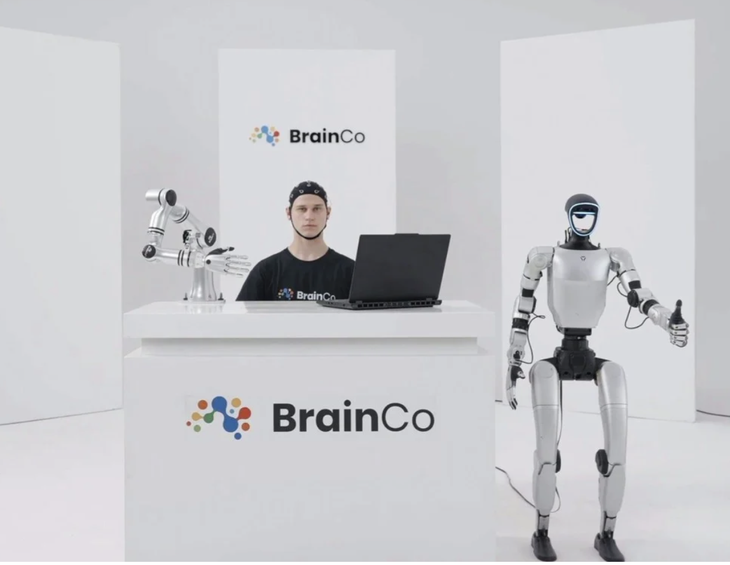
Shanghai, China – In a significant leap for Brain-Computer Interface (BCI) technology, Chinese startup BrainCo has publicly unveiled its groundbreaking "brain-to-robot" platform. This innovative system allows users to control robotic devices purely through brain signals, captured by non-invasive electroencephalography (EEG) wearables. The demonstration, held at the prestigious World Artificial Intelligence Conference (WAIC) in Shanghai, underscores China’s escalating ambition and strategic focus on BCI as a critical future industry.
Redefining Human-Robot Interaction with Non-Invasive BCI
BrainCo’s newly introduced platform represents a pivotal advancement in how humans interact with intelligent machines. Unlike more invasive BCI technologies that require surgical implantation, BrainCo’s system operates entirely externally, relying on an EEG headset to record electrical activity from the user’s scalp. These raw brain signals are then processed and deciphered by sophisticated artificial intelligence (AI) algorithms, translating human intent into actionable commands for a variety of robotic counterparts.
During its debut at WAIC, the platform showcased its versatility, demonstrating control over diverse robotic forms, including humanoid robots, robotic arms, and even robotic dogs. A particularly compelling aspect of the demonstration involved a user manipulating a robotic arm to perform delicate tasks, such as grasping a cup or picking up an apple, solely through focused thought. This direct thought-to-action capability bypasses traditional control interfaces, promising a more intuitive and seamless interaction with complex machinery. The platform’s broad compatibility with different robot types suggests its potential to integrate across various sectors, from industrial automation to personal assistance and entertainment.
The Evolving BCI Landscape: Invasive vs. Non-Invasive Approaches
The BCI field is witnessing a vigorous global race, with different technological philosophies emerging. On one end of the spectrum is Elon Musk’s Neuralink, which has garnered considerable attention for its invasive approach. Neuralink’s strategy involves surgically implanting microchip arrays directly into the brain, aiming to achieve high-bandwidth data transmission for purposes ranging from restoring lost neurological function in individuals with disabilities to potential human augmentation. This method, while offering high signal fidelity, inherently carries risks associated with neurosurgery and long-term implant viability.

In stark contrast, a burgeoning number of Chinese enterprises, led by BrainCo, are championing non-invasive BCI development. This alternative pathway focuses on external devices, such as EEG headsets, to capture brain signals without breaching the skull. As noted by CNBC, this divergence highlights a strategic decision to pursue solutions with lower costs and reduced health risks, potentially accelerating broader adoption across a wider range of applications. The fundamental principle of BCI, whether invasive or non-invasive, revolves around processing brain signals—neural oscillations, event-related potentials, or motor imagery—and converting them into commands that external devices can understand. The rapid evolution of AI, particularly in machine learning and pattern recognition, has been instrumental in enhancing the accuracy and speed of decoding these intricate brain signals, transforming what was once sci-fi into tangible reality.
BrainCo’s Journey and Diverse Applications
Founded in 2015 out of Harvard Innovation Labs, BrainCo has consistently positioned itself at the forefront of non-invasive BCI technology. The company’s strategic roadmap emphasizes accessibility and practical applications, distinguishing its offerings in a competitive market. Nyx He, a partner and senior vice president at BrainCo, articulated the rationale behind their non-invasive focus. He explained that while invasive implants might be necessary for certain severe neurological conditions, non-invasive methods offer a viable, lower-risk, and more cost-effective alternative for a wide array of other needs, particularly in rehabilitation and everyday enhancement.
BrainCo’s existing product portfolio reflects this commitment. One notable innovation is a prosthetic hand capable of interpreting neural and muscle signals to facilitate intricate finger movements, offering enhanced dexterity and control to amputees. Beyond physical rehabilitation, BrainCo has also ventured into neurological wellness, developing a sleep aid device that utilizes low-intensity electrical pulses to stimulate neurotransmitters associated with stress reduction, thereby promoting improved sleep quality.
The company’s long-term vision is ambitious and multi-phased. Initially, BrainCo plans to prioritize applications for individuals with disabilities, providing assistive technologies that improve quality of life. Subsequently, the focus will broaden to address neurological disorders such as Attention Deficit Hyperactivity Disorder (ADHD) and depression, leveraging BCI for therapeutic and diagnostic purposes. The ultimate goal is to tap into the vast consumer electronics market, making brain-controlled devices and neuro-wellness tools accessible to the general public. Furthermore, BrainCo intends to license its BCI platform to other companies, fostering a wider ecosystem of brain-tech product development and accelerating innovation across the industry. This strategy positions BrainCo not just as a product developer but as a foundational technology provider, aiming to catalyze the growth of the entire brain-computer interface sector.
China’s Strategic Imperative in Brain-Computer Interfaces
BrainCo’s recent unveiling is not an isolated event but a manifestation of a broader national strategy. The Chinese government has officially designated BCI as a "future industry" within its latest five-year plan, signaling a concerted effort to invest heavily in and rapidly develop this nascent sector. This designation implies significant government funding, policy support, and an accelerated regulatory pathway to foster domestic innovation and market leadership.
In the preceding year, seven Chinese ministries collectively issued a comprehensive development plan for the BCI industry, setting ambitious targets. The plan aims for China to achieve "critical technological breakthroughs" in BCI before 2027. This includes not only advancements in hardware and software but also the establishment of robust ethical guidelines and regulatory frameworks to ensure responsible development. The government’s proactive stance is driven by a recognition of BCI’s potential to revolutionize healthcare, enhance military capabilities, and create entirely new economic sectors, aligning with China’s broader goal of technological self-reliance and global leadership in advanced technologies. This national backing provides a fertile ground for companies like BrainCo to thrive, offering resources, talent, and a supportive policy environment that few other nations can match.
Implications and the Future of BCI Development
The implications of BrainCo’s "brain-to-robot" platform and China’s strategic push are far-reaching. Technologically, the progress in non-invasive BCI opens new avenues for human-robot collaboration, making advanced robotics more accessible and intuitive for a wider user base. It challenges the notion that high-fidelity BCI necessarily requires invasive procedures, potentially democratizing access to brain-controlled technologies.
Economically, China’s aggressive investment in BCI is poised to create a burgeoning domestic market and potentially position Chinese firms as global leaders in this domain. Market analyses, such as those cited by CNBC, suggest that BCI could become a new frontier in the ongoing technological competition between the United States and China. The global BCI market, valued at approximately $1.7 billion in 2023, is projected to grow significantly, with some estimates reaching over $6 billion by 2030, driven by both medical and consumer applications. China’s focused approach aims to capture a substantial share of this growth.
Beyond direct control, BrainCo believes its new platform could address a critical challenge in the robotics industry: the scarcity of high-quality training data for AI-powered robots. By combining data from real-world robot operations, human manipulation, and simulation, the platform could generate vast datasets of human intent and execution, enabling robots to learn and adapt more effectively. This could accelerate the development of more intelligent and autonomous robotic systems across various industries.
However, the rapid advancement of BCI also brings forth important societal and ethical considerations. Questions surrounding data privacy, the security of brain-derived information, and the potential for misuse of such powerful control mechanisms will require careful deliberation and robust regulatory frameworks. As BCI moves from niche medical applications to broader consumer markets, these ethical dimensions will become increasingly pertinent.
In conclusion, BrainCo’s unveiling of its non-invasive "brain-to-robot" platform marks a significant milestone in BCI technology. Bolstered by strong national strategic backing, China is rapidly advancing its capabilities in this field, offering a compelling alternative to invasive approaches and setting the stage for profound transformations in human-machine interaction, healthcare, and the global technological landscape. The coming years will undoubtedly witness intense innovation and competition as nations vie for supremacy in this exciting new frontier of brain-computer interfaces.