Global Gold and Silver Prices Face Intense Downward Pressure as Markets Brace for Federal Reserve Interest Rate Decision

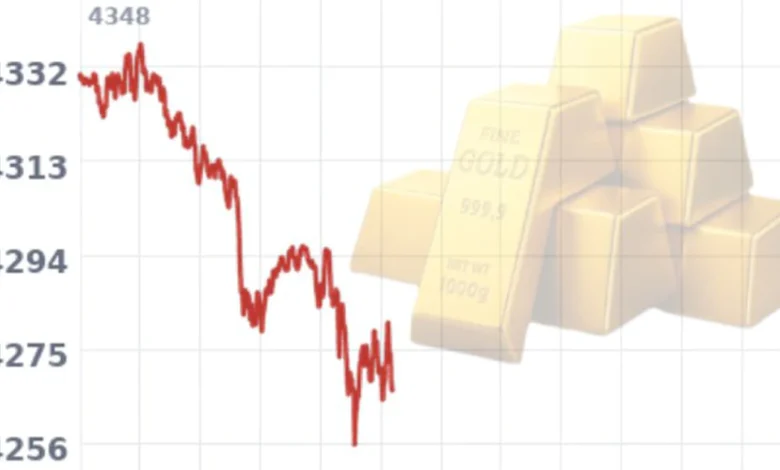
Global precious metals markets are experiencing a severe wave of downward pressure, with both gold and silver prices registering substantial losses. This correction occurs as international investors and financial institutions position themselves ahead of the highly anticipated Federal Reserve monetary policy meeting. Market participants are closely monitoring central bank signals to determine whether policymakers will implement another interest rate hike or choose to pause tightening measures to assess economic stability.
The looming prospect of prolonged high interest rates has rattled commodities markets, which had previously enjoyed a robust upward trajectory driven by safe-haven demand, persistent geopolitical tensions, and shifting global economic forecasts. As policymakers prepare to deliver their verdict, analysts, traders, and institutional investors are re-evaluating their portfolios, triggering a wave of profit-taking and technical selling across major bullion exchanges.
Sharp Retracement in International Bullion Markets
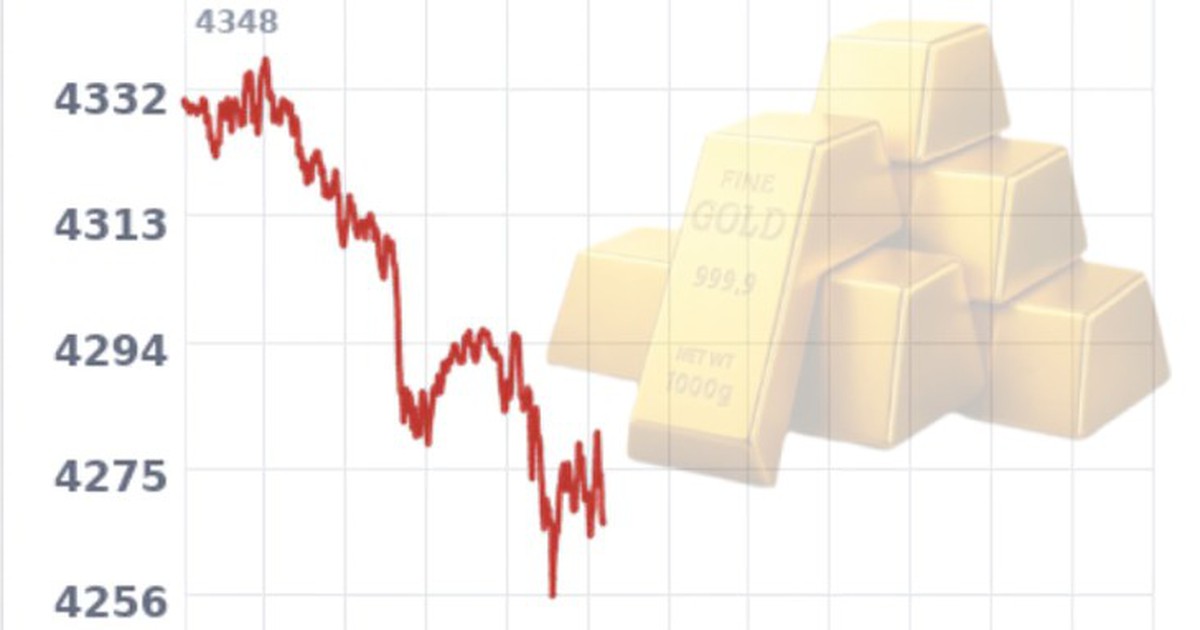
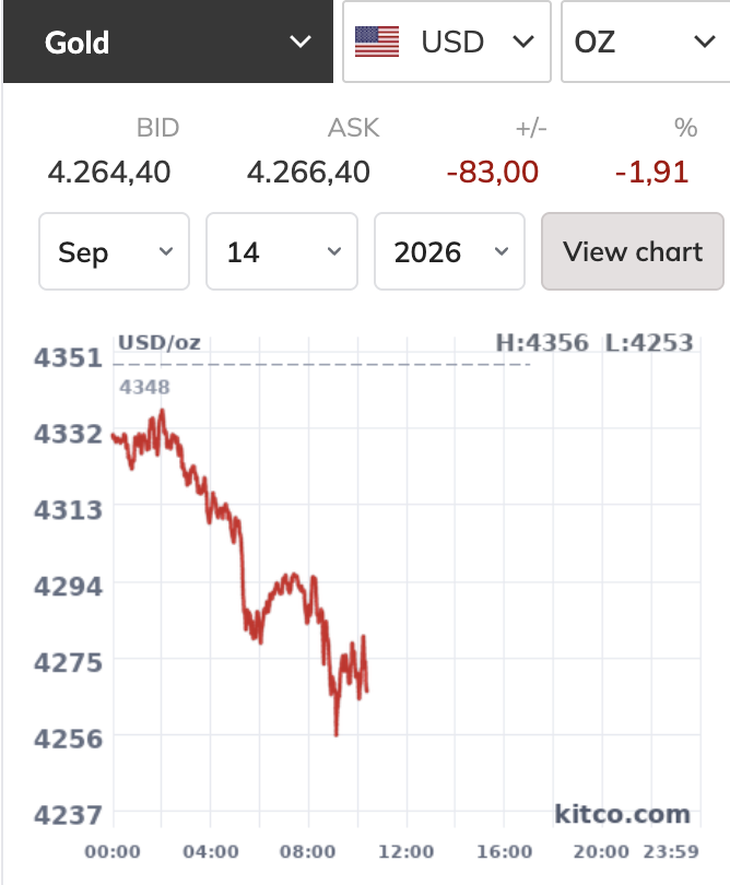
Trading activity in international precious metals markets reflected heightened volatility as the crucial Federal Reserve meeting approached. At 9:30 PM on September 14, spot gold dropped significantly, trading at approximately $4,266 per ounce. This figure represents a sharp decline of $82.90 per ounce compared to the close of the previous week. When converted using prevailing commercial bank exchange rates, international spot gold is valued at roughly VND 136 million per tael.
This latest adjustment marks a dramatic correction from recent historical peaks. Spot gold has now fallen by an estimated $432 per ounce—equivalent to approximately VND 13.6 million per tael—from its near-record highs. The primary catalyst behind this aggressive sell-off is the mounting market expectation that the Federal Reserve will maintain its aggressive monetary stance in response to stubborn inflationary pressures.
Market sentiment shifted markedly following the release of the United States Consumer Price Index (CPI) report late last week. The inflation data showed a slight uptick, surpassing consensus forecasts and prompting futures markets to price in an increased likelihood of further monetary tightening. According to data retrieved from the FedWatch Tool managed by the CME Group, interest rate futures indicated a roughly 90% probability that the U.S. central bank would implement a benchmark interest rate hike during its upcoming policy announcement. This renewed tightening outlook strengthened the U.S. dollar and elevated Treasury yields, creating a challenging macroeconomic environment for non-yielding assets like gold.
Market Dynamics and Expert Perspectives
Prior to the recent macroeconomic data releases, many commodity strategists and market experts suggested that spot gold would find robust technical support, making a drop below the psychological threshold of $4,300 per ounce unlikely in the near term. However, the velocity and magnitude of the recent decline have far exceeded conventional forecasts, catching several institutional traders off guard.
Commenting on the market behavior, financial expert Tran Duy Phuong noted that precious metals trading often adheres to the classic market adage of "buy the rumor, sell the fact." This trading philosophy describes a phenomenon where prices rally ahead of anticipated announcements as investors price in expected outcomes, only to experience a correction when the actual event materializes or when preliminary data shifts market expectations.
Phuong characterized the current pre-meeting downturn as a healthy market adjustment rather than a structural trend reversal. He suggested that historical trading patterns often point toward a strong recovery for gold prices in the immediate aftermath of Federal Reserve policy decisions, with potential targets testing the $4,560 per ounce threshold as volatility subsides and market certainty is restored.
Despite these optimistic projections, a distinct division remains among macroeconomic analysts regarding the Federal Reserve’s definitive trajectory. While current pricing suggests a strong bias toward further tightening, financial analysts emphasize that no absolute guarantees exist. Although a complete pause in rate hikes remains a possibility given the cumulative lagging effects of previous monetary tightening, economists argue that stubborn inflation figures make it equally improbable for the central bank to signal an imminent pivot toward monetary easing.
Broader Economic Pressures and U.S. Treasury Yields
Beyond immediate inflation metrics, market strategists point out that the Federal Reserve is currently navigating complex economic crosscurrents that extend beyond standard consumer price indices. One of the central bank’s most pressing underlying concerns is the massive expansion of the United States public debt issuance and its direct transmission to broader financial conditions.
Throughout the preceding week, yields on U.S. Treasury securities experienced substantial upward momentum across the yield curve. Most notably, the yield on the benchmark 10-year U.S. Treasury note advanced steadily, pressing close to the critical psychological threshold of 5%. Elevated sovereign bond yields increase the opportunity cost of holding non-interest-bearing physical commodities, exerting persistent downward gravitational pull on global gold and silver valuations.
Furthermore, strengthening labor market resilience and robust retail sales data in the United States have consistently challenged predictions of an imminent economic slowdown. These robust economic indicators provide the central bank with the necessary leeway to maintain elevated interest rates for an extended duration, directly contradicting earlier market consensus that anticipated aggressive rate cuts before the end of the fiscal cycle.
Domestic Market Trends and Price Disparities
Mirroring the downward trajectory of international spot markets, domestic precious metals prices in Vietnam have also retreated, albeit at a more gradual pace due to domestic supply-demand dynamics and regulatory frameworks governing the gold bar market.
At major domestic trading desks, Saigon Jewelry Company (SJC) listed SJC gold bars at VND 145.6 million per tael for selling and VND 142.6 million per tael for buying. This reflects a modest decrease of VND 400,000 per tael compared to the closing rates of the previous week. Similarly, retail prices for 9999 pure gold rings moved downward in tandem, with selling prices settling near VND 145.1 million per tael and buying prices registered at VND 142.1 million per tael.
Other prominent domestic gold and gemstone enterprises reported sharper corrections. Ancarat lowered its retail selling price by VND 1.2 million per tael, bringing transactions down to VND 151.3 million per tael, while the purchase price settled at VND 147.8 million per tael. Meanwhile, Mi Hong reported selling prices at VND 144.5 million per tael and purchasing prices at VND 143 million per tael, marking a decrease of VND 1.5 million per tael.
A notable structural feature of the domestic gold market remains the persistent valuation gap between local listings and international spot equivalents. When calculated against converted global spot prices, domestic gold bars continue to trade at a significant premium, currently hovering approximately VND 9.6 million per tael higher than international benchmarks. This enduring spread highlights unique domestic liquidity conditions and localized consumer demand patterns that insulate the local market from immediate global corrections to a certain degree.
Silver Markets Contract Amid Broad Commodity Sell-off
In tandem with gold, international silver prices faced intense downward pressure during the trading session, declining to $63.21 per ounce. When converted into domestic currency equivalents, this international spot price corresponds to approximately VND 2 million per tael.
Domestic silver retailers adjusted their listings downward to reflect the global correction. Ancarat listed silver selling prices at VND 2.219 million per tael and buying prices at VND 2.152 million per tael. Similarly, SBJ quoted silver at VND 2.217 million per tael for retail sale and VND 2.145 million per tael for acquisition. Phu Quy positioned its silver offerings slightly higher, with selling prices at VND 2.242 million per tael and buying prices at VND 2.175 million per tael.
Implications and Outlook for Investors
The ongoing correction in precious metals underscores the high-stakes environment facing global financial markets. As the Federal Reserve prepares to deliver its definitive policy stance, market participants across both institutional and retail segments are exercising heightened caution.
The immediate implications of the upcoming central bank decision extend far beyond bullion valuations, influencing foreign exchange reserves, equity market volatility, and emerging market capital flows. While short-term technical indicators and sentiment metrics point to continued turbulence, long-term investors continue to monitor structural macroeconomic drivers—including central bank reserve accumulation, geopolitical fragmentation, and sovereign debt sustainability—which many analysts believe will ultimately underpin the strategic value of precious metals in diversified portfolios.