ASEAN Cup 2026 Implements Sweeping IFAB Rule Changes to Enhance Sportsmanship and Reduce Time-Wasting

Friday, July 25, 2026, 00:00 (GMT+7)
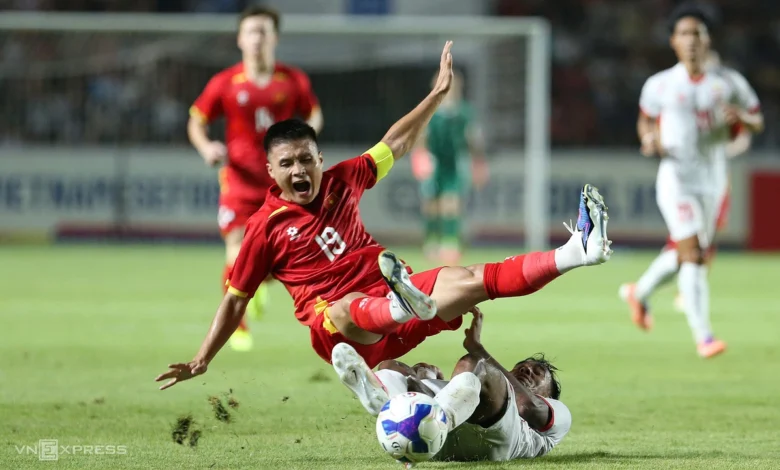
The ASEAN Cup 2026 is poised to usher in a new era of football with the adoption of a comprehensive set of rule changes designed to significantly improve sportsmanship, streamline game flow, and drastically reduce time-wasting. These stringent regulations, derived from the International Football Association Board (IFAB) revisions for the 2026-2027 season, include direct red cards for players covering their mouths during on-field disputes and a strict 10-second limit for substituted players to exit the pitch. The tournament, scheduled from July 24 to August 26, will serve as a prominent regional platform for these global football innovations.
A Stricter Stance on Unsportsmanlike Conduct
At the forefront of these new regulations is a firm crackdown on player behavior, particularly concerning dissent and confrontation. The most striking change, and one likely to generate considerable discussion, pertains to players obscuring their mouths during arguments or altercations on the field. Referees are now empowered to issue a direct red card to any player who uses their hands, arms, or even their jersey to cover their mouth while engaging with opponents or officials during a heated exchange. This rule is specifically applicable during confrontational situations, not generally throughout the match.
The rationale behind this particular rule is multi-faceted. It aims to eliminate a common tactic used by players to conceal verbal abuse, intimidation, or strategic communication from cameras, lip-readers, and often, even nearby officials. By making these exchanges fully visible, IFAB and, by extension, the ASEAN Cup organizers, hope to foster a more transparent and respectful environment on the pitch. This shift aligns with IFAB’s broader agenda to uphold the integrity of the game and ensure that player conduct reflects the values of fair play. The World Cup 2026 reportedly saw two high-profile dismissals under similar circumstances: Miguel Almiron of Paraguay and Piero Hincapie of Ecuador, indicating a global trend towards stricter enforcement. While on-field confrontations are not uncommon in Southeast Asian football, the habit of covering one’s mouth during such incidents is less prevalent, suggesting that players in the region may need to adapt swiftly to avoid severe penalties.
Further bolstering referee authority and curbing player dissent, the new rules stipulate that only team captains are permitted to approach and engage in dialogue with the match officials regarding on-field decisions. Any other player who attempts to challenge, point at, shout at, or overtly protest a referee’s decision will no longer be overlooked. Such actions will now be met with immediate disciplinary action, typically a yellow card, with repeat offenses potentially leading to further sanctions. This measure is designed to alleviate the immense pressure often placed on referees and prevent chaotic scenes involving multiple players surrounding an official, ensuring that match control remains firmly in the hands of the referee.
In an even more decisive move, referees have been granted enhanced powers to address players who deliberately leave the field of play in an attempt to pressure or intimidate officials. Any player found to be intentionally abandoning the pitch for such reasons faces the risk of a direct red card. This extends beyond individual players; team officials, including coaches and technical staff, will also face severe penalties if they are found to be inciting players to leave the field. The most extreme consequence for such behavior states that if a team intentionally causes a match to be suspended by abandoning the field, they will automatically forfeit the game. This principle was highlighted by an incident earlier in the year (within the article’s 2026 timeline) involving Senegal and Morocco in the African Cup of Nations final, where Senegal reportedly left the match, only to return and still claim victory. The new ASEAN Cup rule aims to prevent such controversial outcomes by establishing a clear and immediate forfeiture penalty for deliberate match abandonment.
Aggressive Measures Against Time-Wasting
Beyond sportsmanship, a significant portion of the new regulations targets the pervasive issue of time-wasting, a common frustration for fans and a detriment to the game’s fluidity. IFAB’s goal is to maximize actual playing time, which has been a growing concern across professional football, with many matches seeing the ball in play for less than 60 minutes.
One key area of focus is on throw-ins. If a player is deemed to be deliberately delaying a throw-in, the referee will issue a warning and then initiate a five-second countdown, using clear hand signals and potentially verbal cues. Should the ball not be put back into play within this timeframe, possession will be immediately awarded to the opposing team. This aggressive approach is expected to dramatically quicken the pace of restarts and eliminate a frequent source of stoppages.
A similar five-second countdown rule will be applied to goal kicks. After the referee signals for a goal kick, the defending team will have five seconds to put the ball back into play. Failure to do so will result in the award of a corner kick to the attacking team, a significant penalty that will discourage any deliberate dawdling by goalkeepers or defenders. This marks a departure from previous practices where referees would merely caution players for persistent delays, providing a more immediate and impactful consequence.
Substitutions, another common tactic for disrupting the game’s rhythm, especially in the closing stages, are also subject to tighter controls. Once the electronic board displays the numbers for a substitution, the player being replaced must exit the field of play within ten seconds. Crucially, this exit must be via the nearest touchline or goal line, unless specifically directed otherwise by the referee for safety or practical reasons. If the departing player deliberately delays their exit beyond the 10-second limit, the match will resume without them. While the substitution itself will not be canceled, the incoming player will only be permitted to enter the field at the next stoppage in play, at least one minute later, and only after receiving the referee’s explicit signal. This ensures that teams cannot exploit substitutions to waste time or break the opponent’s momentum during critical periods of the match.
The treatment of injured players has also been revised to combat feigned injuries and ensure continuous play. If a player (excluding goalkeepers) receives on-field medical attention for an injury that caused a stoppage in play, they will be required to leave the field for a minimum of one minute after the ball is put back into play. This one-minute period will be tracked by a continuous stopwatch, and the player will only be allowed to re-enter with the referee’s permission once the time has elapsed.
However, IFAB has built in several important exceptions to this rule to prioritize player safety and fairness:

- Injuries to the goalkeeper.
- Collisions between a goalkeeper and another player.
- Collisions involving two players from the same team.
- Situations involving serious injuries, particularly head injuries, which require immediate and prolonged attention.
- Fouls that result in the offending player receiving a red or yellow card, as the stoppage is due to disciplinary action rather than solely the injury itself.
- When the injured player is the designated taker of a penalty kick, ensuring they have the opportunity to take it.
Furthermore, specific instructions have been given to referees regarding goalkeepers who feign injury. To prevent tactical instructions from being covertly relayed during such stoppages, referees are advised not to allow other players to approach the technical area or substitute benches while the goalkeeper is receiving treatment.
Broader Implications and Tournament Context
These sweeping changes represent a significant evolution in football regulations, reflecting IFAB’s ongoing commitment to modernizing the game and addressing persistent issues that detract from the spectator experience. The ASEAN Cup 2026, by adopting these rules, positions itself at the forefront of this global movement, aiming to deliver a faster, fairer, and more exciting tournament for fans across Southeast Asia and beyond.
The implementation of these rules will undoubtedly place greater demands on players, who will need to adapt their on-field behavior and tactical approaches. Coaches will also need to adjust their strategies, particularly concerning substitutions and set-piece routines, to avoid costly penalties. Referees, in turn, will play a crucial role in the consistent and fair application of these new regulations, necessitating extensive training and clear communication to ensure uniformity across all matches. While there may be an initial period of adjustment and potential controversy as players and teams adapt, the long-term goal is to cultivate a football environment where sportsmanship is paramount, and every second of play is genuinely competitive.
The ASEAN Cup 2026 itself is set to be a highly anticipated event, featuring ten national teams from the region. These teams will be divided into two groups of five, competing in a single round-robin format during the group stage. The top two teams from each group will advance to the semi-finals, which will be played over two legs, home and away, adding an extra layer of strategic depth and excitement to the knockout stages. The adoption of these progressive rules will add another compelling dimension to the tournament, making it a key benchmark for how such regulatory shifts impact regional football.
The ASEAN Cup 2026 Organizing Committee, in collaboration with national federations, will likely undertake significant efforts to educate players, coaches, and officials on the nuances of these new rules. This proactive approach will be critical for a smooth transition and to ensure that the focus remains on the beautiful game, played with integrity and intensity. The changes underscore a collective desire within the football community to combat negative aspects of the game and deliver a product that is continuously evolving for the better.
Lương Hiếu – Xuân Bính