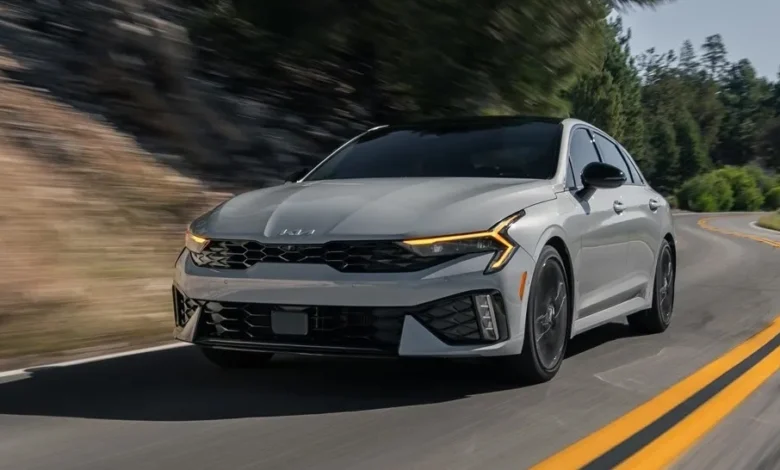
The automotive landscape has undergone seismic shifts over the past several years, characterized by a rapid pivot toward crossover SUVs, trucks, and electrified powertrains. Within this challenging environment for traditional passenger cars, the midsize sedan segment has experienced a steady contraction in consumer interest and overall market share. However, defying broader industry trends, the Kia K5 has emerged as a resilient player, experiencing a notable surge in popularity. This counterintuitive growth comes at a time when consumers are increasingly sensitive to fuel costs and economic fluctuations, prompting many buyers to reconsider the efficiency, affordability, and packaging of a traditional three-box sedan.
According to recent sales figures leading up to August, the cumulative sales performance of the Kia K5 reached an impressive 52,611 units, marking a solid 11.2% increase compared to the same period in the previous year. Building upon this commercial momentum, the South Korean automaker has officially announced the rollout of the 2027 Kia K5. While the latest iteration introduces modest cosmetic and equipment adjustments alongside a slight price adjustment, it also brings strategic structural changes to the model lineup in the North American market, reflecting shifting consumer demands and manufacturing priorities.
Pricing Adjustments and Lineup Restructuring for the 2027 Model Year
Stepping into the 2027 model year, the entry-level pricing for the Kia K5 has experienced a minor upward adjustment. The starting MSRP for the base model has risen from $27,490 to $27,690, representing a modest increase of $200. This nominal price hike remains well within industry norms for annual model-year updates, particularly in an era marked by persistent supply chain adjustments and rising production costs.
More significant than the price bump, however, is a major strategic shift in the vehicle’s trim hierarchy. The most notable change in the 2027 lineup is the discontinuation of the once-popular K5 EX high-end trim level. Previously positioned as a luxurious yet accessible choice within the portfolio, the EX variant previously commanded a starting price of $34,990. With its elimination, the K5 lineup now tops out with the performance-oriented K5 GT, which carries a more accessible starting price of $33,790. Industry analysts view this streamlining as an effort to simplify the ordering process for consumers while bridging the gap between standard variants and high-performance trims without alienating budget-conscious midsize sedan buyers.
Enhanced Customization and Optional Packages
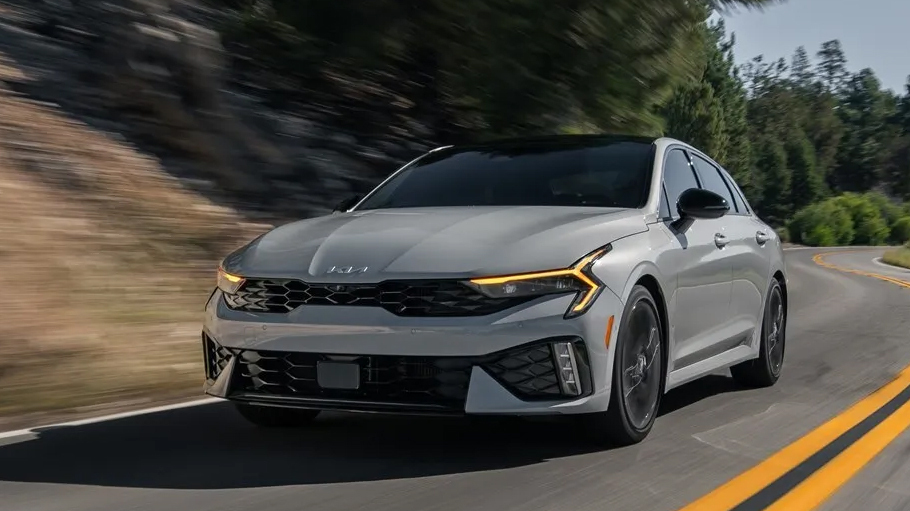
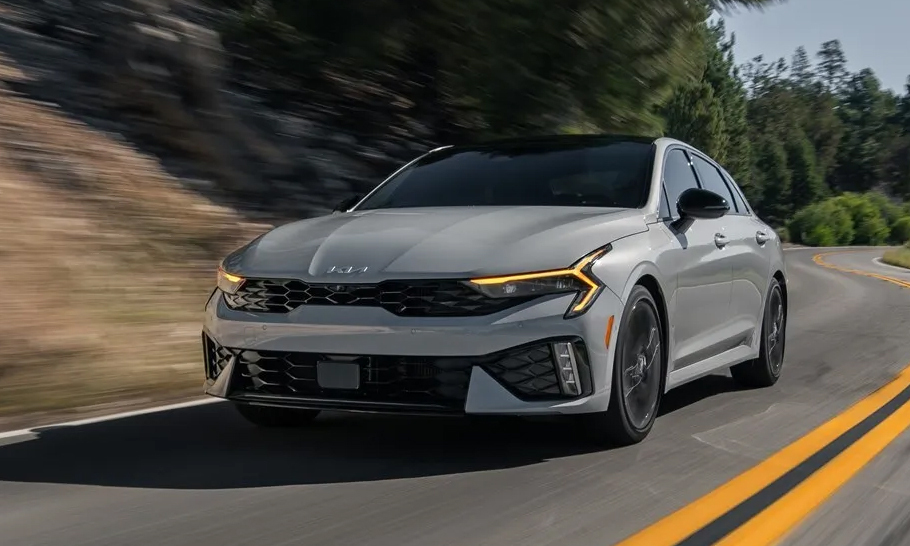
While the core exterior and interior architecture of the Kia K5 remains largely carried over from its recent mid-cycle refresh, the 2027 model year introduces carefully curated optional packages designed to enhance comfort, technology, and convenience. Specifically, the K5 GT-Line variant now offers a newly introduced Convenience package priced at $700. This optional bundle adds a high level of daily usability features, including power-folding exterior side mirrors, a heated steering wheel, ventilated front row seats, driver’s seat memory settings, and 10-way power adjustment for the front passenger seat.
While the $700 price tag for the Convenience package represents exceptional value for the equipment provided, buyers must note a mandatory prerequisite. To add the Convenience package, customers are required to also purchase the GT-Line Premium package, which is priced at $2,200. Combining these two packages elevates the vehicle’s luxury quotient significantly, outfitting the GT-Line with a premium 12-speaker Bose audio system, ambient interior LED lighting, a panoramic sunroof, and striking 18-inch gloss-black wheels. This tiered approach allows buyers to tailor their vehicles closely to their lifestyle preferences, though it requires a higher upfront financial commitment for those seeking top-tier amenities.
Powertrain Options, Performance Dynamics, and Fuel Economy
Beneath the hood, the 2027 Kia K5 continues to offer powertrain configurations tailored to distinct driving styles, ranging from daily efficiency to spirited performance. Standard models rely on a dependable 2.5-liter naturally aspirated inline-four engine, generating 186 horsepower and 165 lb-ft (242 Nm) of torque. This powerplant is paired with a smooth-shifting 8-speed automatic transmission that delivers power to the front wheels. For drivers residing in colder climates or seeking enhanced all-weather traction, the GT-Line trim level offers the additional flexibility of an available all-wheel-drive (AWD) system.
Fuel economy figures for the front-wheel-drive configuration remain competitive for the midsize segment, EPA-rated at approximately 9.0 liters per 100 km (26 mpg) in city driving, 6.36 liters per 100 km (37 mpg) on the highway, and 7.84 liters per 100 km (30 mpg) combined. When equipped with the optional all-wheel-drive system, the corresponding fuel consumption metrics adjust slightly to 10.2 liters per 100 km in the city, 7.12 liters per 100 km on the highway, and 8.71 liters per 100 km combined, reflecting the additional mechanical weight and drivetrain drag.
For enthusiasts seeking a more engaging and aggressive driving dynamic, the range-topping K5 GT features a high-output 2.5-liter turbocharged engine. This powerhouse unleashes an impressive 290 horsepower and 311 lb-ft (421 Nm) of torque. Unlike the standard models, the GT is mated to a quick-shifting 8-speed dual-clutch transmission (DCT) and is configured exclusively with front-wheel drive. Remarkably, despite its substantial performance advantage, the fuel consumption of the K5 GT remains closely aligned with the standard AWD variants, proving that high performance does not automatically necessitate exorbitant fuel penalties.
Competitive Landscape and Market Implications
Within the highly competitive North American midsize sedan arena, pricing strategy plays a critical role in consumer decision-making. With a starting price of $27,690, the 2027 Kia K5 maintains a distinct cost advantage over several of its primary Japanese and domestic rivals. For context, the 2026 Honda Accord starts at $28,400, while the 2027 Toyota Camry begins at $29,700, with both figures excluding mandatory destination and handling fees. Furthermore, industry observers anticipate that Honda will likely implement similar price increases for the upcoming model year of the Accord, further solidifying Kia’s value proposition.
At the same time, value-seeking consumers still have alternative choices within the segment. The 2026 Nissan Altima enters the market with a starting price of $27,580, closely matching the K5, while the 2026 Hyundai Sonata undercuts much of the competition with a starting price of $25,650. This broad spectrum of pricing ensures that buyers prioritizing cost-efficiency retain viable options, especially if they are flexible regarding model-year freshness and brand loyalty.
Automotive analysts note that Kia’s measured approach to the K5’s evolution reflects a broader industry strategy: maximizing profitability on existing platforms while catering to niche demands through targeted feature packaging rather than costly ground-up redesigns. By maintaining aggressive pricing structures, expanding optional comfort features, and streamlining trim levels to focus on popular variants like the GT-Line and GT, Kia is well-positioned to sustain its sales momentum in a shrinking segment. As dealerships prepare for the arrival of the 2027 models, the K5 continues to demonstrate that traditional sedans can thrive through a winning combination of sharp styling, modern technology, and undeniable economic value.