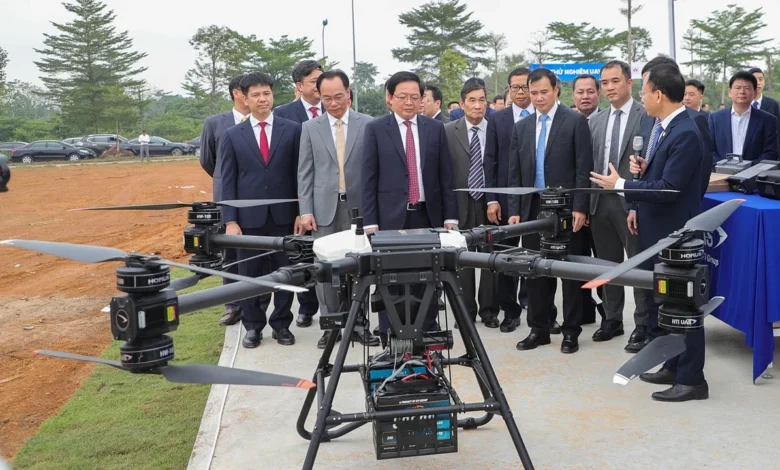
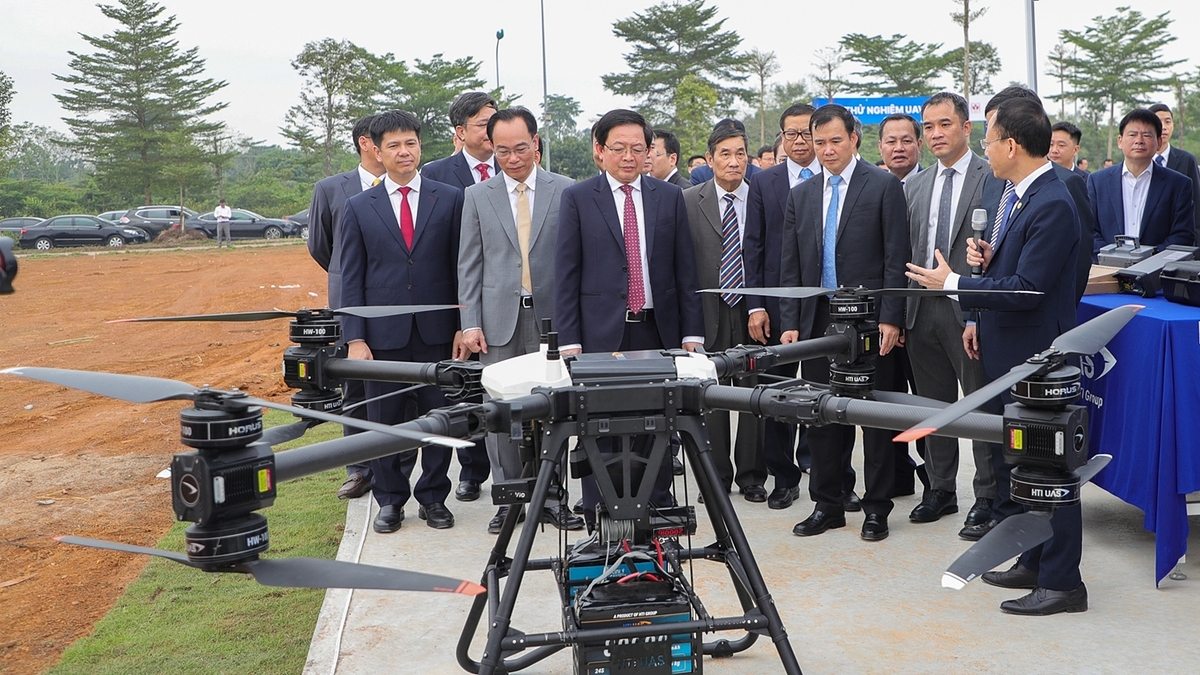
Vietnam National University (VNU) in Hanoi officially inaugurated its Unmanned Aerial Vehicle (UAV) Testing Center in the Hòa Lạc High-Tech Park on the morning of October 25. This strategic facility is designed to serve as a comprehensive ecosystem for scientists, students, and technology enterprises to collaborate on the research, development, flight testing, and commercialization of drone technologies. The opening ceremony, attended by Deputy Prime Minister Hô Quốc Dũng, marks a significant milestone in Vietnam’s effort to localize drone production and establish a robust national defense and civilian aerospace industry.
The Role of the Hòa Lạc UAV Testing Center
The newly launched testing site is not merely a landing strip or a flight arena; it is a sophisticated research environment intended to bridge the gap between theoretical academic study and industrial application. The center provides specialized infrastructure where students can engage directly with real-world engineering challenges, while researchers gain access to the tools necessary for prototyping and rigorous performance verification.
By integrating this facility into the Hòa Lạc High-Tech Park, VNU aims to foster a symbiotic relationship with domestic businesses. Companies can now utilize the site to conduct high-stakes flight tests, refine product designs based on real-time data, and collaborate with university research teams to solve complex technological bottlenecks. This proximity between academia and industry is expected to shorten the development lifecycle of next-generation UAVs significantly.
Strategic Context: Aligning with National Objectives
The establishment of the UAV Testing Center is a direct response to the broader national strategy regarding low-altitude airspace. On September 28, the Politburo issued a key conclusion identifying low-altitude airspace as a vital national resource—a new frontier for economic development and a critical space for the exercise of national sovereignty.
This policy shift reflects the government’s recognition of the dual-use potential of drones. Whether for precision agriculture, search and rescue operations, surveillance, or specialized logistics, UAVs are increasingly viewed as essential assets for a modern economy. The government has set ambitious goals to construct three national-level flight testing zones and at least one national research and testing center specifically for UAVs by 2030.
A Multi-Pronged Technological Initiative
The inauguration of the UAV facility was accompanied by two other significant developments at VNU: the launch of a laboratory for semiconductor packaging and chip testing, and the opening of a centralized practice center under the University of Engineering and Technology.
These facilities collectively illustrate VNU’s commitment to "Resolution 57," which emphasizes the necessity of hands-on training. By exposing students to industrial-grade equipment and standardized manufacturing processes, the university is actively working to bridge the skills gap in Vietnam’s high-tech workforce. According to VNU Director Bùi Thế Duy, the university is aggressively expanding its partnerships with private firms to create shared innovation spaces. These areas focus on robotics, automation, and smart technologies, ensuring that the next generation of engineers is not only academically proficient but also industry-ready.
Market Projections and Economic Impact
The strategic vision for the Vietnamese drone industry is clearly outlined in recent government directives. The state has set a target to achieve a 30% to 40% localization rate for strategic UAV lines by 2030, a figure that is projected to climb to over 85% by 2045. As these technologies mature, the "low-altitude economy" is expected to become a new pillar of growth for the nation, with estimates suggesting it could contribute approximately 1.5% to the national GDP by 2045.
This economic trajectory is supported by the ongoing investment in human capital. By integrating academic research with corporate demand, VNU is positioning itself as a central hub for the "triple helix" model—government, academia, and industry—working in concert. The focus on basic sciences, social sciences, and critical defense technologies suggests that the university is not just looking for immediate commercial wins, but is building a foundational knowledge base that can sustain long-term technological independence.
Industry Collaboration and Future Outlook
During the ceremony, Deputy Prime Minister Hô Quốc Dũng emphasized the importance of high-tech infrastructure in enhancing national competitiveness. He highlighted that the ability to test and certify UAVs domestically is a prerequisite for any nation wishing to secure its digital and physical borders in the 21st century.
For the private sector, the Hòa Lạc center offers a de-risking mechanism. Developing drones requires expensive testing environments, specific air traffic clearance, and high-precision sensors. By providing a pre-approved and equipped facility, the state is lowering the barrier to entry for local startups and established aerospace firms alike. This is expected to trigger a surge in domestic patent filings and localized manufacturing efforts.
The collaboration model at Hòa Lạc is also set to influence how other universities across Vietnam structure their engineering programs. By moving away from purely theoretical curriculum toward an "application-first" model, VNU is setting a benchmark for pedagogical reform in the STEM fields.
Addressing Technological Challenges
While the infrastructure is now in place, experts note that the path forward will require overcoming significant challenges, including regulatory hurdles, the development of local supply chains for components like flight controllers and high-density batteries, and the creation of robust cybersecurity protocols for drone operations.
However, the launch of the Hòa Lạc center provides a physical location to tackle these problems in a controlled, collaborative setting. Researchers at the facility are already expected to begin work on flight stability algorithms, autonomous navigation systems, and swarm technology, which are critical for both civilian and security-related applications.
Summary of Development Goals
To contextualize the scale of this ambition, the following timeline and objectives have been established:
- 2024–2025: Operational startup of the Hòa Lạc UAV facility, focusing on testing protocols and initial prototype flight trials.
- 2026–2030: Expansion of national testing infrastructure and the establishment of the comprehensive National UAV Research Center.
- 2030: Target for 30–40% localization of key drone components to reduce reliance on imported technology.
- 2045: Long-term target for over 85% localization, with the low-altitude economy contributing 1.5% to the national GDP.
The inauguration on October 25 is more than just a ribbon-cutting event; it is a signal of Vietnam’s intent to move up the value chain in global manufacturing. By moving from simple assembly to research-driven design, the country is laying the groundwork for a future where indigenous technology plays a central role in both its economic growth and its sovereign security. As the Hòa Lạc facility begins its operations, it will likely serve as a magnet for tech talent and venture capital, cementing the role of VNU as a key architect of Vietnam’s high-tech future.