Israel election gridlock leaves nation in political limbo as neither Netanyahu nor opposition secures majority

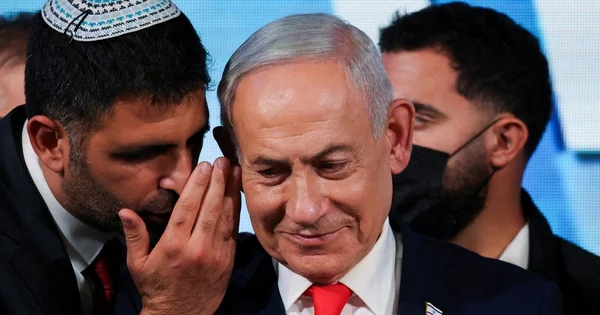
The political landscape of Israel remains in a state of deep uncertainty following the national elections held on October 28, 2026. With over 85 percent of the ballots counted, the results suggest a protracted period of coalition negotiations, as neither the incumbent Prime Minister Benjamin Netanyahu’s right-wing bloc nor the opposition coalition led by Gadi Eisenkot has managed to secure the 61-seat threshold required to form a majority government in the 120-seat Knesset.
Preliminary data released by the Central Elections Committee indicates that the political deadlock is reflective of a deeply polarized electorate. The Likud-led right-wing alliance is currently projected to secure 53 seats, while the opposition bloc spearheaded by Gadi Eisenkot’s Yashar party is trailing with 48 seats. Meanwhile, a coalition representing Israel’s Arab minority has emerged as a potential kingmaker, projected to hold 19 seats. These figures represent the most significant parliamentary fragmentation in recent Israeli history, casting doubt on the immediate stability of the executive branch.
The Anatomy of the Stalemate
The current electoral math highlights the persistent divide in Israeli society. At an individual party level, Likud has maintained its position as the largest single party with 26 seats, followed by the opposition’s Yashar party with 21 seats. However, the inability of either primary figure to command a clear mandate reflects the exhaustion of traditional political alliances.
The role of the Arab-led coalition, with its projected 19 seats, has become the focal point of post-election maneuvering. Traditionally, these factions have remained outside the standard coalition-building processes, yet the current margin of victory for both major blocs makes their cooperation—or at least their passive support—a potential necessity for any government seeking to avoid a repeat election. The leadership of this bloc has signaled that any party seeking to replace the current administration must engage in substantive negotiations regarding the specific policy demands and the integration of Arab citizens into the broader national agenda.
Chronology of the 2026 Election Cycle
The road to this week’s voting was paved with intense domestic and regional pressure. The election was triggered by the collapse of the previous governing coalition earlier this year, a culmination of months of public dissatisfaction and internal security debates.
- Mid-2026: Persistent friction within the cabinet regarding the management of regional security threats and economic reforms leads to the dissolution of the government.
- September 2026: The Knesset formally approves the call for early elections. Campaigning intensifies, with the focus shifting heavily toward national security, the cost of living, and the future of regional alliances.
- Late October 2026: Polling stations open across Israel. Voter turnout is reported as robust, signaling high engagement despite voter fatigue from consecutive election cycles.
- October 28, 2026: Initial vote counts are released, revealing a gridlocked parliament. President Isaac Herzog publicly urges political leaders to seek compromise to avoid a future, redundant round of voting.
Official Responses and the Role of the Presidency
President Isaac Herzog, who serves as the formal arbiter in the government formation process, has expressed grave concern over the potential for another cycle of political instability. In an official statement following the announcement of the preliminary counts, Herzog called for a departure from the "politics of the past."
"We must exhaust every possible avenue to avoid another round of elections," Herzog stated. "The public has sent a clear signal that it values stability, and the responsibility now rests with the leaders of the parties to prioritize the national interest over partisan gridlock."
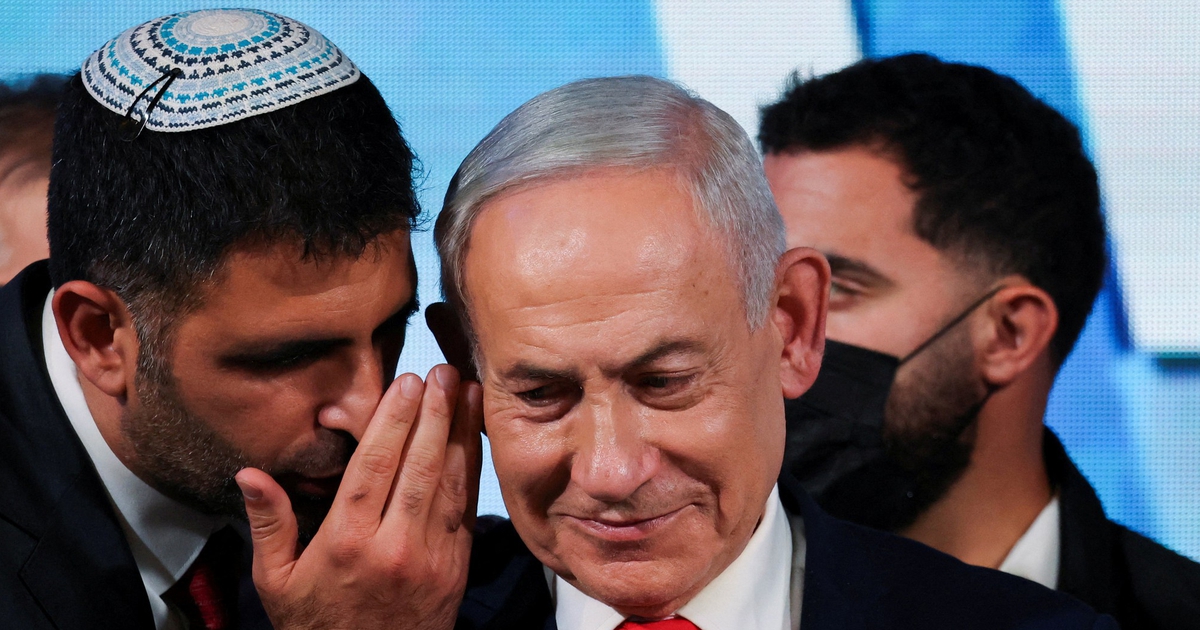
According to the established protocol, once the final vote count is certified on November 4, the President will commence a round of formal consultations with the leaders of all elected parties. Based on these discussions, the President will nominate a candidate deemed most capable of forming a viable coalition. The nominee will then be granted a 28-day window to negotiate a government, with a possible 14-day extension if progress is verified. Should the nominee fail, the President will move to the next candidate. If all efforts to form a government reach an impasse, Israel will be forced into yet another general election—a prospect that analysts warn would be economically and socially taxing for the nation.
Strategic Implications: The Iran Factor and Regional Security
The political campaign has been heavily influenced by the shadow of external conflict. Prime Minister Benjamin Netanyahu has campaigned on a platform of a "strong, right-wing national government," emphasizing his experience in navigating the complex security landscape. Specifically, Netanyahu has signaled his intention to coordinate closely with the administration of U.S. President Donald Trump, aiming to reset policy toward Iran. His rhetoric has focused on the necessity of resuming aggressive tactical operations against Iranian military assets, an agenda that has resonated with his base but deepened the divide with the political center.
Conversely, Gadi Eisenkot has criticized the Prime Minister for what he characterizes as the erosion of public trust in state institutions. Eisenkot’s campaign has warned against the instrumentalization of national security for political gain, arguing that the country requires a change in leadership to restore both domestic stability and international diplomatic credibility.
Economic and Domestic Outlook
Beyond the security sector, the political deadlock poses a risk to Israel’s economic stability. Investors and international observers are monitoring the situation, concerned that the lack of a functioning government will delay the passage of the 2027 national budget. A government without a majority is effectively a caretaker administration, limited in its ability to enact long-term structural reforms or respond to fiscal emergencies.
Analysts suggest that the ongoing reliance on small, ideological parties for coalition building has forced larger parties like Likud and the Yashar movement to adopt increasingly narrow policy platforms. This "tail wagging the dog" phenomenon has historically made Israeli governments fragile, as minority partners can threaten to withdraw support over specific legislative disputes.
Looking Ahead: The Path to Consensus
As the nation waits for the final count, the pressure on party leaders to demonstrate flexibility is mounting. The possibility of a national unity government—a coalition involving both the Likud and the opposition—remains a topic of intense discussion. While historically rare in the current climate of hostility, many political commentators argue that such an arrangement may be the only way to break the deadlock without resorting to a fifth election in recent years.
The next ten days will be critical. As the political machinery of Jerusalem gears up for the consultation process, the outcome will depend not only on the raw numbers but on the ability of the political establishment to pivot from campaign rhetoric to the pragmatic realities of governance. For now, the people of Israel remain in a state of suspended animation, watching to see whether their leaders can move beyond the brinkmanship that has defined this electoral cycle to secure the stability the country so desperately seeks.