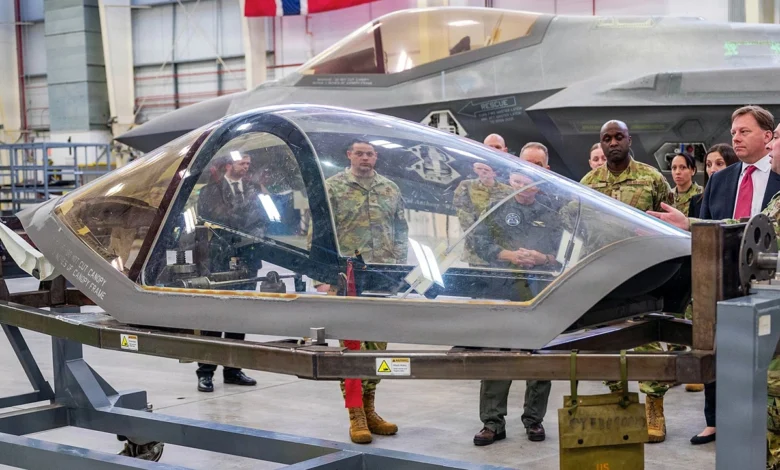
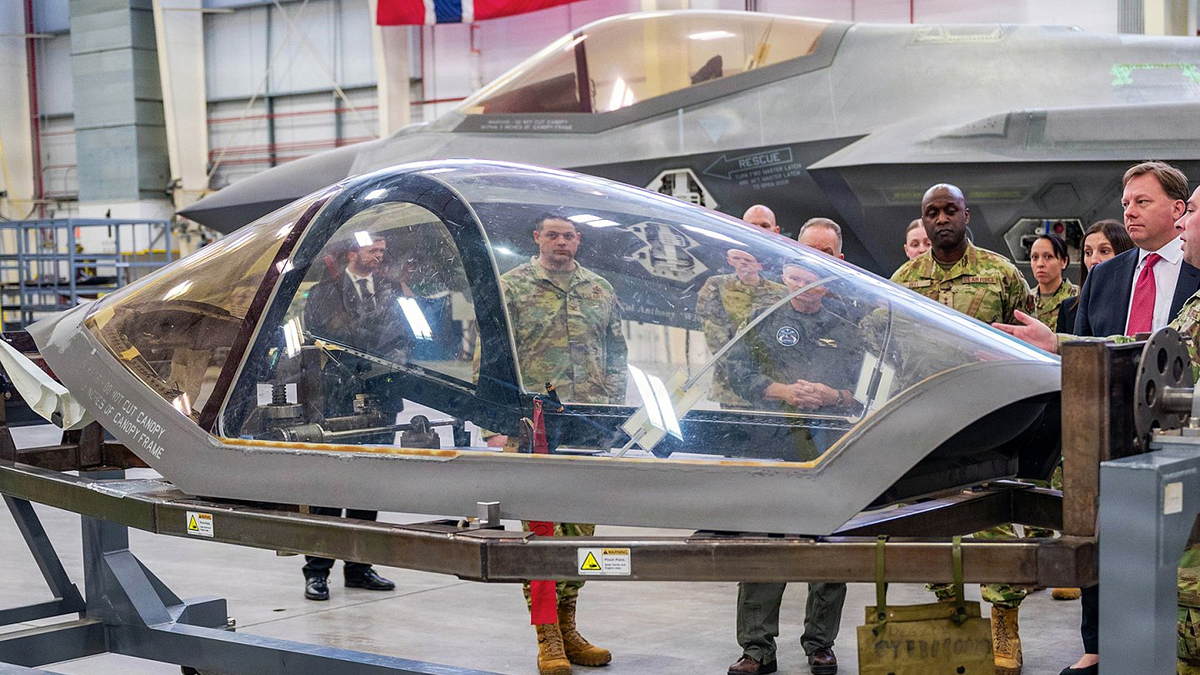
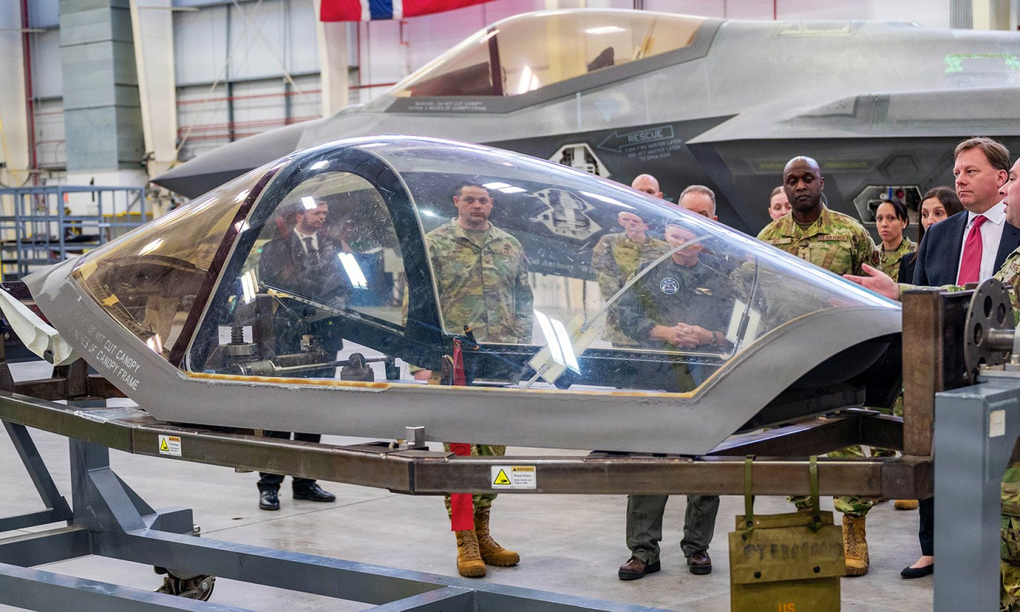
The inadvertent arrival of critical components belonging to the Lockheed Martin F-35 Lightning II stealth fighter in Hong Kong has ignited a significant security debate regarding the vulnerability of global military supply chains and the potential for technological reverse engineering by near-peer adversaries. The incident, which reportedly occurred last week, involved a shipment of F-35 parts—including an aircraft canopy and a weapon bay door—that were diverted from their intended destination in the United States to the Hong Kong Special Administrative Region after a transit stop in South Korea.
This development highlights the extreme sensitivity of the F-35 program, the world’s most expensive and sophisticated weapons platform, and the ongoing efforts by global intelligence services to acquire proprietary data regarding stealth technology. As the Pentagon and Lockheed Martin scramble to assess the implications, the incident serves as a stark reminder of the complexities involved in maintaining the technological edge of fifth-generation aerial platforms in an era of heightened geopolitical competition.
Chronology of the Diversion
The logistics chain for the F-35 is a sprawling, globalized network involving thousands of suppliers across multiple continents. According to reports from the military-focused publication The War Zone, the components in question were being transported from Australia. Following a scheduled stop in South Korea, the shipment—which should have proceeded directly to a U.S. facility—was rerouted to Hong Kong.
While the exact mechanics of how a shipment of such high-value, restricted defense hardware could be misdirected remain under investigation, the event has prompted immediate inquiries within the Australian Ministry of Defence and the U.S. Department of Defense. Australian Defence Minister Richard Marles has not explicitly confirmed the breach of specific equipment, maintaining a cautious stance typical of sensitive defense intelligence matters. Similarly, representatives from Lockheed Martin’s Australian branch have downplayed the incident, suggesting that the components were "no longer in a state of operational utility," thereby minimizing the risk of a catastrophic intelligence leak.
Technical Significance of the Recovered Components
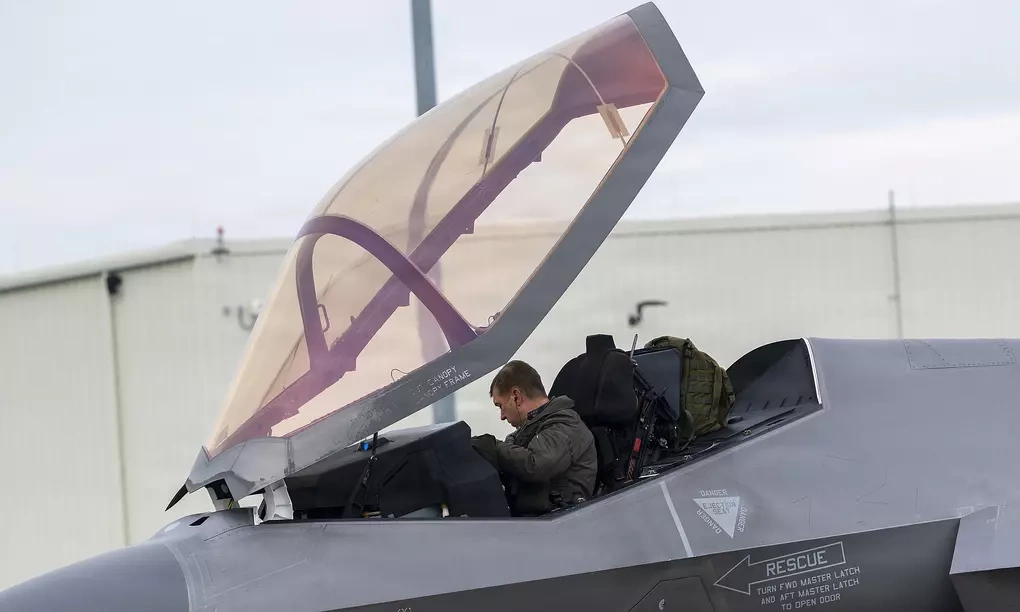
The F-35 canopy and weapon bay door are not merely structural elements of the aircraft; they are highly engineered components critical to the platform’s low-observable (stealth) signature. The canopy, manufactured from advanced acrylic materials and coated with radar-absorbent substances, is a masterpiece of material science. Its precise shape and the integration of these coatings are vital for maintaining the aircraft’s radar cross-section (RCS) at an absolute minimum, particularly from the front-facing aspect.
Military analysts, including Thomas Newdick and Tyler Rogoway, have emphasized that these parts are subject to the strictest design and manufacturing tolerances. Even if these items were slated for disposal or are in a degraded state, they contain proprietary manufacturing data that could be invaluable to foreign intelligence agencies.
- Radar Absorbent Material (RAM) Composition: Analyzing the layers and chemical composition of the coating on the canopy and doors could reveal secrets about how the U.S. manages broadband radar absorption.
- Manufacturing Processes: The methods used to bond these materials and the specific geometric tolerances are guarded secrets. Understanding these could allow competitors to refine their own manufacturing techniques for their stealth platforms.
- Sensor Integration: Weapon bay doors on the F-35 are designed to open and close in milliseconds to minimize the window of detectability. The structural integrity and hinge mechanisms are proprietary technologies that could inform the design of future competing systems.
Broader Implications for Global Defense
The primary concern for the U.S. and its allies is not necessarily the direct replication of the F-35, as the complexity of the aircraft’s software and systems architecture makes a simple "copy-paste" approach impossible. Instead, the risk lies in the acquisition of data that fills gaps in the intelligence community’s understanding of Western stealth capabilities.
By analyzing the physical components, Chinese intelligence could identify the specific challenges the U.S. faced during the development phase—such as the historical issues with canopy delamination—and how they were ultimately solved. This knowledge allows an adversary to avoid the same costly research and development pitfalls, effectively shortening their own development cycles for platforms like the J-20 and the emerging J-35.
Currently, China is aggressively expanding its stealth fighter fleet. Estimates suggest that over 500 J-20 fighters have been produced, and the J-35 program is moving toward fleet integration. Access to even minor hardware components from an F-35 provides a "ground truth" that simulations and theoretical blueprints cannot replicate.
Official Responses and Strategic Deterrence
The U.S. Department of Defense maintains a rigorous protocol for the security of its defense articles, governed by International Traffic in Arms Regulations (ITAR). While the Pentagon has not issued a detailed public breakdown of the security failure, the incident has undoubtedly triggered a top-to-bottom review of supply chain logistics for the F-35 program.
Lockheed Martin, in its brief communications, has sought to reassure stakeholders that the risk of compromise is low. However, the expert consensus remains that any physical access to F-35 hardware by a major competitor is a net-negative for U.S. national security. The loss of control over these components allows researchers to verify their own radar cross-section models against real-world data, potentially identifying the specific angles or frequencies at which the F-35 might be most vulnerable.

The Evolution of Intelligence Gathering
Intelligence gathering in the 21st century has shifted from large-scale espionage to the granular collection of technical data. The incident in Hong Kong fits a broader pattern of "niche" intelligence acquisition, where the goal is not to steal the entire system, but to gather specific, high-value data points that undermine the adversary’s technological advantages.
As Newdick and Rogoway noted in their analysis, the objective is often to determine the "how" and "why" behind Western engineering. By reverse-engineering the material composition of a canopy or the mechanical precision of a weapon bay door, a competitor can build a more effective counter-stealth strategy, designing radars and sensor suites specifically tuned to exploit the weaknesses identified in the physical hardware.
Future Outlook and Security Hardening
In response to this incident, it is expected that the Pentagon will implement stricter oversight of international defense shipments. This may include enhanced end-to-end tracking, the use of secure, dedicated logistics channels, and more frequent audits of third-party logistics providers.
Furthermore, the event highlights the necessity of the "security-by-design" philosophy. As defense systems become increasingly modular and distributed across global supply chains, the vulnerability of any single part becomes a vulnerability of the entire system. Future combat aircraft, including those being considered for the next-generation air dominance (NGAD) programs, will likely feature even more stringent security protocols for the transit and disposal of all hardware components.
Ultimately, while the immediate impact of the F-35 parts being diverted to Hong Kong may not lead to the immediate obsolescence of American stealth technology, it serves as a wake-up call regarding the fragility of globalized military logistics. The incident underscores that in the high-stakes game of great power competition, information is often hidden in plain sight, tucked away in the shipping manifests and cargo holds of the global supply chain. Protecting that information is just as critical as the hardware itself.