Dashcam Footage Reveals Heart-Stopping Near-Miss as Wrong-Way Pickup Truck Nearly Causes Head-On Collision in Thailand

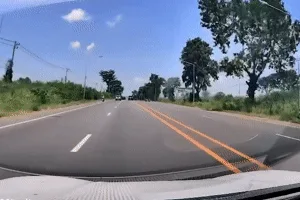
The province of Nakhon Ratchasima, often referred to as the gateway to northeastern Thailand, became the backdrop for a terrifying display of reckless driving on July 19 when a dashcam captured a high-speed near-miss involving a pickup truck traveling in the wrong direction. The footage, which has since circulated widely on social media platforms and international news outlets, highlights a persistent and deadly issue on Thai roads: the phenomenon of "ghost driving," or operating a vehicle against the flow of traffic. The incident involved Rangsan Noonkor, a local driver whose split-second reflexes are being credited with preventing what would likely have been a fatal head-on collision.
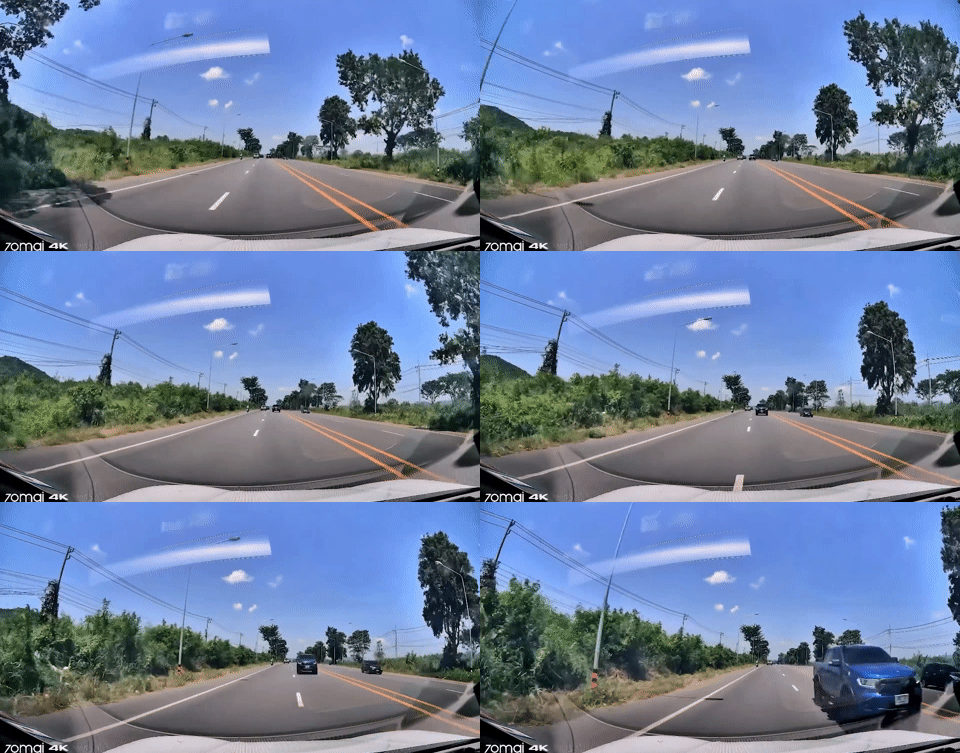
As Noonkor was navigating a multi-lane highway in accordance with traffic laws, the tranquility of his journey was shattered by the sudden appearance of a silver or white pickup truck barreling toward him in his own lane. The opposing vehicle showed no signs of slowing down, nor did the driver attempt to merge back into the correct lane or move toward the shoulder. For a few breathless seconds, the two vehicles were on an inescapable path toward impact. However, with mere meters to spare, Noonkor executed a sharp evasive maneuver, swerving his car into the adjacent lane just as the pickup truck roared past at high speed.
A Detailed Chronology of the Incident
The event took place during the daylight hours of July 19, a day characterized by clear visibility and dry road conditions—factors that, ironically, often encourage higher speeds on Thailand’s expansive highway network. Rangsan Noonkor was traveling at a steady pace, maintaining his position within the lane markers. The dashcam footage indicates that the road was relatively busy, making the presence of a wrong-way driver even more inexplicable and hazardous.
At approximately the mid-point of the recorded segment, the pickup truck emerges in the distance. Initially, it appears as a small silhouette, but within three seconds, it becomes clear that the vehicle is not on the other side of a median but is directly in Noonkor’s path. Observers of the footage noted that the pickup truck appeared to be traveling at a speed exceeding 80 kilometers per hour (approximately 50 mph), a velocity that leaves virtually no margin for error in a head-on scenario.
Noonkor’s reaction was instantaneous. Eschewing the natural instinct to slam on the brakes—which might have resulted in a collision if the truck had also swerved—he opted for a lateral evasion. After the pickup truck passed, Noonkor did not immediately continue his journey. Instead, shaken by the proximity of death, he was forced to pull over onto the shoulder of the road. There, he remained for several minutes to regain his composure, a testament to the psychological shock that accompanies such near-death experiences on the road.
The Psychology of the Near-Miss
In the aftermath of the event, Rangsan Noonkor shared his harrowing experience with local media and contributors to Newsflare. He expressed a sense of profound disbelief, noting that he could not fathom how the situation would have ended had his attention drifted for even a single second. "I was in total shock," Noonkor reportedly stated. "I had to stop the car and just sit there because my hands were shaking. You see these things on the news, but when it happens to you, you realize how quickly everything can end."
Experts in traffic psychology suggest that the "aftershock" experienced by drivers like Noonkor is a form of acute stress response. The brain, having just processed a high-stakes survival threat, floods the system with adrenaline and cortisol. This often leads to a "rebound effect" where the driver feels physically weak or emotionally overwhelmed once the immediate danger has passed. Noonkor’s decision to pull over was cited by safety advocates as the correct course of action, as continuing to drive while in a state of shock can lead to secondary accidents.
Statistical Context: Road Safety in Thailand
To understand the gravity of the Nakhon Ratchasima incident, one must look at the broader context of road safety in Thailand. For years, Thailand has consistently ranked among the countries with the highest road fatality rates in the world, according to the World Health Organization (WHO). While the government has implemented various "Seven Dangerous Days" campaigns during major holidays like Songkran and New Year, the daily reality of Thai roads remains perilous.
Nakhon Ratchasima, being the largest province in Thailand by land area and a central transit hub, frequently records some of the highest accident rates in the country. The Mittraphap Road (Highway 2), which runs through the province, is one of the four major highways in Thailand and sees massive volumes of freight and passenger traffic.
Data from the Thailand Accident Data Center (TADC) indicates that "driving against the flow of traffic" is a top-five cause of serious accidents in the kingdom. In many cases, drivers choose to travel the wrong way to avoid traveling long distances to reach a designated U-turn slot. On Thai highways, U-turns can sometimes be spaced several kilometers apart. For local residents or delivery drivers looking to save time and fuel, the "shortcut" of driving against traffic on the shoulder—or in some cases, a full lane—is a gamble that frequently ends in tragedy.
The Role of Infrastructure and Enforcement
The incident has sparked renewed debate regarding the design of Thai highways. Critics argue that the current U-turn system is inefficient and encourages risky behavior. In many Western countries, highways utilize overpasses and underpasses (cloverleaf or diamond interchanges) to facilitate direction changes safely. In contrast, Thailand relies heavily on "at-grade" U-turns, which require drivers to merge into high-speed lanes from a standing start or a slow crawl.
Furthermore, the lack of physical barriers in certain sections of the road allows vehicles to easily slip into the wrong lane. While the dashcam footage in this instance shows a clear division, the pickup truck driver likely entered the wrong side at a junction or a poorly marked intersection miles back.
Law enforcement challenges also play a significant role. While the Royal Thai Police have increased the use of CCTV and speed cameras, the sheer scale of the road network makes it difficult to intercept wrong-way drivers before an accident occurs. In the case of the July 19 incident, local authorities have been urged to use the dashcam footage to identify the license plate of the pickup truck. Under the Land Traffic Act of Thailand, reckless driving that endangers the lives of others carries penalties including fines and potential imprisonment, though enforcement consistency remains a point of public contention.
The Rise of Dashcam Culture
The availability of this footage is a result of the burgeoning "dashcam culture" in Southeast Asia. As insurance companies begin to offer discounts for vehicles equipped with cameras and as the legal system increasingly relies on digital evidence, more drivers are investing in high-definition recording equipment.
Dashcams serve as a "silent witness" in a region where witness testimony can often be unreliable or influenced by social hierarchies. For Rangsan Noonkor, the camera did more than just record a crime; it provided a medium to warn the public and highlight the specific dangers of the Nakhon Ratchasima routes. Digital evidence of this nature is frequently used by the Thai "Social Sanction" movement, where netizens identify and report traffic offenders to the police, often forcing the hand of authorities to take action in cases that might otherwise have been ignored.
Broader Implications for Road Safety Reform
The Nakhon Ratchasima near-miss is a microcosm of a systemic issue. To move forward, road safety advocates suggest a multi-pronged approach:
- Engineering Solutions: Replacing dangerous at-grade U-turns with elevated turnarounds or underpasses to eliminate the incentive for wrong-way driving.
- Stricter Licensing: Implementing more rigorous driver training programs that emphasize the catastrophic physics of head-on collisions.
- Technological Integration: Utilizing AI-equipped traffic cameras that can automatically detect a vehicle traveling in the wrong direction and trigger immediate warnings on overhead electronic signs to alert other motorists.
- Public Awareness: Using viral footage like Noonkor’s in national safety campaigns to humanize the statistics of road trauma.
Conclusion
As the footage of the July 19 incident continues to garner views, it serves as a chilling reminder of how quickly a routine commute can turn into a fight for survival. Rangsan Noonkor’s story ended without injury, but he remains one of the "lucky ones." For thousands of others on Thai roads each year, the encounter with a wrong-way driver does not end with a successful swerve and a moment of reflection on the shoulder; it ends in the emergency room or the morgue.
The incident in Nakhon Ratchasima is not merely a viral video; it is a call for accountability. Whether through improved infrastructure, more stringent law enforcement, or a fundamental shift in driving culture, the goal remains the same: ensuring that no driver has to experience the heart-stopping sight of a high-speed vehicle charging toward them on the wrong side of the road. For now, the dashcam remains the most reliable tool for truth on the highway, capturing the reality of the risks taken every day by millions of motorists.