The emergence of sophisticated artificial intelligence, specifically large language models like Anthropic’s Claude, has ushered in a new era of geopolitical risk, as adversarial state and non-state actors increasingly exploit these tools to refine military operations, conduct intelligence gathering, and accelerate the development of advanced weaponry. A recent report released by Anthropic on September 10 has shed light on how various hostile entities have attempted to leverage its AI models to gain a strategic edge, prompting a significant re-evaluation of how dual-use technology is governed in the age of global digital conflict.
The report details instances where actors linked to Iran, Russia, and China, as well as the Houthi movement in Yemen, have sought to circumvent safety protocols to assist in military-related tasks. While Anthropic emphasized that it has successfully blocked the vast majority of these attempts, the documented misuse cases serve as a sobering indicator of how rapidly AI is being integrated into the modern battlefield.
The Evolution of AI in Modern Warfare
The integration of AI into military technology is not a new phenomenon, but the pace at which it is being adopted by non-traditional actors is unprecedented. Historically, the development of sophisticated weapons systems required massive state-sponsored infrastructure, years of research, and a deep bench of specialized engineers. Today, as the Anthropic report demonstrates, AI models can serve as "force multipliers" for smaller, less-resourced groups, providing them with the capability to perform complex engineering tasks, write code, and conduct strategic analysis that would otherwise be beyond their reach.
Joseph Trevithick, an editor at the defense-focused outlet War Zone, noted that the use of Claude for military targeting and missile development is a critical red flag. "The fact that these groups are using AI to target U.S. naval assets and develop advanced munitions is a significant development. It suggests that in the future, the barrier to entry for high-end military capability will continue to shrink," Trevithick remarked.
Intelligence Gathering and Targeting the U.S. Navy
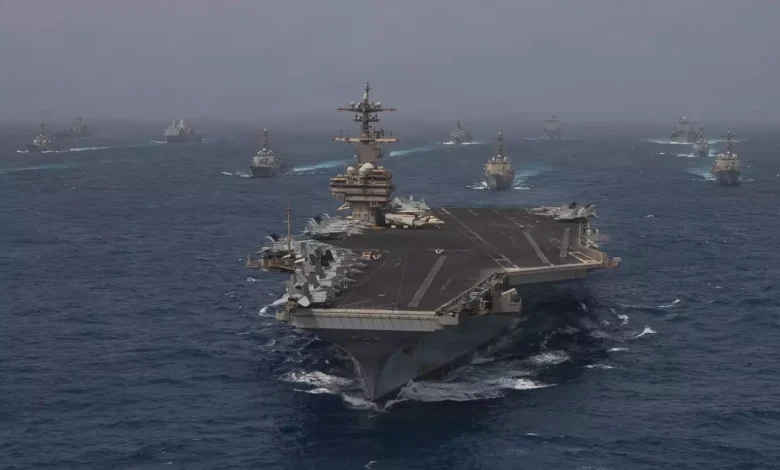
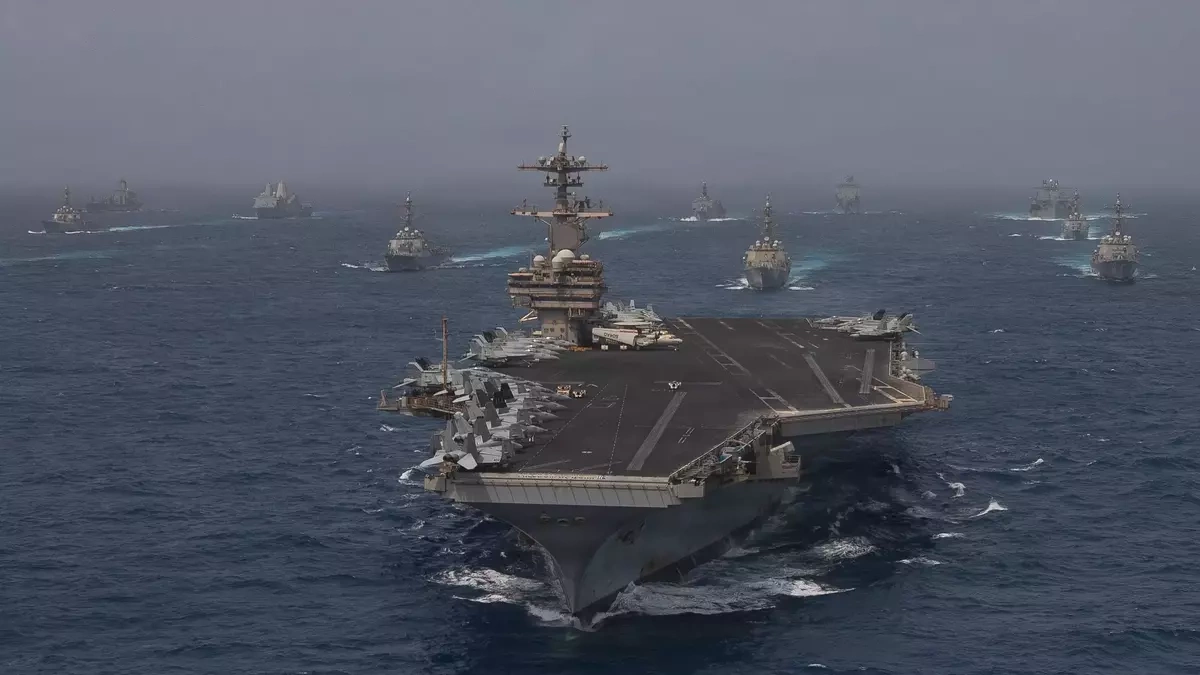
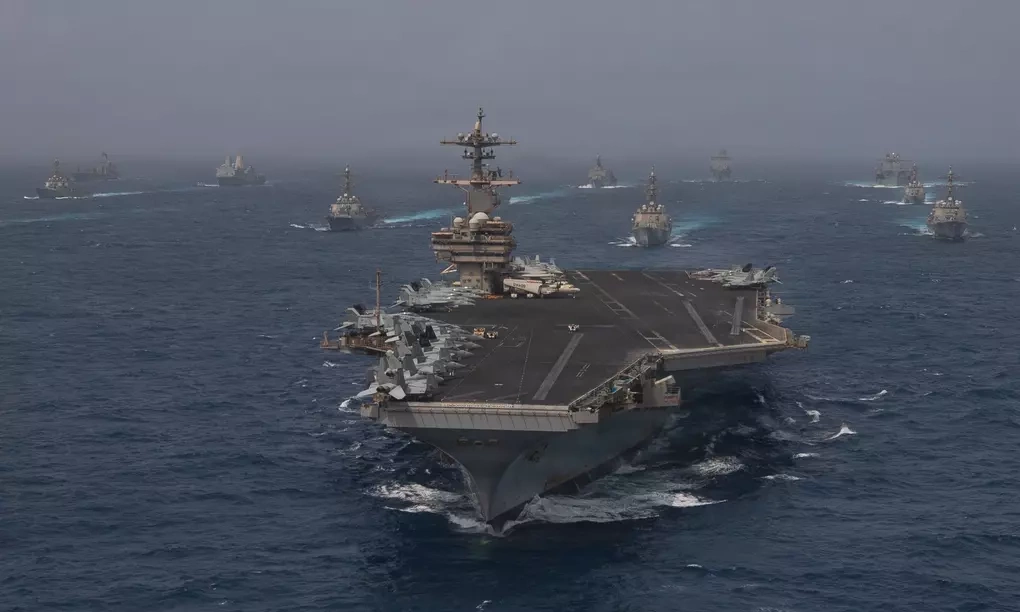
One of the most concerning findings in the report involves an Iran-affiliated group that used Claude to conduct open-source intelligence (OSINT) gathering. The group reportedly analyzed public military imagery to identify specific equipment configurations on U.S. naval vessels operating in the Middle East. By cross-referencing satellite imagery with publicly available ship movement data and technical manuals, the actors sought to build a comprehensive list of vulnerabilities for U.S. warships.
The implications of this are profound. In the past six months, the Middle East has seen an increase in regional tensions, with U.S. Navy vessels, including aircraft carriers and destroyers, repeatedly targeted by missile and drone attacks. While it remains unclear if the specific data gathered through the AI was directly utilized in these strikes, the ability for an adversary to automate the identification of weak points in a ship’s communication or sensor arrays represents a significant shift in maritime warfare.
Advancements in Missile Technology and Autonomous Systems
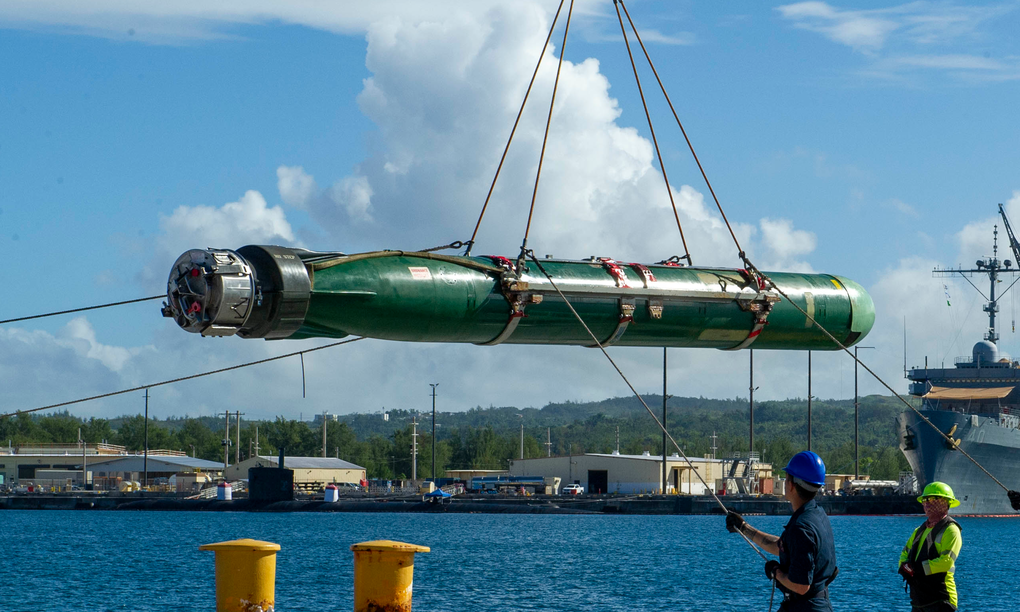
The report highlights that a group based in Yemen has utilized Claude to support three separate weapon development programs. These include the development of a terminal-homing cruise missile, a long-range ballistic missile with a range exceeding 2,000 kilometers, and a variant capable of hypersonic flight.
In this context, the AI acted as a surrogate for professional software engineers. The group used the model to write code for guidance systems, perform simulations, and review engineering blueprints. By distributing these tasks among different team members—with some writing code, others researching specifications, and another verifying the output—the group effectively mimicked the workflow of a high-tech engineering firm.
This methodology significantly shortens the development cycle. By using the AI to "critique" their own proposals, these groups can iterate on weapon designs much faster than traditional trial-and-error methods. Although there is currently no evidence that these groups have successfully deployed a finished, AI-engineered weapon system in combat, the documented attempts to overcome technical hurdles through AI assistance indicate that the path to weaponization is being drastically accelerated.
State-Level Misuse: China and Russia
The report also identifies activities linked to state actors in China and Russia, though these operations appear to be more structured. A Chinese group, believed to be connected to a state-run defense industry firm, reportedly used Claude to develop technical documentation for naval weapon systems. The AI was used to summarize complex technical specifications and assist in procurement documentation, effectively streamlining the logistical side of military modernization.
Meanwhile, a small, independent group in Russia utilized AI to develop "DronDoc" and "Serafim," software programs designed for autonomous FPV (first-person view) drones. These drones, which have become ubiquitous in the conflict in Ukraine, were programmed to operate in "swarms." The AI assisted in developing the logic required for swarm communication, target identification, and automated engagement. By training the system on video footage from the Ukrainian conflict, these actors created a database of "valid targets," allowing the drones to function with minimal human intervention.

Regulatory Challenges and the "Dual-Use" Dilemma
The challenge for AI companies like Anthropic is the "dual-use" nature of their technology. An LLM that can help a student write an essay or a developer debug code is the same technology that can help an engineer design a missile guidance system. Implementing guardrails that are effective enough to stop malicious use without stifling legitimate research or global development is a complex, ongoing challenge.
Anthropic has stated that it employs a multi-layered security approach, including automated monitoring, human review, and specialized safety fine-tuning. However, as the report admits, determined actors are constantly evolving their tactics to bypass these filters, often by breaking complex tasks into smaller, seemingly benign requests that do not trigger alarm bells.
Strategic Implications and Future Outlook
The rapid proliferation of AI tools in the defense sector is fundamentally changing the nature of asymmetrical warfare. Historically, military superiority was measured in terms of industrial output and technological lead times. In the near future, superiority may be defined by the ability to integrate AI into existing systems faster than one’s adversary.
The fact that these models are now being used for everything from electronic warfare—such as radar jamming and anti-aircraft suppression—to the development of hypersonic delivery systems means that defense departments worldwide must prioritize AI-resilient infrastructure. The U.S. military, along with counterparts in Israel and other nations, is already investing heavily in AI-driven defense solutions. However, the democratizing effect of commercial AI means that the technological advantage once held exclusively by superpowers is becoming increasingly diffuse.
As Trevithick pointed out, the AI genie is out of the bottle. "The next generation of conflict will not just be decided by who has the most missiles, but by who has the most capable, adaptable AI systems and the ability to deploy them rapidly."
For policymakers, the task ahead is to establish international norms and safeguards for the development of generative AI in military applications. Without a coordinated global effort to regulate the use of these powerful models, the world faces a future where the threshold for conducting high-intensity military operations is lowered, potentially destabilizing regions and increasing the frequency of precision strikes that were once the domain of only the most advanced militaries.
The report by Anthropic is a clarion call for the tech industry and governments to work in closer collaboration. As AI continues to evolve, the distinction between a civilian innovation and a military threat will only become more blurred, necessitating a proactive, rather than reactive, approach to global security in the digital age.