The UN General Assembly Walkout: Benjamin Netanyahu Defends Gaza Operations Amid Deepening Diplomatic Isolation

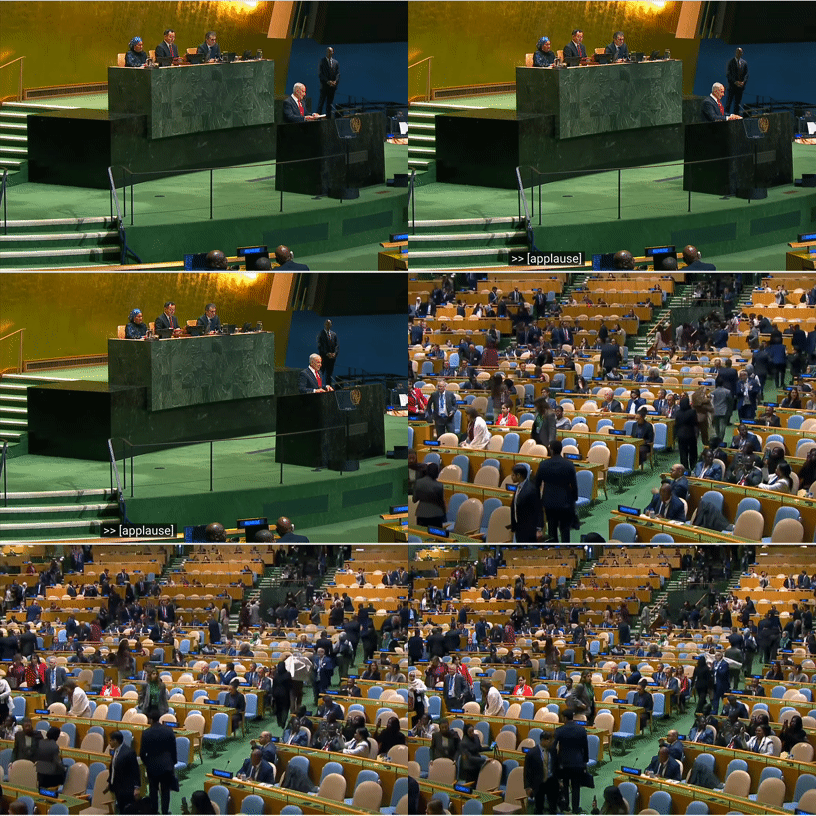
The 79th session of the United Nations General Assembly in New York witnessed one of its most polarized moments as Israeli Prime Minister Benjamin Netanyahu took the podium to deliver a fiercely defiant address. Defending Israel’s ongoing military campaigns in the Gaza Strip and the wider Middle East, Netanyahu doubled down on national security objectives even as his government faces historic levels of international scrutiny, mounting legal challenges, and profound diplomatic isolation.
The speech, delivered on September 24, triggered an immediate and visible protest inside the iconic General Assembly hall. Dozens of diplomats stood up and walked out in unison just as the Israeli leader began speaking, leaving rows of empty seats and underscoring the deep rift dividing the international community over the ongoing conflict. The dramatic walkout captured global headlines, symbolizing the frustration of many member states with Israel’s military strategy and its perceived defiance of international consensus.
Defiant Rhetoric and Accusations Against Western Allies
During his address, Prime Minister Netanyahu pushed back aggressively against critics, attributing international pressure to political cowardice and deep-seated bias. In a particularly contentious segment of his speech, he accused several nations, specifically pointing to Western European countries, of having "cowed before raging anti-Semitic mobs" and refusing to stand firmly with Israel during its existential crisis.
Netanyahu maintained that Israel’s military actions are not only justified but necessary to dismantle militant networks that threaten the existence of the Jewish state. He argued that international criticism fails to account for the security realities Israel faces on multiple fronts, including threats from Hamas in Gaza, Hezbollah in Lebanon, and state-backed adversaries such as Iran. According to the Israeli premier, compromising on military operations would invite further aggression and imperil the safety of millions of Israeli citizens.
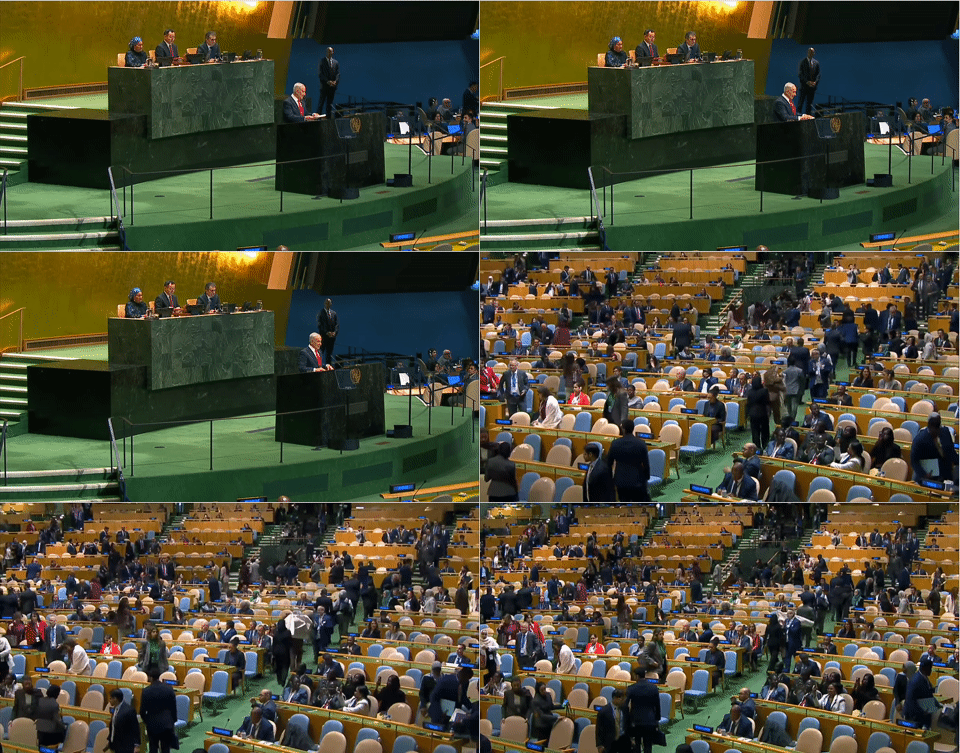
However, his framing of international dissent as capitulation to extremism found little sympathy among the remaining delegates in the hall. For months, international bodies, human rights organizations, and a growing number of sovereign governments have expressed profound alarm over the scale of civilian casualties, the widespread destruction of civilian infrastructure, and the worsening humanitarian catastrophe in the Gaza Strip.
President Mahmoud Abbas Details the Plight of Palestinians
Hours before Netanyahu’s address, Palestinian President Mahmoud Abbas delivered a powerful and solemn address to the UN General Assembly via a pre-recorded video message. Abbas painted a grim picture of the realities facing the Palestinian population, asserting that the death toll among Palestinians poses an existential threat to their community and has severely undermined the viability of the long-championed two-state solution.
"The people of Gaza are enduring slaughter, destruction, starvation, and forced displacement, while illegal settlement expansion in the West Bank accelerates at an unprecedented pace," Abbas stated. He emphasized that the fundamental rights and future of millions of Palestinians hang in the balance, calling on the global community to move beyond rhetoric and take concrete actions to protect them.
President Abbas directly appealed to the international community to increase pressure in defense of the two-state solution, which envisions an independent Palestine existing side-by-side in peace and security with Israel. Furthermore, he called upon the United States and other global powers to lift punitive measures and restrictions against the Palestinian Authority, arguing that financial strangulation and diplomatic marginalization only serve to deepen the crisis.
A High-Stakes Diplomatic Gathering Marked by Friction
The fiery exchanges between Israeli and Palestinian leaders occurred against the backdrop of the broader UN General Assembly high-level week, which commenced on September 22. Widely regarded as the premier event on the global diplomatic calendar, this year’s gathering has been intensely overshadowed by the compounding crises in the Middle East, the war in Ukraine, and escalating geopolitical tensions involving major global powers.
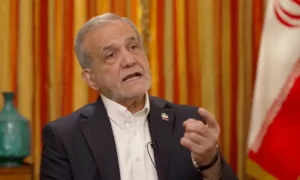
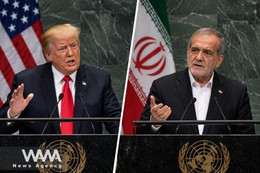
The atmosphere in New York has been tense, with cascading diplomatic developments spilling over into the proceedings. Notably, Iranian leadership reacted sharply to developments during the week, with reports emerging that Iranian President Masoud Pezeshkian altered his scheduled address to the UN following statements made by Western leaders. The interplay of regional rivalries and superpower competition has turned the UN headquarters into a crucible of high-stakes posturing and tense negotiations.
Adding to the logistical and diplomatic complexities, intersecting geopolitical tensions have led to severe travel and operational restrictions for various delegations. Highlighting the friction, U.S. Treasury Secretary Scott Bessent recently addressed logistical hurdles faced by the Iranian delegation attending the UN meetings, noting the complex diplomatic maneuvers required as Iranian commercial aviation remains heavily sanctioned and globally isolated.
Growing Global Isolation and Humanitarian Concerns
The deepening diplomatic chasm between Israel and a significant portion of the international community carries profound implications for multilateral diplomacy. While Israel maintains critical strategic alliances—most notably with the United States—its relationship with traditional allies in Europe and the Global South has frayed significantly over the past year.
Humanitarian organizations have continued to issue dire warnings regarding the situation in Gaza. Deliveries of food, medical supplies, and clean water remain severely restricted, leading to widespread malnutrition and preventable deaths. Public health infrastructure has largely collapsed, and hundreds of thousands of displaced individuals are living in precarious conditions with inadequate shelter as seasonal weather changes approach.
International courts, including the International Court of Justice (ICJ) and the International Criminal Court (ICC), have also become arenas of intense legal and political battle. Proceedings examining allegations of war crimes, crimes against humanity, and the legal implications of the occupation have placed additional pressure on Israeli leadership, contributing to the diplomatic isolation that Netanyahu addressed during his UN speech.
Implications for the Future of the Middle East
The events of September 24 at the United Nations underscore the formidable barriers standing in the way of any durable peace settlement in the Middle East. With Israel resolute in its military strategy and determined to neutralize perceived threats, and Palestinian leadership insistent on statehood, self-determination, and accountability for civilian suffering, the diplomatic path forward appears increasingly narrow.
The walkout by dozens of diplomats during Netanyahu’s speech serves as a clear barometer of shifting global sentiment. While it does not alter ground realities or halt military operations, it signals a growing weariness among nations regarding the status quo and a potential hardening of international positions against unilateral military actions. As the UN General Assembly session concludes, the fundamental challenge remains: bridging an unyielding divide between security imperatives and humanitarian rights in a region torn apart by decades of conflict.
Related posts: