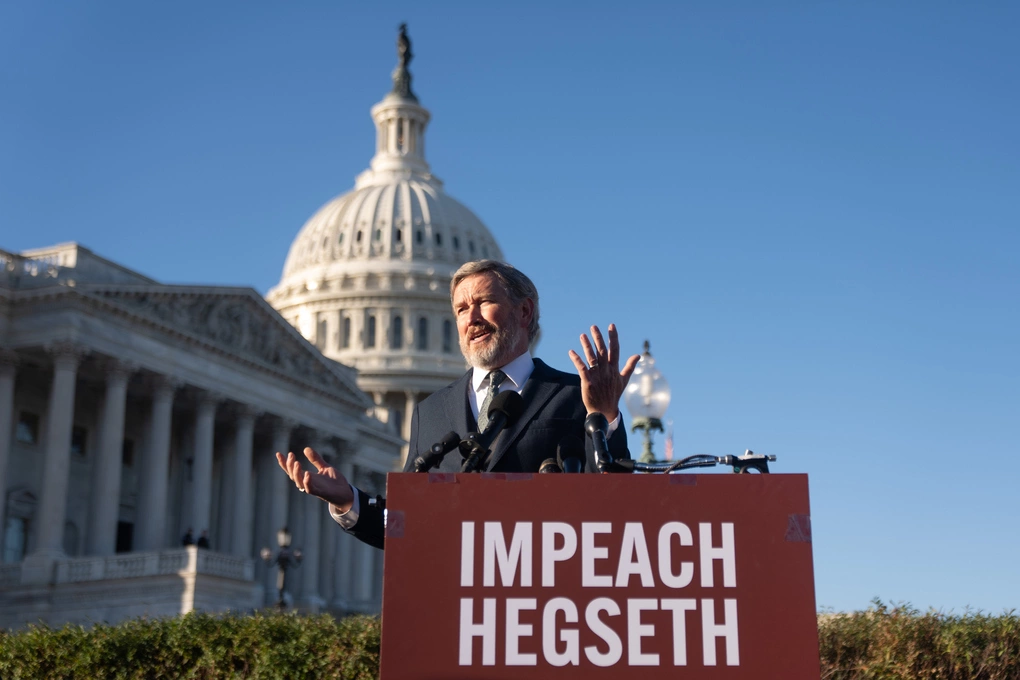
The political landscape in Washington D.C. has reached a volatile inflection point as Secretary of Defense Pete Hegseth faces the looming prospect of impeachment proceedings. Despite the Republican Party holding a majority in the House of Representatives, the formal articles of impeachment introduced by Representative Thomas Massie on November 9, 2026, have sent shockwaves through the corridors of power. Should these proceedings advance, Hegseth would become only the third executive official in United States history to face such a constitutional reckoning, raising profound questions about executive overreach, congressional oversight, and the balance of power within the federal government.
The Genesis of the Impeachment Articles
Representative Thomas Massie’s move to file articles of impeachment is rooted in a fundamental dispute over the constitutional authority to wage war. At the heart of the indictment is Secretary Hegseth’s conduct during military operations against Iran. Massie, a long-standing skeptic of foreign intervention, argues that the Trump administration bypassed the necessary congressional authorization, essentially engaging in unilateral military strikes without the explicit approval required by the War Powers Resolution of 1973.
The articles allege that Hegseth acted in "ultra vires"—beyond his legal authority—by directing and deploying military assets for operations that lacked clear legislative backing. Furthermore, the charges extend to accusations that these operations, particularly in Yemen and Venezuela, resulted in civilian casualties and constituted acts of aggression against sovereign nations, disguised under the thin veil of "law enforcement" or "counter-narcotics" operations.
Historical Precedent and Constitutional Framework
To understand the gravity of the current situation, one must look back at the historical rarity of executive impeachment. In the history of the United States, only a handful of non-presidential officials have faced the full force of the impeachment process. The most notable precedent involves Secretary of War William Belknap in 1876. Belknap was impeached by the House for corruption and kickback schemes. In a desperate attempt to avoid the stigma of an impeachment trial, Belknap resigned minutes before the House vote, yet the Senate proceeded with the trial regardless, asserting its constitutional right to hold former officials accountable.

More recently, the 2024 impeachment of Secretary of Homeland Security Alejandro Mayorkas, initiated by the Republican-led House, serves as the most immediate contemporary comparison. While the House voted to impeach Mayorkas along partisan lines, the Senate, controlled by the Democratic Party, ultimately dismissed the charges. This modern precedent suggests that the political outcome of such proceedings is often tethered to the composition of the Senate, where a two-thirds majority is required to convict and remove an official from office.
The Legislative Timeline and Procedural Hurdles
Following the introduction of the articles on November 9, the House is constitutionally mandated to move toward a floor vote, which is anticipated to occur as early as November 11. The process is fraught with procedural obstacles. Leadership within the Republican caucus holds the power to either fast-track the motion for consideration, refer it to a committee for exhaustive review, or move to table the motion entirely, effectively killing the initiative.
If the House votes to approve the articles, the case would be transmitted to the Senate, which acts as the high court for impeachment. The trial would be overseen by the Chief Justice of the United States. A conviction would require a supermajority of two-thirds of the Senators present. Given the current political divide, the prospects for a conviction remain slim, but the mere initiation of a trial would place unprecedented pressure on the Trump administration’s defense policies.
Official Responses and Political Repercussions
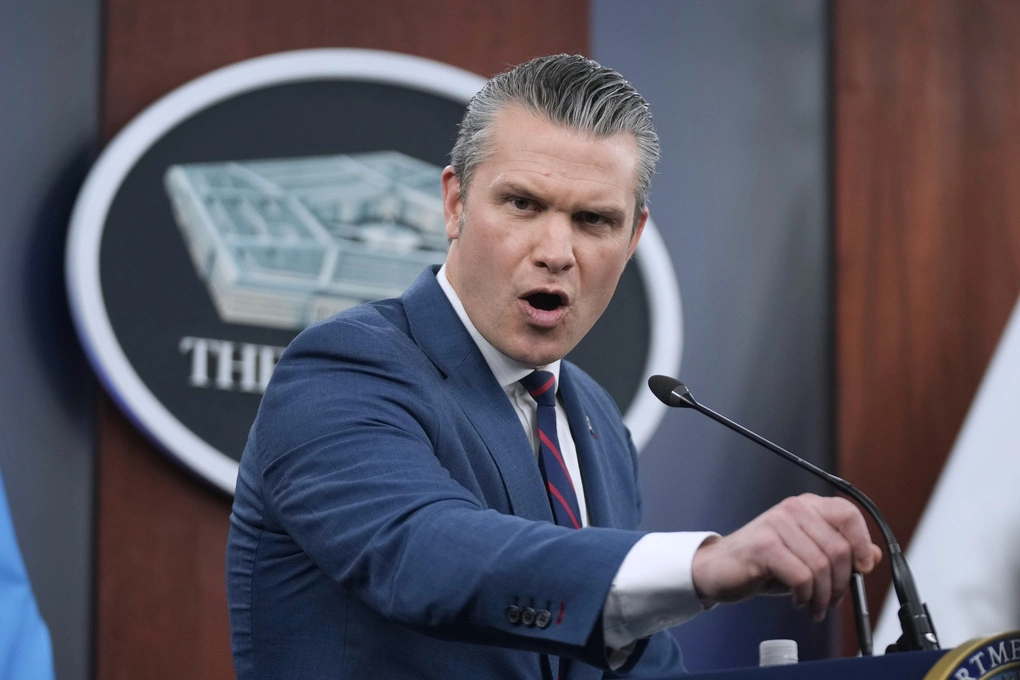
The response from Secretary Hegseth has been one of defiance. In a series of statements, he dismissed the impeachment articles as a "political circus" and a "frivolous attempt" by disgruntled lawmakers to undermine the executive branch’s national security mandate. Hegseth maintains that his actions were fully within the scope of the Commander-in-Chief’s authority and that any critique of his military strategies is effectively a critique of the troops themselves.
President Donald Trump has publicly rallied to Hegseth’s defense, questioning the necessity of the proceedings and casting doubt on the motives of the Republican detractors. "Hegseth did what was required to win," the President stated during a press briefing on November 9. However, behind the scenes, the situation is more complex. Sources close to the White House indicate that the administration is preparing for a protracted legal and political battle, though there is internal debate about how much political capital should be expended to protect a single cabinet member.
Internal White House Dynamics
Observers note that the administration’s strategy may be hampered by its own internal shifts. With the appointment of Stephen Miller as the new Chief of Staff, the administration’s approach to the legislature has undergone a subtle transformation. Unlike some of his predecessors, Miller is deeply attuned to the nuances of Senate operations and constitutional law.
Insiders suggest that Miller and other senior aides may be reluctant to commit the administration to a "scorched earth" defense of Hegseth if they believe it could distract from other primary policy objectives. "Miller understands where the limits lie," noted a former official familiar with White House operations. "He knows when to cut ties to preserve the broader legislative agenda, and he understands that the Senate is a different battlefield than the House."
Broader Implications: Executive Authority vs. Congressional Oversight
The potential impeachment of Secretary Hegseth signals a deepening rift regarding the interpretation of the War Powers Resolution in the 21st century. The core of the legal debate centers on whether the executive branch can continue to categorize military interventions as "limited" or "special" operations to circumvent the need for an Authorization for Use of Military Force (AUMF).
If the House proceeds with these articles, it sets a significant precedent for future administrations. A successful impeachment—or even a prolonged, serious trial—would force a recalibration of the relationship between the Pentagon and Congress. It could lead to stricter oversight mechanisms, mandatory reporting requirements for even the most minor tactical deployments, and a more robust judicial review of military actions that are not explicitly authorized by law.
Furthermore, the impact on morale within the Department of Defense cannot be ignored. The public scrutiny of a sitting Secretary of Defense, combined with the politicization of military strategy, creates an environment of uncertainty for high-ranking officials. For the rank-and-file, it raises questions about the legitimacy of orders and the potential for their missions to become subjects of partisan legislative debate.
Economic and Geopolitical Considerations
Beyond the constitutional and political theater, the potential removal of the Secretary of Defense carries tangible risks for national security and international relations. A leadership vacuum at the Pentagon during an active period of geopolitical volatility could embolden adversaries. The international community, watching the developments in Washington, may perceive the domestic instability as a sign of waning American resolve or internal confusion.
Economically, the uncertainty surrounding the leadership of the world’s largest defense budget could lead to volatility in the defense-industrial base. Investors and contractors rely on stability in the Pentagon’s procurement and policy-setting processes. A prolonged impeachment process could delay critical budget allocations and modernization programs, potentially impacting long-term national security readiness.
Conclusion: A Turning Point for the Republic
As the House prepares for the November 11 vote, the nation stands at a crossroads. The impeachment of a Secretary of Defense is not merely an exercise in legislative power; it is a test of the democratic framework’s ability to manage the tensions between executive agility and legislative accountability.
Whether the articles are dismissed, stalled in committee, or move to a historic Senate trial, the damage to the status quo is already done. The events of the coming weeks will likely redefine the parameters of executive power for years to come. Regardless of the outcome, the case against Pete Hegseth will be recorded in the annals of American political history as a significant moment of institutional friction, highlighting the enduring struggle to define the boundaries of power in a constitutional republic.
The eyes of the nation remain fixed on the Capitol, where the actions of a few hundred representatives will dictate the course of the executive branch and, by extension, the strategic direction of the United States on the global stage.