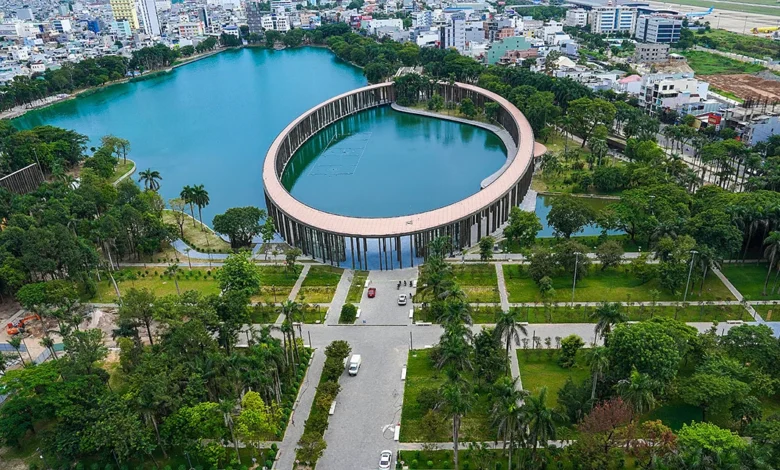
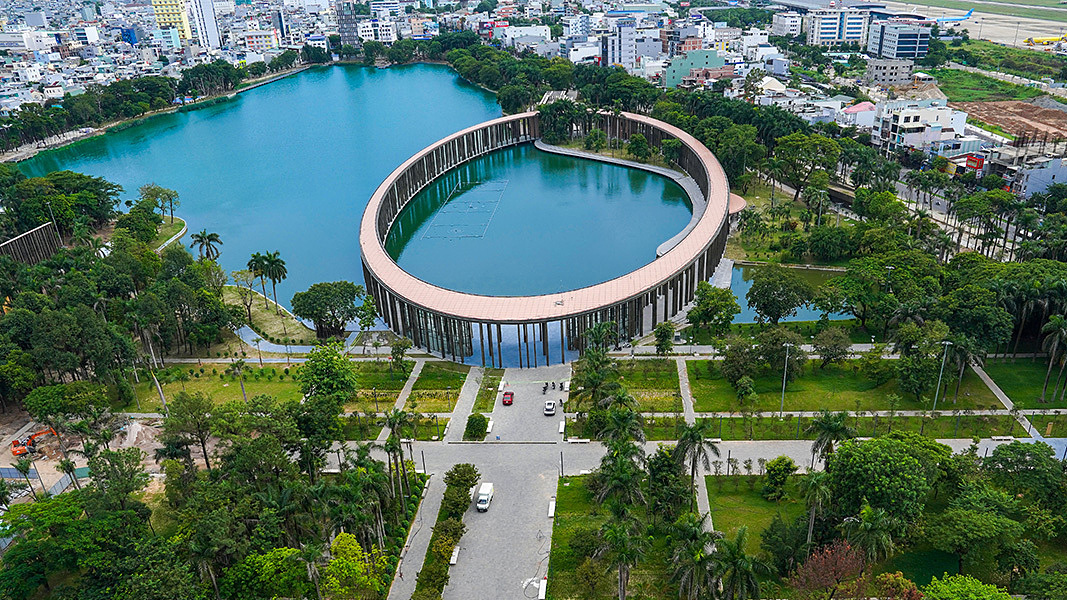
The transformation of the 29/3 Park in Da Nang from a post-war wasteland into a modern architectural landmark known as the "Peace Ring" stands as a testament to the city’s rapid urban evolution. Located at a prime intersection connecting Dien Bien Phu, Nguyen Tri Phuong, and Nguyen Van Linh streets, this 20-hectare site carries a deep historical weight. Before its reclamation and subsequent development into a hub of community activity, the area was infamous for being the city’s largest repository of post-war refuse, a stark contrast to the gleaming urban development that surrounds it today.
A Legacy of Conflict and Contamination
To understand the significance of the 29/3 Park, one must look back to the aftermath of 1975. At that time, the area, then known as Ham Bua, served as a primary dumping ground for the remnants of the conflict. The name "Bua" itself originated from the chaotic, haphazard state of the site, which was blanketed in industrial waste, scrap metal, rusted military hardware, and discarded ammunition.
The site’s proximity to the Da Nang International Airport and a major railway station turned it into a logistical bottleneck for the city’s recovery efforts. The ground was saturated with hazardous materials, including thousands of meters of barbed wire, twisted steel, and petroleum-contaminated soil that rendered the local water sources toxic and foul-smelling. For local residents, the area was a "no-man’s-land" that hindered the expansion of the city’s core.
The Herculean Task of Reclamation
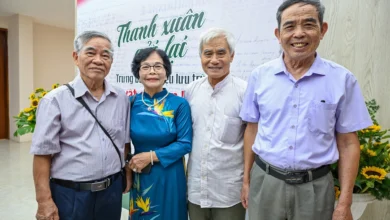
The reclamation process, which began in earnest in 1976, was a labor-intensive operation led by a generation of young volunteers and military engineers. Pham Kieu Da, a veteran and former commander of the Sapper forces, recalls the period as one of immense physical peril. As the head of the clearance team, Da led efforts to dismantle the remnants of the McNamara line—a defensive network of barbed wire and landmines that had encircled the airport—which bordered the park area.
The clearing operation lasted for over a year. It was a mission that demanded not only technical skill but also significant sacrifice; records from the time indicate that the demining and debris-removal process resulted in the loss of life and serious injuries among the sappers.
In the late 1970s, the city administration launched the "Youths Need Parks" initiative. Under the leadership of figures like Mr. Da, who served as the Secretary of the District Youth Union, thousands of volunteers—ranging from civil servants to students—spent their weekends clearing the site by hand. With minimal personal protective equipment, they waded into knee-deep mud to extract twisted metal and debris, often suffering lacerations and infections in the process. This collective effort laid the foundational soil for what would eventually become a green lung for the city.
Evolution of the Green Space (1982–2019)
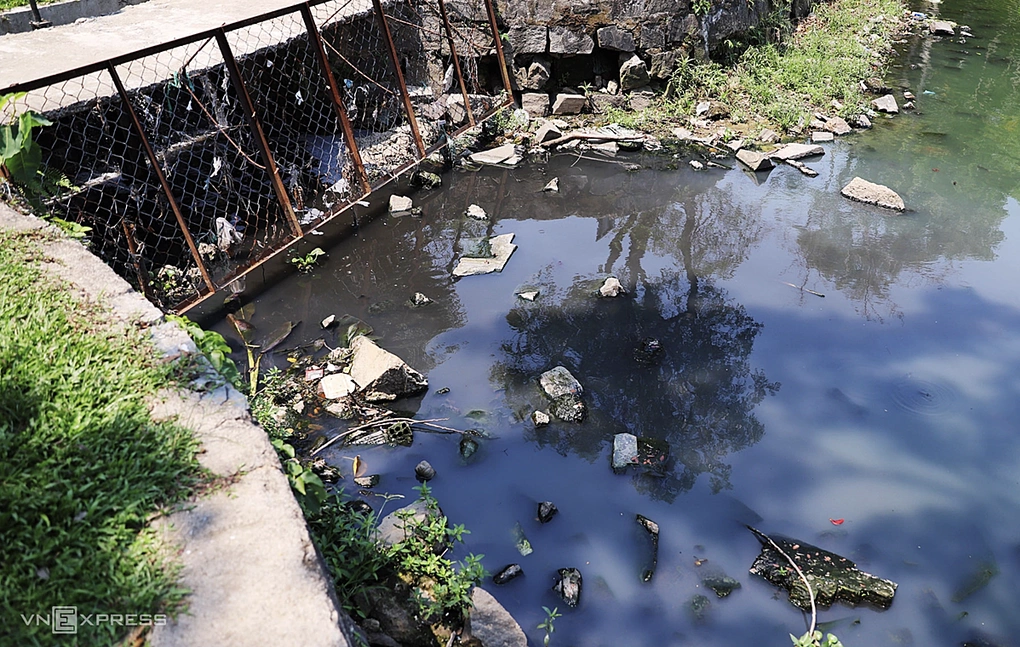
By 1982, the site was officially designated as a Green Park. However, the legacy of its past continued to haunt its development. Over the decades, inadequate drainage and the inflow of untreated household wastewater into the central lake led to severe eutrophication. By 2019, the lake was a source of environmental concern, with hundreds of tons of fish dying due to high pollution levels, creating an odor that impacted the surrounding neighborhoods.
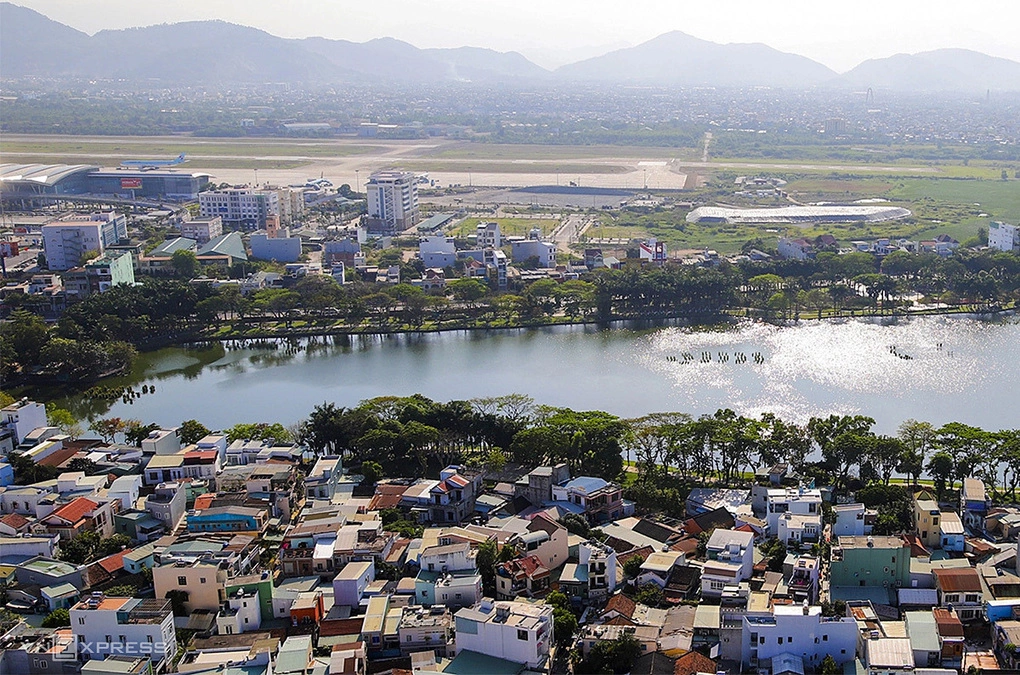
During this period, the park also faced pressure from commercial interests. On two separate occasions, nearly 6,000 square meters of the park’s land were carved out for commercial headquarters and office buildings. These moves triggered widespread public outcry. Recognizing the importance of preserving public green space, the Da Nang municipal government eventually reversed course, reclaiming these plots to restore the integrity of the park’s landscape.
The "Peace Ring": An Architectural Milestone
In March 2025, the city inaugurated a major renovation project for the 29/3 Park, with a total investment of nearly 673 billion VND. The centerpiece of this redevelopment is the "Peace Ring" (Chiếc nhẫn Hòa Bình), an architectural structure designed by StudioMilou Singapore.
The structure is a testament to modern engineering, featuring a sweeping elliptical arch made of reinforced concrete with a wood-grain finish. The design intentionally avoids synthetic paints, opting for protective chemical treatments that highlight the raw beauty of the concrete, allowing it to age naturally and blend into the environment. The "ring" serves as both a structural aesthetic and a functional public space, featuring subterranean galleries, exhibition areas, and an amphitheater-style water stage for public performances.
Addressing Community Concerns and Future Planning
The project has not been without its critics. During the construction phase, local residents and veteran figures like Mr. Da provided feedback on the need for better safety features, such as sturdier railings and increased tree canopy coverage to mitigate the harsh glare of the concrete structures.
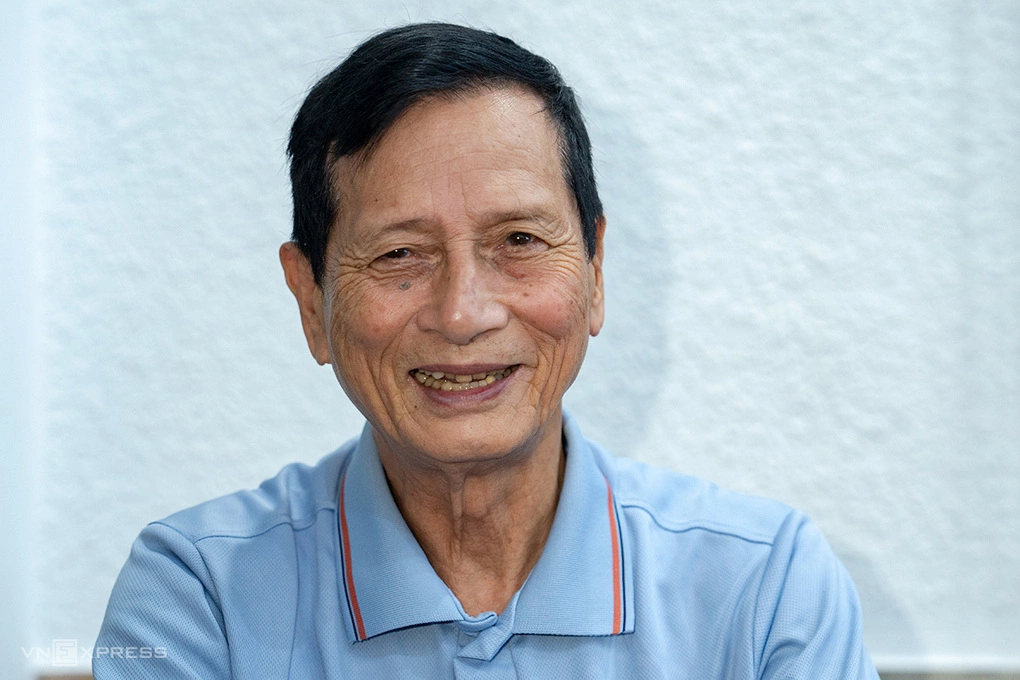
Nguyen Huu Nhat, Director of the Management Board for Civil and Industrial Construction Projects in Da Nang, noted that the board has actively engaged with these concerns. "The design underwent a rigorous selection process, and we are working closely with the consultants to integrate more greenery and shade to soften the urban feel of the concrete surfaces," Nhat stated.
The renovation project, which involved the removal of approximately 115,000 cubic meters of toxic silt and the total overhaul of the wastewater collection system, aims to make the lake the heart of the park once again. The city has also implemented a plan to ensure the park remains a free, accessible public space, with social services and commercial amenities restricted to the secondary phases of the project.
Implications for Urban Sustainability
The transformation of the 29/3 Park reflects a broader shift in Vietnam’s urban planning philosophy: prioritizing public well-being and historical preservation over short-term commercial gains. By reclaiming the land from corporate use and investing in high-tech environmental solutions—such as RGB LED lighting, 3D laser projectors, and advanced water treatment systems—Da Nang is setting a new standard for urban revitalization.
The park is now equipped for 24/7 monitoring, with specialized personnel assigned to maintain its sophisticated outdoor technical systems. Beyond the technology, the local government is planning to use the park’s exhibition spaces to educate younger generations about the city’s history, including the legacies of figures like Mother Nhu and the seven heroes of Thanh Khe.
As the 29/3 Park enters this new chapter, it stands as a bridge between the trauma of the past and the aspirations of a modern, sustainable city. It is no longer a site of waste and war, but a symbol of peace, community, and the persistent human drive to turn even the most damaged ground into a space for growth and reflection.
Related posts: