The Vietnamese real estate market is currently navigating a period of profound recalibration as potential homebuyers adopt a "wait-and-see" strategy, anticipating further price corrections before committing their capital. While financial accumulation among middle-class households has reached record levels, the prevailing sentiment remains one of extreme caution, driven by high interest rates and a lingering uncertainty regarding the true "floor" of property valuations.
A Market in Stasis: The Homebuyer’s Dilemma
For many, like Thanh Tung, a resident of Tay Mo, the decision to hold onto cash reserves rather than entering the property market has become a strategic necessity. With approximately 3.7 billion VND in savings—up from 2.5 billion VND earlier this year—Tung is in a strong position to purchase a 55-square-meter apartment in the western suburbs of Hanoi. Yet, despite having the funds, he has chosen to keep his money in high-yield savings accounts.
Tung’s experience reflects a broader trend among prospective buyers who witnessed property prices soar by 30-40% over the last two years. "I am hesitant to deploy capital too early," Tung explained. "If I buy now, I risk missing out on better deals as more inventory enters the market and sellers become more desperate to liquidate." He is currently opting to rent within a major urban development, waiting for what he perceives as a more stable entry point.
This sentiment is echoed by Thu Phuong, a resident of Duong Noi, who has set aside nearly 4 billion VND for a home purchase. Having spent the latter half of last year searching for a two-bedroom unit, she has repeatedly deferred her plans. "The market felt overheated," she noted. "Prices were anchored at unsustainable levels, and even projects sold off-plan were prohibitively expensive or lacked clear legal transparency." For Phuong and many others, the current "cut-loss" trend—where investors sell properties below their initial purchase price to exit the market—is not yet deep enough to justify a purchase.
Chronology of the Shift: From FOMO to Caution
The transformation of the real estate landscape in Vietnam did not happen overnight. The following timeline outlines the shift in market dynamics:
- Q1-Q2 2023: The market experienced a liquidity crunch following the tightening of credit for real estate developers and increased scrutiny on corporate bond issuances.
- Q3 2023: Prices in the secondary market remained high, but transaction volumes began to plummet as buyers hit an affordability ceiling.
- Q1 2024: A clear shift emerged as developers began offering aggressive incentives and payment schemes to entice buyers.
- Q3 2024 (Present): A "wait-and-see" culture has solidified, with nearly 40% of prospective buyers—according to recent surveys—formally postponing purchases in hopes of further price drops.
During the "Ghost Month" (the seventh lunar month), which traditionally sees a slowdown in market activity, some agents reported a 20% uptick in property viewings. However, this did not translate into sales. As Tuan Thanh, a real estate broker specializing in western Hanoi, observed: "Clients are mostly scouts. They are inspecting the ‘cut-loss’ properties, but the number of successful transactions remains minimal. Unlike last year, when sellers dictated the terms, the power has shifted toward the few buyers who remain in the market."
Supporting Data and Market Analysis
Recent reports from One Mount Group highlight the significant impact of monetary policy on real estate demand. With mortgage interest rates hovering between 12% and 14% annually, the cost of borrowing remains a significant barrier. Consequently, capital that would have been diverted to real estate is currently flowing into safer financial instruments, such as bank deposits.
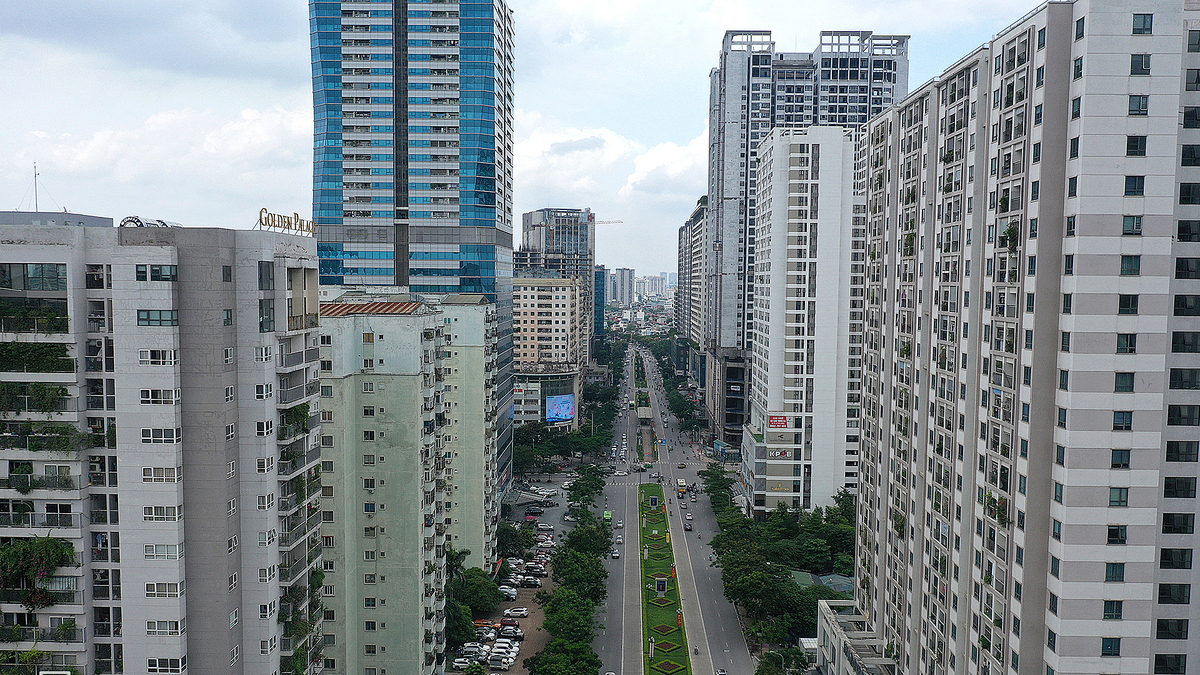
Data from the first half of 2024 indicates a sharp decline in absorption rates. Projects that previously enjoyed absorption rates of over 80% have seen that figure drop to 50-60%. This shift confirms that while the fundamental need for housing remains high, the current pricing structure does not align with the purchasing power of the domestic middle class.
Nguyen Chi Thanh, Vice Chairman of the Vietnam Association of Realtors (VARS), emphasizes that the current price reductions are largely concentrated among speculative investors who relied heavily on financial leverage. "Compared to the 30-40% surge we saw over the past two years, these current reductions are marginal," Thanh noted. "At an average price point of 80-100 million VND per square meter, the average buyer remains extremely cautious. They are waiting for the market to reach a price-to-income ratio that is manageable."
The "Bottoming Out" Forecast
As the year approaches its final quarter, analysts are keeping a close watch on the potential for increased market activity. Pham Duc Toan, General Director of EZ Property, suggests that the current hesitation is a rational response to economic volatility.
"We are seeing the emergence of ‘value zones’—properties that are priced reasonably and possess full legal documentation," Toan stated. "These are the assets that will likely trigger the next wave of investment. The ‘bottom’ of the market will be defined by projects located in areas with robust infrastructure, where developers have maintained transparent legal processes."
However, Toan also warns that the market is still bracing for a wave of distressed assets. "By Q4, the pressure to exit for investors who over-leveraged their portfolios will intensify," he predicted. "As the supply of new, well-vetted projects increases, the competition among sellers will force a more realistic pricing environment."
Broader Implications for the Economy
The current stalemate in the real estate sector has significant implications for the wider economy. Real estate is a key pillar of Vietnam’s GDP, and its stagnation affects auxiliary industries, including construction, raw materials, and retail.
- Banking Sector Risk: The high volume of "cut-loss" listings points to the fragility of some investors’ portfolios. Banks are closely monitoring these non-performing loans to ensure that the fallout does not threaten broader financial stability.
- Infrastructure Development: The government’s continued investment in major transportation projects is expected to act as a catalyst for long-term recovery. Areas near new transit hubs are expected to be the first to see a stabilization in value.
- Housing Affordability: The ongoing pressure from buyers for lower prices is forcing developers to reconsider their product mix. There is an increasing shift toward developing more affordable housing units rather than high-end luxury condos, which currently face the highest inventory accumulation.
In conclusion, the Vietnamese property market is undergoing a painful but necessary correction. For the average homebuyer, the current environment is one of strategic patience. While the allure of owning property remains strong, the era of unbridled price growth has given way to a more disciplined, value-oriented phase of the market cycle. As the year concludes, all eyes will be on whether the anticipated Q4 surge in supply will finally reset the market equilibrium to a point where buyers and sellers can once again find common ground.
Related posts: