Russia and China express concern over potential military escalation in Iran as geopolitical tensions mount

The geopolitical landscape of the Middle East faces a precarious inflection point as Washington signals the potential for renewed military action against Tehran. Following recent statements by President Donald Trump suggesting that the United States has successfully neutralized a significant portion of Iran’s military capabilities but retains “one or two targets” left to address, the international community has responded with mounting apprehension. Both Moscow and Beijing have issued formal cautionary statements, urging restraint and emphasizing the necessity of preserving regional sovereignty as the specter of renewed conflict looms over the Strait of Hormuz and beyond.
A Shifting Strategic Calculus
The discourse surrounding potential military action emerged late last week, catching global markets and diplomatic circles off guard. President Trump’s remarks regarding the "unfinished business" of American military objectives in Iran have fueled widespread speculation that the U.S. may be preparing for a fresh wave of precision strikes or an expansion of its current regional posture.
For decades, the United States has maintained a policy of "maximum pressure" on Iran, utilizing a combination of economic sanctions, naval blockades, and targeted military engagements to curb Tehran’s nuclear ambitions and regional influence. However, the current rhetoric marks a distinct shift toward a more kinetic approach, signaling that the administration views previous operations as incomplete. This development arrives at a time when the Middle East is already strained by a dense network of proxy conflicts, civil unrest, and humanitarian crises, making the prospect of a direct, sustained conflict between the world’s leading superpower and the regional power of Iran a source of profound instability.
Chronology of Escalation
To understand the current tension, it is necessary to examine the series of events that have led to the present impasse:
- Mid-2026: Tensions between Washington and Tehran reached a boiling point following a series of maritime incidents in the Persian Gulf, leading to the deployment of additional U.S. naval assets to the region.
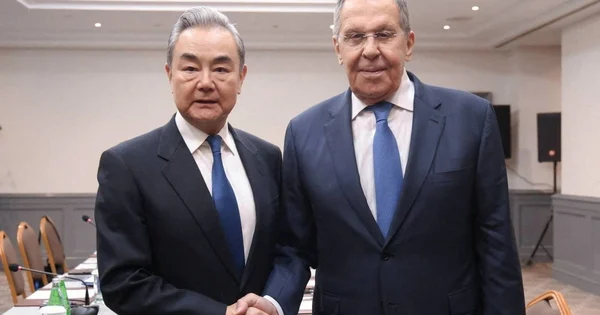
- October 14, 2026: Foreign Ministers from Russia and China met in Baku, Azerbaijan, to discuss regional security architectures, signaling a deepening of the Moscow-Beijing strategic partnership in the face of Western pressure.
- Late October 2026: Reports surfaced suggesting that the U.S. and Israeli military high commands were coordinating on updated contingency plans for strikes against Iranian nuclear and ballistic missile infrastructure.
- November 1, 2026: President Trump publicly addressed the status of military operations, confirming that while much of Iran’s conventional military strength had been compromised, specific strategic objectives remained unfulfilled.
- November 2, 2026: The Russian Foreign Ministry officially condemned the potential for renewed military adventurism, calling it an "extremely alarming" development that threatens to destabilize an already volatile region.
The Russian Perspective: A Call for Diplomatic De-escalation
Maria Zakharova, the spokesperson for the Russian Ministry of Foreign Affairs, issued a stern statement on November 2, highlighting that the situation surrounding Iran remains "critically complex." According to Zakharova, the ongoing regional crises are inextricably linked, and any further military intervention would have catastrophic consequences for the global order.
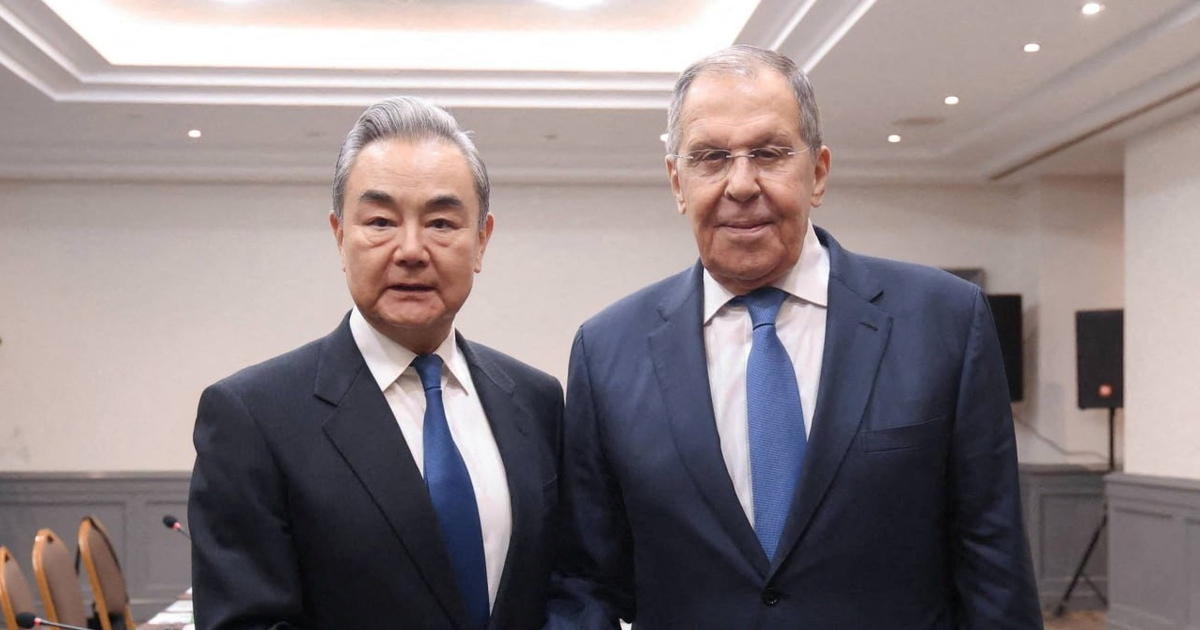
"The situation is far from resolved," Zakharova noted during a press briefing. "Military adventurism against Iran will not achieve the stated goals of security; rather, it threatens to dismantle the sovereignty of the nation and inflame neighboring regions. We believe that diplomatic channels must be prioritized to normalize the situation."
Russia, which has maintained a pragmatic relationship with Tehran while navigating its own complex geopolitical challenges in Eastern Europe, views the potential for a new front in the Middle East as a direct threat to the stability of energy markets and the security of the Eurasian landmass. Moscow has expressed a specific interest in the safety of the Strait of Hormuz, a vital maritime artery through which a significant portion of the world’s oil transits.
Beijing’s Strategic Alignment and Diplomatic Mediation
Simultaneously, the Deputy Secretary of the Supreme National Security Council of Iran, Ali Bagheri Kani, held high-level discussions in Beijing with Chinese Foreign Minister Wang Yi. This visit underscores the critical role China has assumed as a primary economic and diplomatic lifeline for Tehran.
During the talks, Minister Wang Yi reaffirmed China’s unwavering support for Iran’s territorial integrity and national sovereignty. However, Beijing’s tone was notably measured. Wang Yi urged all parties to "focus on political solutions rather than once again resorting to armed conflict." This stance reflects China’s broader foreign policy doctrine, which emphasizes non-interference and the resolution of international disputes through multilateral dialogue rather than unilateral military coercion.
China’s influence in this scenario is significant. As a major importer of Iranian energy and a key player in the Belt and Road Initiative, Beijing has a vested interest in preventing a regional war that would undoubtedly disrupt global supply chains and heighten energy prices. By providing a platform for dialogue, China is positioning itself as a responsible stakeholder capable of tempering the aggressive impulses of Western powers while providing a diplomatic "off-ramp" for Tehran.
Implications for Regional and Global Security
The potential for renewed military action against Iran carries profound implications that extend far beyond the Middle East. A direct conflict could lead to:

- Energy Market Volatility: Any disruption to the Strait of Hormuz could trigger an immediate spike in global crude oil and liquefied natural gas prices, exacerbating inflationary pressures already affecting the global economy.
- Proxy Warfare Expansion: Iran possesses a sophisticated network of regional proxies. A direct attack on Iranian soil could prompt retaliatory strikes across Iraq, Syria, Lebanon, and Yemen, effectively turning the entire region into a theater of total war.
- Humanitarian Crisis: A large-scale military campaign would likely trigger a massive refugee influx into neighboring countries and further deteriorate the humanitarian situation in states already struggling with internal instability.
- Shift in Alliances: Continued U.S. military pressure is likely to push Iran further into the orbit of the Russia-China security bloc, accelerating the fragmentation of the global order into competing spheres of influence.
Analysis: The Limits of Military Force
Military analysts have frequently pointed out that while the United States possesses overwhelming technological and conventional superiority, the nature of the "targets" mentioned by the U.S. administration is inherently difficult to neutralize through kinetic means alone. Iran’s nuclear program, for instance, is dispersed across deeply buried, fortified facilities and decentralized research centers, making it resistant to simple air campaigns.
Furthermore, history has demonstrated that military intervention in the Middle East often results in a "whack-a-mole" scenario, where the removal of one military asset merely leads to the proliferation of decentralized, harder-to-track capabilities. The political cost of a protracted conflict—particularly one that lacks broad international coalition support—could significantly diminish U.S. soft power and diplomatic capital on the global stage.
Conclusion: The Path Forward
As the international community watches these developments with trepidation, the question remains whether the rhetoric from Washington is a genuine precursor to military action or a high-stakes diplomatic tactic designed to extract concessions from Tehran. The strong reactions from Moscow and Beijing indicate that the world is no longer willing to accept unilateral military shifts without significant pushback.
The coming weeks will be critical. If the path toward diplomatic normalization remains blocked, the risk of miscalculation increases exponentially. For now, the global focus remains fixed on the delicate balancing act between the stated security requirements of the United States and the urgent need to prevent a wider, uncontrolled conflagration in one of the world’s most sensitive geopolitical corridors. The calls from Moscow and Beijing for restraint serve as a stark reminder that in the modern, interconnected world, the consequences of regional conflict are never contained by borders.
Related posts: