Nguyen Tri Phuong Hospital Terminates Security Guard Following Public Complaints of Misconduct and Unauthorized Parking Fees

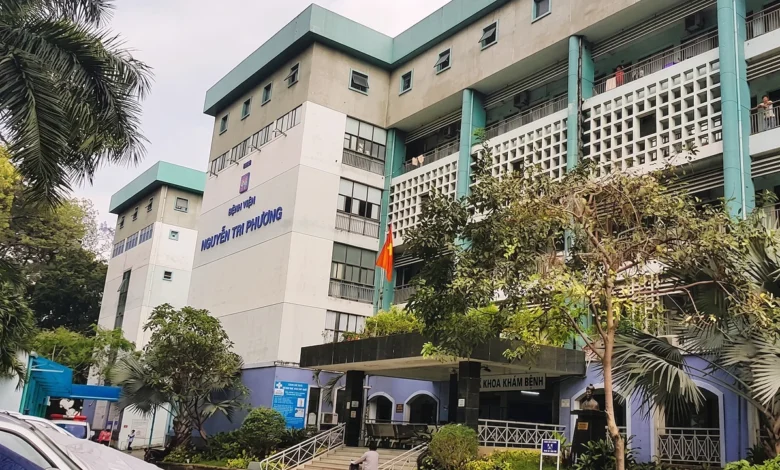
The administration of Nguyen Tri Phuong Hospital in Ho Chi Minh City has officially requested the immediate reassignment and removal of a security staff member following a series of verified reports concerning unprofessional conduct and the solicitation of unauthorized fees. The decision, announced on July 22, follows a internal investigation into two specific incidents involving the security personnel stationed at the hospital’s critical emergency entrance. This move highlights a growing emphasis on "medical culture" and patient satisfaction within Vietnam’s public healthcare infrastructure, particularly in high-pressure urban environments.
Detailed Investigation into the Alleged Misconduct
The controversy began when the hospital’s management received two distinct complaints from the public via official feedback channels. According to Dr. Luong Cong Minh, Deputy Director of Nguyen Tri Phuong Hospital, the facility maintains a zero-tolerance policy regarding behavior that compromises the dignity of patients or the integrity of the hospital’s operations.
The first complaint involved an incident where the security guard in question was reported to have used "loud and aggressive language" toward a citizen. The investigation revealed that the confrontation occurred when a visitor parked their vehicle in a manner that obstructed the emergency gate—a vital artery for ambulances and critically ill patients. While the security guard’s duty was to clear the path, the hospital administration determined that the manner in which the instruction was delivered was unnecessarily hostile and lacked the professional restraint required in a healthcare setting. The guard subsequently admitted to his "raised voice" during the interaction.
The second, and perhaps more serious, complaint involved the acceptance of money at the emergency gate. Evidence, including photographic or video documentation provided by the public, showed the guard receiving a cash payment from a patient’s relative. The relative had reportedly been assisted by the guard in finding a temporary spot to park their vehicle so they could rush a family member into the emergency room.
In his written explanation to the hospital board, the security guard claimed that the money was a "voluntary gift" offered as a token of gratitude and that he did not explicitly demand a fee for parking. However, the hospital leadership rejected this justification. Dr. Minh emphasized that hospital policy strictly prohibits any form of payment for short-term emergency parking support, asserting that such services must be provided entirely free of charge as part of the hospital’s duty of care.
Immediate Administrative Actions and Policy Enforcement
Upon verifying the details of the incidents, the Board of Directors at Nguyen Tri Phuong Hospital coordinated with the third-party security service provider that employs the guard. The hospital issued a formal demand for the security firm to stop assigning this specific individual to any post within the hospital premises. Furthermore, the hospital requested that the employee be transferred to a non-medical location where patient interaction is not a primary requirement.
Beyond the removal of the individual, the hospital has leveraged this incident to enforce a broader systemic overhaul of its security protocols. The administration has mandated that the contracted security company conduct comprehensive retraining for its entire workforce stationed at the hospital. This training is to focus specifically on:
- Communication Skills: Adopting a polite, empathetic, and professional tone when interacting with distressed patients and their families.
- Ethics and Integrity: Reinforcing the strict prohibition against accepting "tips," "gifts," or any form of informal payment.
- Emergency Procedures: Ensuring that the priority remains the swift movement of patients into the facility without creating financial or psychological barriers at the gate.
"Security personnel are often the first point of contact for patients entering a hospital, especially in emergency situations," Dr. Minh stated. "Their behavior reflects directly on the hospital’s reputation. We are committed to building a civilized, safe, and friendly environment for everyone."
Background: Nguyen Tri Phuong Hospital’s Role in Regional Healthcare
To understand the impact of this incident, one must consider the scale and history of Nguyen Tri Phuong Hospital. Established over 120 years ago, the institution began as a small clinic serving the local community and has since evolved into a Grade 1 general hospital under the Ho Chi Minh City Department of Health.
With a capacity of over 1,000 inpatient beds and a daily influx of thousands of outpatients, the hospital is a cornerstone of the healthcare system in District 5 and for the southern provinces of Vietnam. It handles some of the most complex medical cases in the region, including neurosurgery, cardiovascular interventions, and intensive organ care.
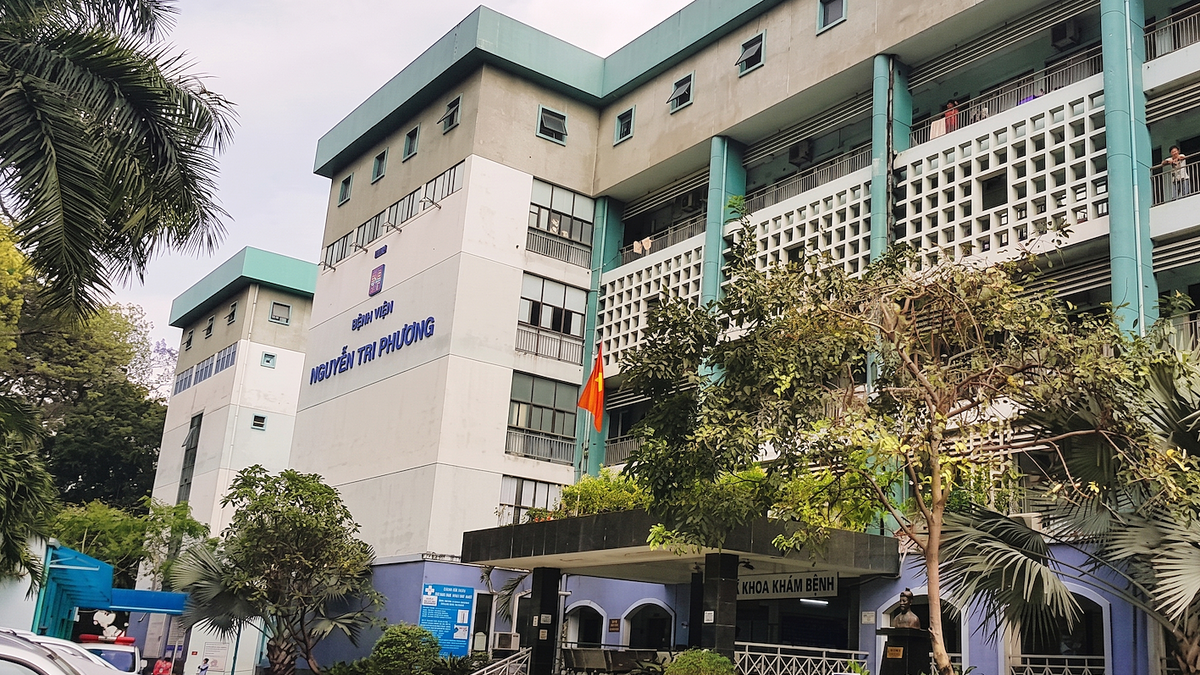
In a facility of this size, logistics—specifically parking and traffic flow—represent a massive daily challenge. Located in a high-density urban area, the streets surrounding the hospital are often congested. The emergency gate, therefore, is a high-stress zone where seconds can mean the difference between life and death. The hospital’s stance on the security guard’s behavior is rooted in the necessity of keeping this zone functional and welcoming, rather than a site of conflict or exploitation.
The Broader Context of Hospital Security in Vietnam
The incident at Nguyen Tri Phuong Hospital is not an isolated case in the landscape of Vietnamese public services. For years, the Ministry of Health has been pushing for a "revolution in attitude" among hospital staff, ranging from doctors and nurses to administrative and support personnel like janitors and security guards.
In 2015, the Ministry issued Decision No. 2151/QD-BYT, which launched a nationwide movement to "Change the attitude and style of medical staff towards patient satisfaction." While security guards are often employees of private contractors rather than the Ministry itself, they are increasingly being held to the same ethical standards as medical professionals.
The issue of "informal fees" (commonly referred to as nạn phong bì or "envelope culture") has been a target of government crackdowns for over a decade. While much of the focus has been on clinical staff, the "gatekeeper" role of security guards makes them susceptible to similar behaviors. By taking a hardline stance against a guard accepting even a "voluntary gift," Nguyen Tri Phuong Hospital is sending a clear signal that the era of informal payments at any level of the healthcare experience is coming to an end.
Analysis of the "Voluntary Gift" Defense
The guard’s defense—that the money was a "voluntary gift"—touches on a complex cultural nuance in Vietnam. In many social contexts, giving a small amount of money to someone who provides a helpful service is seen as a gesture of cảm ơn (thanks). However, in the public sector and specifically in healthcare, this practice is legally and ethically fraught.
When a security guard at an emergency gate accepts money, it creates a "pay-to-play" perception. If one person pays to park at the gate, others may feel they must pay to receive the same "support." This undermines the principle of equitable access to emergency care. The hospital’s decision to classify this as a violation of "medical communication culture" highlights that intent (whether the guard demanded it or the citizen offered it) is secondary to the visual and ethical impact of the transaction.
Moving Forward: Enhancing Patient Experience
Following the incident, Nguyen Tri Phuong Hospital has pledged to increase its monitoring of support services. This includes:
- Enhanced Surveillance: Better utilization of CCTV systems at gates and parking areas to monitor staff-patient interactions.
- Feedback Loops: Encouraging patients and their families to use "hotlines" and digital feedback kiosks to report both positive and negative experiences in real-time.
- Infrastructure Improvements: Evaluating long-term solutions for the parking shortage to reduce the pressure on emergency entrances that often leads to these types of confrontations.
The hospital’s leadership reiterated that in emergency cases, security staff are duty-bound to assist with vehicle management to ensure the patient gets inside as quickly as possible. This service is a fundamental part of the hospital’s emergency response and is funded through the institution’s operational budget, meaning no additional costs should ever be passed on to the patient at the point of entry.
Conclusion
The swift action taken by Nguyen Tri Phuong Hospital serves as a benchmark for other public institutions in Ho Chi Minh City. By prioritizing professional conduct and transparency over the convenience of a long-standing contractor relationship, the hospital has reaffirmed its commitment to its 120-year legacy of service.
As Ho Chi Minh City continues to modernize its healthcare infrastructure, the focus is shifting from merely providing medical treatment to providing a holistic, dignified "patient journey." This journey begins at the hospital gate, and as this incident proves, the hospital administration is prepared to ensure that the gate remains open, professional, and free of charge for those in their hour of greatest need. The removal of the guard is not just a disciplinary action against one individual, but a reinforcement of the "patient-centered" philosophy that is becoming the gold standard for Vietnamese healthcare in the 21st century.