Toyota Vios sedan prices plummet by over 100 million VND at dealerships as market competition intensifies

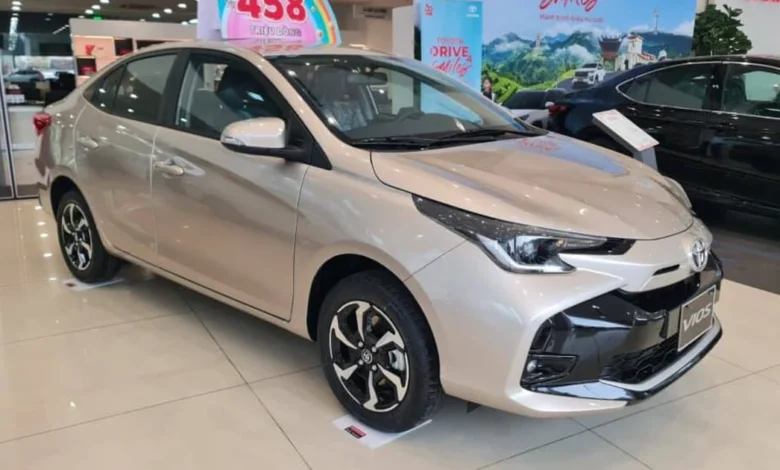
The automotive landscape in Vietnam is currently witnessing a significant pricing realignment, particularly within the competitive B-segment sedan category. Recent market intelligence from Hanoi reveals that the Toyota Vios E-MT, the entry-level manual transmission variant, is being offered at dealerships for as low as 350 million VND. This represents a staggering reduction of 108 million VND compared to the manufacturer’s suggested retail price (MSRP) of 458 million VND. This aggressive pricing strategy, driven by the need to clear 2026 model year inventory, has effectively pushed one of Vietnam’s perennial best-sellers into the price bracket traditionally occupied by A-segment city cars, creating a massive ripple effect throughout the local automotive industry.
The Dynamics of the Price Cut
The significant discount is not merely a promotional tactic; it reflects a broader strategy among authorized Toyota dealers to manage supply chain logistics and inventory turnover for the 2026 model year. By slashing the price by nearly 24%, dealers are aiming to capture a demographic that might otherwise gravitate toward more affordable, smaller vehicles.
For a consumer in the provinces, when mandatory registration fees and associated taxes are calculated, the on-road price for a Toyota Vios E-MT now hovers around 410 million VND. This figure remains approximately 48 million VND below the official list price, representing a substantial value proposition for potential buyers. Beyond the direct cash discount, dealerships are further sweetening the deal by bundling in value-added services and accessories, including window tinting, floor mats, car covers, and an initial supply of 10 liters of fuel.
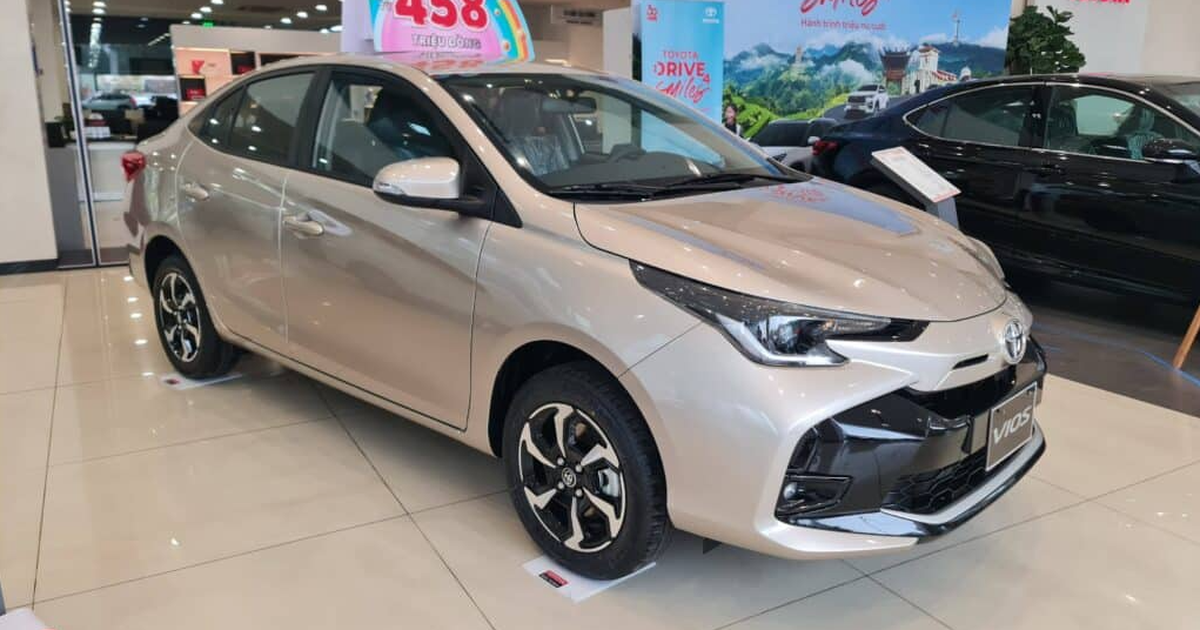
Sales consultants have indicated that if a customer has no immediate need for these physical accessories, they may, in some instances, negotiate for a further adjustment to the final transaction price, highlighting the high level of flexibility currently present in the showrooms.
Market Context and Segment Blurred Lines
The B-segment has long been the battleground for the most popular sedans in Vietnam. However, with the Vios being offered at 350 million VND, the traditional distinction between segments A and B has become increasingly blurred. To put this into perspective, the Vios is now priced only 25 million VND higher than the manual transmission variant of the Kia Morning, and it is significantly cheaper than the Hyundai Grand i10, which retails for approximately 360 million VND for the hatchback version and 380 million VND for the sedan.
This price overlap forces a difficult decision upon consumers. While the Kia Morning and Hyundai Grand i10 offer the maneuverability required for dense urban environments, they are fundamentally smaller, less powerful, and possess fewer safety features than the Toyota Vios. By bringing a B-segment vehicle into this price range, Toyota is essentially challenging the entire A-segment market to justify its value proposition.
In response, other manufacturers have not remained idle. THACO, the distributor for Kia, has also implemented aggressive promotional campaigns, lowering the price of the Kia Morning to approximately 307 million VND. Similarly, Hyundai dealers have been authorized to offer total package incentives for the Grand i10 worth up to 50 million VND, depending on the specific location and inventory needs of the dealership. Despite these efforts, the market sentiment remains heavily skewed toward the perceived durability and resale value of the Toyota brand, especially when the price difference is narrowed to such a marginal degree.

A Historical Perspective on the Toyota Vios
To understand the significance of this move, one must consider the historical trajectory of the Vios in Vietnam. First introduced to the market in August 2003, the Vios quickly cemented its reputation as the "national car." For nearly two decades, it dominated sales charts due to its reliability, low maintenance costs, and the extensive network of service centers managed by Toyota Vietnam.
However, the last few years have brought unprecedented challenges. The global shift toward SUVs and Crossovers has siphoned off a significant portion of the sedan market share. According to industry sales data, from the beginning of 2026 through the end of October 2026, Toyota recorded 7,590 units sold in Vietnam. While this remains a robust figure, it is a testament to the cooling demand for traditional sedans as consumers increasingly prioritize higher ride heights and modular utility.
The current Vios lineup in Vietnam is locally assembled and consists of three distinct variants: the E-MT (manual), E-CVT, and G-CVT. By offering two different transmission options—the five-speed manual and the continuously variable transmission (CVT)—Toyota has attempted to cater to both commercial fleet operators and private family buyers.
Technical Specifications and Safety Standards
Despite the aggressive discounting, the technical specifications of the vehicle remain unchanged, which is a significant point for consumers who prioritize safety. The Vios 1.5E-CVT, for example, is equipped with a comprehensive seven-airbag system, a reversing camera, and rear parking sensors.
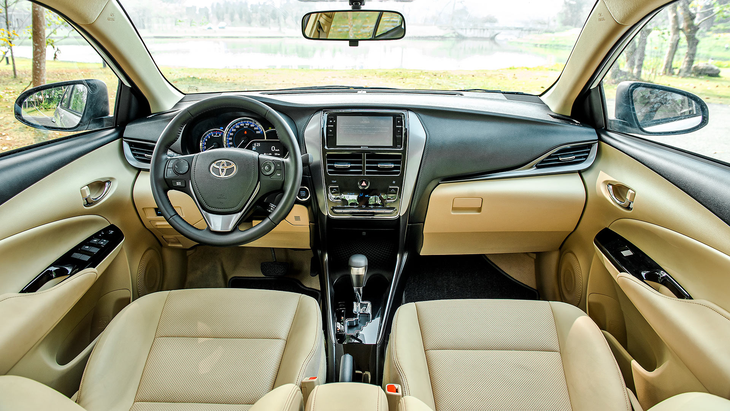
Furthermore, Toyota has maintained a suite of advanced driver-assistance features that are often missing in A-segment competitors. This includes the Pre-Collision System (PCS), Lane Departure Alert (LDA), Hill-start Assist Control (HAC), Traction Control (TRC), and Emergency Brake Signal (EBS). These safety integrations are often the deciding factor for families transitioning from a motorcycle to their first car. The fact that these features are now available at a price point nearing that of a basic A-segment hatchback is expected to accelerate the conversion rate of potential buyers.
Implications for the Automotive Industry
The current price war is likely to have several long-term implications for the Vietnamese automotive market:
- Consumer Surplus: Buyers are currently in an advantageous position. With major players like Toyota, Hyundai, and Kia engaging in price competition, the cost of entry into the passenger vehicle market is effectively at a multi-year low.
- Inventory Management: The massive discounts on 2026 models suggest that automakers are feeling the pressure of high stock levels as they prepare for the introduction of newer model years. This could lead to a cycle of "clearing out" old stock in the final quarter of every year.
- Pressure on Second-Hand Values: While this is excellent for new car buyers, it creates a challenging environment for the used car market. As new car prices drop, the residual value of used vehicles—which are often priced based on their original MSRP—must also decrease to remain competitive, potentially affecting owners who purchased their vehicles at full price earlier in the year.
- Brand Positioning: For Toyota, while the move protects its market share and clears inventory, it risks eroding the premium brand perception of the Vios. However, in a volume-driven market like Vietnam, market share often takes precedence over brand positioning.
Conclusion and Future Outlook
As the year draws to a close, the automotive sector is likely to continue this trend of aggressive discounting. Whether these prices will remain stable as we enter the new fiscal year remains to be seen. Industry analysts suggest that while this short-term strategy is effective for meeting sales targets, the long-term sustainability of such deep discounts is questionable.
For the prospective buyer, the current environment offers a rare window of opportunity to acquire a B-segment sedan with advanced safety features at the price of an entry-level city car. As the market continues to evolve, Toyota’s decision to aggressively clear the 2026 Vios inventory will likely be studied as a primary case of how established players defend their market position against both the rise of the SUV segment and the persistent competition from smaller, cheaper alternatives. The coming months will be critical in determining whether this strategy leads to a permanent shift in segment pricing or if the market will stabilize once the 2026 inventory is fully exhausted.