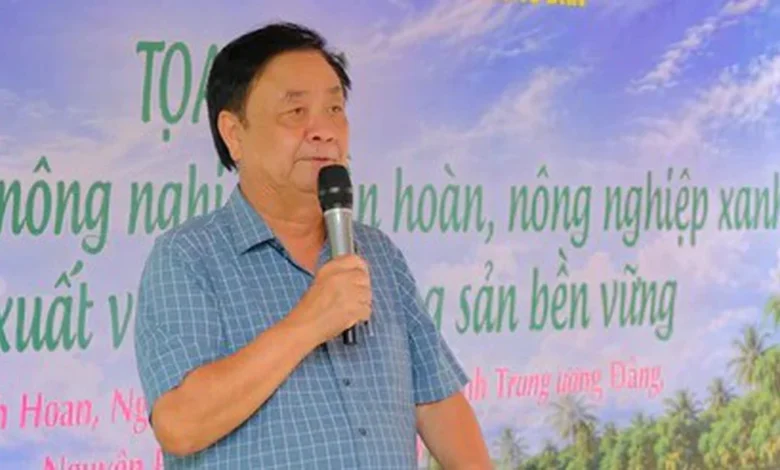
On the afternoon of September 26, in My Tho Commune, Dong Thap Province, a significant agricultural symposium convened to discuss sustainable circular agriculture, green farming practices, and secure value chains linking production with consumption. The event marked a decade of the "Dong Thap Farmers’ Companion Hoi Quan" (Hoi Quan) model, a grassroots initiative that has transformed local agricultural thinking over the past ten years.
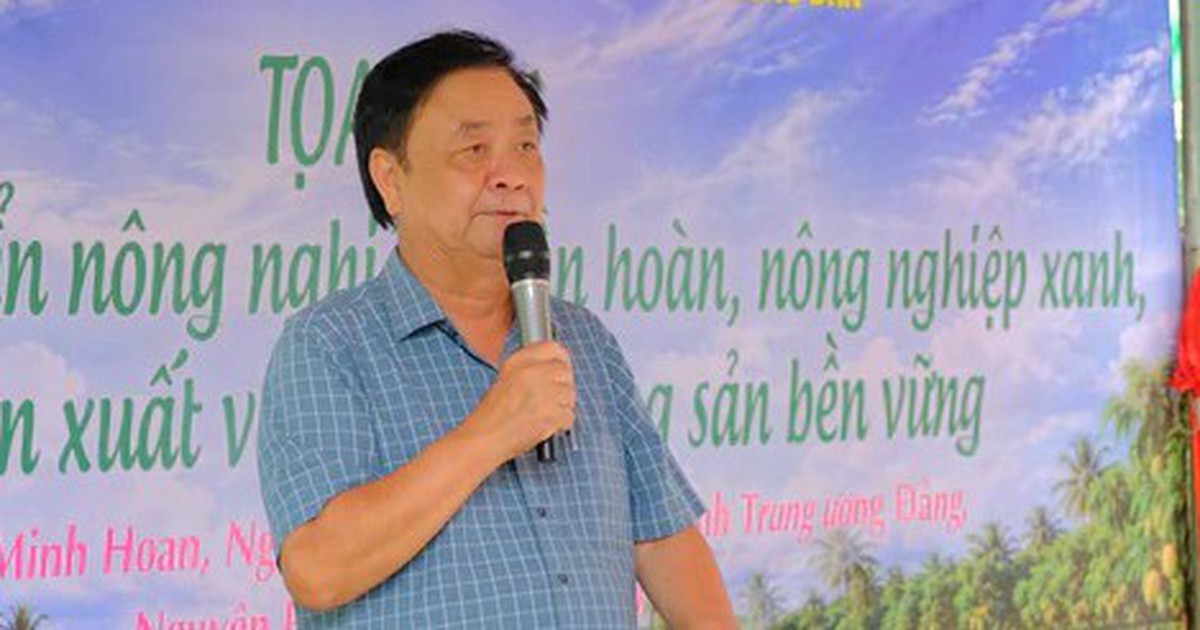
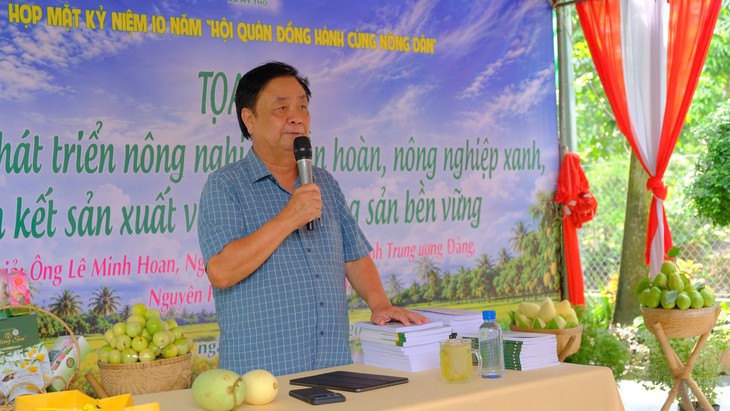
Among the high-profile attendees and speakers was Le Minh Hoan, former Vice Chairman of the National Assembly, who delivered a thought-provoking address centering on the intrinsic value of agricultural commodities, specifically the region’s renowned mangoes, and the urgent necessity of redefining local market strategies. The discussions underscored a critical paradigm shift: moving away from short-term yield maximization toward long-term ecological balance, brand differentiation, and cooperative economic models.
A Decade of Grassroots Innovation and the Hoi Quan Legacy
The Hoi Quan model, which celebrated its tenth anniversary during the September gathering, has long served as an informal yet highly effective platform for local farmers in Dong Thap Province to convene, share knowledge, and address structural challenges in rural development. Originally conceived to foster community cohesion and problem-solving at the hamlet level, these regular meetings have evolved into incubators for advanced agricultural policies and sustainable practices.
My Tho Commune itself represents a microcosm of Dong Thap’s agricultural prowess and its ongoing transition toward modernization. As detailed by local officials, the commune currently boasts a population spanning approximately 50 population zones, with a total mango cultivation area stretching across nearly 1,185 hectares. Local producers have successfully integrated modern standards, yielding five certified OCOP (One Commune, One Product) items alongside 11 hectares of organic production certified under Participatory Guarantee Systems (PGS).
During the first six months of the year, My Tho successfully connected and distributed approximately 6,800 tons of fruit, achieving 68% of its annual plan. This distribution success was driven by proactive local leadership, which established direct contracts with agricultural specialists and facilitated field visits for numerous enterprises eager to secure stable, long-term supply chains with local growers.
The Philosophical Shift: Healing the Land After Harvest
Central to former Vice Chairman Le Minh Hoan’s address was a fundamental challenge to conventional agricultural metrics. For generations, the primary benchmark of agricultural success has been sheer volume—maximizing output per harvest regardless of the long-term ecological toll. Mr. Hoan challenged this orthodox mindset, introducing a regenerative philosophy that places soil health at the center of rural economics.
"Bumper harvests achieved at the expense of soil depletion—can these truly be considered successful?" Mr. Hoan posed to the assembly of farmers, local officials, and agribusiness leaders. "I believe that after every harvest, we need to conduct a ‘health check’ for the soil and the trees, to listen to nature and prepare thoroughly for the next season."
This perspective reflects a growing recognition within Vietnam’s agricultural sector that intensive farming, chemical overuse, and the relentless pursuit of high yields are degrading arable land, increasing pest vulnerability, and threatening the long-term viability of key export crops. By advocating for regular ecological assessments and reduced chemical inputs, Mr. Hoan emphasized that sustainable productivity is inextricably linked to environmental stewardship.
Furthermore, Mr. Hoan stressed that the economic value of agricultural products like My Tho mangoes extends far beyond physical attributes. It relies heavily on geographical branding, market positioning, and the emotional connection forged between producers and consumers. He urged farmers to infuse their work with a distinct identity and narrative, making the consumer feel a personal connection to the fruit they purchase. Beyond high-tech adoption, he called on the farming community to embrace cooperation, expand sales networks, and institutionalize the practice of post-harvest environmental rehabilitation.
Economic Realities of Ecological Transition: Premium Pricing and Reduced Costs
Transitioning from conventional high-input farming to ecological and organic models is rarely without friction. Representatives from the My Tho Mango Cooperative shared the pragmatic challenges faced by local farmers when shifting toward green production methods. Adopting organic practices initially introduces financial hurdles, often accompanied by temporary yield reductions and produce aesthetics that may not immediately conform to strict traditional grading standards.
However, the cooperative’s real-world experience demonstrates that the long-term economic rewards far outweigh the initial growing pains. By prioritizing product safety, environmental integrity, and transparent branding, the cooperative successfully built consumer trust. Consequently, My Tho’s ecological mangoes command a market price roughly 30% higher than conventional market rates, and the cooperative consistently operates in a state of high demand where supply struggles to keep pace with orders.
Local leadership echoed these sentiments, emphasizing that peace of mind and craftsmanship are paramount for modern farmers. By cutting down on unnecessary chemical inputs and production costs, growers can significantly improve their net profit margins even if total physical output experiences a slight adjustment.
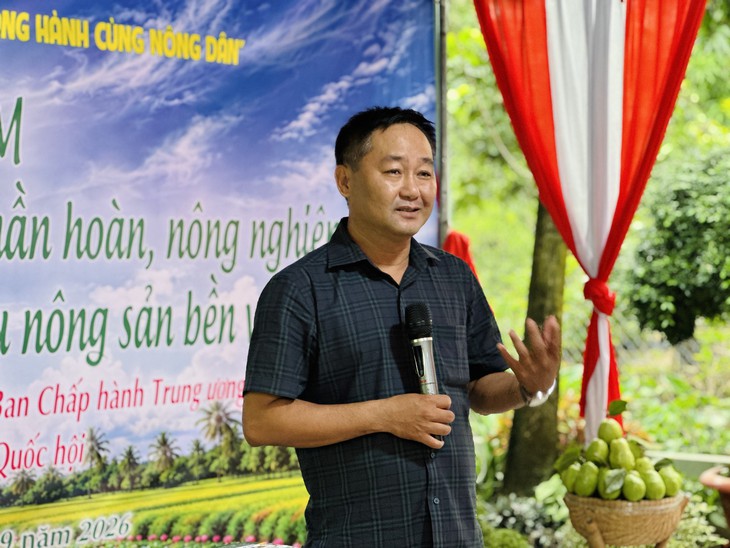
Nguyen Minh Tuan, Chairman of the My Tho Commune People’s Committee, affirmed that the innovative mindsets discussed at the symposium—such as "mango ecosystem thinking" and "conducting health checks for soil and trees"—will be permanently integrated into the regular agendas of the local Hoi Quan meetings.
"Transitioning toward green production and phasing out heavy reliance on chemical plant protection products is an inevitable path to safeguard consumer health and ecological balance," Mr. Tuan stated. "This strategy anchors the market positioning of the Cao Lieu mango brand and secures sustainable value for future generations."
Diversifying Rural Economies: Smart Villages and Agritourism
As My Tho Commune looks toward the future, local authorities are not relying solely on raw commodity sales. Recognizing the vulnerabilities inherent in agricultural commodity markets, the commune is aggressively diversifying its rural economy through structural modernization and experiential tourism.
Parallel to the push for organic farming, the local administration is accelerating its transition toward smart village models, leveraging e-commerce platforms, and developing ecological farm-stay tourism. By opening orchards to visitors, offering hands-on harvesting experiences, and utilizing digital platforms for direct-to-consumer marketing, My Tho is creating multiple revenue streams for mango growers. This multi-faceted approach shields farmers from price volatility and establishes a resilient local economy capable of withstanding external economic shocks.
Broader Implications for Vietnamese Agriculture
The discussions in My Tho Commune reflect a nationwide evolution in Vietnam’s agricultural policy. As the nation transitions from a volume-driven agricultural exporter to a producer of high-value, sustainable specialty goods, initiatives like the Dong Thap Hoi Quan model serve as vital testing grounds for bottom-up policy implementation.
The insistence on soil regeneration and brand storytelling addresses structural vulnerabilities that have historically plagued Vietnamese agriculture—namely, soil degradation, fragmented production, and a reliance on low-margin raw exports. By integrating ecological responsibility with cooperative business models, Dong Thap Province provides a blueprint for rural resilience that aligns with global consumer demand for sustainably sourced, traceable, and premium foodstuffs.
As the My Tho Hoi Quan enters its second decade, the convergence of grassroots community engagement, ecological science, and modern marketing strategies signals a transformative era for the region’s agricultural sector—proving that sustainable land management and commercial profitability are not mutually exclusive, but rather mutually reinforcing pillars of long-term prosperity.