Lexus ES 500e electric sedan confirmed for Vietnamese market following regulatory filings

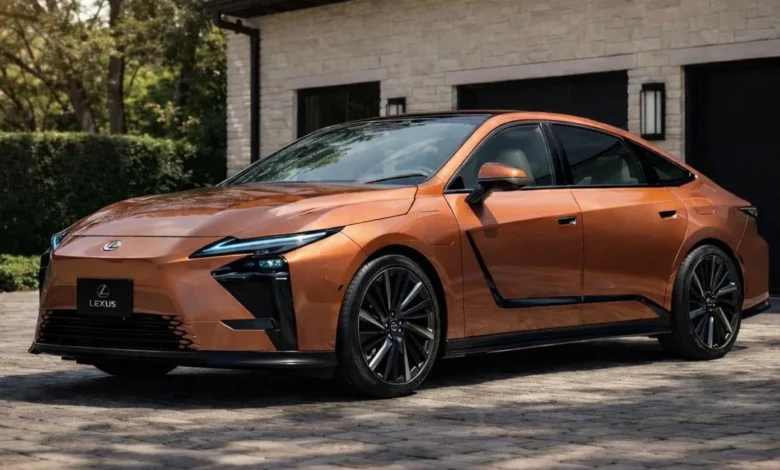
The automotive landscape in Vietnam is poised for a significant shift as Lexus, the luxury division of Toyota, prepares to introduce its first dedicated battery electric vehicle (BEV) to the country. Recent documentation filed with the Vietnam Register (VR) has unveiled technical specifications for the Lexus ES 500e, signaling that the luxury marque is finally ready to compete in the burgeoning premium electric vehicle segment. This move aligns with a broader global strategy by the Toyota Motor Corporation to electrify its luxury portfolio, transitioning from traditional internal combustion engines and hybrids to high-performance electric platforms.
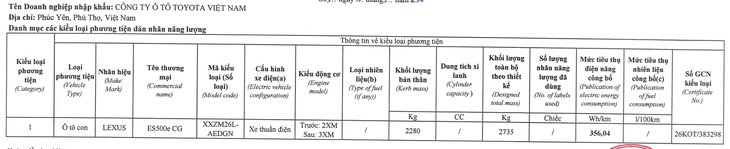
The official filing, dated September 24, 2026, identifies the vehicle under the model designation XXZM26L-AEDGN, with Toyota Vietnam listed as the official importer. This registration serves as the primary confirmation of the model’s impending arrival, confirming that the ES 500e is not merely a prototype but a production-ready vehicle intended for local distribution.
Technical Specifications and Performance Metrics
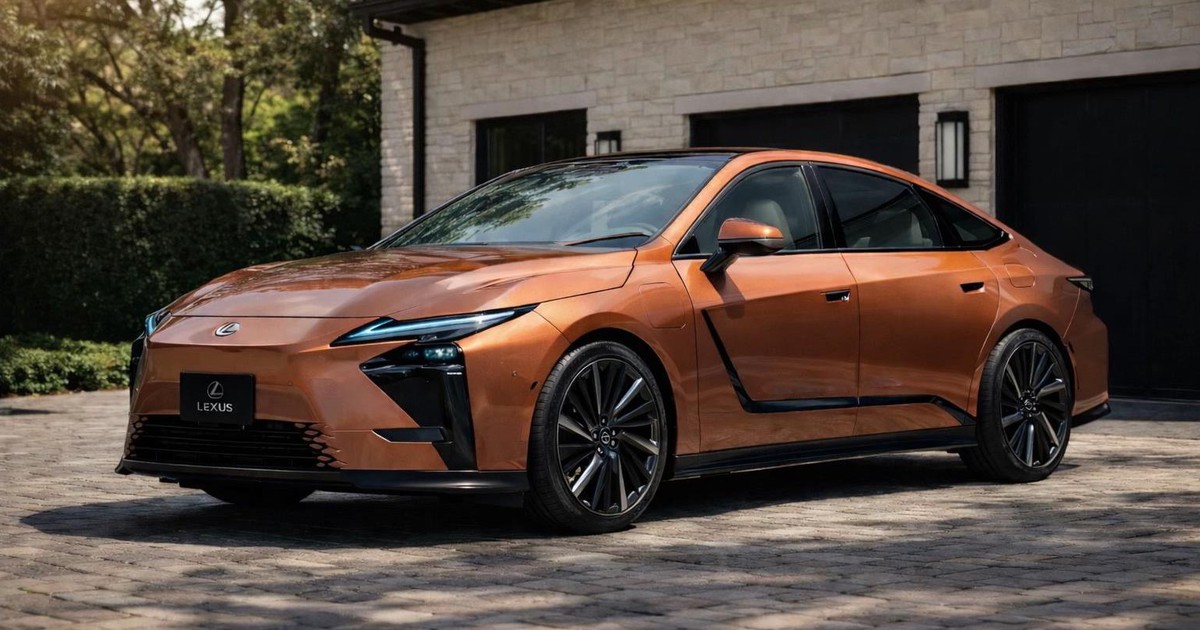
Based on the data disclosed by the Vietnam Register, the Lexus ES 500e is a sophisticated, pure electric sedan. Unlike the brand’s previous electrification efforts, which relied heavily on self-charging hybrid systems, this model is engineered from the ground up as a battery electric vehicle. It features a dual-motor configuration, providing all-wheel-drive capabilities through independent power delivery to the front and rear axles.
In the North American market, where initial testing and public disclosures have taken place, the ES 500e is tuned to produce approximately 338 horsepower. The vehicle is equipped with the advanced DIRECT4 all-wheel-drive system—a hallmark of Lexus’s next-generation electric architecture. This system is designed to provide seamless torque distribution, enhancing both cornering precision and straight-line acceleration.
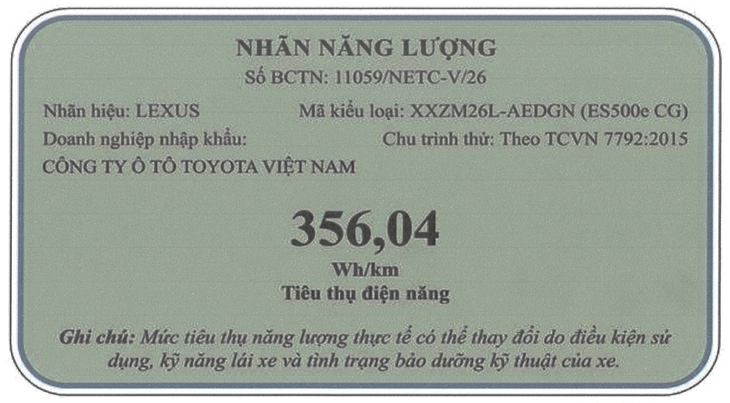
The structural weight of the vehicle is substantial, reflecting the current state of battery density. The curb weight is listed at 2,280 kilograms, with a gross vehicle weight rating reaching 2,735 kilograms. This mass is a critical factor in the vehicle’s energy consumption profile. According to the documents submitted to the Vietnamese authorities, the energy consumption is rated at 356.04 Wh/km. Industry analysts have noted that this consumption figure places the Lexus in a unique bracket compared to competitors like the Porsche Taycan, which reports a significantly lower consumption rate. The difference suggests that Lexus has prioritized cabin comfort, ride quality, and battery longevity over raw aerodynamic efficiency.
Chronology of Development and Market Entry
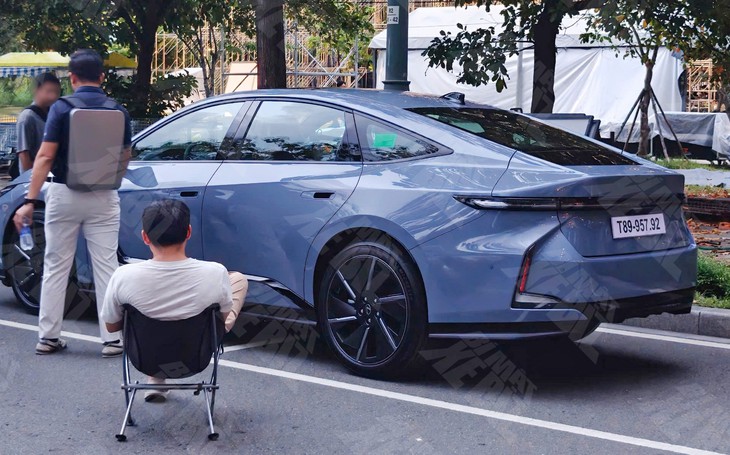
The arrival of the ES 500e in Vietnam is the culmination of a multi-year development cycle. The model was first spotted in late 2025 by eagle-eyed automotive enthusiasts on public roads in Vietnam. At the time, the vehicle was draped in camouflage, yet its fastback silhouette and distinctive 21-inch alloy wheels made it identifiable as the successor to the traditional ES sedan.
The timeline for the official launch is set for early October 2026, with industry insiders estimating a retail price point of approximately 2.98 billion VND. This positioning places the ES 500e firmly in the ultra-luxury segment, targeting high-net-worth individuals who are increasingly transitioning toward sustainable, premium transportation.
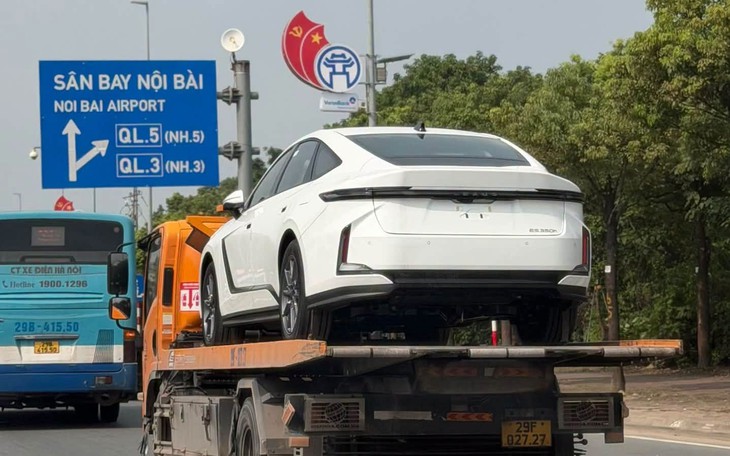
The vehicle has already been seen undergoing final road testing in Vietnam, sporting temporary transit plates. This confirms that the testing phase, which involves local climate and road infrastructure validation, is nearing completion.
The Hybrid Alternative and Portfolio Expansion
Lexus is not relying solely on the ES 500e to capture market share. The registration documents also confirm the introduction of two additional variants of the new Lexus ES: the ES 350h Premium and the ES 350h Luxury. These hybrid models are expected to be priced between 2.36 billion VND and 2.58 billion VND, respectively.
While the ES 500e serves as the flagship for the company’s electric ambitions, the hybrid variants provide a transitional option for customers who may not yet be fully comfortable with charging infrastructure or pure electric range limitations. These hybrid models retain the design language of the electric version, albeit with smaller 19-inch wheels and a different powertrain architecture, proving that Lexus intends to offer a cohesive design identity across its entire ES lineup regardless of the propulsion system.
Strategic Implications for the Vietnamese EV Market
The introduction of the ES 500e marks a pivotal moment for Toyota and Lexus in Vietnam. Historically, Toyota has been criticized by some market observers for its slow adoption of pure electric vehicles compared to competitors from Europe and China. By bringing the ES 500e to the Vietnamese market, the company is effectively challenging the current market leaders in the premium electric sedan segment.
The implications for the broader market are twofold. First, it introduces the Lexus Safety System+ 4.0 to the region, which includes a comprehensive suite of advanced driver-assistance systems (ADAS), such as enhanced collision avoidance, lane-keeping assist, and automated parking features. Second, it raises the bar for interior luxury in electric vehicles. The new ES features a 14-inch center touchscreen, a 12.3-inch digital instrument cluster, and high-end amenities such as power-adjustable rear seats, massage functions, and climate-controlled seating for all passengers.
Analysis: Navigating the Infrastructure Gap
While the technical capabilities of the ES 500e are impressive, the success of the model will be heavily dependent on the maturation of Vietnam’s charging infrastructure. As of late 2026, the density of fast-charging stations remains concentrated in major urban centers such as Ho Chi Minh City and Hanoi.
Lexus is expected to address this by offering home-charging solutions and potential partnerships with commercial charging networks. Furthermore, the brand’s reputation for reliability and its extensive service network in Vietnam provide a competitive edge that startup EV brands currently lack. For a premium buyer, the ability to service a high-end electric vehicle at a trusted dealership is a deciding factor that often outweighs the pure technical specifications of the car itself.
The Future of Premium Mobility
As the October 2026 launch date approaches, anticipation is building among luxury car collectors and early adopters. The Lexus ES 500e represents more than just a new vehicle; it represents the evolution of the brand. By marrying the long-standing "Lexus standard" of whisper-quiet cabins and refined ride quality with the instantaneous torque and modern technology of an electric powertrain, the company is attempting to redefine what it means to drive a luxury sedan in the mid-2020s.
The coming months will provide more clarity on the exact range specifications for the Vietnamese market. In the United States, the 21-inch wheel configuration currently offers an estimated range of 438 kilometers. Whether the Vietnamese version, with its specific regional calibration and potential adjustments, will mirror these figures remains a subject of intense discussion among automotive experts.
In conclusion, the entry of the Lexus ES 500e into the Vietnamese market is a strategic, well-calculated move. It offers a premium alternative to the existing electric vehicle options, maintains the brand’s commitment to luxury, and provides a clear roadmap for the electrification of the entire Lexus lineup in the Southeast Asian region. With the formal registration now complete, the focus turns to the official debut, where the company is expected to outline its long-term vision for electric mobility in one of the fastest-growing automotive markets in the world.