Vietnam’s First Comprehensive Master Plan for Information and Communications Infrastructure Paves the Way for Digital Transformation


For the first time in its history, Vietnam has officially adopted a comprehensive master plan for its Information and Communications Technology (ICT) infrastructure, marking a strategic pivot toward a modern, integrated, and highly efficient digital ecosystem. This landmark policy document, which sets the development trajectory through 2030 with a vision extending toward 2050, is designed to synchronize disparate technical components, foster regional development, and establish a cohesive foundation for the nation’s socio-economic growth in the digital era. By aligning government, economic, and social digital infrastructures, the plan creates a unified space that aims to accelerate Vietnam’s transition into a high-tech, data-driven economy.
A Strategic Shift in Infrastructure Planning
Historically, infrastructure in Vietnam—particularly within the postal and telecommunications sectors—has been developed in a fragmented, piecemeal fashion. Individual enterprises often built isolated networks to serve specific business goals, leading to redundant investments and a lack of interoperability. The new master plan seeks to dismantle these silos, emphasizing a "synergetic development" model where digital infrastructure functions as the essential utility for the national economy, similar to transportation or energy networks.
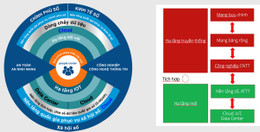
The plan identifies five core pillars of ICT infrastructure: telecommunications networks, data centers and cloud computing, digital platforms, postal networks, and cyber-security infrastructure. By codifying these sectors into a single master plan, the government aims to eliminate regional disparities and ensure that rural and remote areas are not left behind in the country’s digital leap.

The Evolution of the Postal Sector: From Mail to Logistics
A critical component of this master plan is the fundamental restructuring of the postal sector. While Vietnam has maintained an extensive service network with over 21,600 service points as of 2020, the sector has struggled to keep pace with the meteoric rise of e-commerce and modern logistics. Previously, postal services operated primarily as legacy mail delivery systems. The new mandate redefines postal infrastructure as a backbone for e-commerce and supply chain logistics, ensuring that the physical flow of goods matches the rapid flow of digital data.
The transformation strategy envisions a shift toward automated sorting, advanced material handling, and the integration of Internet of Things (IoT) devices. By 2030, the government intends to develop between three and five regional postal hubs across the country. These hubs will serve as the engine for a national logistics network, capable of processing massive volumes of goods with significantly reduced transit times.
Supporting Data and Development Targets
The government’s ambitious roadmap sets specific, measurable targets for the postal sector by 2025:
- Operational Capacity: An increase in total processing capacity to 93,000 tons of mail per day.
- Delivery Standards: A goal of five-day delivery for inter-provincial and international shipments, and a two-day delivery target for intra-provincial shipments.
- Regional Hubs: The establishment of three major regional hubs with an average processing capacity exceeding 11,000 tons per day, each covering a service radius of roughly 350 kilometers.
- Local Distribution: The development of 14 regional distribution centers, each capable of handling over 4,500 tons of mail per day.
These figures represent a significant upgrade from current capabilities, reflecting the government’s commitment to ensuring that digital services remain affordable and high-quality for all citizens, regardless of their location.
Official Perspectives and Industry Response
The Ministry of Information and Communications (MIC) has emphasized that this plan is not merely a government directive but a collaborative framework. During the official unveiling of the master plan on February 23, 2024, Deputy Minister Phan Tam directed key industry players—such as Vietnam Post and Viettel Post—to prioritize resources for the expansion of next-generation postal infrastructure.
Representatives from the Institute of Information and Communications Strategy, which spearheaded the drafting process, noted that the plan was developed through rigorous analysis of current market gaps and global trends. By working closely with major logistics enterprises, the Ministry has ensured that the proposed targets are technically and economically feasible. "The goal is to create an open, interoperable space where both state-owned and private entities can operate with maximum efficiency," an Institute representative stated.
Challenges and Implementation Strategy
Despite the clear vision, the implementation of such a comprehensive master plan faces inherent challenges. The transition from legacy systems to modern, digital-first infrastructure requires massive capital investment and a workforce skilled in emerging technologies. Furthermore, the need for deep cooperation between the Ministry of Information and Communications, the Ministry of Transport, and provincial authorities adds a layer of bureaucratic complexity.
To mitigate these risks, the plan incorporates a "preventative" design, ensuring that supply chains remain resilient even during global crises or domestic emergencies. By emphasizing the "shared infrastructure" model, the government intends to reduce operational costs for companies, thereby increasing the overall competitiveness of the Vietnamese economy in the global market.

Broader Socio-Economic Implications
The implications of this master plan extend far beyond the telecommunications and postal sectors. By establishing a robust ICT foundation, Vietnam is effectively creating the "hardware" required for the "software" of its digital economy. This infrastructure will serve as the catalyst for:
- Digital Government: Facilitating the seamless transition of public services to digital platforms.
- Economic Competitiveness: Reducing logistics costs, which have traditionally been a significant hurdle for Vietnamese exporters.
- Social Equity: Ensuring that even the most remote populations have access to reliable digital services, thereby bridging the urban-rural divide.
The Path Forward: 2025 to 2030 and Beyond
The current phase of the plan focuses on the integration of existing assets and the pilot implementation of new technologies, such as automated sorting and AI-driven route optimization. As the nation moves toward 2030, the focus will shift toward scaling these successes and expanding the reach of high-speed broadband and 5G networks to every corner of the country.
The "Make in Viet Nam" initiative, which promotes the domestic development of digital technologies, serves as the final, critical piece of the puzzle. By encouraging local firms to develop proprietary tech for use in the national infrastructure, the government aims to ensure technological sovereignty and reduce reliance on imported solutions.
In summary, Vietnam’s new master plan for information and communications infrastructure is a comprehensive, future-proof blueprint. It recognizes that in the 21st century, connectivity is not a luxury but a fundamental necessity. By systematically upgrading its digital and physical logistics networks, Vietnam is positioning itself to be a significant player in the global digital economy, fostering an environment where innovation can thrive, businesses can scale, and citizens can participate fully in the digital age. As the plan moves from policy to practice, the eyes of the region remain on Vietnam, watching to see if this ambitious vision will successfully translate into the reality of a modernized, digital-first nation.