30 . 000 Trường mầm non tiểu học đóng cửa năm 2025: Khủng hoảng giáo dục Trung Quốc

The Kindergarten Crisis: 59 Closures Every Day
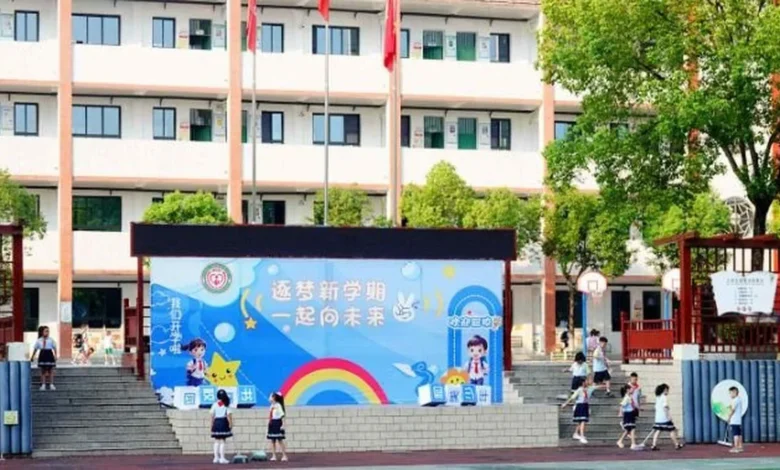
The most severe impact of China’s declining birth rate is currently being felt at the preschool level. In 2025, the nation witnessed the disappearance of approximately 21,400 kindergartens, bringing the total number of such facilities down to 231,900. When broken down, this statistic reveals a staggering reality: an average of 59 kindergartens closed their doors every single day throughout the year.
Enrollment figures for preschools have mirrored this downward trajectory. The number of children entering kindergarten plummeted by approximately 10%, or 3.58 million students, leaving the total enrollment at 32.25 million. This decline is not merely a statistical anomaly but the result of a consistent multi-year drop in the national birth rate. Despite the transition from the "One-Child Policy" to the "Two-Child Policy" in 2016, and subsequently the "Three-Child Policy" in 2021, birth rates have continued to reach historic lows, influenced by high living costs, urban pressures, and changing social attitudes toward marriage and child-rearing.
Private educational institutions are bearing the brunt of this contraction. While private kindergartens account for 52.1% of all preschool facilities in China, they currently only attract 40.6% of the total student population. As the pool of available students shrinks, parents are increasingly gravitating toward public kindergartens, which are heavily subsidized by the state and offer lower tuition fees. Currently, 91.5% of kindergarten-aged children are enrolled in "inclusive" programs—mostly public or low-cost private schools supported by the government. This has left high-end private institutions in a cutthroat battle for a dwindling number of students, leading to widespread insolvency and closures.
Primary Schools Face the Demographic Cliff
The contraction is rapidly moving up the educational ladder. In 2025, the number of primary schools in China decreased by approximately 8,000, leaving a total of 128,300 facilities. This represents the sharpest decline in primary school numbers in five years. Fresh enrollment in primary schools fell by 9.6% compared to the previous year, with only 14.61 million new students entering the system. Across the board, the total number of primary school students nationwide decreased by 4.06 million.
To understand this sudden drop, one must look at the chronology of China’s population policies. In 2023, primary schools experienced a short-term enrollment peak of 18.77 million students. This peak was the direct result of the 2016 "Two-Child Policy," which led to a temporary spike in births in 2016 and 2017. However, the "baby boom" was short-lived. By 2018, birth rates began to slide again, accelerating their decline in 2020 during the global pandemic. The children born in those lower-birth-rate years are now reaching primary school age, resulting in the "demographic cliff" currently being observed by education officials.
The Paradox of Growth: High Schools and Universities
While the base of the educational pyramid is crumbling, the middle and upper tiers are experiencing a temporary expansion. This paradox is explained by the "lag effect" of demographics. The cohorts currently entering middle school, high school, and university were born during a period (roughly 2008–2010) when birth rates were relatively stable, averaging around 16 million births per year.
Middle school enrollment saw a slight uptick in 2025, reaching 18.52 million new students and bringing the total middle school population to 55.09 million—an increase of 1.23 million. The expansion is even more pronounced at the high school level. The number of public high schools increased by 300 to a total of 16,100, welcoming 10.74 million new students, a 3.7% increase from the previous year. Demographic experts, including Zhang Lilong from the Capital University of Economics and Business, predict that the high school-aged population will not reach its peak until approximately 2029, after which it will face a similar contraction to that currently seen in kindergartens.
At the tertiary level, China continues to push for a more highly educated workforce. The gross enrollment rate for higher education reached 61.3% in 2025, spread across 3,167 colleges and universities. For the first time in history, China recorded over 1 million Master’s degree graduates and more than 100,000 PhD graduates in a single year. The government is intentionally expanding vocational and specialized degree programs to align with national strategic goals in high-tech industries, with over 80,000 students graduating from specialized vocational bachelor’s programs in 2025.
Labor Market Shifts: Unemployment and Rising Standards
The demographic shift is causing a significant upheaval in the educational workforce. For the second consecutive year, the total number of teaching staff from kindergarten to high school has declined, falling to 15.68 million in 2025. The vast majority of job losses are concentrated in the preschool sector, where the closure of 21,400 facilities has left tens of thousands of teachers and support staff unemployed.
However, for those who remain in the profession, the standards for entry are rising. As the student-to-teacher ratio improves due to fewer pupils, schools are becoming more selective. In 2025, 85.3% of primary school teachers held at least a bachelor’s degree, a significant jump from 70.3% in 2021. This suggests that while the quantity of schools is decreasing, the government is attempting to leverage the smaller student population to improve the quality of education.
Government Response: The 15th Five-Year Plan
In response to these tectonic shifts, the Chinese State Council recently unveiled the 15th Five-Year Plan for Education Development, covering the period from 2026 to 2030. This policy framework is specifically designed to address the structural changes necessitated by a shrinking and shifting student population.
Key components of the plan include:
- Repurposing Facilities: Local governments are being directed to convert empty kindergarten and primary school buildings for other uses, such as senior care centers or community vocational hubs, to avoid leaving massive infrastructure assets dormant.
- Early Warning Systems: The establishment of a demographic monitoring system to provide early warnings of population fluctuations. This will allow provincial governments to adjust school construction and teacher recruitment plans up to five years in advance.
- Budgetary Protections: Despite the shrinking number of students, the policy mandates that local governments maintain education spending at no less than 4% of their regional GDP. The goal is to shift from "quantity-based" funding to "quality-based" funding.
- Teacher Redistribution: Implementing programs to retrain surplus preschool teachers for roles in primary schools or special education, where vacancies may still exist.
Broader Socio-Economic Implications
The "hollowing out" of China’s early education system has profound implications for the nation’s future. In the short term, the closure of schools and the resulting unemployment among educators add pressure to an already strained labor market. In the long term, a smaller student population means a smaller future workforce, which could hamper China’s economic growth and its ability to support an aging population.
Furthermore, the "involution" (neijuan) or intense competition within the Chinese education system remains high. Even as schools close, the competition for spots in top-tier universities and high schools remains fierce, as parents focus their resources on their only child. This continued pressure, combined with the shrinking number of schools, may further discourage young couples from having children, creating a self-reinforcing cycle of demographic decline.
The data from 2025 serves as a harbinger of a new era for China. The era of mass expansion and "education for all" at any cost is being replaced by an era of consolidation, specialization, and structural management. As the nation navigates this transition, the empty classrooms of 30,000 closed schools stand as a silent testament to the greatest demographic challenge in modern Chinese history. Based on reports from Nikkei and Caixin, it is clear that the restructuring of the Chinese education system is not a temporary trend but a permanent adaptation to a new demographic reality.